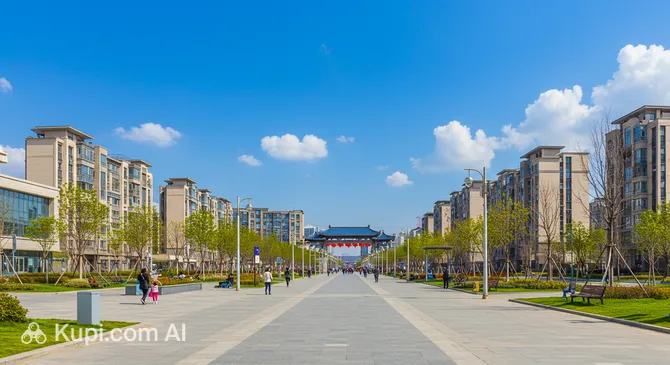
Located in the heart of Henan Province, Zhumadian is a fascinating blend of ancient traditions and the rapid pace of modern life. This major administrative center in China is often called the "Inner Inn of the Middle Kingdom" due to its historical role as a vital transportation hub. With a population of over 4.3 million people, the city offers travelers a unique opportunity to see the authentic life of the country's central region, far from the hustle and bustle of coastal metropolises.
Zhumadian. Illustration.
Source: Kupi.com AI
The city's geographical location defines its mild character and strategic importance. Exploring Zhumadian, you will inevitably encounter its deep cultural heritage; according to legend, many classic Chinese tales originated here. If you want to better understand the roots of local identity, it is worth exploring the rich historical past of this region, which dates back to the Neolithic era.
Among the region's main highlights are the picturesque Chaya Mountains, which inspired the creators of the classic novel "Journey to the West," and majestic temple complexes. Zhumadian hospitably opens its doors to those seeking harmony between natural beauty and cultural enlightenment, promising unforgettable impressions of the real China.
Weather Overview
Zhumadian is located in a zone influenced by a temperate continental climate, characterized by a clear change of seasons. Summer here is usually hot and humid: in July and August, the average daytime temperature often exceeds +30°C, and tropical rains bring temporary relief. Winters, conversely, are cold and quite dry, with temperatures in January dropping to slightly below zero at night.
The best times for a visit are considered spring (April-May) and autumn (September-October). During these periods, the city's climate is most favorable for long walks and visiting natural attractions in the surrounding area. The air becomes clear, and the temperature stays in a comfortable range from +15°C to +25°C.
Travelers should take into account that July receives the most precipitation—up to 200 mm, which can affect plans for visiting mountainous areas. In winter, the number of wet days is minimal, making walks through city museums and temples quite comfortable if you have taken care of warm clothing.
Average monthly temperature
Average monthly precipitation
Interesting Facts
Zhumadian is a place where history intertwines with legends, creating a unique urban character. Here are some notable facts about this city:
Birthplace of a Legend: It is believed that Zhumadian is the origin of the story of "Liang Shanbo and Zhu Yingtai," often called the Chinese equivalent of "Romeo and Juliet" or the legend of the Butterfly Lovers.
Center of the World: In ancient times, the city was called "Tianzhong," which translates to "Center of Heaven" or the center of the Earth, emphasizing its central position in ancient China.
Literary Connection: The landscapes of the Chaya Mountains near the city are officially recognized as one of the primary locations that inspired the author's description of Sun Wukong's adventures in the famous novel "Journey to the West."
Ancient Innovations: Ancient musical instruments—bone flutes over 8,000 years old—were discovered in this region, testifying to the ancient musical culture of these lands.
How to Get There
Zhumadian is an important hub in Henan Province's transport network, making it easily accessible for travelers. The city is conveniently connected to the country's largest metropolises by high-speed rail lines, allowing for quick travel from Beijing, Shanghai, or Guangzhou. When planning your travel route, keep in mind that the city is also within the influence zone of a major aviation hub.
While the city itself does not have its own major civil airport, most tourists arrive via Zhengzhou Xinzheng International Airport (CGO). This is a modern and high-tech airport located about a two-hour drive away. From there, Zhumadian can be reached by high-speed train directly from the terminal or by a comfortable intercity bus.
Zhumadian Railway Station accepts both regular and high-speed trains. The station is conveniently located relative to the central districts, and a developed network of taxis and public transport makes it easy to reach your hotel. Traveling by train is not only the fastest but also the most scenic way to arrive in the city.
The crown jewel in the vicinity of Zhumadian is rightfully considered Chaya Mountain. This picturesque massif is famous for its whimsical granite formations that resemble figures of animals, people, and mythical creatures. Convenient hiking trails have been laid out for tourists, allowing them to enjoy panoramas that once served as the setting for classic Chinese stories about the Monkey King.
In the city itself, the Nanhai Temple is a must-visit—it is one of the largest Buddhist complexes in Asia. Its monumental architecture and peaceful atmosphere attract not only pilgrims but also history and art enthusiasts. A walk through the temple grounds allows you to appreciate the elegance of traditional Chinese carving and the scale of modern religious structures.
For those who prefer outdoor recreation within the city, Kaiyuan Park is ideal. This is a hub of local culture: here you can see elderly people practicing Tai Chi, listen to street musicians, or simply admire the cherry blossoms and lotuses depending on the season. Zhumadian harmoniously combines such green oases with modern avenues, creating a comfortable environment for getting to know the city.
Local Cuisine
Zhumadian's culinary traditions are closely linked to the rich gastronomy of Henan Province, known as Yu cuisine. The main focus here is on hearty soups and dough-based products. Be sure to try Huimian—these are wide flat noodles cooked in a thick bone broth with the addition of mutton, herbs, and medicinal roots. This dish is considered a true symbol of the region and is served in almost every local restaurant.
Another local delicacy worth trying is crispy flatbreads with various fillings and spicy beef soups. The local cuisine is famous for its moderate use of spices: it is not as hot as Sichuanese but possesses a deep and rich flavor. At the city's street markets, you will find a huge variety of snacks, from fried dumplings to caramelized fruit on sticks.
Regarding drinks, various types of Chinese tea are popular in Zhumadian, as is local beer. The food culture here is very democratic: during the day, city residents prefer quick bites in noodle shops, and in the evening, they gather in large groups in noisy restaurants. Dining with locals will allow you not only to enjoy the food but also to feel the genuine hospitality of central China's residents.
Travel Tips
A trip to central China requires some preparation, but in return, it offers sincere impressions of the country's true culture. These practical tips will help make your trip to Zhumadian as comfortable and interesting as possible.
Clothing and Equipment: In summer, take light clothing made of natural fabrics, as it can be quite hot in the region. For walks in the Chaya Mountains, comfortable shoes with good grip are mandatory. In winter, the weather is cool and dry, so a warm jacket will come in handy.
Mobile Payments and Connectivity: Install Alipay or WeChat Pay and link your card—this is the primary method of payment in the city. To access your usual services and maps, take care of a reliable VPN service in advance and buy a local SIM card.
Language Barrier: English is not widely spoken in Zhumadian. Be sure to download an offline translator and save screenshots of your hotel address in Chinese.
City Transport: Use taxi-hailing apps (e.g., Didi); this will eliminate the need to explain directions to the driver.
Health and Safety: The city is safe for walking, but always carry a hotel business card. Pharmacies are common in the center, but it's better to bring specific medications with you.
Culture and Etiquette: Locals may show friendly curiosity toward foreigners. Be polite; a smile is the best way to communicate. When visiting temples, remain quiet and do not disturb those praying.
Cash: Despite the prevalence of online payments, always have a small supply of cash Yuan for small shops or in case of network failure.
Following these simple rules will allow you to focus on the beauty and unique atmosphere of the city, turning your stay in Zhumadian into a pleasant adventure.
Entertainment & Nightlife
Zhumadian in the evening reveals a completely different side when neon signs light up the central streets and numerous night markets open. This is the best time to feel the spirit of the city: here you can not only taste local delicacies but also observe the life of the townspeople. Most activity is traditionally concentrated in the central district, where bars and restaurants stay open until late at night, offering both traditional Chinese karaoke (KTV) and more modern forms of leisure.
For connoisseurs of cultural activities, performances of Henan Opera are regularly held in the city. This is a bright and dynamic spectacle with characteristic vocal parts and rich costumes, allowing for a deeper immersion into the folklore of the province. Local theaters and concert venues are magnets for those seeking aesthetic pleasure after sunset.
Safety in the city is at a high level, allowing tourists to comfortably walk along the illuminated avenues even late at night. For moving between venues, it is most convenient to use official taxi apps. If you are looking for a place to just relax and enjoy the atmosphere, check out one of the modern cinemas or take a stroll along the city canals, which are decorated with ornamental lighting in the evening.
Parks & Museums
The natural and cultural heritage of Zhumadian is concentrated in its picturesque green zones. Nanhai Park is a favorite vacation spot for citizens: here, vast water spaces are combined with traditional gazebos and well-kept alleys. It is an ideal place for morning walks where you can observe the traditional Chinese way of life in the fresh air.
For those interested in history, the Zhumadian City Museum is a must-visit. Its halls feature archaeological finds that tell the story of the region's development from deep antiquity to the present day. Particular attention is paid to household items of ancient dynasties and the history of the Silk Road, part of which passed through these lands. The museum helps to understand why this region was considered the "heart" of China for many centuries.
No less interesting is the Butterfly Lovers Culture Park, dedicated to the famous legend of the lovers Liang and Zhu. This place is filled with romance and symbolism, offering visitors not only beautiful views but also the chance to touch classical Chinese literature and folklore. The combination of historical monuments and modern park areas makes cultural leisure in the city multifaceted and interesting for tourists of all ages.
Getting Around
The public transport system in Zhumadian is well-developed enough to meet the needs of both locals and visitors. The basis of internal communication consists of bus routes that cover almost all districts of the city and suburbs. Buses run regularly, and fares are extremely low, making them the most budget-friendly way to get around. Route information is often duplicated in navigation apps on smartphones.
For faster and more comfortable travel, tourists prefer taxis. Both official services and aggregators operate in the city. A car is easy to catch on the street or call through a mobile app. Taxis in Zhumadian are inexpensive, but it is recommended to have the address of your hotel or destination written in Chinese characters, as drivers rarely speak foreign languages.
A popular alternative to motorized transport is renting bicycles and e-scooters through urban sharing services. This is a great way to explore parks and central streets at a leisurely pace. Wide sidewalks and dedicated lanes in many parts of the city make such trips safe and pleasant. Payment for bus fares and bike rentals is most often done using QR codes in mobile apps.
Accommodation
The hospitality market in Zhumadian offers a decent choice of accommodation options, primarily oriented toward business travelers and domestic tourists. Mid-range chain hotels and comfortable 4-star hotels predominate here, providing a high level of service at very affordable prices compared to major metropolises. For budget-conscious travelers, numerous guesthouses and local hostels are available.
The most convenient area for staying is the city center and the territory near the main railway station. By choosing a hotel in this part of the city, you will have quick access to shopping centers, restaurants, and main transport arteries. Recently, suburban resorts and eco-hotels catering to nature lovers and those seeking a quiet getaway have also begun to appear in the vicinity of the Chaya Mountains.
It is recommended to book accommodation in advance, especially if your trip coincides with China's national holidays or major regional festivals. It is worth considering that in some smaller hotels, the staff may not speak English, so having a booking confirmation in Chinese and a translator app installed on your phone will significantly facilitate the check-in process.
Nearby Cities
Due to its location on the province's main transport artery, Zhumadian serves as an excellent starting point for exploring neighboring cities and cultural centers. Within an hour or an hour and a half by train are places that each possess their own unique character and set of attractions.
One interesting destination is Jiannan, located very nearby. It is also worth paying attention to Yuzhou, a city with an ancient history known for its ceramic production. A trip to Luohe will introduce you to the region's industrial and gastronomic potential, while the city of Pingdingshan offers interesting industrial landscapes and natural parks.
Exploring the surroundings of Zhumadian will help you form a more complete picture of life in Henan Province. The convenient schedule of high-speed trains allows you to plan trips so that you return to the city by dinner, making your journey rich and varied.
Shopping & Souvenirs
Shopping in Zhumadian is primarily an introduction to local goods and the lively atmosphere of commercial districts. Central Jiefang Road is the main shopping artery, where modern shopping malls sit alongside small clothing and electronics stores. Here you can find both famous Chinese brands and international mass-market goods.
If you are looking for something more authentic, head to the local food and clothing markets. These are the best places to buy fresh fruit, spices, and the famous Henan tea. As souvenirs from Zhumadian, people often bring back folk crafts, such as traditional embroidery or ceramics from neighboring counties. Don't forget to look for jade products, which are particularly popular here.
Large shopping centers usually operate from 10:00 to 22:00, while smaller shops may open earlier. Most places accept payment through popular mobile apps such as Alipay or WeChat Pay, making shopping convenient even without a large amount of cash. Strolling through the shops of Zhumadian is not only an opportunity to buy gifts but also a way to see the modern daily life of the province's residents.