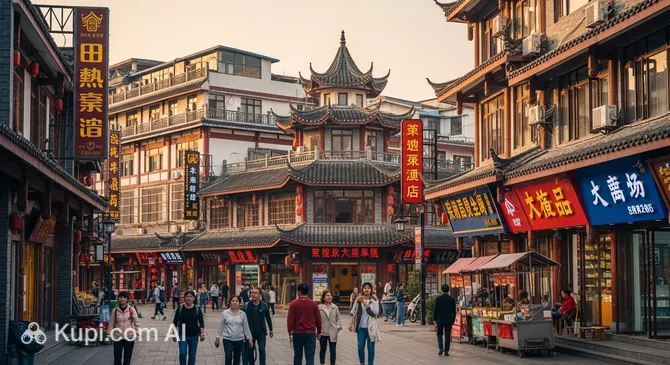
Jiannan is a dynamically developing city located in the central part of China. Unlike the bustling metropolises on the coast, this city maintains an atmosphere of practicality and hard work, serving as an important industrial and residential center for the region. With a population of about 478,000, it is a typical example of modern Chinese development, where functional architecture stands alongside evolving infrastructure.
Geographically, the city is situated in Henan Province, occupying a strategically advantageous position at the intersection of major transport routes. Although Jiannan is not considered a classic tourist destination, it attracts those who want to see the authentic life of industrial China, get acquainted with its economic structure, and experience the rhythm of daily life. Here, you can feel the spirit of change that has been driving the country in recent decades.
Jiannan. Illustration.
Source: Kupi.com AI
For those interested in the region's past, the city's historical heritage is revealed through its connection to important ancient trade routes. Today, Jiannan is a city of contrasts, where modern shopping areas and industrial zones are harmoniously integrated into the landscape of the Central Plain. Visiting this place offers a unique opportunity to look behind the scenes of the "world's factory" and see the inner workings of an ordinary Chinese city.
Weather Overview
The climate in Jiannan is distinctly continental, typical for the country's central regions. This means travelers should prepare for significant temperature swings between seasons. Summers here are usually hot and humid, with temperatures in July and August often rising above +30°C, while winters can be cold and quite dry, with temperatures dropping below freezing in January.
Most precipitation falls between May and September, coinciding with the rainy season. July is considered the wettest month, so if your trip is planned for the summer, be sure to bring an umbrella or a raincoat. In winter, there is significantly less precipitation, and the weather is often clear but frosty. To stay informed about current conditions, you can check the latest weather in the city before you leave.
The city's industrial profile should also be considered: during periods of calm winter weather, air quality can vary due to meteorological conditions and factory operations. The most comfortable times to visit are spring (April–May) and autumn (September–October), when the weather is mild and pleasant, ideal for exploring the city and its surroundings.
Average monthly temperature
Average monthly precipitation
Interesting Facts
Industrial Heartbeat: Jiannan is an important link in the supply chain of consumer goods throughout China, with a high concentration of textile and food industry capacities.
Transport Crossroads: Due to its location, the city serves as a critical logistics center connecting Henan Province with the economic zones of neighboring regions.
Economic Affordability: Among regional residents, Jiannan is known as one of the most practical and cost-effective cities to live in, which attracts many young specialists.
Hidden Potential: The city is actively investing in the development of high-tech manufacturing sites, aiming to transform from a traditional industrial center into an innovation hub.
How to Get There
The transport accessibility of Jiannan is due to its role as a major industrial hub. The easiest way to get here is via the well-developed network of roads and expressways that connect the city with the largest centers of Henan Province. To plan your route in advance and explore the options, we recommend checking the section on how to get to the city.
While the city does not have its own airport, the nearest major air hubs are located in regional centers. The journey from an international airport to Jiannan by taxi or rental car usually takes between 2 to 4 hours, depending on traffic. This is a convenient option for those arriving from other provinces or from abroad.
Railway communication also plays an important role in the region's logistics. Nearby stations receive trains connecting the city with key economic zones. Intercity bus services are a popular and budget-friendly way to travel between neighboring settlements, offering regular schedules throughout the day.
Jiannan is not your typical museum-city; its appearance is defined by modern, functional spaces. The main points of interest here are the well-maintained business districts and contemporary shopping complexes. These are the places where the city's life pulses: they house the best restaurants, recreation areas, and venues for local events.
For travelers seeking cultural enrichment, the city serves as a convenient base for day trips. Within Jiannan itself, it is worth paying attention to the architecture of the new quarters, which demonstrate the rapid growth of Chinese urbanism. In the evenings, the city's central squares transform into lively public spaces where you can observe locals practicing gymnastics or dancing.
If you have time, it is recommended to combine a tour of Jiannan with a visit to the neighboring historical centers of Henan Province. There you will find ancient temples and rich museum exhibits, while Jiannan itself offers the comfort of modern infrastructure and a chance to witness the industrial greatness of modern China without the tourist crowds.
Local Cuisine
The gastronomy of Jiannan is a vivid embodiment of Henan cuisine, which is famous for being hearty, moderately spicy, and rich in flour-based dishes. The main dish you must try is the local noodles. They are prepared in various ways: in a rich meat broth, stir-fried with vegetables, or served under a thick, aromatic sauce. The region's cuisine is designed to provide energy, so portions here are usually quite generous.
Street markets and small family restaurants hold a special place in the food culture. Street food in Jiannan is a true ritual. Try freshly made steamed baozi buns or flatbreads with various fillings. In the evening, stalls selling meat and seafood skewers seasoned with traditional spices like cumin and chili pepper open up, creating the unique flavor of a local meal.
Popular drinks include various types of tea, as well as refreshing soy milk and local fruit infusions. For those who prefer more modern establishments, shopping malls feature chain restaurants offering both classic Chinese cuisine and international dishes. The gastronomic scene in Jiannan is honest and delicious food that perfectly reflects the hospitable and straightforward character of the locals.
Travel Tips
Traveling to Jiannan requires some preparation, as the city is oriented toward business and industry rather than mass tourism. These practical tips will help you feel confident and make your trip as comfortable as possible.
Clothing and Essentials: Pack your wardrobe based on the continental climate: bring light clothing for the hot summer and warm items for the cold winter. Comfortable shoes are a must, as you will be walking a lot. Don't forget a universal power adapter.
Transport: To get around the city, download the Didi app—it is the most reliable way to call a taxi. Public buses can be difficult to navigate without knowledge of Chinese.
Finance: The main currency is the Yuan. In Jiannan, WeChat Pay and Alipay are used almost everywhere, so set them up in advance. Cash is accepted, but international bank cards do not work everywhere.
Communication: English is not widely spoken here. Install an offline translator and always carry a hotel card with the address written in Chinese characters.
Health: In the winter months, air quality may decrease due to industrial activity, so those with sensitive respiratory systems should carry protective masks. Pharmacies are common, but medicine names will be in Chinese.
Local Etiquette: Residents are friendly but value restraint. Loud behavior in public places may be perceived negatively. Greet people with a slight nod of the head.
What to Avoid: It is not recommended to photograph restricted industrial facilities or sensitive areas. Also, avoid walking through unlit industrial outskirts at night.
Connectivity: Buy a local SIM card at your arrival airport, as Wi-Fi in hotels often requires authorization via a Chinese phone number.
Despite its industrial specifics, Jiannan will reveal itself as a hospitable and active city if you show a little patience and curiosity. Have a pleasant trip!
Entertainment & Nightlife
The entertainment scene in Jiannan is primarily oriented toward local residents, making it authentic and accessible in its own way. Most activity is concentrated in modern shopping centers, which serve as multifunctional hubs. Here you will find spacious cinemas, modern bowling centers, and an essential attribute of Chinese leisure—karaoke bars (KTV), where you can spend an evening with friends.
The city's nightlife is relatively quiet. Cozy cafes and bars are open in the business districts, where young people and office workers prefer to gather after a workday. Gastronomic streets are particularly popular: after sunset, numerous street food stalls open here, creating a lively and aromatic atmosphere perfect for a late dinner.
For those seeking large-scale cultural entertainment, such as theaters or major concert halls, locals often recommend heading to neighboring large provincial centers. Nevertheless, Jiannan offers everything necessary for quality everyday relaxation in a safe and friendly environment.
Parks & Museums
The green zones of Jiannan are, first and foremost, cozy urban parks and squares created for the relaxation of local residents. Although there are no massive national reserves in the city, the small park areas are pleasingly well-kept and offer plenty of space for walking. These are ideal places to witness the daily life of citizens: from morning Tai Chi exercises to quiet family picnics on weekends.
The museum component of the city is focused on preserving local heritage and education. In local cultural centers, you can find exhibitions dedicated to the industrial development and history of the region. This is an excellent opportunity to understand how a small settlement transformed into a modern industrial center. Exhibits often tell the story of the labor achievements and the evolution of daily life for the residents of central China.
For those eager to see large-scale historical collections and ancient artifacts, a trip to the regional center is recommended. Nevertheless, the parks and local museums of Jiannan possess their own special "hometown" charm, offering guests a peaceful atmosphere and a chance to take a break from the urban hustle under the shade of the trees.
Getting Around
The transport system of Jiannan is simple and functional, fully meeting the needs of an industrial center. The backbone of public transport consists of buses, whose routes cover all residential and industrial areas, as well as connecting the center with the outskirts. Fares are minimal; however, tourists should keep in mind that during peak hours, when shift workers are returning home, buses can be overcrowded.
Taxis are the most convenient and fastest way to get around the city. To hail a car, it is best to use the Didi mobile app (the Chinese equivalent of Uber), as it guarantees transparent metered pricing and helps avoid the language barrier. Payment for the trip usually happens automatically through the app, which is extremely convenient for foreign guests.
In the central districts of Jiannan, bicycle rentals via mobile platforms are also popular. This is an excellent option for short trips in good weather, allowing you to see the city streets in detail. Overall, the city's transport infrastructure is constantly improving, making travel between shopping centers, hotels, and industrial zones increasingly comfortable.
Accommodation
The hotel sector in Jiannan is primarily aimed at business travelers and specialists visiting local industrial enterprises. Mid-range hotels predominate here, offering quality service, stable Wi-Fi, and convenient working conditions. Luxury five-star resorts are rare within the city itself, but the functionality and cleanliness of local establishments are of a high standard.
For those planning a longer stay or preferring a home-like atmosphere, apartments are an excellent option. They are widely available in the new residential quarters and are often booked through international or local online platforms. When choosing accommodation, it is wise to focus on proximity to the central business districts, as the main infrastructure and dining establishments are concentrated there.
If you are looking for a wider selection of world-class hotel chains, consider staying in neighboring large cities, from which Jiannan can be quickly reached by transport. When booking within the city itself, it is recommended to do so in advance, especially if your trip coincides with regional industrial exhibitions or national holidays.
Nearby Cities
The city of Jiannan is a convenient starting point for those who want to explore central China beyond the usual tourist routes. Thanks to its proximity to several major cities, you can easily plan day trips to discover new facets of the province.
Just 21 kilometers away is the city of Zhumadian, which is significantly larger than Jiannan and offers a broader cultural program. Also worth noting is Luohe, known for its parks and developed food industry. For those interested in local life and small settlements, visiting Yaozhuangcun or Yuzhou, famous for its ceramic traditions, will be an interesting experience.
Exploring the surroundings of Jiannan allows you to see the diversity of landscapes and architectural styles of the Central Plain. It is a great chance to escape the industrial rhythm and immerse yourself in the atmosphere of the Chinese province, where tradition and modernity are intertwined in the most fascinating ways.
Shopping & Souvenirs
Shopping in Jiannan reflects its industrial status, where practicality comes first. The city's main shopping centers are located in the central districts and are modern complexes housing clothing, electronics, and home goods stores. These are comfortable places where you can find both famous Chinese brands and everyday goods at very affordable prices.
For those seeking an authentic experience, it is worth visiting the traditional markets in the older parts of the city. Life here is in full swing from early morning: stalls are bursting with fresh local produce, spices, and textiles. This is the best place to feel the local color and purchase goods produced directly in the province. Be sure to look out for cotton products and local knitwear, for which the region's textile industry is famous.
While Jiannan does not specialize in tourist souvenirs, you can find interesting items from local artisans or typical Henan treats in gift packaging at the markets. Shops usually operate from morning until late evening, and payment is most often made via mobile apps like WeChat Pay or Alipay, though cash is accepted in larger centers. Shopping here is devoid of big-city pretension, but it pleases with honest prices and a huge selection of practical items.