Support

Stone Gate

About

The Stone Gate (Kamenita vrata) is an iconic historical and architectural monument located in the heart of Zagreb, the capital of Croatia. It is more than just an ancient structure; it is the only one of the five original city gates that has survived to this day, having once served as a powerful fortification connecting the Lower Town and Gradec—the historical part of Zagreb. This eastern gate is an essential part of Zagreb's medieval urban infrastructure.
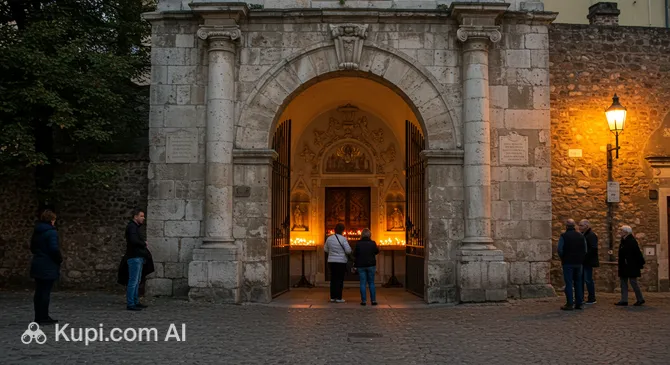
Stone Gate. Illustration.
Source: Kupi.com AI

Traveler photos:

Walking through the Stone Gate is like traveling through time. It has witnessed many key moments in Zagreb's history and still preserves a medieval atmosphere. Originally built as part of the defense system, today it is one of the city's most recognizable symbols and a popular spot for both tourists and locals.

The Stone Gate gains special allure and spiritual significance from a small chapel built right within its passage. It was constructed in the second half of the 18th century and is dedicated to the Mother of God of the Stone Gate. Inside the chapel is a revered painting of the Virgin Mary, the work of an unknown artist, which legend says miraculously survived the great fire of 1731 that destroyed the surrounding wooden structures. This event gave the site sacred status, and since then, the gate has become a place of prayer and pilgrimage where people leave thank-you plaques and light candles.

Contacts

The Stone Gate is a public historical monument, so it does not have specific contact details. It is easily accessible on foot, as it is located in the historical center of Zagreb. For more information about the attraction or other tourist sites in the city, it is recommended to contact the Zagreb Tourist Information Center.

How to contactContact
AddressKamenita ul. 1, 10000, Zagreb, Croatia
Phone number+385 1 4851 611
Websitezupa-svmarkaev.hr

What to Do

Passing through the Stone Gate, you feel as though you are stepping back in time into Zagreb's medieval past. These gates serve as a portal to Gradec—the historical Upper Town. Once on the other side, you can begin a fascinating walk through narrow cobblestone streets, admiring ancient buildings and discovering the charm of old Zagreb. It is a wonderful starting point for exploring the historical quarters.

Inside the gate itself, be sure to visit the small but highly significant chapel. It houses the revered painting of the Mother of God, which, according to legend, miraculously survived the devastating fire of 1731. Many visitors, both locals and tourists, come here to pray, light a candle, or simply stand in silence, touching centuries of history and feeling the special spiritual energy of the place.

The Stone Gate is not only a historical monument but also one of the most photographed spots in Zagreb. Don't miss the chance to take a few commemorative photos of this recognizable symbol of the old city, which holds many legends and stories. It’s a perfect place to capture the spirit of ancient Zagreb and its rich past.

Getting There

The Stone Gate is conveniently located in the heart of historical Zagreb, at the junction of the Upper and Lower Towns, making it easily accessible for walking. If you are in Zagreb's central square — Ban Jelačić Square (Trg Bana Jelačića) — the walk to the gate will take you only about 10-15 minutes. It is a pleasant walk, though keep in mind that it is uphill, as the gate serves as the entrance to the ancient Gradec district.

For those who prefer a more comfortable ascent or want to add a bit of local flavor to their trip, the famous Zagreb funicular is an excellent option. It is considered one of the shortest in the world and quickly transports you from the Lower Town to the Upper Town. From the upper funicular station, the Stone Gate is just a few minutes' walk away. Additionally, the foot of the hill where Gradec is located can be reached by city trams—one of Zagreb's main forms of public transport.

If you plan to explore Zagreb as part of an organized tour, you likely won't need to plan your route to the Stone Gate separately. This iconic landmark is almost always included in sightseeing tours of the historical city center. This option not only makes finding the gate easy but also allows you to learn many interesting facts from a guide.

Nearest city: Zagreb

History & Facts

The history of the Stone Gate dates back to the 13th century when it was built as an integral part of the defense system of medieval Gradec—one of the two settlements from which Zagreb eventually grew. In those days, Gradec and neighboring Kaptol were connected by five powerful gates, but only the eastern one—the Stone Gate—has survived to this day, standing as a silent witness to the centuries-old history of the Croatian capital.

One of the most dramatic yet iconic events in the history of the Stone Gate was a massive fire that swept through the city in 1731. The fire destroyed most of Gradec's wooden buildings, but according to legend, the painting of the Virgin Mary located in the gate's arch miraculously remained unscathed. This event was seen by townspeople as a true miracle, and subsequently, in the second half of the 18th century, a small chapel was built inside the gate. This revered relic is still kept there today, drawing believers and pilgrims.

A major milestone in Zagreb's history was the unification of Gradec, Kaptol, and surrounding settlements into a single city in 1850. This event marked the beginning of a new stage in the development of the future capital of Croatia. Despite the city's subsequent growth and the emergence of a new district—the Lower Town (Donji grad) with its more modern regular layout—the Stone Gate did not lose its significance. It has been carefully preserved as an important historical monument and a vivid reminder of Zagreb's medieval past and rich cultural heritage.

Time Needed

To see the Stone Gate itself and peek into the Chapel of the Mother of God located inside, you will need very little time—usually 15-30 minutes is quite enough. In this short period, you can appreciate the historical significance of the structure, see the votive plaques left by the faithful, and feel the special atmosphere of the place.

However, it is worth noting that the Stone Gate is not just a standalone attraction, but a kind of entrance to the historical district of Gradec, also known as Zagreb's Upper Town. Therefore, if you want to do more than just glance at the gate and instead fully immerse yourself in the atmosphere of the old city and explore its narrow streets, squares, and other points of interest, it is recommended to set aside 2-3 hours. This approach will give you a more complete picture of this charming part of the Croatian capital.

Working Hours

As a historical passage connecting parts of the city, the Stone Gate in Zagreb is accessible to visitors 24/7, year-round. You can pass through it at any time of day or night to experience the spirit of the old town. No special booking is required to walk through the gate.

However, if you are interested in visiting the small Chapel of the Mother of God of the Stone Gate located within the archway, it has its own opening hours. Typically, the chapel is open to visitors during the day, roughly from 8:00 AM to 8:00 PM. Please note that the exact schedule may vary depending on the time of year and religious holidays. Therefore, if visiting the chapel is an important part of your itinerary, it is recommended to check the current opening hours on-site or on Zagreb's official tourist websites.

Open 24 hours

Nearby

Visiting the Stone Gate in Zagreb is undoubtedly an iconic event that allows you to touch the city's centuries-old history. However, to make your trip even more rewarding and complete, it is worth paying attention to the attractions located in the immediate vicinity. Exploring the surroundings of the Stone Gate will allow you to dive deeper into the atmosphere of the Upper Town and discover other gems of the Croatian capital.

Many interesting sites are just a few steps away, and visiting them won't take much time but will significantly enrich your experience of Zagreb. These can include historical monuments and museums, as well as picturesque corners that capture the city's unique charm.

NameDistance
Klovićevi Dvori Gallery0.1 km
Museum of Broken Relationships0.2 km
Ban Josip Jelačić Statue0.3 km
Zagreb City Museum0.3 km
Croatian Natural History Museum0.3 km
Zagreb Cathedral0.3 km
Museum of Lost Tales0.4 km

Have you reached the end of the page?

So the route has been studied inside and out