Support

Ban Josip Jelačić Statue

About

In the heart of Zagreb, on its main square, stands one of the most recognizable symbols of the Croatian capital—the Ban Josip Jelačić Statue. This majestic equestrian statue is dedicated to an outstanding political figure and military leader of Croatia, Count Josip Jelačić von Bužim, who played a key role in the country's history. The monument is not just a decoration but the true historical heart of the city.
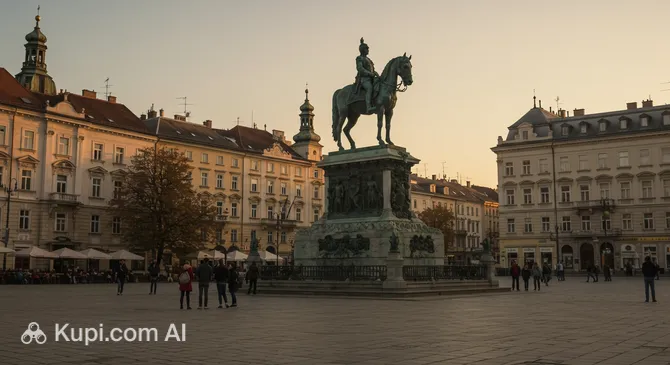
Ban Josip Jelačić Statue. Illustration.
Source: Kupi.com AI

Traveler photos:

The monument was created by the famous Austrian sculptor Anton Dominik Fernkorn and officially unveiled on October 19, 1866. Located in the center of the square named after the Ban, it immediately catches the eye and serves as the main landmark for residents and visitors alike. It is a place where history meets modernity, creating a unique atmosphere.

Ban Josip Jelačić Square is not only a historical site but also the center of public life and Zagreb's main pedestrian zone. Life is always bustling here: city events take place, friends meet, and tourists enjoy views of the surrounding buildings in various architectural styles. Visiting this monument is a great way to start your journey into the rich culture and history of the Croatian capital.

Contacts

Since the Ban Josip Jelačić Statue is a public city landmark located on the central square, it does not have specific contact details, such as a phone number or an official website.

To obtain any tourist information about Zagreb and its sites, it is recommended to contact the Tourist Information Center. One of the offices is conveniently located right on Ban Jelačić Square, where the monument is situated.

How to contactContact
AddressTrg bana Josipa Jelačića, 10000, Zagreb, Croatia
Websitezagreb-touristinfo.hr

What to Do

Visiting the Ban Josip Jelačić Statue is an opportunity to immerse yourself in the lively atmosphere of Zagreb. First and foremost, it is a favorite spot for photo shoots: tourists and locals alike enjoy taking pictures against the backdrop of the majestic equestrian statue. While here, it is worth taking the time to observe the architectural ensemble of the square, where buildings in Baroque, Classicist, and Art Nouveau styles blend harmoniously. The monument is the central meeting point and the main landmark from which it is convenient to begin exploring the Croatian capital.

Life bustles around the monument. Numerous cozy cafes and restaurants are located here, where you can relax with a cup of coffee while enjoying the view of the square. Nearby are souvenir shops offering mementos of Croatia. Close to the statue is another historical site—the 19th-century Manduševac Fountain, which is also worth a look and is a popular photo spot. Additionally, temporary fairs and exhibitions often take place on the square, adding an element of pleasant surprise to your visit.

Ban Josip Jelačić Square also serves as the main stage for various city events and celebrations. Visitors may witness interesting cultural events, such as a parade in honor of Croatia's Independence Day or grand receptions for national heroes, such as Olympic athletes. Thus, a visit to the monument is not just about sightseeing, but a full participation in the social and cultural life of the city.

Getting There

The Ban Josip Jelačić Statue boasts one of the most convenient locations in Zagreb. It is situated in the very heart of the city, on the main square that bears his name — Trg bana Josipa Jelačića. This is the central point of the Donji Grad (Lower Town) district and the capital's main pedestrian zone, so finding the monument is effortless.

Due to its central position, the easiest way to reach the statue is on foot if you are already in downtown Zagreb. A stroll through the picturesque streets of the Croatian capital will be a pleasant part of your tour in itself. For those who prefer public transport, it is also very straightforward. Numerous tram routes pass through the city center and have stops in the immediate vicinity of the square.

If you are coming from more distant areas of Zagreb or its suburbs, city transport is the best choice. Take a tram heading to the center and get off at the stop of the same name, Trg bana J. Jelačića. From there, the statue is just a few steps away. Since the square is the main transport and pedestrian hub, finding the right route and stop is very easy.

Nearest city: Zagreb

History & Facts

The history of the Ban Josip Jelačić Statue is inextricably linked to the personality of the Count himself—an outstanding commander and an iconic figure for Croatia. Josip Jelačić von Bužim served as the Ban (ruler) of the country during a turning point in history, from 1848 to 1859. He was elected to this post during the revolutionary events in the Austrian Empire and actively fought for the national interests of the Croatian people; he is also known for the abolition of serfdom. The monument, erected a few years after his death, became a tribute to his contribution to the nation's formation.

Interestingly, the square was named after Ban Jelačić as early as 1848, long before the monument was installed. The equestrian statue itself was officially unveiled on October 19, 1866. Throughout its long history, the square has changed names several times: it was known as Harmica and Republic Square, but Zagreb residents have always colloquially called it Jelačić Square or simply "The Square." This emphasizes the deep connection between the place and the people's memory.

The fate of the monument itself proved to be no less dramatic than the history of the country. In 1947, the statue was dismantled, and the square was renamed. The monument was stored in a gallery basement for decades, hidden from the eyes of the citizens. However, in 1990, during a period of national revival, the statue was triumphantly returned to its historical place. This event became a powerful symbol of the restoration of historical justice and returned the main square to its iconic and beloved appearance.

Time Needed

For a quick look at the Ban Josip Jelačić Statue and a few photos, you will need very little time—about 15–20 minutes. This is enough to appreciate the sculptor's craftsmanship and capture one of the main symbols of Zagreb. The monument itself does not require long study, but its true value is revealed in the context of the surrounding space.

To truly feel the atmosphere of this place, it is worth setting aside significantly more time. Since the statue is located on the central square of the Croatian capital, it is recommended to plan for a visit of 1 to 2 hours. During this time, you can not only examine the statue in detail but also walk around the square itself, admire the architecture of the surrounding buildings, or stop by one of the many cafes or souvenir shops. This will turn a short stop at the landmark into a full, leisurely stroll through the heart of the city.

Working Hours

One of the main advantages of the Ban Josip Jelačić Statue is its complete accessibility. Since the monument is located on an open central square of the city, it is open to visitors 24/7. This landmark has no set operating hours, allowing tourists to view it at any convenient time, whether early in the morning or late at night.

No prior booking, ticket purchase, or tour registration is required to visit the monument. Access to the square and the statue itself is absolutely free. You can simply come and enjoy the atmosphere of the historical center of Zagreb, take photos, and relax at the base of the statue at any time of year.

Open 24 hours

Nearby

The location of the Ban Josip Jelačić Statue in the very center of Zagreb makes it an ideal starting point for exploring other iconic sites in the Croatian capital. After viewing the monument, do not rush to leave the square—a walk around its surroundings will allow you to dive deeper into the city's history and culture, discovering many interesting sites located just a few steps away.

Exploring nearby attractions will enrich your experience and help you form a more complete picture of Zagreb. Most of the key historical and cultural landmarks are within walking distance, making such a stroll easy and pleasant. Below is a list of places that are very close by and definitely worth a visit.

NameDistance
Meteorological Post0.2 km
Archaeological Museum0.2 km
Zagreb Cathedral0.2 km
Stone Gate0.3 km
Klovićevi Dvori Gallery0.3 km
Museum of Broken Relationships0.4 km
Museum of Lost Tales0.4 km

Have you reached the end of the page?

So the route has been studied inside and out