Support

Zagreb Cathedral

About

Zagreb Cathedral, officially known as the Cathedral of the Assumption of the Blessed Virgin Mary and Saints Stephen and Ladislaus, is the primary Catholic church in Croatia and one of the most prominent landmarks of its capital, Zagreb. This majestic Neo-Gothic structure is considered the most monumental sacral building southeast of the Alps. Located in the historic heart of the city in the Kaptol district, the cathedral serves not only as a vital religious center but also as an invaluable architectural monument.

The main feature defining the city's skyline is the two elegant spire bell towers that soar into the sky to a height of about 108 meters. This makes Zagreb Cathedral the tallest building in all of Croatia, visible from many points throughout the city. The exterior of the church is decorated with exquisite Gothic elements, sculptures of saints, and carved details that give it a monumental yet refined appearance.
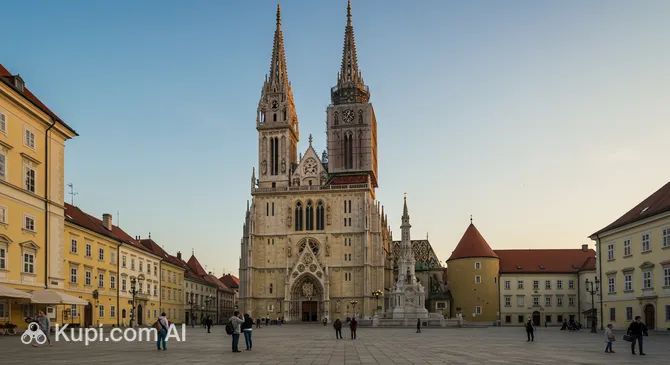
Zagreb Cathedral. Illustration.
Source: Kupi.com AI

Traveler photos:

The cathedral's history is full of dramatic events. Its construction began as early as the 11th century, but the building suffered repeated destruction, including during the Mongol invasion in the 13th century. The church acquired its current Neo-Gothic look after a massive reconstruction led by architect Hermann Bollé, which followed the devastating earthquake of 1880. It was then that the famous towers were erected, becoming a symbol of Zagreb's resilience and rebirth.

Inside the cathedral, visitors are met with impressive decor: colorful stained-glass windows creating a play of light, ancient Baroque altars, gilded carvings, and one of the finest organs in Europe. The treasury houses valuable religious artifacts, while the crypt holds the remains of many prominent figures in Croatian history, making the cathedral not only an architectural gem but also a site of national memory.

Contacts

For the most up-to-date information regarding access to the cathedral, especially in light of the restoration work following the 2020 earthquakes, it is recommended to reach out via the official contact channels. Below is the essential contact information.

How to contactContact
AddressKaptol 31, 10000, Zagreb, Croatia
Websitekatedrala.hr

What to Do

Visiting Zagreb Cathedral is an immersion into an atmosphere of grandeur and tranquility. Once inside, visitors can examine the majestic interior of the church in detail, which is famous for its rich decor and represents significant artistic value. Special attention is drawn to the presbytery, where the tombs of prominent historical figures are located—Cardinal Aloysius Stepinac and military leader Tomaž Erdődy. Strolling through the cathedral, you can admire the play of light passing through the tall stained-glass windows and appreciate the craftsmanship of the ancient altars and sculptures.

The tour is not limited to the interior. Tourists can admire the external architectural appearance of the cathedral, which is a work of art in itself. Its impressive Neo-Gothic towers, which have become a true symbol of Zagreb, are visible from many parts of the city and serve as a beautiful backdrop for photos. A walk around the cathedral will reveal another interesting detail: portions of the powerful fortification walls, built back in the 15th century to protect against Ottoman invasions, have been preserved here. These ancient fortifications add historical depth and serve as a reminder of the centuries-old history of this iconic site.

Getting There

Getting to Zagreb Cathedral is quite easy as it is located in the very heart of Zagreb — in the historic Kaptol district. Given this central location, the best way to reach it is a pleasant walk. The cathedral is within walking distance of most major tourist routes and the central Ban Josip Jelačić Square, making it easy to include in your city exploration plan.

If you are staying outside the city center or want to save time, you can use the extensive public transport network. The most convenient way is the Zagreb trams, which are an integral part of city life. Many routes pass through the city center, and the stops closest to the cathedral are just a few minutes' walk away. For example, you can get from the main railway station to Ban Josip Jelačić Square by tram in just 5-8 minutes, and from there, the cathedral is just a stone's throw away.

For those who prefer maximum comfort or are traveling with luggage, taxis or ride-hailing services are always available. This is particularly convenient if you are heading to the cathedral directly from the airport or more distant parts of the city. A trip from central locations won't take long, as the distance to the cathedral is short.

Nearest city: Zagreb

History & Facts

The history of Zagreb Cathedral is a true saga of resilience and rebirth. Its fate is closely intertwined with key events in the life of Croatia. Construction began as early as 1093, but in 1242, the nearly completed building was destroyed during the Mongol invasion. At the end of the 15th century, when the threat from the Ottoman Empire arose, powerful defensive walls were built around the cathedral, fragments of which have survived to this day. In the 17th century, one of the towers was even adapted as a military observation post, emphasizing the strategic importance of the site.

One of the most dramatic moments in the church's history occurred in 1880, when a powerful earthquake caused the main nave to collapse. However, this tragedy sparked a massive reconstruction under the leadership of architect Hermann Bollé. It was he who gave the cathedral its modern, internationally recognized Neo-Gothic appearance, crowning it with two elegant spire towers about 105 meters high. This reconstruction became a symbol of the revival of not only the cathedral but the entire city of Zagreb.

Challenges for the cathedral have continued into the present day: in March 2020, another earthquake caused serious damage, harming one of the towers. This event once again served as a reminder of the fragility of historical heritage and the resilience with which it is being restored. As an interesting detail, it's worth noting that the image of Zagreb Cathedral once graced the reverse side of the 1,000 Croatian kuna banknote issued in 1993, forever etching its image into the country's financial history.

Time Needed

When planning a visit to Zagreb Cathedral, you should allow approximately 1–2 hours. This is generally enough time to leisurely admire both the impressive exterior and the rich interior, including the main nave, altars, and famous stained-glass windows. During a full visit, you will have time to study the architectural details and visit the significant tombs located inside the cathedral.

Of course, the duration of your visit depends on your interests. If you are short on time, even 30–40 minutes will allow you to get a general sense of the cathedral's scale and take some memorable photos. For a deeper immersion into the history and art of the temple, an hour and a half to two hours will give you the chance to not only appreciate the main elements but also pay attention to details, such as the treasury, if it is open to visitors. Photography enthusiasts should also set aside extra time to find the best angles around the cathedral.

Keep in mind that Zagreb Cathedral is an active church, so before visiting, it is worth checking the current opening hours, which may change, especially on days of services or due to restoration work. Respectful behavior toward worshippers and maintaining silence will allow you to fully enjoy the atmosphere of this majestic place.

Working Hours

Typically, the following visiting hours are set for tourists at Zagreb Cathedral: Monday to Saturday from 10:00 AM to 5:00 PM and Sunday from 1:00 PM to 5:00 PM. Entrance to the cathedral is traditionally free, and no advance booking is required to view the main hall. Visiting the treasury is usually possible by prior arrangement. The cathedral is open to visitors year-round, however, opening hours may change during major religious holidays.

However, it is critically important to take into account that the cathedral was seriously damaged during the earthquake in March 2020 and has been under extensive reconstruction ever since. Due to the ongoing restoration work, tourist access may be fully or partially restricted, and the stated opening hours may not be current. Before planning a visit, it is strongly recommended to check the latest information regarding access on the official website of the Zagreb Archdiocese or verify the status at local tourist information centers.

Nearby

A visit to Zagreb Cathedral is just the beginning of your journey through the historical heart of Zagreb. Located in the Kaptol district, the cathedral is surrounded by many other iconic sites just a few minutes' walk away. A stroll through its surroundings will allow you to dive deeper into the atmosphere of the old city, discovering cozy streets, hidden courtyards, and other cultural treasures of the Croatian capital.

Exploring the nearby attractions will enrich your trip, complementing the impressions of the majestic cathedral with new discoveries. From monuments to prominent figures to unique museums and ancient city gates—it all creates a complete picture of the rich history and modern life of Zagreb.

NameDistance
Ban Josip Jelačić Statue0.2 km
Stone Gate0.3 km
Meteorological Post0.4 km
Archaeological Museum0.4 km
Klovićevi Dvori Gallery0.4 km
Bowling Importanne Galleria0.5 km
Museum of Broken Relationships0.5 km

Have you reached the end of the page?

So the route has been studied inside and out