Support

The Open Air Museum

About

The Danish Open Air Museum (Frilandsmuseet), located near Copenhagen, is one of the oldest and largest museums of its kind in the world. It is a unique place where visitors can take a real journey through time, exploring over 500 years of Denmark's history. The museum covers a vast area where the atmosphere of a Danish village from past centuries has been recreated.
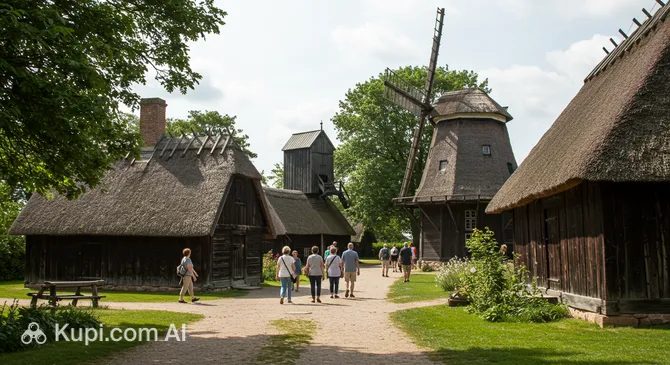
The Open Air Museum. Illustration.
Source: Kupi.com AI

Traveler photos:

A real medieval village stretches across more than 50 hectares, with various types of dwellings and outbuildings presented with historical accuracy. Here you will find peasant houses, an old school, an active church, wind and water mills, and many other structures characteristic of different regions and historical periods of Denmark, from 1650 to the present day.

A special feature of the Danish Open Air Museum is that every building here is authentic. They were all carefully dismantled at their original locations across the country, transported, and meticulously restored on the museum grounds. Thanks to this, not only the architectural features but also the authentic interior details are preserved, allowing guests to get the most complete picture of Danish life and traditions across different eras.

Walking through this museum is not just looking at exhibits, but a true immersion into the past. You can step inside the houses, see how workshops were set up, and imagine what daily life was like centuries ago. It is a wonderful opportunity for the whole family to learn more about the culture and history of Denmark in an engaging and visual way.

Contacts

To get the latest information on the Danish Open Air Museum's opening hours, ticket prices, and scheduled events, we recommend visiting the museum's official website. You can also find details at tourist information centers in Copenhagen or via the contact details provided on the attraction's official resources.

How to contactContact
AddressKongevejen 100, 2800 Kongens Lyngby, Denmark
Phone number+45 41 20 64 55
Websitenatmus.dk

What to Do

At the Danish Open Air Museum, your journey through time is not limited to just looking at the exteriors of old buildings. Feel free to step inside! You will have a unique opportunity to see authentic interiors and household items that tell the story of Danish life across different eras. Imagine how peasants lived, peek into the homes of wealthy townspeople or craftsmen, see the residence of a prosperous miller, or even the inhabitants of an almshouse. This will allow you to see firsthand the social differences and living conditions characteristic of Denmark over several centuries.

In addition to exploring historical buildings, the museum offers a rich cultural program. Here you can catch a theater performance, watch artisans demonstrating traditional crafts, and even take part in interactive programs. Especially vivid impressions await those who visit the museum during the holidays. For example, during the Christmas season, the atmosphere of an old-fashioned Danish Christmas is recreated: you will learn how it has been celebrated over the last 200 years, see traditional decorations, learn about ancient customs, and perhaps even try some festive treats.

Getting There

The Danish Open Air Museum is located about 15 kilometers northwest of central Copenhagen, in the Sorgenfri district. This makes it easily accessible for visitors to the capital of Denmark. There are several convenient ways to reach the museum and immerse yourself in the atmosphere of the past.

The most common option is to use public transport from the center of Copenhagen. First, you will need to take the S-tog train to Lyngby station. From Lyngby station, regular buses run to the museum, taking you directly to your destination. The entire journey usually takes a reasonable amount of time and allows you to enjoy views of the suburbs.

For those who value comfort and speed, a taxi or a rental car is a great choice. The drive from central Copenhagen to the museum typically takes about 20-30 minutes, though time may vary depending on traffic. Additionally, outdoor enthusiasts might consider cycling. Scenic bike routes pass through the woodlands surrounding Copenhagen, offering not just transportation but a pleasant ride in the fresh air on the way to the Danish Open Air Museum.

Nearest city: Copenhagen

History & Facts

The Danish Open Air Museum was founded in 1897 by the prominent Danish figure Bernhard Olsen, making it one of the oldest museums of its kind in the world. Its creation was part of a broader late-19th-century European movement aimed at preserving folk culture and traditions. Olsen's primary mission was to safeguard Denmark's unique rural heritage so that future generations could see and understand how their ancestors lived.

Over its century-long history, the museum has expanded significantly. Today, its impressive collection includes dozens of historical buildings, carefully selected and transported from various regions of Denmark, including remote islands and provinces. Each structure in the museum has its own unique story and represents a specific period and corner of the country. Special attention was paid not only to architectural features but also to the detailed recreation of authentic interiors—from furniture and household items to working tools—allowing visitors to gain a complete picture of everyday Danish life in the past.

Nowadays, the Danish Open Air Museum, also known as Frilandsmuseet, plays a key role in preserving Denmark's cultural heritage. It is not only a popular tourist attraction in Copenhagen and its surroundings but also an important educational center. The museum hosts research in history, architecture, and ethnography. It continues to evolve, regularly adding to its collection and improving visitor programs, while always staying true to its main goal of preserving and promoting Denmark's rich cultural heritage.

Time Needed

When planning a visit to the Danish Open Air Museum, it's worth considering its impressive size and the richness of the exhibits. To get a general overview and see the main highlights, we recommend setting aside at least 3-4 hours. This will allow you to take a leisurely stroll through the museum's extensive grounds, which span over 50 hectares, and peek into the most interesting historical buildings.

However, if you want to truly immerse yourself in the atmosphere of the past, visit all the available houses and farm buildings, take part in interactive programs, or watch a performance at the local theater, you should definitely plan to spend a full day there. This is especially relevant if your visit coincides with special events or holidays, such as the Christmas program, when the museum offers an expanded schedule and a unique atmosphere.

Working Hours

The Danish Open Air Museum generally follows a seasonal schedule typical for museums of this type. It is usually open to visitors during the warmer months, roughly from spring to autumn, and may be closed or operate on a reduced schedule during the winter months. Opening hours may also vary depending on the day of the week and the season.

Since exact information on opening hours and ticket booking requirements may change, it is highly recommended to check the official website of the Danish Open Air Museum or contact the museum administration directly before your visit. This will ensure you get the most up-to-date information and can plan your visit effectively, especially if you are visiting during the peak season or for special events.

DayOpening hours
MondayClosed
Tuesday10:00 – 16:00
Wednesday10:00 – 16:00
Thursday10:00 – 16:00
Friday10:00 – 16:00
Saturday10:00 – 16:00
Sunday10:00 – 16:00

Nearby

A visit to the Danish Open Air Museum is a fascinating journey into the history and culture of Denmark in its own right. However, to make your trip to Copenhagen even more rewarding and memorable, it's worth checking out other interesting places nearby. Exploring the surroundings will allow you to dive deeper into the atmosphere of this amazing city and its suburbs, discovering new facets of Danish life.

Near the museum and within a short trip, you will find both natural beauty and other cultural sites that can complement your experience of the capital of Denmark. Below is a list of some attractions that might interest you, along with the approximate distance from the Danish Open Air Museum.

NameDistance
Søborg Aquarium5.3 km
Bakken5.6 km
Bellevue Beach6.4 km
National Gallery of Denmark12.1 km
Rosenborg Castle12.3 km
The Little Mermaid12.4 km
Manon Les Suites12.5 km

Have you reached the end of the page?

So the route has been studied inside and out