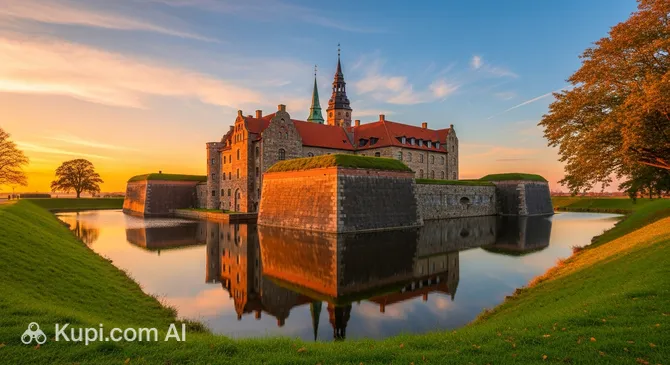
Imagine one of the oldest and most significant fortifications in Northern Europe. Nyborg Fortress (Nyborg Slot) is a majestic medieval monument located on the picturesque island of Funen in the city of Nyborg. Built in the 12th century, this stone citadel served for centuries as a reliable shield protecting Denmark from naval raids and controlling the Great Belt Strait.
Nyborg Fortress. Illustration.
Source: Kupi.com AI
Traveler photos:
The name of the structure translates as "New Castle", which sounds ironic for a building with a nearly thousand-year history. During its heyday, the fortress was not only a military site but also a political center where the first Danish parliament gathered. Massive walls, deep moats filled with water from the Vindinge River, and austere architecture make it an outstanding example of fortification art.
Today, Nyborg Fortress is a unique open-air museum and a symbol of Danish statehood. It is among the country's three most important historical fortifications, alongside Copenhagen and Fredericia. Visitors are drawn here by the rare opportunity to touch authentic 12th-century stones and feel the power of ancient defensive systems.
Contacts
To clarify visit details or book a tour, you can use the official contact information. The administration of Nyborg Fortress is always ready to assist tourists with up-to-date information on current exhibitions.
The main object of attention when visiting the fortress remains Knud's Tower — a rare example of original 12th-century architecture that has survived to this day. By climbing the defensive ramparts and bastions designed by the famous engineer Henrik Rüse, you can appreciate the scale of the fortification system and imagine how the castle's defenders stood guard centuries ago.
Inside the residential part of the castle, guests will find the magnificent Knights' Hall, the appearance of which was restored in the style of the 1550s for King Christian III. Here you can see massive wooden ceiling beams and a detailed scale model of the castle, showing what the citadel looked like during its period of greatest power. Each room of the museum is filled with artifacts telling the story of the daily lives of monarchs and soldiers.
The surrounding area of the fortress is ideal for leisurely walks along the deep moats. Exploring the outer defensive perimeter allows you to see the remains of the powerful fortification system that once made Nyborg virtually impregnable. This place is perfect for both military history buffs and those who want to enjoy the atmosphere of medieval Denmark.
Getting There
Reaching this historic site is easy, as the city of Nyborg is a major transport hub. Regular rail services connect it to the country's largest cities, such as Copenhagen and Odense. After arriving at the station, the fortress can be reached on foot in just a few minutes, enjoying a stroll through the picturesque streets of the center.
For travelers by car, it is also very convenient: the distance from the Danish capital is about 150 kilometers, which takes approximately 1.5–2 hours of driving. Nyborg Fortress is located at Slotsgade 34, and there are parking spaces available for visitors nearby. A taxi from the city center or the station is another quick option, although the walking route allows you to better feel the atmosphere of the ancient port.
Nearest city: Nyborg
History & Facts
The history of this place is inextricably linked to the birth of Danish statehood. Erected around 1170 by order of King Valdemar I the Great, the fortress became a strategic stronghold for protecting the Great Belt strait. For centuries, the fate of the kingdom was decided here: the castle served as the meeting place for the Danehof — the medieval parliament where the high nobility and clergy gathered.
The most iconic event took place within the castle walls in 1282. King Eric V Glipping signed Denmark's first constitution here — the "Great Charter" (Håndfæstning). This document obliged the monarch to consult with the aristocracy when making key decisions, which was a vital step toward forming a rule-of-law state in Northern Europe. In total, 25 such fateful assemblies were held in Nyborg.
The castle's architectural appearance changed with the eras. In the 15th century, King Hans significantly expanded the living quarters, and later, in the 16th century, Christian III transformed the fortress into a then-modern defensive complex. Although the castle suffered severely during the Swedish siege in 1659 and subsequent wars, a large-scale restoration in the early 20th century restored its former grandeur and turned it into one of the country's most interesting museums.
Time Needed
To explore all the hidden corners of the medieval fortification without rushing, a typical visitor will need about 2–3 hours. This time is quite sufficient to see Knud's Tower, walk through the ancient halls, and appreciate the power of the ramparts surrounding the castle.
If you are a true history enthusiast and plan to study the museum exhibits in detail, examine the models, and dive into archival facts about the Danehof, you should allocate 4–5 hours for the visit. Don't forget to leave some time for a walk through the adjacent territory, which is especially picturesque in sunny weather.
Working Hours
At present, the territory around the fortifications and the outer defensive ramparts of Nyborg Fortress are accessible for viewing 24/7, any day of the week. This provides an opportunity to walk by the castle walls and admire its architecture even in the evening, when the decorative lighting is turned on.
However, keep in mind that the castle's interior museum spaces and themed exhibitions have their own operating schedules, which may vary depending on the season. Before planning your visit, be sure to check the official website of the attraction to confirm tour times and the availability of the Knights' Hall.
Open 24 hours
Nearby
A stroll around the ancient fortifications is just the beginning of your acquaintance with the region's historical heritage. The surroundings of the castle are literally steeped in the atmosphere of the past, and visiting nearby locations will help you form a more complete picture of how medieval Denmark lived and defended itself.
Most points of interest are within walking distance, making it easy to plan a rich walking itinerary. The table below lists the most notable sites located in the immediate vicinity of the fortress.