Support

Nyborg

About

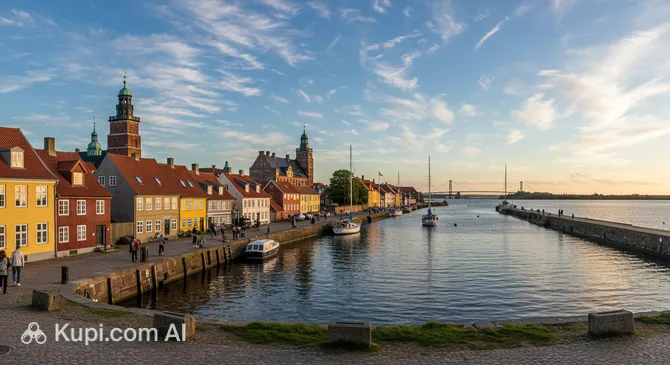
Nyborg is a true Danish gem, cozily nestled on the eastern coast of the island of Funen, right by the Great Belt Strait. The city essentially greets travelers descending from the famous bridge that connects the island with Zealand. This is where Denmark reveals its most picturesque side: Nyborg embraces the shores of a small bay, offering fairy-tale views of old houses and towers from the water.

Nyborg. Illustration.
Source: Kupi.com AI

With a population of about 17,500, the city maintains an atmosphere of intimate, almost family-like comfort while remaining an important hub for East Funen. Life here flows slowly: locals enjoy strolling along the embankment, taking in the sea breeze, while the urban environment pleases the eye with a harmonious blend of different eras.

The city's main pride is its majestic medieval castle, surrounded by quarters of beautifully preserved townhouses. The fascinating history of Nyborg intertwines here with modernity: right next to ancient walls, you can find atmospheric coffee shops and the unique "KinoVino" cinema, where watching the latest film releases is paired with tapas tastings.

Nyborg serves as an excellent starting point for further travels around the island. It is worth a visit for anyone wishing to feel the Viking spirit, the romance of a seaport, and the charm of a small European town, especially during the summer season when the city comes alive with festivals and fairs.

Weather Overview

The climate in Nyborg is shaped by its proximity to the sea, which ensures mild weather without sharp temperature fluctuations. Summer here is moderately warm and is considered the most comfortable time for travel. In July and August, the average daytime temperature reaches +21°C, creating ideal conditions for walks, while nights remain fresh with readings around +14...+15°C.

Winter months are characterized by cool temperatures, but thanks to the sea air, severe frosts are infrequent. In January and February, the air warms up to an average of +4...+5°C during the day, while the average night temperature stays around +1.5°C. Spring and autumn offer a smooth transition: as early as May, daytime temperatures are around +15.7°C, and September often pleases with pleasant warmth with average daytime values around +17.8°C.

When planning your trip, it's worth considering that Danish weather is changeable, and rain is a regular occurrence. On average, 10 to 14 days per month may have precipitation, so waterproof clothing and an umbrella will be useful at any time of year. To plan your wardrobe accurately, we recommend checking the current weather in Nyborg for the dates of your visit in advance.

Average monthly temperature

Average monthly precipitation

Interesting Facts

In addition to its well-known historical monuments, Nyborg hides many fascinating details that make it unique even by the standards of history-rich Scandinavia.

Nyborg Castle. Illustration.
Source: Kupi.com AI

Traveler photos:

  • Nyborg is the factual cradle of Danish democracy. It was here in 1282 that King Erik Glipping signed the country's first-ever constitution, which for many years secured the city's status as the most important political arena of the medieval kingdom.

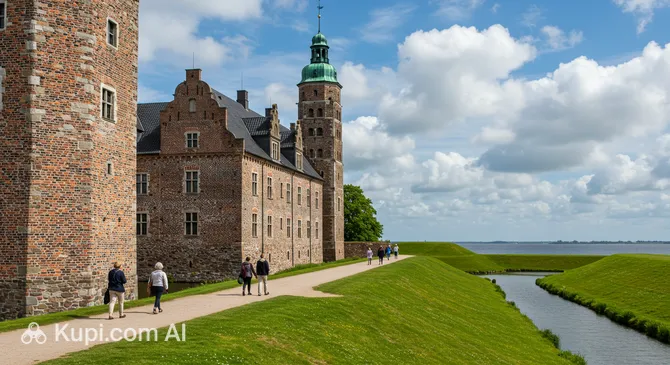
  • The legendary Nyborg Castle is one of the oldest surviving royal castles in Denmark. Its impressive bastions and ancient earthworks are so well preserved that a walk along them transports guests straight into the Middle Ages.

  • In the city center lies an architectural gem—Mads Lerche's House (Mads Lerches Gård), built in 1601. This building, with its signature bright red walls, is officially considered the oldest house in Nyborg.

  • The locals know how to combine art with gastronomy: the city features the unique "KinoVino" cinema. It is not just a hall for watching movies, but a cultural space where screenings are accompanied by tastings of fine wines and traditional tapas snacks.

  • Just a few kilometers from the city, at the Ladby Museum, lies Denmark's only Viking ship burial. Here, you can see a real drakkar that became the final resting place of an ancient chieftain and touch the mysteries of Scandinavian seafarers.

How to Get There

Located in the heart of Denmark, Nyborg is an important transport hub connecting the island of Funen with Zealand. Thanks to the Great Belt Bridge, the city is easily accessible by both car and public transport. You can find more details on how to get to Nyborg by studying all available routes and schedules.

There is no airport in the city of Nyborg itself, but you can fly into Copenhagen (CPH) in the city of Copenhagen, which is about 122 km from Nyborg. This is the country's largest international aviation hub, receiving flights from all over the world. From the airport, you can reach Nyborg by direct train, which takes just over an hour, or by car.

An alternative for travelers is Billund Airport (BLL), located in the city of Billund, about 114 km from Nyborg. This is Denmark's second-largest airport, convenient for those planning to visit western Denmark or Legoland. The journey from here by taxi or rental car will take about 1.5–2 hours.

For convenience, here is summary information on the main airports:

AirportPassenger trafficDistance
Sonderborg Airport74 00076 km
Aarhus Airport542 958109 km
Billund Airport4.0 mln114 km
Copenhagen Airport29.9 mln122 km
Esbjerg Airport47 000144 km

Traveling by rail is one of the most comfortable ways to reach the region. A key transit point for many tourists is Copenhagen Central Station, located in the city of Copenhagen, 118 km from Nyborg. High-speed trains depart regularly from here, passing through Nyborg towards Odense and mainland Denmark.

Another significant transport hub is Aarhus H Station in the city of Aarhus, located about 99 km from Nyborg. This is an important point for those traveling from northern Jutland. The railway service in Denmark is known for its high precision and comfort, so the trip from these major stations to Nyborg will be fast and pleasant.

Below is information on the major railway stations convenient for planning your route:

StationPassenger trafficDistance
Aarhus H Station6.3 mln99 km
Copenhagen Central Station36.5 mln118 km
Malmö Syd Station8.3 mln140 km
Malmö Central Station17 mln143 km
Helsingborg Central Station8.8 mln144 km

Main Attractions

Nyborg is a city where history comes alive at every step. Its compact historical center is perfect for walking, allowing tourists to immerse themselves in the atmosphere of medieval Denmark. Unique architectural monuments have been preserved here, telling of the times when this city was the kingdom's political center.

The undisputed dominant feature and heart of the city is Nyborg Castle. This is the oldest surviving royal castle in Scandinavia, founded as far back as the 12th century. For centuries, it was the meeting place of the Danehof—the first Danish parliament, which made the most important decisions for the country. Visitors can explore the grand halls where kings once feasted and walk along the preserved defensive ramparts, which offer panoramic views of the city.

Nyborg Castle. Illustration.
Source: Kupi.com AI

Traveler photos:

Located right next to the castle is another architectural jewel—Borgmestergården (The Mayor's Yard). This is a magnificent example of a Renaissance merchant's house with its characteristic bright red facade and half-timbered construction. Today, the building houses a branch of the Museum of East Funen, where you can learn about the lives of wealthy townspeople from past centuries and see ancient interiors and collections of craft items.

It's impossible to miss the Church of Our Lady (Vor Frue Kirke), whose spire is visible from many points in the city. The church was built at the end of the 14th century and is a beautiful example of Gothic architecture. Inside, a peaceful atmosphere reigns; look out for the wrought-iron gates, the ancient pulpit, and the impressive chandeliers. The church still plays a vital role in the community's life, and its bells are an integral part of Nyborg's soundscape.

For lovers of quiet walks in the fresh air, the Nyborg Ramparts (Nyborg Vold) are the ideal spot. This is a vast green zone surrounding the historical center that once served as a reliable defense for the city. Today, it is a picturesque park with shaded alleys and ponds, where open-air theatrical performances known as "Plays on the Ramparts" are often held in the summer.

Local Cuisine

The culinary life of Nyborg is a harmonious union of maritime traditions and the cozy rustic cuisine of the island of Funen. Since Denmark is famous for its careful treatment of local products, the main rule applies here: fish and seafood must be perfectly fresh. In local establishments, you should definitely order oysters, mussels, or shrimp, but a special favorite is traditional smoked fish, whose aroma is unmistakable.

The gastronomic hallmark of the region is smørrebrød—an open-faced sandwich elevated to the level of art. A slice of rye bread is generously decorated with herring, roast beef, or egg, creating a hearty and beautiful dish. For those who prefer hot food, the ideal choice is "stegt flæsk"—crispy fried pork belly served with boiled potatoes and a thick parsley sauce. This dish is considered a national pride and the embodiment of home comfort.

Special attention in Nyborg is paid to seasonality. In spring and summer, restaurant menus are filled with dishes made from new potatoes, fresh vegetables, and fragrant herbs. Those with a sweet tooth should visit farmer's markets or cafes for the famous Danish ice cream. It is said that the nearby town of Kerteminde makes some of the best treats in the country, for which many tourists are willing to travel a few extra kilometers.

The drinking culture here keeps pace with the food. A traditional lunch with herring is usually accompanied by ice-cold schnapps (aquavit) and local beer. During the summer season, when the city comes alive with gastronomic festivals, the streets are filled with the aromas of food, and apple cider sparkles in glasses. These festivals are a great opportunity not only to eat well but also to chat with locals while enjoying the atmosphere of real "hygge."

Travel Tips

Welcome to Nyborg! To ensure your journey to this historical corner of Denmark is as comfortable and hassle-free as possible, we have prepared a list of useful practical recommendations to help you plan your trip and avoid common mistakes.

  1. Clothing and Essentials. Nyborg is located right by the Great Belt Strait, so it's often windy here. The main principle in clothing is layering. Even in summer, be sure to bring a windproof jacket and a light scarf. Since the historical center is paved with cobblestones, leave high heels at home and opt for comfortable sneakers or flat shoes. Don't forget a universal travel adapter (Type K or C), although standard European plugs fit in most hotels.
  2. Transport. The city center is compact and best explored on foot. For trips around the outskirts or to the beach, a bicycle is the ideal option—it's the most popular mode of transport in the country, and rental points are easy to find. Public transport consists of buses (FynBus), but they can run infrequently on weekends. Taxis are an expensive pleasure, so for short distances, it's better to use your feet or your two-wheeled friend.
  3. Finances. The official currency is the Danish Krone (DKK). Although some tourist spots may accept Euros, the exchange rate will be very unfavorable. Cashless payment is widespread here: Visa and Mastercard are accepted everywhere, from museums to street hot dog stands. Cash might only be needed in rare cases, such as at flea markets. Gratuities are usually already included in the bill, but rounding up the amount is considered good manners.
  4. Health and Safety. Nyborg is a very safe and quiet city where you can walk without worry even after dark. You can and should drink water straight from the tap—it's of excellent quality here. Pharmacies (Apotek) usually work until 17:30 on weekdays and close early on Saturdays; 24-hour on-duty pharmacies are only found in large neighboring cities, like Odense. The emergency number is 112.
  5. Communication. You won't face a language barrier: almost all locals, from school children to retirees, speak English fluently. However, Danes will appreciate it if you learn a few words: "Hej" (Hi) and "Tak" (Thanks). Free Wi-Fi is available in many cafes, the library, and on trains. For mobile communication, it's convenient to buy a prepaid SIM card (e.g., Lebara or Lycamobile) at 7-Eleven supermarkets or kiosks.
  6. Local Etiquette. Residents value personal space and restraint. When entering a shop or bus, it's customary to greet the staff or driver. In public places, try not to be noisy and behave calmly. An important detail: people here are very punctual, so if you have a table or excursion booked, arrive exactly on time.
  7. What to Avoid. The most important rule: never walk on bike paths! This is sacred territory for cyclists, and a pedestrian stepping into a bike lane can cause genuine indignation and even create a dangerous situation. Also, avoid crossing the road on a red light, even if no cars are on the horizon—it's customary here to strictly follow traffic rules.
  8. Additional Tip. Keep in mind shop working hours. Unlike in many countries, supermarkets and boutiques here often close quite early (around 17:30–18:00) on weekdays and may have shorter hours (until 14:00) or be closed on Sundays. Plan your shopping and grocery runs in advance, especially for the weekend.

Nyborg is a welcoming city where it's easy to feel at home. By following these simple tips, you can focus on the main thing—enjoying the atmosphere of the ancient royal capital, walking along the fortress ramparts, and contemplating the seascapes.

Entertainment & Nightlife

Nightlife in Nyborg isn't about noisy metropolises and endless raves; it's about comfort, the "hygge" atmosphere, and soulful conversations over a glass of a good drink. Evening entertainment is concentrated around the historical center and the picturesque harbor, where old architecture provides the perfect backdrop for a relaxing break. Local establishments focus more on relaxed socializing than dancing until dawn, making the city a great place for romantic dates or meeting friends.

The epicenter of the city's cultural and evening life is the Bastionen cultural center. This historical building, surrounded by fortress ramparts, serves as the main stage for live music concerts, stand-up shows, and theatrical productions. Here, you can listen to both local jazz performers and popular Danish bands. The atmosphere is casual, and the crowd is quite diverse—ranging from young people to respectable couples.

For those who prefer a more intimate setting, the unique KinoVino is an excellent choice. This is a hybrid of a cinema and a wine bar, where watching the latest film industry releases can be combined with tasting excellent wines and tapas snacks. Also, in the city center on the pedestrian streets, you can find classic Danish "bodegas" (pubs), where locals like to have a pint of beer after work. The dress code in most places is casual, as comfort and simplicity are valued here.

In terms of safety, Nyborg is one of the quietest cities in the region. Walking through the streets at night is completely safe; however, keep in mind that public transport runs infrequently at night. If you stay out late, it's better to find the number of a local taxi service in advance, as catching a car on the street can be problematic. Prices for alcohol and entertainment are in line with the general Danish level, meaning they are higher than the European average, so many tourists prefer to start the evening with dinner at one of the harbor restaurants.

The daytime entertainment program in the city is inextricably linked to its rich past. The main attraction remains Nyborg Castle, around which historical festivals and fairs are often held, often spilling over into evening festivities. Additionally, during the day, you can visit local galleries or take a walk along the coast to enjoy views of the Great Belt Strait.

Nyborg Castle. Illustration.
Source: Kupi.com AI

Traveler photos:

Parks & Museums

Nyborg is a city where discovering a rich historical past can easily be alternated with relaxed relaxation in nature. Green zones here are inextricably linked to the architectural landscape, and museums offer not just a look at exhibits, but a true immersion into the era of medieval kings and merchants.

The city's main green artery is the Ramparts (Nyborg Vold). This is a unique monument of landscape design where former defensive structures have been transformed into a picturesque circular park. Cozy walking paths have been laid out here, surrounded by centuries-old trees and canals that reflect the sky. It's the perfect place for a morning jog or a leisurely picnic with a view of ancient towers.

For those who prefer seascapes, the coast of the Great Belt Strait will be a real discovery. The city's beaches in Nyborg are famous for their clean water and soft sand. A walk along the shoreline provides not only fresh sea air but also a breathtaking view of the grand Great Belt Bridge—an engineering marvel connecting the islands. In summer, the area is full of life, while in the off-season, it attracts lovers of silence and meditative wave-watching.

The central place among cultural institutions is held by Nyborg Castle. As a museum, it offers visitors a unique opportunity to walk through the halls where the first Danish parliament—the Danehof—once sat. The exhibition tells of the city's political role in the Middle Ages, and the authentic interiors allow you to feel the spirit of royal power.

Nyborg Castle. Illustration.
Source: Kupi.com AI

Traveler photos:

Another important spot on the cultural map is Borgmestergården (The Mayor's Yard). This museum, housed in a magnificent half-timbered building from 1601, is dedicated to the history of everyday life and trade. Here, you can see reconstructed interiors of a merchant's house, ancient costumes, and household items that tell the story of how city dwellers lived several centuries ago. The museum often hosts interactive exhibitions that are interesting for both adults and children.

Among the architectural monuments, the old Dyrehave Mill (Dyrehave Mølle) is worth noting as one of the city's symbols. This majestic structure, towering over the surroundings, serves as a reminder of the region's agricultural past and provides an excellent backdrop for photographs.

Insider Tip: If you want to see the city from an unusual perspective, head to the old water tower near the ramparts. Although access inside may be limited, the area around it is a quiet and atmospheric corner known to few tourists, ideal for a short break away from the hustle and bustle.

Getting Around

Nyborg's transport system is characterized by Scandinavian punctuality and comfort, although the city itself is so compact that most tourist routes through the historical center can be easily covered on foot. Nevertheless, for trips to outlying areas, resort zones, or beaches, public transport will be a reliable aid.

The core of urban mobility is the buses operated by the regional company FynBus. The route network connects the railway station, the city center, and residential areas. The buses are modern and comfortable, but keep in mind that intervals may increase in the evenings and on weekends. Boarding is through the front door, and exiting is through the middle or rear door.

Nyborg Railway Station plays the role of a key hub. Trains from the state company DSB not only connect the city with major metropolises but also serve as a quick way to reach the nearest suburbs. A train ride is often faster and more comfortable than a bus if your destination is near the railway line.

The fare payment system is unified and may seem unusual to newcomers. The most convenient option for tourists is to use mobile apps such as RejseBillet or FynBus Mobilbillet. In these, you can purchase single tickets or day passes. Cash payment to the bus driver is possible but is gradually becoming a thing of the past: only coins and small bills are accepted, and the ticket price may be higher than in the app.

The cost of travel depends on the number of zones crossed. Nyborg and its immediate surroundings usually fit into one or two zones. A ticket is valid for a certain period (usually about an hour for the minimum fare), during which you can transfer from bus to train and back without extra charge. Be sure to keep your ticket until the end of the journey to present to inspectors.

The most popular and authentic alternative to motors is the bicycle. The city is interlaced with a network of safe bike paths, and two-wheeled transport here has absolute priority on the road. Rental points can be found at the station and in the center, and many hotels offer bicycles to their guests. This is the ideal way to get to the castle or ride along the strait's coast.

Taxis in the city are represented by several operators (e.g., Dantaxi), but prices are quite high. It's customary to order a car by phone or via an app; catching a taxi on the street is almost impossible. Car-sharing services are poorly developed in Nyborg, so for independent travel, it's better to consider classic car or bicycle rental.

The main hack for a tourist is using the free app or website Rejseplanen (Journey Planner). This service combines all types of transport, builds optimal routes in real-time, shows current delays, and calculates the exact cost of the trip. Without it, navigating the schedule can be difficult.

Accommodation

The choice of accommodation in Nyborg, though not as vast as in major metropolises, is characterized by high quality and a variety that can satisfy the needs of different categories of travelers. The city offers a harmonious blend of historical inns, cozy Bed & Breakfasts (B&Bs), modern resort complexes, and well-equipped campsites. Here, you can find atmospheric rooms in old buildings as well as functional apartments for family vacations.

In terms of location, two main areas are considered the most popular and convenient. The first is the historical center. Staying here puts you in the heart of the old town, within walking distance of atmospheric cobbled streets, restaurants, and the main attraction—the majestic Nyborg Castle. This is an ideal option for those who plan to do a lot of walking and want to soak up the medieval spirit.

The second popular area is the Great Belt coast. Larger hotels and resort centers are located here, along the beachfront and near the forest. This area is chosen for its stunning sea views and the famous bridge, as well as direct access to the beaches. In summer, it is especially pleasant to enjoy the sea breeze, and many hotels offer bicycle rentals for rides along the shore.

The price range in Nyborg corresponds to the general price level in Scandinavia: from medium to high. Budget travelers should look into hostels or campsites, which in Denmark are known for their cleanliness and comfort. For those seeking more privacy, renting a summer house (sommerhus) in the city's outskirts is an excellent option—a very popular way to vacation among the Danes themselves.

Booking Tip: Nyborg is a popular destination during the summer season (July-August) and during national holidays. Additionally, due to its convenient location in the center of the country, conferences and weddings are often held here. Therefore, it is strongly recommended to book accommodation in advance, preferably several months before your trip, to guarantee the best choice and prices. You can use major international online platforms or the hotels' own websites for this.

Nearby Cities

For those who want to explore the surrounding area, Nyborg serves as an excellent starting point for day trips to several interesting nearby locations:

Just a half-hour drive away is Odense—the birthplace of the famous fairy-tale writer Hans Christian Andersen. It is the country's third-largest city, where the cobbled streets of the historical quarter sit alongside modern parks and museums. A trip here will allow you to immerse yourself in the world of fairy tales and visit one of the best zoos in Europe.

If you cross the Great Belt Strait, you can visit Slagelse. This city is an important commercial center for the region, but its main appeal for tourists lies in its history. Nearby is the famous Trelleborg Viking ring fortress, a UNESCO World Heritage site.

Slightly further west is Fredericia—a unique fortress city surrounded by some of the best-preserved defensive ramparts in Northern Europe. A walk along the bastions will provide not only historical impressions but also magnificent views of the Little Belt Strait.

CityPopulationDistance
Korsor14 70222 km
Odense180 86327 km
Svendborg27 30031 km
Slagelse34 63636 km
Kalundborg16 49044 km

These nearby destinations offer an insight into the region's diverse culture and landscapes, perfectly complementing the experience of visiting Nyborg.

Shopping & Souvenirs

Shopping in Nyborg is a calm and pleasant activity, devoid of the hustle and bustle of huge metropolises. The city does not claim the title of fashion capital but charms with its "hygge" atmosphere. Here, the process of buying turns into a leisurely stroll along ancient cobbled streets, where modern brands sit alongside the cozy shops of local artisans. It's the perfect place to find unique Scandinavian-style interior items, high-quality clothing, and gastronomic souvenirs from the island of Funen.

The heart of the city's commercial life is the pedestrian streets in the historical center, primarily Kongegade (King's Street) and its adjacent alleys. This zone is closed to cars, allowing tourists to move comfortably between clothing boutiques, bookstores, and home goods stores. Here, you'll find branches of popular Danish chain brands as well as independent shops where owners personally greet customers and are ready to tell the story behind every item.

Unlike larger cities, Nyborg's center has no giant indoor malls. The entire historical center functions as one large open-air shopping district. However, on the outskirts of the city, you can find larger supermarkets and "big box" format stores with electronics and garden goods, which are convenient for those traveling by car and planning more substantial purchases.

Special attention should be paid to the local markets that liven up the Torvet city square. On market days, farmers from all over East Funen gather here, offering the freshest vegetables, fruits, honey, and homemade cheeses. In the summer season, flea markets (loppemarked) are popular, often held near the harbor or close to landmarks. It's a great chance to find vintage Danish porcelain, silver, or old trinkets at a reasonable price.

When choosing souvenirs, it's worth looking at the work of local craftsmen. The island of Funen is called "the garden of Denmark," so gastronomic gifts here are beyond competition: be sure to buy a jar of local honey, marzipan, or the famous smoked cheese (rygeost) with cumin. Also, ceramics, glassware, designer candles, or textiles make excellent gifts. In the souvenir shop at Nyborg Castle, you can purchase high-quality replicas of historical jewelry, books, and medieval-style toys.

When planning a shopping trip, it's important to remember the Danish working hours. Most shops in the center are open from 10:00 to 17:30 or 18:00 on weekdays. On Fridays, some may stay open a bit longer, but on Saturdays, many close as early as 14:00 or 15:00. Sunday is traditionally a day off for boutiques, with only large grocery supermarkets and bakeries remaining open. Payment is made by bank cards (Visa, Mastercard) almost everywhere; cash might only be needed at a flea market.

Tourists residing permanently outside the EU can take advantage of the Tax Free system when purchasing goods over a certain threshold (usually 300 DKK) in one store. Look for Global Blue stickers in the windows or ask sellers for a Tax Free Form, which you will need to present at customs when leaving the EU to receive a VAT refund.
Reached the end of the page?

That means the route is fully explored