Support

Fredericia

About

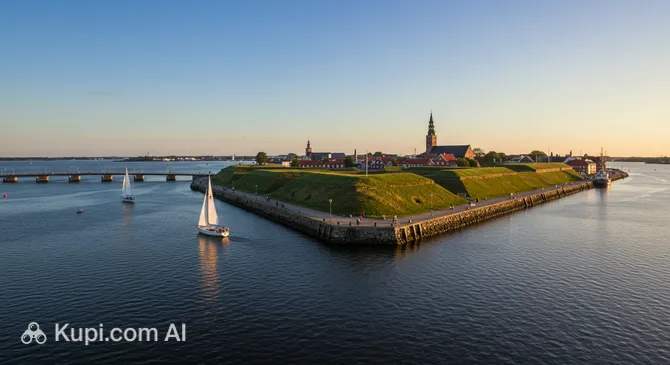
Fredericia is a cozy and atmospheric city sprawling on the western shore of the picturesque Little Belt strait. Thanks to its unique geographical location, it serves as a vital link between the Jutland peninsula and the island of Funen. Denmark is known for its scenic port towns, and Fredericia, with a population of about 41,000, is a prime example, combining the dynamics of a major transport hub with the tranquility of coastal life.

Fredericia. Illustration.
Source: Kupi.com AI

The city was founded in 1650 by order of King Frederick III and was originally intended as an impregnable fortress. The fascinating history of Fredericia is still clearly visible in its architectural appearance: the strict street layout and perfectly preserved earthen ramparts surrounding the center have become the city's trademark. Today, these ancient bastions have been transformed into a popular place for walks, offering magnificent views of the surrounding area.

In addition to its historical heritage, Fredericia attracts tourists with its modern waterfront and impressive bridges connecting the city to the neighboring island. Here, you can spend hours watching the life of the port, enjoying the fresh sea air, and looking for the famous Danish "hygge" in local cafes and on the green alleys of the parks. This place is ideal for those who want to feel the authentic spirit of the country and enjoy the harmony of nature and history.

Weather Overview

The climate in the city is temperate and heavily influenced by the sea, which makes temperature fluctuations quite gradual. Summer in Fredericia is mild and comfortable for long walks: in the warmest months, July and August, the average temperature is around 16–17°C, and during the day, the air often warms up to a pleasant 20–21°C. This is the best time to explore the city; however, remember that even in summer, rain is not uncommon, and the number of rainy days remains at 12–14 per month.

Winters here are cool but generally without severe frosts. In January and February, the thermometer fluctuates between +1°C and +5°C. The current weather in Fredericia can be changeable due to winds from the Little Belt strait, so layered clothing will be useful in any season. Precipitation falls evenly throughout the year, and tourists should be prepared for overcast or rainy days occurring 11 to 15 times a month.

Expect a moderately warm summer with occasional rain and cool, damp winters with temperatures slightly above freezing.

Average monthly temperature

Average monthly precipitation

Interesting Facts

In addition to its main architectural monuments, Fredericia holds many fascinating secrets and unique historical features that make this city truly special. Its past is filled with bold royal decisions and the heroic deeds of local residents.

  • A City of Freedom and Privileges. From its very founding in 1650, Fredericia received a unique status. To attract settlers to the new fortress city, the king granted residents exemption from taxes and the right to freedom of religion. Thanks to this liberal approach, the city quickly became a multicultural center where representatives of various faiths lived together peacefully.

  • A People's Monument. The famous "Foot Soldier" (Landsoldaten) monument, erected in honor of the soldiers of the Danish-Prussian War, is not just a symbol of victory, but also an embodiment of the unity of the townspeople. Notably, the funds for the creation of this sculpture were raised by the residents of Fredericia themselves, making it a unique example of public gratitude to its defenders.

  • Living History of Fortifications. The city's ramparts are considered among the best-preserved defensive structures in all of Northern Europe. Today, these historical fortifications have been transformed into a picturesque park area: a walk along the ramparts allows you not only to touch the past but also to enjoy magnificent panoramic views of the strait and the old quarters.

Oven Vande by the Ramparts. Illustration.
Source: Kupi.com AI

Traveler photos:

How to Get There

Fredericia is a major transport hub in Denmark, making a trip here convenient from almost anywhere in the country or Europe. The city has excellent connections thanks to its proximity to major airports and a well-developed railway network. You can find more details on how to get to Fredericia by exploring various routes and choosing the most suitable one for your journey.

The primary way for international tourists to arrive remains air travel followed by a transfer. The nearest and most significant air hub is Billund Airport (IATA: BLL). It is not located in Fredericia itself, but in the town of Billund, about 42 km away. It is the country's second-largest airport, receiving many international flights. The journey by taxi or rental car will take about 40–50 minutes. Buses also run between the airport and Fredericia, making this option very practical.

An alternative option could be Aarhus Airport (IATA: AAR), located in the city of Aarhus, approximately 98 km from Fredericia. This is a regional airport that suits those arriving on specific European flights. The drive from here to Fredericia takes about 1 hour and 20 minutes. Although it is further away than Billund, it can be a convenient entry point for some routes.

For convenience, here is a summary of the main airports:

AirportPassenger trafficDistance
Billund Airport4.0 mln42 km
Sonderborg Airport74 00067 km
Esbjerg Airport47 00076 km
Aarhus Airport542 95898 km
Westerland - Sylt Airport125 745116 km

Railway connections in Denmark are very well developed, and trains are often the choice of travelers who value comfort and scenic views. One of the key hubs through which tourists often plan their route is Copenhagen Central Station. It is located in the country's capital, Copenhagen, about 177 km from Fredericia. Trains from many European countries arrive here, as well as express trains from Kastrup Airport. A direct train or a trip with a transfer to Fredericia will take about 2 hours.

Another important station in the region is Aarhus H Station, located in the city of Aarhus, 70 km from the destination. It is a major transport hub serving millions of passengers annually. If your route passes through Aarhus, you can reach Fredericia by regional train in less than an hour. Fredericia also has its own railway station, which connects these major hubs to the city center.

Below is information about the nearest major railway stations:

StationPassenger trafficDistance
Aarhus H Station6.3 mln71 km
Aalborg Railway Station2.2 mln165 km
Copenhagen Central Station36.5 mln178 km
Helsingborg Central Station8.8 mln192 km
Malmö Syd Station8.3 mln204 km

Main Attractions

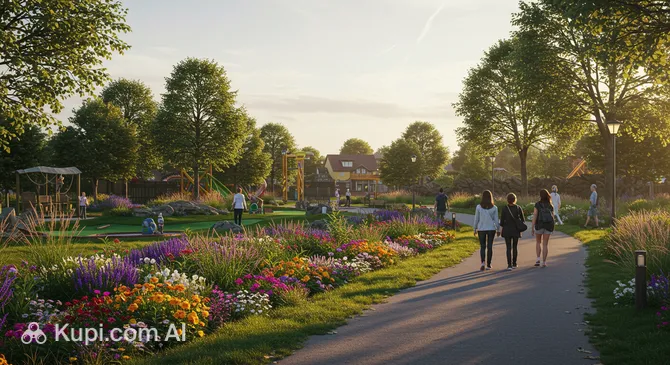
Fredericia offers guests more than just an immersion in military history; it provides plenty of opportunities for active family holidays. The city is famous for its entertainment centers and parks, which attract thousands of tourists every year, especially those traveling with children. Here, you can easily alternate walks along the ancient ramparts with fun at modern attractions.

One of the most beloved spots for locals and visitors alike is Madsby Play Park. This is a huge green area, considered one of the best free playgrounds in Denmark. The park is perfect for a family picnic and active games: it features a mini-zoo with domestic animals, boat rentals, a puppet theater, and the famous mini-train that runs through the territory. For children, it is a true paradise with numerous slides, swings, and tracks for "moon cars."

Madsby Play Park. Illustration.
Source: Kupi.com AI

Traveler photos:

If the weather is not suitable for outdoor walks, an excellent alternative is Fredericia Idrætscenter. This is a large sports complex, the jewel of which is the tropical water park. Inside, visitors can enjoy water slides, warm water pools, and relaxation areas with saunas and jacuzzis. This place allows you to feel the summer atmosphere even on a cool Danish day and is suitable both for swimming enthusiasts and those who just want to relax after sightseeing.

For young explorers fascinated by the prehistoric world, Dinoland will be a real discovery. This indoor play center immerses guests in the era of dinosaurs, offering many mazes, trampolines, and play areas styled like a Jurassic jungle. Here, children can release their energy while parents relax in the cafe, watching them play. The center is conveniently located and often becomes a lifesaver for tourists on rainy days.

Local Cuisine

Fredericia's culinary scene is a harmonious blend of ancient Danish traditions and modern culinary trends. Due to its location on the shores of the Little Belt, the local cuisine abounds with the freshest seafood. On restaurant menus, you will often find dishes made from smoked eel or fish caught literally that morning. The trademark of the city, as with the whole country, remains the famous smørrebrød — an open-faced sandwich that is turned into a true work of art here, topped with pickled herring, tender roast beef, or shrimp.

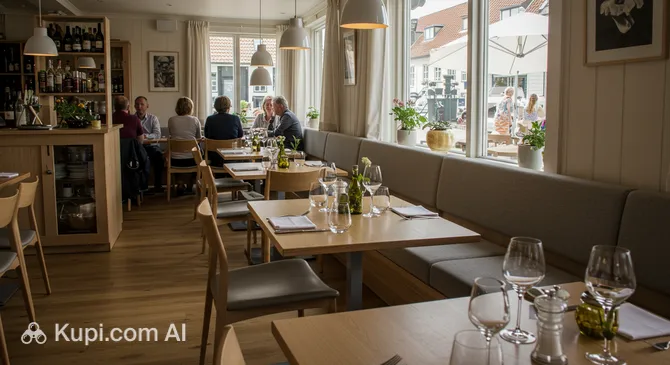
For those who want a hearty meal, it's worth ordering classic Danish meatballs (frikadeller) with potato salad or new potatoes with herbs and butter — a simple but incredibly tasty seasonal dish. To appreciate the skill of local chefs in a cozy atmosphere, you can visit the restaurant Mair's, where special attention is paid to the quality of ingredients and presentation.

Mair's. Illustration.
Source: Kupi.com AI

Traveler photos:

Those with a sweet tooth will remember Fredericia for the aroma of fresh pastries. Be sure to try a traditional rhubarb or apple pie, as well as the famous Danish cinnamon rolls, which perfectly complement a cup of strong coffee. Lovers of unusual taste sensations should venture to try salty licorice — a specific but very popular local treat.

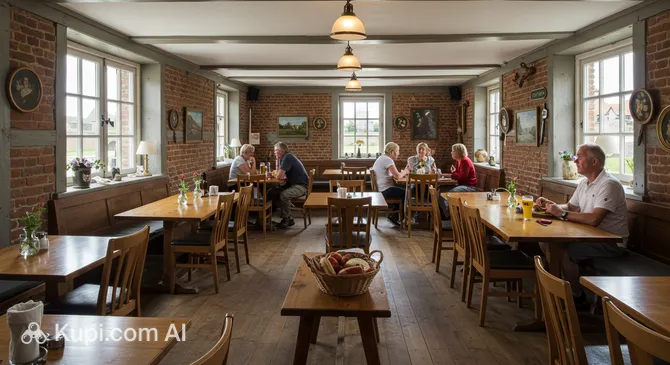
Street food here also deserves attention: hot dog stands serving Danish-style hot dogs (with crispy onions and pickled cucumbers) can be found in the central squares. In the evening, locals and tourists often gather in bars for a glass of local beer or ale. An excellent place for such relaxation is The English Pub, which features a friendly and laid-back atmosphere.

Travel Tips

Preparing for a trip to Fredericia doesn't require complex effort, but knowing a few local quirks will make your journey much more comfortable. We've compiled a list of practical recommendations to help you feel confident in this historic Danish city.

  1. Clothing and Essentials: The weather near the Little Belt strait is windy and changeable. The main principle for clothing is layering. Even in summer, it's worth bringing a light windbreaker and a sweater for the evenings. Be sure to bring comfortable, waterproof shoes: they will be useful for walking on the cobblestones of the old town and for climbing the earthen ramparts.

  2. Transport: The historical center of Fredericia is compact and best explored on foot. For slightly longer distances, renting a bike is ideal, as the cycling infrastructure here is excellently developed. Public transport consists of buses, but they do not run very frequently. Note that taxis in Denmark are expensive, so for your budget, it's better to rely on your feet or a bike.

  3. Finances: The local currency is the Danish Krone (DKK). Denmark is one of the most "cashless" countries in the world, so there's no need to exchange a lot of money. Bank cards are accepted almost everywhere: in museums, cafes, and even in small kiosks. Cash may only be needed in very rare cases at markets. Tips are usually already included in the bill, but rounding up the amount is welcome if you liked the service.

  4. Health and Safety: Fredericia is a calm and safe city. You can walk the streets in the evening without fear. You can and should drink water straight from the tap — it is of excellent quality here. Pharmacies are marked with the sign "Apotek," but note that there are few 24-hour pharmacies in smaller towns, so it's better to bring a basic set of medicines with you.

  5. Communication: Although the official language is Danish, almost all local residents, from teenagers to elderly people, speak excellent English. However, knowing a few phrases in Danish, such as "Tak" (thank you) or "Hej" (hello), is always warmly received and will help establish contact.

  6. Local Etiquette: Danes value personal space and restraint. It is customary to greet the salesperson when entering a shop. On escalators, stand on the right and pass on the left. And the most important rule: never walk on the bike lanes. For Danes, this is not just a marking, but a full-fledged transport artery, and a pedestrian on it causes genuine indignation among cyclists.

  7. What to Avoid: Do not cross the road on a red light, even if there are no cars on the horizon. In Denmark, this is considered a sign of bad manners and disrespect for the rules; plus, the fines for traffic violations by pedestrians are quite substantial.

  8. Shop Opening Hours: Be prepared for shops to close early. On weekdays, most outlets operate until 17:30 or 18:00, on Saturdays — until lunchtime, and on Sundays, many are closed. Supermarkets stay open longer, but it's better to plan your shopping for the first half of the day.

By following these simple tips, you can avoid minor mishaps and fully focus on the beauty of Fredericia. Enjoy the cozy atmosphere, the sea air, and Danish hospitality!

Entertainment & Nightlife

Fredericia's nightlife is characterized by restraint and that very Danish cozy atmosphere of "hygge" that is hard to find in noisy metropolises. You shouldn't expect large-scale raves or 24-hour discos here; instead, the city offers quality relaxation in pubs, gastropubs, and concert venues. Most evening activity is concentrated in the historical center inside the ramparts, where the most popular establishments are located.

The local crowd prefers a relaxed style of socializing over a glass of beer or a cocktail. The dress code in most places is casual: a casual style will be appropriate almost everywhere. The liveliest evenings are Friday and Saturday, when locals head out into the city after the work week. On weekdays, life quiets down quite early, and many establishments may close as early as midnight.

For lovers of classic bar culture and live socializing, the English Pub is a point of attraction. This place is famous for its wide selection of beers and ales, as well as sports broadcasts that gather noisy groups of fans. The traditional-style interior is perfect for long sessions, and on weekends, live music often plays here, creating a great mood for visitors to the city.

If you are looking for a more romantic setting or a place for an exquisite dinner that smoothly transitions into an evening cocktail, pay attention to the restaurant Oven Vande ved Volden. It is located in a picturesque spot by the harbor, and the evening lights reflecting in the water create a unique atmosphere. This establishment is excellent for those who want to enjoy a glass of wine in a quiet and elegant setting.

The city's cultural life also doesn't stop after sunset. The main magnet for music lovers is the Tøjhuset cultural center. Jazz, rock, and blues concerts, as well as stand-up shows, are regularly held here. It is a great alternative to bars for those who want to spend an evening enjoying live performances. For those who prefer silence, a walk along the Little Belt waterfront to the sound of the waves would be the perfect end to the day.

Parks & Museums

The cultural and natural landscape of Fredericia is unique in that its green zones are inextricably linked to the city's heroic past. A walk through the parks here often turns into a history lesson, and museums offer an interactive look at life in a fortress city. For tourists, this is an excellent opportunity to combine outdoor relaxation with educational excursions.

The city's main green artery and its pride are the Fortress Ramparts (Volden). These are among the largest and best-preserved defensive structures in Northern Europe, which today function as a massive public park. The area covers about 18 hectares and is ideal for leisurely walks or morning jogs. Climbing the grassy slopes, you will find yourself surrounded by centuries-old trees and can enjoy a panoramic view of the city's rooftops and the Little Belt strait. Ancient cannons are placed along the paths, adding to the atmosphere of the place.

For those who prefer relaxation by the water, Østerstrand is a true oasis. This is not just a city beach, but a full-fledged recreational zone awarded the Blue Flag for cleanliness. The park by the beach is equipped with barbecue areas, volleyball courts, and a cozy beach bar. The main feature of the site is the famous "Circle Bridge" — a wooden structure extending into the sea, which allows for sunbathing and swimming with maximum comfort. In summer, the place is buzzing with life, while in the off-season, it's an ideal spot for meditative walks to the sound of the waves.

The Fredericia Bymuseum (Fredericia Town Museum) will help you dive into the city's history. It is located in a complex of historical buildings, some of which date back to the 17th century. The museum's exhibition tells of the city's unusual status as a religious refuge and a free economic zone in the past. Here you can see reconstructed house interiors from different eras, learn about the life of soldiers and civilians, and visit the beautiful museum garden where historical varieties of vegetables and flowers are grown.

Another iconic site is the Bunkermuseet (Bunker Museum), hidden inside the ramparts themselves. This is a small but impressive space, representing a double shelter from World War II and the Cold War. Visitors can go underground and feel the atmosphere of that time, examining original equipment, communication tools, and household items intended for survival in extreme conditions. This place is particularly interesting for those fascinated by military history.

Insider Tip: If you have time to venture outside the center, be sure to visit the Trelde Næs nature reserve, located north of the city. This is a picturesque cape with high clay cliffs, dense forests, and wild beaches. The place is famous for its hiking trails and the possibility of finding fossils on the shore — a great adventure for nature lovers.

Getting Around

The transport system in Fredericia is organized efficiently and conveniently, although the city itself is compact enough that many attractions can be reached on foot. The main form of public transport here is buses, which connect the center with residential areas, the port, and the railway station. There is no metro or tram in the city, as there is simply no need for them due to the short distances.

Bus services are operated by the regional company Sydtrafik. City routes are easily recognizable by the yellow color of the buses. They run regularly from early morning until late evening, though intervals increase on weekends. Boarding a bus is usually done through the front door, where you need to show your ticket or validate your card, and exiting is through the middle or rear doors.

The regional fare system is unified with the national one. The most popular payment method for locals is the Rejsekort card. This is an electronic pass that works on a "check-in / check-out" system: you tap the card against a terminal when entering and must do so again when exiting so the system can deduct the correct amount based on the zones traveled. For tourists, buying a plastic card may not be cost-effective due to its price (about 80 DKK for the card itself), so using alternatives is more convenient.

For short-term visits, it is best to use mobile apps such as Rejsebillet or the Sydtrafik app. You can link a bank card to them and buy tickets online, which saves you from searching for change. Tickets can also be purchased from the driver with cash (only Danish kroner are accepted), but keep in mind that drivers rarely have change for large bills. The fare depends on the number of zones crossed; the minimum adult fare usually covers a trip within two zones and costs about 24–26 DKK.

Fredericia is an important railway hub, so trains serve as both intercity and suburban transport. From the main station, you can quickly reach neighboring towns. If you plan a train trip, tickets can be bought at machines at the station (cards accepted) or via the DSB app. Important: there are no conductors selling tickets on trains, and fines for traveling without a ticket are very high.

An excellent alternative to public transport is the bicycle. The city's infrastructure is perfectly adapted for two-wheeled transport: there are bike paths and parking everywhere. You can rent a bike through services like Donkey Republic by downloading the app and finding the nearest available bike on the map. This is often faster and more pleasant than waiting for a bus.

Taxis in Fredericia are a comfortable but expensive pleasure. Popular international aggregators like Uber may not be available due to legislative restrictions, so it is better to use official services, such as Dantaxi. A car can be ordered by phone or through their app. Car-sharing is less common than in the capital and often requires pre-registration with document verification, which can take time.

To plan your routes, it is highly recommended to use the Rejseplanen app or website. This is a universal planner that shows the schedules of all types of transport, including buses and trains, in real-time, helps you build the optimal route, and immediately shows the trip cost.
Accommodation

Where to stay:

Fredericia offers travelers a balanced choice of accommodation, ranging from functional business hotels to cozy guest houses and picturesque campsites. Since the city is not a mass resort center, there aren't a huge number of luxury five-star complexes; however, finding a comfortable place to stay is not difficult. The bulk of the hotel stock consists of mid-range hotels catering to both tourists and business travelers, as well as private apartments that allow you to feel like a local.

When choosing an area, you should focus on the goals of your trip. The most atmospheric and convenient place to stay is the historic center within the ramparts. By staying here, you will be within walking distance of the main museums, pedestrian streets, and the park area. If you want to wake up with a view of the water, look for accommodation options in the harbor area or along the Little Belt waterfront. For those traveling by train and planning day trips around the region, hotels in the immediate vicinity of the railway station would be the most practical choice.

Campsites are a special category of accommodation in Denmark, and Fredericia is no exception. In the summer season, this is one of the most popular ways to stay, especially for families with children. Campsites are often located in green areas by the sea and offer both tent sites and comfortable cabins for outdoor recreation.

Booking Tip: Summer is the high season, when both Danes and foreign tourists visit the city. If your trip is planned for July or August, it is highly recommended to book accommodation in advance, preferably 2–3 months ahead. This will not only guarantee availability but also help you choose the best price-to-quality ratio.

The price range in Fredericia, as in all of Scandinavia, is quite high. "Budget" options include hostels and spots in campsites, while the middle segment is represented by standard 3-4 star city hotels. Booking is most convenient through popular international online aggregators, where most properties are listed, although for renting cabins in campsites, it is sometimes better to use the owners' direct websites.

Nearby Cities

For those who want to explore the surroundings, Fredericia serves as an excellent starting point for day trips to several interesting nearby locations. Thanks to the city's central location and developed transport network, travelers can easily reach the cultural gems of Jutland and the island of Funen in less than an hour.

One of the most popular destinations is Odense — the birthplace of the great storyteller Hans Christian Andersen. This city is steeped in an atmosphere of magic: the cobbled streets of the historical center, colorful houses, and the modern museum dedicated to the writer create a unique flavor. Odense is also famous for its green parks and magnificent zoo, which is considered one of the best in Europe, making it an ideal choice for a family trip.

History and architecture enthusiasts should visit Kolding, located very close by. The main landmark of the city is the majestic Koldinghus Castle — a former royal residence overlooking a lake. Here, ancient walls blend harmoniously with modern design following its restoration. Additionally, Kolding is home to the renowned Trapholt Museum of Modern Art, which offers a stunning view of the fjord.

If you are attracted to the rhythm of a large city, head to Aarhus. This is Denmark's second-largest city, known for its open-air museum "Den Gamle By," where you can literally step back in time. Equally impressive is the ARoS museum with its famous rainbow panorama on the roof. Aarhus offers a rich selection of restaurants, shops, and cultural events, satisfying the interests of the most demanding tourists.

CityPopulationDistance
Middelfart16 2778 km
Kolding61 63819 km
Vejle60 23121 km
Hedensted12 22023 km
Horsens61 07433 km

These nearby destinations provide an insight into the region's diverse culture and landscapes. A short train or car journey will reveal new facets of Danish coziness and allow you to see the country beyond Fredericia.

Shopping & Souvenirs

Shopping in Fredericia is a calm and pleasant activity that allows you to combine a stroll through the historical center with a search for interesting purchases. The city doesn't have huge shopping malls that overwhelm with their size; instead, it has a well-developed network of cozy pedestrian streets. The main shopping arteries are Gothersgade, Vendersgade, and Danmarksgade. Most shops are concentrated here, from popular affordable clothing brands to small family-owned boutiques.

Special attention should be paid to home goods and interior decor. Denmark is world-renowned for its design, so even in a small city, you can find stylish items — from minimalist ceramics and glassware to high-quality textiles. These items will be not only a useful purchase but also an excellent reminder of Scandinavian hygge. Local gastronomic souvenirs are also popular with tourists: handmade chocolate, jams, and traditional licorice.

If you want to feel the atmosphere of a real Danish market, head to Axeltorv square. On Wednesdays and Saturdays, a trade in fresh farm products usually unfolds here. This is the perfect place to buy seasonal fruits, local cheeses, or simply enjoy the lively atmosphere of the city while watching the locals do their shopping.

It is important for travelers to keep in mind the specifics of shop opening hours, which may differ from what they are used to. On weekdays, shops are usually open from 10:00 to 17:30 or 18:00 (sometimes a bit later on Fridays). On Saturdays, the working day is shorter — most doors close as early as 14:00 or 15:00. Sunday is generally a day off for all shops, except for large grocery supermarkets and some flower shops.

Reached the end of the page?

That means the route is fully explored