Support

Historiecenter Dybbøl Banke

About

Dybbøl Banke History Centre is more than just a classic museum; it is a unique "space of meaning" where key chapters of the past come to life. Located in scenic Southern Jutland, near the town of Sønderborg, this centre invites every guest to take a journey through time and feel the atmosphere of the great events that shaped modern Denmark.
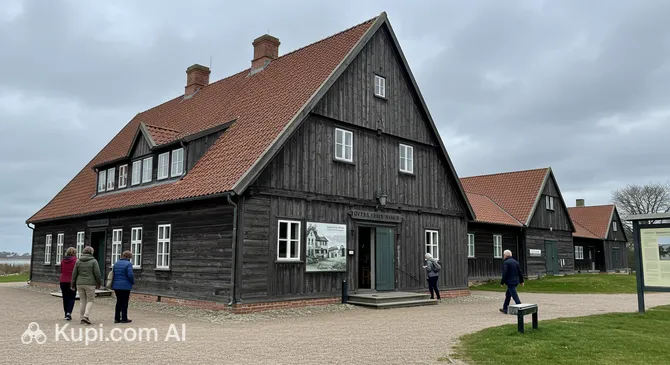
Dybbøl Banke History Centre
Dybbøl Banke History Centre. Иллюстрация. Источник: Kupi.com AI

Opened in 1992, the complex stands out for its striking architecture, which won a large-scale design competition. The building serves as a bridge between modernity and a landscape that still bears the traces of ancient redoubts and fortifications. It has been recognized as one of the best sites in the region by Travellers’ Choice, confirming its popularity with travelers from around the globe.

The core concept of the centre is built on interactive storytelling. Instead of dry display cases, visitors find reconstructions of soldiers' daily lives and the opportunity to touch history in the most literal sense. The centre also manages the famous Dybbøl Mølle mill, which is an integral part of this extensive open-air historical complex.

Contacts

To plan your visit and clarify any details, you can use the official contact information provided below.

How to contactContact
AddressDybbøl Banke 16, 6400 Sønderborg, Denmark
Phone+45 74 48 90 00
Websitewww.1864.dk

What to Do

Immersion into the era begins at the soldier's camp, where 19th-century barracks have been meticulously recreated. Here, you can hear the sounds of cannon fire and the echoes of the past, experiencing the hardships and daily routines of young soldiers. Be sure to explore the reconstructed Danish redoubts: a massive 2.2-ton cannon and heavy blockhouses vividly demonstrate the power of fortifications from that period.

Special attention should be paid to the Dybbøl Mølle mill. Inside, there is a museum featuring rare drawings, photographs, authentic weapons, and uniforms. The exhibition details not only the historical battles but also the day-to-day operation of the mill, which served as an important local landmark for centuries.

For those who prefer a more tranquil experience, the open spaces of the complex offer magnificent panoramic views of the bay. It is an ideal spot for walking, reflection, and capturing vibrant photographs. Interactive zones and educational programs ensure the centre is engaging for both adults and children.

Getting There

Getting to this iconic location is straightforward. The history centre is located at Dybbøl Banke 16, just a few minutes' drive from the center of Sønderborg. For those traveling by car, convenient parking is available directly on the museum grounds.

If you prefer public transport, buses run regularly from the city center to the Dybbøl Banke stop. Alternatively, you can take a local taxi, which will quickly bring you from the train station or your hotel straight to the museum entrance.

For outdoor enthusiasts, there are scenic cycling and walking trails connecting the city with the historic battlefield. A stroll here allows you to enjoy the sea air and views of the bay before starting your tour.

Ближайший город: Sonderborg

History & Facts

The ground upon which the centre stands is of immense importance to Danish national identity. The land, featuring remnants of ancient fortifications, was gifted to the state in 1924 as a tribute to the Danish people. The modern building itself was made possible through private donations from the Aage V. Jensen foundation, with its design selected from nearly two hundred competition entries.

The complex was officially opened on April 18, 1992. The ceremony was attended by Queen Margrethe II and Prince Henrik, underscoring the site's significance in preserving historical memory. The architecture is rich with symbolism and is harmoniously integrated into the landscape of the former battlefields.

Special attention is given to the events of 1864, which fundamentally reshaped the borders of Europe. Following World War I, in 1920, part of these territories returned to Denmark, becoming the region of Southern Jutland. Since 2005, the famous Dybbøl Mølle mill, one of the primary symbols of Danish resilience, has been an official part of the museum complex.

Time Needed

To thoughtfully explore all the exhibits and walk the grounds, guests are recommended to set aside 2 to 3 hours. This is enough time to visit the main building, inspect the reconstructed redoubts, and go up the mill.

For families with children or history buffs, the visit can easily extend to half a day, especially if you decide to enjoy an outdoor picnic overlooking the bay.

Working Hours

The centre is hospitably open to visitors daily from 10:00 to 17:00. The schedule is consistent throughout the week, from Monday to Sunday inclusive.

Please note that seasonal changes may affect the accessibility of certain outdoor exhibits, so it is advisable to check the official website to confirm the latest information before your visit.

10:00 – 17:00

Nearby

The surroundings of the history centre are literally steeped in the past. Exploring nearby locations will help you fully immerse yourself in the region's atmosphere and see complementary architectural and fortification monuments.

NameDistance
Dybbøl Mill0.2 km
Sønderborg Castle1.9 km
Curry Leaves2.1 km
SKAAL Sønderborg2.2 km
Penny Lane Sønderborg2.2 km
Borgen Shopping Centre2.4 km
Kislings2.5 km

Reached the end of the page?

That means the route is fully explored