Support

Dybbøl Mill

About

Imagine the snow-white silhouette of an old windmill, its sails frozen against a backdrop of picturesque hills. Dybbøl Mill (Dybbøl Mølle) is more than just a historical building; it is a true national symbol that embodies the spirit of a country like Denmark.

Located just a few kilometers from the city of Sønderborg, this attraction draws travelers with its harmonious architecture and breathtaking panoramic views of the Alssund strait. Built in the mid-18th century, the mill has gone through a series of destructions and restorations, ultimately becoming an important museum and a destination for 50,000 tourists annually.
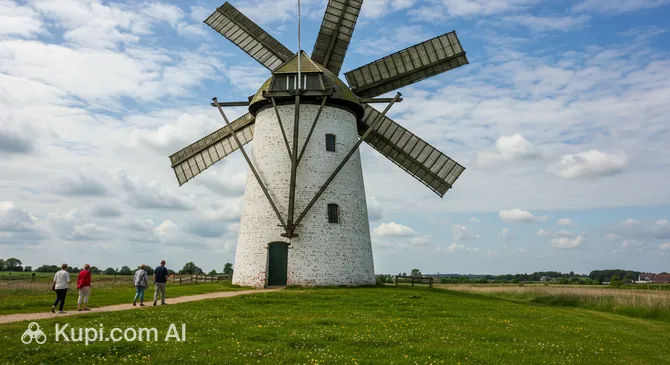
Dybbøl Mill
Dybbøl Mill. Иллюстрация. Источник: Kupi.com AI

Today, this site serves as a living monument to the rural architecture and engineering of the past. Visitors come here not only for the history but also for the atmosphere of tranquility offered by the well-maintained grounds and the incredible landscapes of Southern Jutland.

Contacts

To clarify details before your visit, you can use the following information:

How to contactContact
AddressDybbøl Banke 7, 6400 Sønderborg, Дания
Phone+45 74 48 90 00
Websitewww.1864.dk

What to Do

A visit to Dybbøl Mill is a great opportunity to look "behind the scenes" of an ancient craft. You can climb to the upper floors to see the massive wooden mechanisms in detail and understand how wind energy once turned grain into flour. You can often find guides in traditional costumes sharing stories about the daily life of milling families with great enthusiasm.

Inside the building, there is an interesting museum exhibition featuring archival photographs, drawings, and artifacts illustrating the structure's long journey through the centuries. For those who appreciate aesthetics, the open platform on the hill is an ideal spot for a photo session, offering a fantastic view of Sønderborg and the Broager peninsula.

Nearby is the Dybbøl Banke History Center with interactive exhibits that will interest both adults and children. After your walk, you can stop by the local souvenir shop or simply enjoy the silence while strolling along the green slopes of the hill.

Getting There

Dybbøl Mill is located at Dybbøl Banke 7, approximately 6 kilometers west of the city center. Thanks to its elevated position, it is clearly visible from a distance, serving as a perfect landmark for travelers.

If you prefer public transport, buses run regularly from the center of Sønderborg and stop almost right at the entrance. After the tour, many tourists choose to walk back to the city: a 25-minute walk down the hill offers magnificent views of the surrounding landscapes.

For those traveling by car, the drive to Dybbøl Banke takes only a few minutes, and convenient parking is available on-site. You can also take a taxi from the city center or the nearest train station.

Ближайший город: Sonderborg

History & Facts

The history of this site began in 1744, when the first wooden mill was erected on the hill. Throughout its centuries-long existence, it has witnessed many events and has risen from the ashes several times. The structure suffered from fires and natural disasters on multiple occasions, but it was always carefully restored by local residents.

The mill acquired its modern appearance in 1936. It had to be rebuilt from scratch following a major fire caused by a short circuit the previous year. This stage of restoration gave the building the strength and grace that we can admire today.

Interestingly, until 1990, Dybbøl Mill continued to perform its primary function of grinding grain. It was only in 1995 that it officially changed its status, becoming a museum site. Today, it is recognized as one of Denmark's national symbols, embodying the continuity of generations and the cultural identity of the region.

Since 1992, the mill has been part of a large-scale historical complex that is constantly developing. Restoration work carried out for significant anniversaries has allowed the unique engineering solutions of the past to be preserved in perfect condition.

Time Needed

To leisurely explore all levels of the mill, examine the mechanisms, and browse the museum exhibition, you should plan for about 1.5–2.5 hours. This is enough time to see the interiors and take beautiful photos against the backdrop of the panoramic views.

If you plan to combine your visit with the neighboring history center or a long walk across the Dybbøl hills, it is better to set aside half a day. The area is ideal for a relaxed pace and thoughtful exploration of history.

Working Hours

The mill's operating hours depend directly on the tourist season. During the peak season, which runs from May to September, the museum's doors are typically open daily from 10:00 AM to 5:00 PM. During the rest of the year, hours may be reduced or limited to weekends.

Since the exact schedule can change, we strongly recommend checking the official website before your trip to ensure your visit is as convenient as possible.

Nearby

The mill's location allows tourists to go beyond a single site and enjoy a full walk through historical landmarks. Exploring the surrounding area will significantly enrich your experience and help you delve deeper into the atmosphere of Southern Jutland.

In the immediate vicinity of the mill are various fortifications and memorials that form a unified cultural landscape:

NameDistance
Dybbøl Banke History Centre0.2 km
Sønderborg Castle1.7 km
Penny Lane Sønderborg1.9 km
Curry Leaves1.9 km
SKAAL Sønderborg2 km
Kislings2.2 km
Borgen Shopping Centre2.2 km

Reached the end of the page?

That means the route is fully explored