Support

Quito Historic Center

About

Imagine a place where every cobblestone holds the secrets of centuries past. The Historic Center of Quito is the heart of Ecuador's capital, representing one of the world's most impressive and well-preserved colonial-era architectural ensembles.
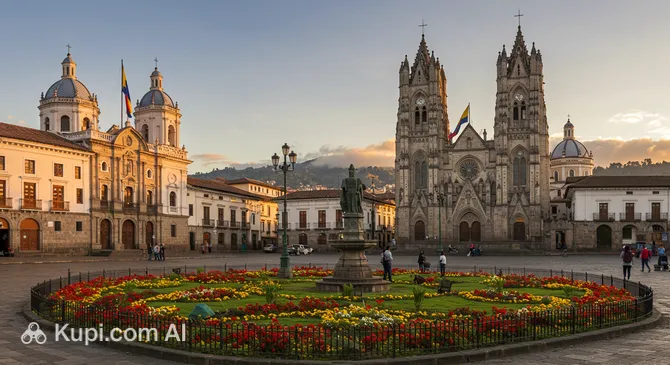
Quito Historic Center
Quito Historic Center. Иллюстрация. Источник: Kupi.com AI

The significance of this district cannot be overstated: in 1978, Quito became the first city in the world whose center was included in the UNESCO World Heritage List. Travelers will find narrow winding streets, majestic monasteries, and luxurious churches that shape the unique appearance of the "Light of America."

This district is not just an open-air museum, but a living space where history meets modernity. As the largest historical district in Latin America, it offers guests the chance to immerse themselves in the atmosphere of Spanish Baroque and enjoy a cultural wealth that has been carefully preserved for centuries.

Contacts

To help you plan your walk through the Old Town, it's useful to have the exact coordinates of the central part of the district.

How to contactContact
AddressQFJP+8RP, García Moreno, Quito 170401, Ecuador

What to Do

A stroll through the center feels like traveling back in time, where every turn reveals a new architectural masterpiece. Be sure to visit the Basilica of the National Vow — a grand Neo-Gothic structure decorated with gargoyles in the shape of Ecuadorian animals. Equally impressive is the La Compañía de Jesús church, whose interior dazzles with the brilliance of gold leaf, and San Francisco Square with its ancient monastic complex.

For those seeking atmospheric routes, the Street of the Seven Crosses (García Moreno) is perfect. Here, you can not only admire the ancient facades but also peek into cozy shops with artisanal crafts. Try canelazo, a traditional warming drink, and savor the taste of real Ecuadorian chocolate at one of the tastings often held by local masters.

Art lovers should dedicate time to the City Museum or the Archbishop's Palace, and in the evening, simply watch life unfold at Independence Square (Plaza Grande), where locals gather. Cultural life is always in full swing here: from street performances to solemn religious processions that turn the center into a set for an ancient legend.

Getting There

Reaching the heart of the capital is easy, as the district is conveniently located for tourists. From anywhere in the city, you can get here by taxi or use the extensive public transport network. If you are staying in central areas, a walk to the old quarters can be a pleasant start to your day.

For those arriving from Quito International Airport (Mariscal Sucre), the journey will take 45 to 60 minutes. You can choose a comfortable taxi or use official shuttle buses that run to the city's main transport hubs, from where it is easy to transfer to a local bus or the metro.

Within the city itself, the most efficient ways to get around are the bus rapid transit system (Metrobús-Q) and the new metro lines, with stations located in close proximity to the main squares and cathedrals. Exact address for navigation: QFJP+8RP, García Moreno, Quito 170401, Ecuador.

Ближайший город: Quito

History & Facts

Founded by Spanish conquistadors in 1534 on the ruins of an ancient indigenous settlement, the city quickly became the region's most important spiritual and administrative center. This is where the famous "Quito School" was born — a unique artistic movement in which European Baroque and Neoclassical traditions intertwined with the craftsmanship and vision of indigenous peoples.

The center's architectural appearance was shaped over centuries, creating a stunning landscape of monasteries, government buildings, and elegant mansions. Due to its location between the slopes of the active Pichincha Volcano and the river valley, the city acquired a characteristic elongated shape, for which it is often called the "axis city."

Interestingly, many buildings here were constructed using traditional techniques that helped them withstand numerous earthquakes. Today, a walk through these streets allows you to literally touch the colonial past of Latin America, preserved in its original form thanks to the care of local residents and its UNESCO status.

Time Needed

Given the scale of the district and the number of iconic sites, it is recommended to set aside at least one full day for a complete immersion in the atmosphere. This will be enough time to see the main squares and visit the most famous cathedrals.

However, if you want to visit museums without rushing, head up to the observation decks, and enjoy a leisurely lunch in one of the colonial courtyards, it's better to plan for 1.5–2 days. This pace will allow you to feel the rhythm of the city and see how its appearance changes in the rays of the setting sun.

Working Hours

The Historic Center district itself is open for walking 24/7, and the evening illumination of the buildings creates a special, magical atmosphere. However, please note that most museums, churches, and exhibition halls operate on a schedule from 9:00 AM to 5:00 PM.

Many sites may close earlier on holidays or have reduced hours on Sundays. Before visiting specific cathedrals or galleries, it is recommended to check for up-to-date information on their official websites to ensure your introduction to the city's culture goes perfectly.

Nearby

Exploring the surroundings of the old city will allow you to see the capital from different angles — from green parks to modern entertainment centers. The surrounding areas are rich in places for active recreation and family walks, which will harmoniously complement the historical program.

NameDistance
Plaza de la Independencia0.1 km
Church of the Society of Jesus0.2 km
Sinners Microbrewery – Historic Center0.3 km
Church and Convent of St. Francis0.3 km
Casa del Alabado Pre-Columbian Art Museum0.4 km
Museum of the City0.5 km
La Casona de la Ronda0.6 km

Reached the end of the page?

That means the route is fully explored