Support

Yaku Water Museum

About

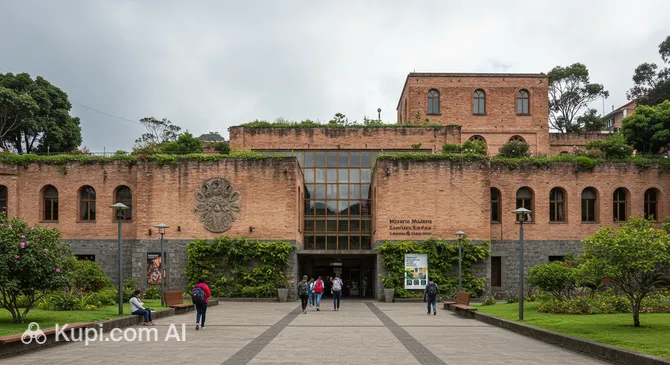
Nestled on the hillsides overlooking the historic center of Quito, you'll find a truly unique space—the Yaku Water Museum. More than just a traditional indoor exhibit, it is an inspiring hybrid of an educational center and a water park, where our planet's most precious resource takes center stage. In Ecuador, this is considered one of the most original and enriching ways to spend your time.
Yaku Water Museum
Yaku Water Museum. Иллюстрация. Источник: Kupi.com AI

The museum's concept is built around two fundamental ideas: "water and nature" and "water and society." Each hall and outdoor area invites visitors on an interactive journey, revealing the mysteries of the water cycle, its physical properties, and its massive influence on the development of human civilization.

Despite its popularity with locals, many international travelers unfairly overlook it. Yet, this is exactly where modern technology and environmental education intertwine with breathtaking views of the Andean capital, making science accessible and engaging for everyone.

Contacts

For your convenience, we have gathered the current contact information for the Yaku Water Museum. We recommend checking the official website before your visit to learn about current temporary exhibitions or special events.

How to contactContact
AddressEl Placer Oe11-271, Quito 170130, Ecuador
Phone+593 2-381-3340
Websitewww.yakumuseoagua.gob.ec

What to Do

A visit to the Yaku Water Museum is first and foremost about being active. Forget the "do not touch" rule: here, visitors of all ages can and should participate in interactive experiments and hands-on activities. You can explore the properties of water yourself, conduct physical tests, and watch how a single drop transforms into a powerful force.

For those looking for a balance between knowledge and entertainment, the museum offers unique water attractions. Thanks to its "half museum, half water park" concept, this site is an ideal venue for a family outing. While children are busy playing with water flows, adults can explore exhibits dedicated to the role of water in Ecuador's ecosystems and its significance for human survival.

Beyond the scientific halls, be sure to stroll through the museum's open-air areas. Here, you can learn about traditional water collection methods or simply enjoy the tranquility while watching artificial streams flow against the backdrop of Quito's majestic panoramas. This space encourages reflection on ecology and our responsibility for the planet's future.

Getting There

Getting to the Yaku Water Museum is easy, as it is located near the historic center of Quito, on the slope of El Placer hill. The most comfortable and fastest way is to use a taxi or a ride-sharing app; the trip from the city center takes only about 10–15 minutes.

For those using public transport, buses heading toward the Old Town are a good option. You will need to get off at the stop nearest to the El Placer neighborhood and then walk a short distance. Keep in mind that the museum is situated on an incline, so the walk may require some effort, but it is well worth it for the unfolding panoramas.

If you are already in the historical part of Quito and enjoy walking, you can reach the museum on foot. This is a great opportunity to see authentic residential neighborhoods that rarely make it into major tourist guidebooks and to experience the true flavor of Ecuador.

Ближайший город: Quito

History & Facts

The Yaku Water Museum is a vital part of the capital's cultural landscape. It is worth noting that Quito was the first city in the world to be designated a UNESCO World Heritage Site, and this museum perfectly complements the region's historical wealth by focusing on ecology.

Unlike traditional collections of antiquities, "Yaku" is among the city's most eclectic and intriguing museums. It stands alongside iconic sites like the Casa del Alabado Museum of Pre-Columbian Art or the Oswaldo Guayasamín Foundation, offering a modern perspective on global issues through the lens of local traditions.

The institution's concept is based on a deep understanding of the connection between humans and nature. The "water and society" philosophy reflects how this vital resource has shaped Ecuador over the centuries, from ancient irrigation systems to modern environmental initiatives.

Interestingly, the name Yaku means "water" in the Kichwa language. This emphasizes the continuity of generations and respect for the indigenous peoples of the Andean region, for whom the element of water has always been a sacred and deeply revered part of life.

Time Needed

To fully appreciate all the interactive zones and enjoy the views offered by the Yaku Water Museum, we recommend setting aside about 2–3 hours for your visit. This is enough time to walk through the main halls without rushing and try your hand at various experiments.

If you are traveling with children, the visit can easily stretch to half a day. Younger visitors usually love spending time in the play areas with water attractions, where learning turns into an exciting adventure. You should also leave some time to contemplate the city panorama, which opens up from the museum's terraces and is a highlight in its own right.

Working Hours

The Yaku Water Museum operates on a schedule convenient for most tourists; however, please remember that the museum is always closed on Mondays. On other days, the doors are open from morning until the end of the working day, making it easy to include a visit in your city itinerary.

The schedule is as follows: Tuesday, Thursday–Sunday, the museum welcomes guests from 9:30 AM to 4:30 PM. On Wednesdays, the hours are slightly extended until 5:00 PM. We recommend arriving at least an hour and a half before closing to have enough time to see all the key exhibits.

DayWorking hours
ПонедельникЗакрыто
Вторник9:30 – 16:30
Среда9:30 – 17:00
Четверг9:30 – 16:30
Пятница9:30 – 16:30
Суббота9:30 – 16:30
Воскресенье9:30 – 16:30

Nearby

Exploring the surroundings of the Yaku Water Museum is a wonderful way to make your day in Quito even more fulfilling. Its location near the historic center and scenic hills makes it easy to combine a museum visit with trips to amusement parks and nature areas.

Many nearby sites offer active recreation or the chance to enjoy city views from new perspectives. Below is a list of interesting places located within a few kilometers of the museum:

NameDistance
Church and Convent of St. Francis0.5 km
Sinners Microbrewery – Historic Center0.6 km
Casa del Alabado Pre-Columbian Art Museum0.6 km
Quito Historic Center0.7 km
Museum of the City0.7 km
Church of the Society of Jesus0.7 km
Plaza de la Independencia0.8 km

Reached the end of the page?

That means the route is fully explored