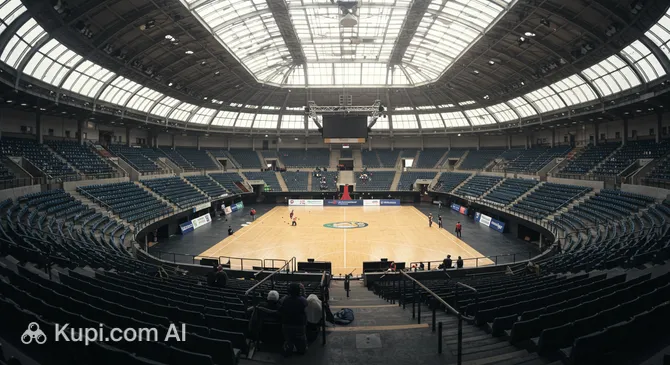
In the heart of the capital of Ecuador stands an impressive structure — the General Rumiñahui Coliseum. This large indoor arena is one of the main centers of public life in Quito, bringing together sports fans, music lovers, and national holiday celebrants under its roof. The venue is named after a legendary Inca hero who became a symbol of courage and the protection of these lands.
General Rumiñahui Coliseum. Illustration.
Source: Kupi.com AI
Traveler photos:
The Coliseum is a modern multi-functional venue designed for hosting mass events of various scales. It regularly hosts thrilling basketball tournaments, volleyball matches, and performances by world stars, making the arena an important spot on the map for any tourist wishing to feel the pulse of the city.
Thanks to its capacity and convenient location, the General Rumiñahui Coliseum has become an integral part of the urban landscape. It is not just a sports facility, but a place where traditions come alive and new experiences are created, reflecting the hospitable and dynamic character of the Ecuadorian capital.
Contacts
For planning a visit to the General Rumiñahui Coliseum, it is very helpful to have up-to-date contact information. You can reach the venue administration by the phone number provided or check the exact location on the map to plan your route through Quito in advance. The table below presents the main contact details and the official address of the site.
Visitors to the General Rumiñahui Coliseum can witness a wide variety of events — from intense professional matches to grand musical shows. The arena is famous for its excellent acoustics and energy, so attending national festivals or concerts by popular performers here always leaves a vivid impression.
For sports enthusiasts, this place is interesting for the opportunity to watch the region's best basketball and volleyball teams in action. Additionally, the arena often serves as a venue for major cultural exhibitions and public holidays, which allow tourists to get a deeper look into the local flavor and the Ecuadorian way of life.
Even if there are no events scheduled on the day of your visit, it is worth walking around the surrounding area to appreciate the architectural scale of the complex. The modern lines of the structure, combined with elements reflecting national heritage, make the Coliseum a great subject for photography and an important point on an introductory route through Quito.
Getting There
Getting to the arena is quite easy, as it is located in the central part of Quito. The simplest and most comfortable way for tourists is to use a taxi or popular mobile ride-sharing apps. A trip from the city's historic center will take 15 to 30 minutes, depending on traffic intensity.
For those who prefer public transport, numerous bus routes pass nearby, and stops are within walking distance of the entrances. If you are heading to the Coliseum directly from the airport, the drive can take about 45 minutes. The main landmark for the driver will be Av. Ladrón de Guevara, where this large-scale sports complex is located.
Nearest city: Quito
History & Facts
The history of this arena is inextricably linked to the name of a great national hero. The Coliseum was named in honor of Rumiñahui — a legendary Inca general who was born in Quito and became a symbol of unbreakable resistance against the Spanish conquistadors in the 16th century. His bravery and devotion to his people still inspire the residents of Ecuador.
According to legend, after his defeat and capture, Rumiñahui refused to reveal the location of the Inca treasures to the invaders, preferring death over betrayal. This heroic act cemented his status as a defender of the nation. In 1985, the country's Congress officially declared December 1st as the annual day of remembrance for this outstanding warrior.
Today, Rumiñahui's image is widely used in culture; his portraits adorn banknotes, and key public facilities are named after him. The General Rumiñahui Coliseum has become one of these symbols, embodying the respect of modern Ecuadorians for their rich historical heritage and the ancestors who forged the history of this land.
Time Needed
To simply view the Coliseum building from the outside and take souvenir photos against the backdrop of its massive structures, 30–40 minutes is usually enough. However, if your goal is to attend a specific sports match or concert, you should set aside 1 to 3 hours for the visit, considering the time for security checks and breaks.
On days of major international events, it is recommended to arrive early to have time to take your seats and fully enjoy the vibrant atmosphere of the occasion. When planning your route, remember that the area around the arena is quite active, and you can easily find a place to relax after the program ends.
Working Hours
The opening hours of the General Rumiñahui Coliseum are directly tied to the schedule of planned events. On days of concerts or sports competitions, the arena usually opens its doors to spectators 1–2 hours before the program begins and closes shortly after the last event ends.
Since there may be no fixed hours for free tourist visits to the internal halls, visitors are strongly encouraged to check the current event calendar on official resources or inquire at the ticket offices. This will allow you to choose the most interesting time for a visit and purchase tickets for your preferred show in advance.
Nearby
The arena's location in one of the capital's busy districts allows travelers to combine visiting events with exploring interesting locations nearby. A walk around the neighborhood will help you better feel the city's rhythm and see not only sports venues but also picturesque parks and modern cultural centers.
Many popular attractions are within a radius of just a few kilometers, making this area a convenient starting point for further exploration of Quito. The table below lists the places closest to the Coliseum that can enrich your sightseeing program.