Support

Town Hall Square

About

Town Hall Square (Estonian: Raekoja plats) is not just the central square of Tartu; it is the true heart of this city located in Estonia. It serves as the primary public space and historical core, attracting both locals and visitors.
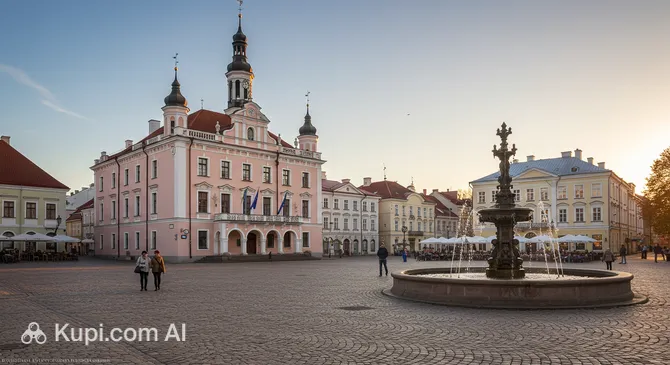
Town Hall Square. Illustration.
Source: Kupi.com AI

Traveller photos:

For many centuries, Town Hall Square has played a key role in the life of Tartu, serving as a link between the ancient stronghold on Toomemägi Hill and the river port on the Emajõgi River. The square began to take shape as early as the 13th century as a busy trade center known as the Great Market. It was originally separated from the river by a fortress wall, emphasizing its strategic and commercial importance.

The modern architectural ensemble and appearance of Town Hall Square began to form after the devastating Great Fire of 1775, which destroyed most of the wooden buildings in the city center. Following this tragic event, the square was rebuilt, acquiring the features that have largely been preserved to this day. Today, it stretches from the magnificent Tartu Town Hall building, which dominates the space, to the picturesque Emajõgi riverfront (Vabaduse puiestee), serving as a favorite spot for walks and meetings.

Contacts

Town Hall Square is an open public space, so it does not have direct contact details for visitors. If you require tourist information about Tartu, including details about events or attractions on Town Hall Square, it is recommended to contact the Tartu Visitor Centre.

How to contactContact
AddressRaekoja plats, 51004 Tartu, Estonia
Phone+372 744 2111
Websitevisittartu.com

What to Do

On Town Hall Square, the first thing that catches the eye is the famous "Kissing Students" fountain. This romantic sculpture, installed in 1998 on the site of a fountain that had existed since 1951, quickly became one of the city's most recognizable symbols. It is a favorite spot for photographs and romantic meetings, embodying the youthful spirit of this university center.

Visitors can admire the square's impressive architectural ensemble. The dominant feature is undoubtedly the majestic Tartu Town Hall, built in the Neoclassical style. The square is surrounded by historical buildings, each with its own story. Houses number 12 and 18, attributed to the famous architect J. Lange, deserve special attention. These structures lend the square a unique historical flavor.

Town Hall Square is an ideal place for leisurely strolls and relaxation. Here you can simply sit on a bench and enjoy the atmosphere, take bright souvenir photos, or watch the city life go by. Additionally, the square often serves as a starting point for further exploration of Tartu's historical center, with easy access to other major attractions.

Getting There

Getting to Town Hall Square in Tartu is quite simple, as it lies at the heart of the city's historical center. If you are already in central Tartu, the most pleasant way to reach it is on foot. Follow the signs leading to the Old Town (Vanalinn) or directly to the Town Hall (Raekoda), and you will find your way without difficulty. This allows you to enjoy the atmosphere of the ancient streets and gradually immerse yourself in the city's historical spirit.

For those traveling from more distant districts of Tartu, public transport is a convenient option. Several city bus stops are located in the immediate vicinity of Town Hall Square, from which you can reach the square in just a few minutes. You can check current routes and schedules on-site or in advance via Tartu's public transport online resources.

Additionally, you can always use a taxi, which will quickly take you to Town Hall Square from any point in the city. If you are traveling by rental car, please note that parking in the historic center of Tartu may be paid and limited, especially during peak hours. Therefore, it is recommended to check nearby parking options in advance.

Nearest city: Tartu

History & Facts

Town Hall Square in Tartu has a rich and multi-layered history dating back to the 13th century. It originally developed as a bustling marketplace known as the Great Market, strategically located near the port on the Emajõgi River. As early as the Middle Ages, the first town hall building was erected here, becoming the center of city administration. However, the square's historical wooden buildings have not survived to the present day—they were completely destroyed during the Great City Fire of 1775, a tragic milestone in Tartu's history.

After the devastating fire, the city began to rebuild actively. It was then that construction began on the new town hall building, which gave the square its modern name. The design of this iconic structure belongs to architect Johann Heinrich Walter. The cornerstone of the new town hall was laid in 1782, and the grand opening took place in 1786, though finishing work continued for another three years until 1789. This building became the architectural landmark and symbol of the reborn city.

In the 20th century, Town Hall Square underwent several changes. During the Soviet period, it was renamed Soviet Square. Its historical name, Town Hall Square, was restored in 1990. Unfortunately, the Second World War also left its mark: in 1944, buildings on the southern side of the square were destroyed as a result of bombing. They were later rebuilt, but in an architectural style characteristic of a later period, which introduced certain changes to the historical appearance of this landmark site.

Time Needed

To fully enjoy the atmosphere of Town Hall Square in Tartu and see its key landmarks, most visitors will find 1-2 hours to be sufficient. This time is usually enough to take a leisurely stroll across the square, admire the architecture of the surrounding historic buildings, take memorable photos at the famous "Kissing Students" fountain, and simply soak up the spirit of this historical place.

If your plans include a more detailed exploration, such as visiting the interior of the Tartu Town Hall itself (if available during your visit) or touring other nearby museums and points of interest, then you should plan for additional time. In this case, your stay at the square and its surroundings could easily extend to half a day, allowing for a deeper dive into the history and culture of Tartu.

Working Hours

Town Hall Square in Tartu is a public space, so it is accessible for visiting 24 hours a day, year-round. You can come here at any time of day or night to enjoy its atmosphere. No special booking or tickets are required to visit the square itself.

However, it is worth noting that individual sites located on the square may have their own operating hours. For example, the famous "Kissing Students" fountain may operate on a specific schedule, especially during the winter period. Also, the cafes, restaurants, and shops located on Town Hall Square operate according to their own business hours. To get the most up-to-date information on the fountain's operation or specific establishments, it is recommended to check their official websites or local information resources.

Open 24/7

Nearby

Exploring Tartu is not limited to Town Hall Square alone. Discovering the attractions located in the immediate vicinity can significantly enrich your experience of the city. This allows for a deeper immersion into its history, culture, and daily life, revealing new facets of this charming Estonian destination.

A stroll around the area surrounding Town Hall Square will give you the chance to see more than just the city's central point. You can discover cozy streets, interesting museums, historical buildings, and unique establishments that together create the unmistakable character of Tartu. Every nearby find will add vibrant colors to your trip.

NameDistance
Tartu Art Museum0.1 km
Pühaste Cellar0.2 km
Antonius Hotel0.2 km
St. John's Church0.3 km
Tartu Toy Museum0.4 km
Ruins of Tartu Cathedral0.5 km
University of Tartu Museum0.5 km

Reached the bottom of the page?

Looks like you know this route inside out