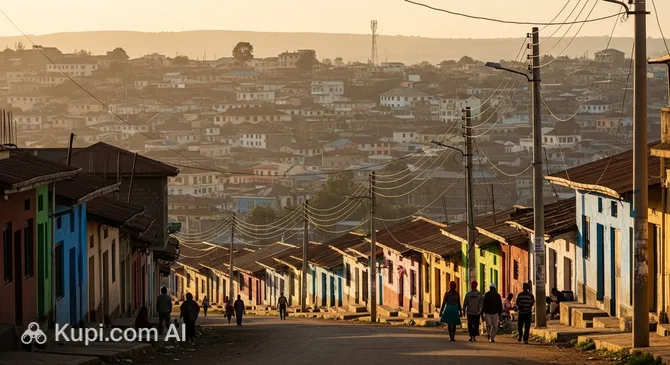
Shashamane is a unique city in the central part of Ethiopia, located in the Oromia region. It is unlike the country's typical tourist centers; its atmosphere is permeated with a spirit of cultural diversity and calm everyday life. The city stretches across the picturesque Great Rift Valley, near sparkling lakes, making it an important transit point for travelers heading south.
Shashemene. Illustration.
Source: Kupi.com AI
The main feature that has made Shashamane world-famous is its status as the spiritual home for the Rastafari community. The history of this settlement is inextricably linked to the generous gift of Emperor Haile Selassie I, who in 1948 allocated land here for repatriates from the Caribbean and Africa. Today, about 208,000 people live here, and the city streets are a colorful mix of Ethiopian traditions and the influence of the Western African diaspora.
Although the city does not have a highly developed tourist infrastructure, it attracts those seeking authenticity and wanting to touch the living history of the Rastafarian movement. A visit to Shashamane is an invitation to see a different, less formal side of Ethiopia, where agriculture exists alongside vibrant art and reggae music.
Weather Overview
Shashamane is dominated by a subtropical highland climate, which pleases with moderate temperatures throughout the year. During the day, the air usually warms up to 15–25°C, and nights bring a pleasant coolness, making a stay here comfortable even in the height of the African summer. The warmest months are February and March, when the mercury can rise to 26°C.
When planning a trip, it is worth considering the seasonal characteristics: the main rainy period lasts from June to September. At this time, the weather in the city is characterized by frequent downpours and high humidity. If you prefer dry and sunny days, the best time to visit is December and January, when there is practically no precipitation and the sky remains clear.
Average monthly temperature
Average monthly precipitation
Interesting Facts
In 1948, Emperor Haile Selassie I officially granted 500 acres of fertile land in the vicinity of the city to representatives of the African diaspora, turning it into a global center for the Rastafari movement.
Shashamane is considered the only place in the world where Rastafarians received land as a gift from a monarch whom they revere as a divine incarnation.
Due to its unique composition of residents, the city has become a melting pot of cultures: here you can hear not only Amharic and Oromo but also Jamaican Patois.
The city is located at an altitude of about 1,900 meters above sea level, which accounts for its mild climate despite its proximity to the equator.
The city's area code is 6, and it is in the UTC+3 time zone.
How to Get There
Shashamane is an important transport hub in central Ethiopia, but it is primarily accessible by land. There is no direct air connection to the city, so most tourists start their journey from the capital. You can find more details on how to get to the city and other regions on specialized transport resources.
The main route runs from Addis Ababa, which is about 250 km away. A trip by bus or taxi takes from 4 to 6 hours depending on road conditions and traffic. Regular scheduled buses depart from the capital's bus stations, offering a budget-friendly and colorful way to travel.
For a more comfortable journey, it is recommended to rent a 4x4 vehicle, especially if your trip falls during the rainy season. Trips on local minibuses ("Hiaas") from neighboring Rift Valley towns such as Awasa are also popular. It is recommended to leave early in the morning to avoid congestion at the city entrance.
The main "living" attraction of Shashamane is the Rastafarian commune. This is a unique community where you can learn about the life and philosophy of people who have returned to the historical homeland of their ancestors. A walk through these neighborhoods allows you to see bright graffiti in the colors of the Ethiopian flag and hear reggae music playing right from the windows of houses.
Among the cultural sites, the Banana Art Gallery stands out—an unusual gallery where works by local artists made from banana tree fibers are presented. It is also worth visiting the Black Lion Museum, which houses artifacts related to the history of the community and visits by famous figures of the movement from all over the world.
For those interested in religious architecture, the St. Michael Church and Mary Church are open to visitors. They reflect the deep traditions of Ethiopian Orthodoxy and are centers of spiritual life for local residents. Despite the lack of large-scale monuments, Shashamane charms with its genuine atmosphere and sincere hospitality.
Local Cuisine
The gastronomic scene in Shashamane is a classic introduction to Ethiopian traditions. The basis of any meal here is injera—a large, porous sourdough flatbread made from teff flour, topped with various wats (thick stews made of meat, vegetables, or lentils). For those seeking spicy sensations, it's worth trying kitfo—finely chopped beef with spices, often served raw.
Rastafarian culture has had a particular influence on the local cuisine, bringing the concept of Ital food—pure, natural, and mostly vegetarian food. In local cafes, you can find dishes made from fresh vegetables and legumes, prepared without the use of artificial additives or salt, which will appeal to health-conscious eaters.
It is impossible to imagine a visit to Shashamane without participating in a coffee ceremony. Ethiopia is the birthplace of coffee, and here it is prepared with special reverence. For something stronger, you should try tej—a traditional honey wine with a tart taste. Most authentic establishments are concentrated around the markets, where portions are always generous and prices remain very affordable.
Travel Tips
Preparing for a trip to Shashamane requires attention to detail, as the city lives by its own special rules. These tips will help you feel confident and safe.
Clothing and Gear: Choose light clothing made of natural fabrics for daytime walks, but be sure to bring a warm sweater or jacket for cool evenings. If you plan to visit churches, remember the modest dress code: shoulders and knees must be covered, and it's advisable for women to have a headscarf.
Transport: Within the city, it is most convenient to get around on three-wheeled "bajajs" or minibuses. The price for a taxi ride should be agreed upon in advance, as meters are a great rarity here.
Finance: The main currency is the Ethiopian Birr. Cards are accepted very rarely, so always carry a sufficient supply of cash. It's better to exchange currency at banks in Addis Ababa or official exchange points.
Health: Consult a doctor about vaccinations and malaria prevention before your trip. Drink only bottled water and avoid ice in drinks.
Connectivity: A SIM card from the local operator Ethio Telecom can be purchased at specialized kiosks by presenting a passport. Wi-Fi in hotels is often unstable, so mobile internet will be more reliable.
Local Etiquette: Ethiopians are very polite people. Greet people with a light bow or a handshake. Before taking a photo of someone, be sure to ask for permission.
What to Avoid: It is not recommended to walk alone on the outskirts of the city after dark. Also, refrain from discussing political topics and criticizing local customs.
Important Nuance: Time in Ethiopia is often counted on a 12-hour cycle starting from sunrise, so always clarify whether you are talking about "international" time or local Ethiopian time.
Following these simple rules will make your journey into the heart of Rastafarian culture smooth and unforgettable.
Entertainment & Nightlife
Shashamane is not a center of vibrant nightlife in the traditional sense: there are no huge clubs or 24-hour discos here. The city's life quiets down quite early, and after 10:00 PM, most establishments close. However, for those looking for social interaction, local cafes and bars where residents and expats gather in the evenings become a center of attraction.
A special atmosphere is created by reggae nights, which periodically take place in the Rastafarian communes. These are not commercial parties, but rather soulful gatherings with live music and dancing, where curious tourists may also be invited. In such places, an atmosphere of relaxation and friendliness prevails, and music becomes a universal language of communication.
Daytime entertainment includes walks through colorful markets and visits to small private galleries. If you want more active recreation or full-fledged nightclubs, it is better to head to nearby Awasa or return to Addis Ababa, as Shashamane is more conducive to quiet contemplation and cultural immersion.
Parks & Museums
City parks as organized recreation areas are practically non-existent in Shashamane, but nature itself surrounds the place. Most greenery is concentrated within the Rastafarian communities and in private gardens where exotic plants and fruit trees are grown. To enjoy large-scale natural landscapes, local residents and visitors head to the shores of the Rift Valley lakes.
The city's cultural life is concentrated in intimate venues. The Black Lion Museum is a small but significant space dedicated to the history of repatriation and the life of the Rastafari community. Here you can see photos, documents, and personal belongings of the first settlers, which help explain how Shashamane became the "Promised Land" for thousands of people.
Art lovers should check out the Banana Art Gallery. This private museum-workshop demonstrates the amazing possibilities of natural material: detailed paintings and souvenirs are created from dry banana leaves and fibers. Visiting such places gives a much deeper insight into the character of the city than a walk along standard tourist routes.
Getting Around
The transport system in Shashamane is simple and entirely oriented towards the needs of locals. The main means of transportation within the city are Hiaas minibuses and nimble three-wheeled bajajs (tuk-tuks). The latter are the most convenient way to quickly reach your destination, as they easily maneuver along dusty and often uneven roads.
Fares are paid in cash directly to the driver or conductor. Fares are fixed and very low, but tourists should clarify the cost in advance to avoid overpaying. There are no unified travel passes or transport cards in the city. Peak hours occur in the morning and early evening when the Hiaas can be very crowded, so it is better to plan trips for midday.
For intercity travel, buses are used, departing from the main bus station. They connect Shashamane with Addis Ababa and other regional centers. Private taxis can be an alternative, but renting them will cost significantly more. Bicycle rental is not developed in the city due to the difficult terrain and heavy traffic on the main streets.
Accommodation
Accommodation options in Shashamane are quite modest and primarily aimed at transit travelers or those visiting the Rastafarian community. You won't find luxury five-star hotels here, but you can certainly count on clean and budget-friendly guesthouses and small mid-range hotels. Most of them are concentrated along the main road that crosses the city.
Guesthouses located directly in the neighborhoods inhabited by the Rastafarian diaspora are particularly popular. Staying in such places allows for a deeper immersion into the local culture and interaction with interesting people from all over the world. For long-term stays, private apartments or rooms for rent are often offered, with conditions ranging from spartan to quite comfortable.
Booking accommodation in advance is recommended only if you plan to visit during major religious holidays or reggae festivals. At other times, vacancies are usually available. When choosing a place to stay, pay attention to the presence of private security and access to clean water, as the city's infrastructure can be unstable.
Nearby Cities
Shashamane serves as an excellent starting point for exploring the picturesque surroundings of the Rift Valley. Just 21 kilometers away is the lively city of Awasa, famous for its eponymous lake. It is an ideal destination for a day trip: here you can walk along the embankment, spot hippos and marabous, and taste freshly caught fish at the local market.
If you want to see a more traditional and quiet Ethiopia, head to Kofele or Yirgalem. These places are surrounded by dense forests and coffee plantations, offering opportunities for light trekking and getting to know the way of life of the Sidamo people. The journey to them by bus or taxi takes about an hour.
The region around the city offers many natural and cultural discoveries for those willing to get off the beaten path. Exploring neighboring settlements will allow you to see the diversity of Ethiopia's landscapes—from mirror-like lakes to highland pastures.
Shopping opportunities in Shashamane are concentrated in its colorful markets, which are the heart of city life. There are no modern shopping centers with glass display cases here, but there are authentic trading rows where you can find literally everything—from fresh tropical fruits and vegetables to traditional Ethiopian fabrics with bright patterns.
The main souvenir from this trip will certainly be Ethiopian coffee beans, considered among the best in the world. Also, look out for handmade items from the Rastafarian community: these could be knitted "tam" hats, jewelry in the colors of the Pan-African flag, cotton clothing, and unique wooden crafts. Bargaining at the markets is not only appropriate but is also an important part of the communication process with the seller.
Shops usually operate from early morning until sunset, closing for a lunch break. Payment is made exclusively in cash in the local currency. If you are looking for branded items or specialized electronics, it is better to head to Addis Ababa for such purchases, as the assortment in Shashamane is limited to essential goods and folk crafts.