Support

Agde

About

Agde is a true gem on the Languedoc coast, located right at the confluence of the Hérault River and the Gulf of Lion in the Mediterranean Sea. This charming town is situated in the south of France, in the Hérault department, and is famous for its unique geographical position: it is where a wild river, an ancient volcanic landscape, and golden beaches stretching for 14 kilometers along the azure coast meet.
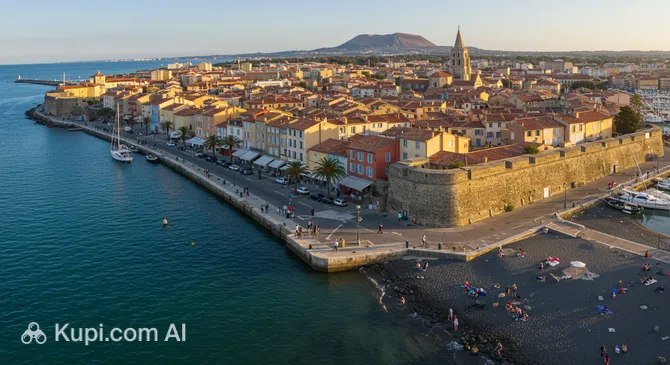
Agde. Illustration.
Source: Kupi.com AI

With a population of around 29,600, Agde successfully combines the coziness of a small town with the energy of a popular resort. Administratively, the town is divided into several areas, most notably the historic center, built from dark volcanic stone which gives it a unique appearance; the famous resort area of Cap d’Agde with its lively promenade and beaches; and the quieter, family-oriented district of Grau d’Agde.

Agde attracts tourists with its rich history dating back to ancient times, as evidenced by its preserved monuments. One of the key attractions is the Saint-Étienne Cathedral, which resembles a fortress and was built from the same local volcanic basalt. Another unique feature of the town is the Canal du Midi, which passes through Agde and is a UNESCO World Heritage site, offering picturesque boat trips.

Why visit Agde? It is a place where history and modernity are harmoniously intertwined at every step. Add to this about 300 sunny days a year, the warm Mediterranean Sea, a rich cultural life, and a friendly atmosphere—and you will understand that Agde is capable of enchanting you from your first visit and providing unforgettable memories.

You can find more interesting facts on the history of Agde page.
Weather Overview

The weather in Agde is characterized by warm, sunny summers and mild, wet winters. In summer, especially in July and August, the average temperature stays around 24.4°C, with maximums reaching 29.3°C, while rainfall is minimal. Winter months, such as January and December, bring cooler weather with average temperatures around 7.8°C - 8.7°C and more rainy days, though total precipitation remains low. Spring and autumn are transitional seasons with comfortable temperatures; October and November can be the rainiest months of the year. Overall, expect warm summers with little rainfall and cool winters with moderate rain. To learn more, check out the detailed forecast: climate of Agde.

Average monthly temperature

Average monthly precipitation

Interesting Facts

Agde, known to many as a sunny resort, actually hides much more than meets the eye. Behind its modern facade lie centuries of history and fascinating features. Here are just a few interesting facts about this ancient town in France:

Agde Round Lock. Illustration.
Source: Kupi.com AI

Traveler photos:

  • Ancient Roots: Agde is considered one of the oldest towns in the south of France. Its impressive history spans over 2,600 years: the city was founded by Phocaean Greeks as early as the 6th century BC and for a long time served as an important trading port connecting the Mediterranean with the inland regions of Gaul.

  • Cardinal Richelieu's Ambitions: In the 17th century, the influential Cardinal Richelieu harbored grand plans to turn Agde into France's largest maritime port. Although these massive designs were never fully realized, traces of those ambitions can still be seen in the architecture of the old quays and port facilities.

  • The "Black Pearl" Cathedral: One of the main architectural gems of Agde is the Romanesque Saint-Étienne Cathedral, built in the 12th century. Its uniqueness lies in its construction material—dark volcanic stone, which gives the building a characteristic, somewhat austere but majestic appearance. The cathedral's massive tower once also served defensive purposes.

  • Treasures from the Riverbed: Agde is proud of its Ephebe Museum (Musée de l'Éphèbe), dedicated to underwater archaeology. Within its walls is a unique collection of artifacts recovered from the bed of the Hérault River and the coastal waters. The most famous find and a true symbol of the city is the beautifully preserved ancient bronze statue of a youth—the Ephebe of Agde, dating back to the 2nd century BC.

How to Get There

You can reach the town of Agde, located in the south of France, in several ways, including flying into the nearest airports followed by a transfer, or by train, thanks to the presence of a railway station directly in the town.

The nearest airport to Agde is Béziers Cap d'Agde Airport (IATA: BZR). It is located just about 10 km from the center of Agde, in the town of Béziers. This is a small regional airport from which you can reach Agde by taxi or bus in approximately 30-40 minutes.

A larger option is Montpellier–Méditerranée Airport (IATA: MPL), located in the city of Montpellier, about 49 km from Agde. This is an international airport with a significantly larger selection of flights. A trip from Montpellier airport to Agde by car or taxi will take about 1 to 1.5 hours.

You can also consider Perpignan–Rivesaltes Airport (IATA: PGF) in Perpignan, located approximately 80 km from Agde. This is a medium-sized airport, and the journey from there to Agde will take about 1.5 to 2 hours.

For convenience, here is a summary of the main airports:

AirportPassenger trafficDistance
Beziers Vias Airport273 29710 km
Montpellier Mediterranee Airport1.8 mln49 km
Llabanère Airport463 23580 km
Garons Airport260 00091 km
Carcassonne Airport322 76796 km

Railway travel is also a convenient way to reach Agde. The town has its own railway station.

Agde Railway Station (IATA: EAG) is located very close to the town center, just 1.3 km away. This is a medium-sized station that handles regional and some long-distance trains, making it a convenient arrival point for many travelers. From the station, it is easy to reach your hotel on foot, by taxi, or by local bus.

If you are arriving at a larger railway hub, you should look at Montpellier Railway Station (IATA: XPJ). It is located in the city of Montpellier, about 46 km from Agde. This is a very large station with many national and international routes. From Montpellier to Agde, you can take a regional train (the journey takes about 30-40 minutes) or a bus.

For convenience, here is a summary of the main railway stations:

StationPassenger trafficDistance
Agde Station757 4911 km
Montpellier Railway Station8.1 mln46 km
Perpignan Station2.1 mln84 km
Nîmes Railway Station4.4 mln92 km
Nîmes Pont du Gard Station1.1 mln100 km
Avignon Railway Station4.5 mln126 km

Additionally, Agde can be reached by car, as the town is well-connected to the main French road network. If you are traveling in a private or rental car, this can be a convenient option allowing you to explore the surroundings.

Main Attractions

Agde, a charming town in the south of France, boasts not only beautiful beaches but also a range of interesting attractions capable of captivating any traveler. Here, history blends harmoniously with modern entertainment, offering a diverse vacation experience.

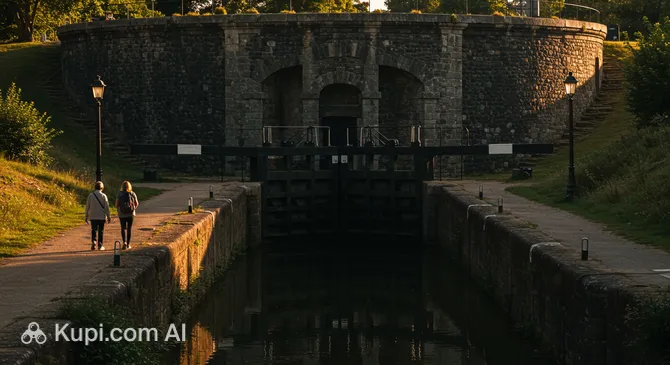
One of the most unusual and iconic landmarks in Agde is the Round Lock (L'Écluse Ronde d'Agde). This unique 18th-century engineering feat on the Canal du Midi, a UNESCO World Heritage site, allows boats to turn in three different directions. Watching the lock in operation and the barges passing through is a fascinating sight that attracts both engineering enthusiasts and curious tourists alike.

Agde Round Lock. Illustration.
Source: Kupi.com AI

Traveler photos:

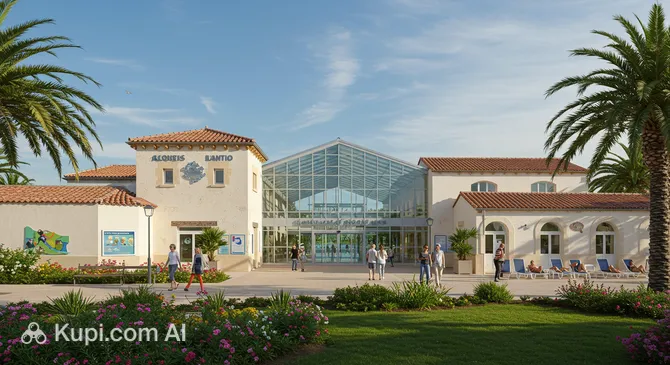
For those seeking relaxation and water fun, the Archipel La Cité de l'Eau Centre and Spa is an ideal choice. This modern complex offers swimming and leisure pools, water slides, and a spa area with various treatments. It is a wonderful place for a family holiday or for restoring your energy after a busy day.

Archipel Agde Aquatic Center & Spa. Illustration.
Source: Kupi.com AI

Traveler photos:

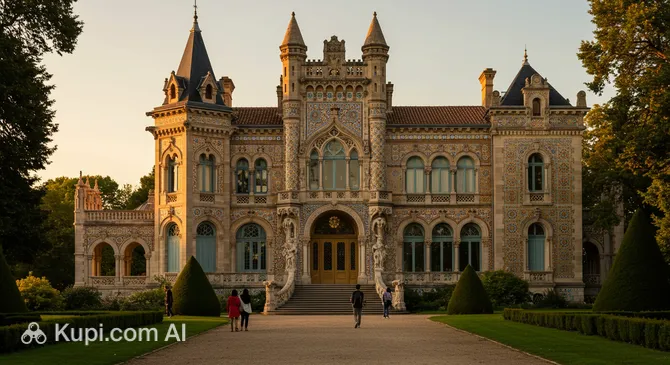
History and architecture lovers should pay attention to Château Laurens. This elegant early 20th-century mansion, built in the Art Nouveau style, is a true jewel of the city. Its unique decor, stained glass windows, and frescoes are truly imaginative. Visiting the château is an opportunity to touch the refined atmosphere of the past and appreciate the craftsmanship of the architects and artists of that era.

Château Laurens. Illustration.
Source: Kupi.com AI

Traveler photos:

Additionally, in Agde, you can stroll through the ancient streets, visit the Saint-Étienne Cathedral, built of dark volcanic stone, or head to one of the many markets to experience the local flavor and purchase fresh produce and souvenirs.

Local Cuisine

The cuisine of Agde is a true celebration of flavor for lovers of the freshest seafood, sun-drenched vegetables, and the rich aromas of Languedoc. Situated on the Mediterranean coast and near the Étang de Thau lagoon, the town offers an abundance of seafood that forms the basis of many local dishes.

Be sure to try the famous cassoulet—a hearty and aromatic stew made from white beans with various types of meat. Of course, you cannot miss the fresh oysters and mussels, which are farmed nearby and served in all sorts of variations. Other popular dishes include Languedoc-style ceviche, baked squid, and the traditional fish soup, bouillabaisse. In local restaurants, you will often be offered freshly caught sea bream, monkfish, or cuttlefish, masterfully grilled with olive oil and Provencal herbs.

Your meal will be perfectly complemented by local drinks. Languedoc wines deserve special attention—refreshing whites and aromatic rosés that pair perfectly with Mediterranean dishes. Many wineries offer tastings, allowing you to get to know the character of local grape varieties.

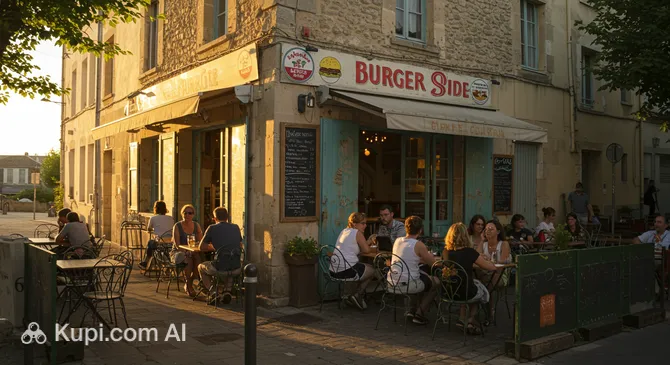
The food culture in Agde focuses on product freshness and the slow enjoyment of a meal. Locals and tourists prefer to dine in numerous restaurants offering both traditional dishes and modern interpretations. Be sure to stop by one of the lively farmers' markets, where you can buy local cheeses, aromatic sausages, olives, honey, and, of course, fresh fruits and vegetables. While the town is famous for its traditional cuisine, you can also find establishments with a more international menu; for example, the Cap d’Agde Burger Bar offers popular dishes in a lively resort atmosphere.

Cap d'Agde Burger Bistro. Illustration.
Source: Kupi.com AI

Traveler photos:

Agde's gastronomic scene attracts with its authenticity and diversity. The town regularly hosts gastronomic festivals and harvest celebrations, where you can not only taste local delicacies but also participate in culinary masterclasses. This is a wonderful opportunity to get closer to the secrets of Languedoc cuisine and enjoy the friendly atmosphere of southern France.

Travel Tips

Welcome to Agde! To make your journey through this charming corner of France as comfortable and memorable as possible, we have prepared some practical tips. They will help you better navigate the area and avoid potential inconveniences.

  1. Clothing and Essentials:

    The climate in Agde is Mediterranean, with hot summers and mild winters. In summer, be sure to bring light clothing, swimwear, sunscreen, a hat, and sunglasses. For evening walks, a light sweater or jacket may come in handy. In autumn and spring, the weather is changeable, so layering your clothes is a good idea. Comfortable shoes are your main companion for exploring the old town and walking along the coast. Don't forget a power adapter (Type E).

  2. Local Transport:

    Agde is a relatively small town, and many of its parts, especially the historic center and the Cap d'Agde resort area, are pleasant to explore on foot or by bicycle. The town is served by the Cap'Bus network, which connects various districts, including the beaches. Taxis are also available but can be more expensive. Renting a car makes sense if you plan to explore the surrounding Occitanie region.

  3. Finances:

    The official currency is the Euro (EUR, €). Credit and debit cards (Visa, Mastercard) are widely accepted in most shops, restaurants, and hotels. However, it's always useful to have some cash on hand for small purchases, markets, or in small establishments. ATMs (DAB - distributeur automatique de billets) are easy to find. Tips in restaurants are usually 5-10% of the bill if service is not included, or you can simply round up the amount.

  4. Health and Safety:

    Pharmacies (pharmacie) are easily recognized by a green cross; some may have emergency hours. For emergency medical assistance, call the pan-European number 112. Agde is considered a fairly safe town, but as anywhere, you should take standard precautions: keep an eye on your belongings in crowded places, especially on beaches and at markets, and do not leave valuables unattended.

  5. Communication:

    The official language is French. In tourist areas, many people speak English, but knowing a few basic French phrases (e.g., "Bonjour" – hello, "Merci" – thank you, "S'il vous plaît" – please) will be very helpful and appreciated by the locals. Wi-Fi is available in most hotels, cafes, and restaurants. A local SIM card can be purchased at mobile shops or supermarkets for better data rates.

  6. Local Etiquette:

    The French value politeness. When entering a shop or cafe, it is customary to say hello ("Bonjour" during the day, "Bonsoir" in the evening). When addressing someone, especially elders, use "Madame" or "Monsieur". Loud conversations in public places, especially on transport or in restaurants, are discouraged. Patience and a smile will help in any situation.

  7. What to Avoid:

    Try not to discuss sensitive political topics too loudly. Also, avoid photographing people without their permission, especially in private settings. Keep in mind that part of the Cap d'Agde resort is a famous naturist center—if you do not plan to visit it, just be aware of its specific nature and boundaries.

  8. Agde's Unique Feature – Volcanic Stone:

    Take note of the unique architecture of the old town of Agde, built from dark volcanic basalt quarried from the extinct Mont Saint-Loup volcano. This gives the town a special, slightly austere, yet very memorable look. Be sure to stroll through its narrow streets and visit the Saint-Étienne Cathedral, also built from this stone.

We hope these tips make your stay in Agde even more pleasant and fulfilling. Enjoy the sun, the sea, and the unique atmosphere of this southern French town!

Entertainment & Nightlife

Agde, and especially its famous resort district of Cap d'Agde, offers a wide variety of evening and night entertainment that comes alive after dark, particularly during the summer season. Here, everyone will find something to their liking: from lively bars and trendy clubs to cozy restaurants and night markets.

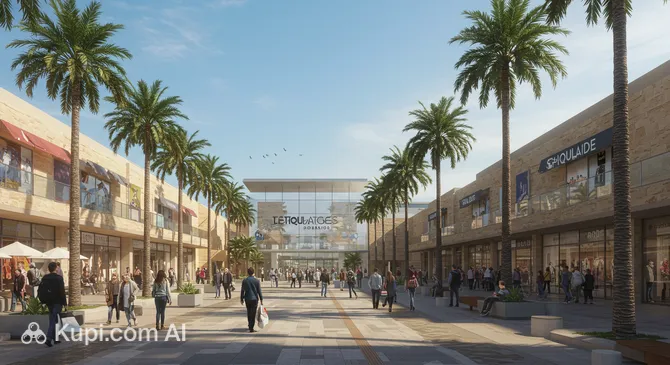
The main center of nightlife in Cap d'Agde is considered to be the Port area (Port Nature and Avant-Port) and the so-called Leisure Island (Île des Loisirs). This is where most of the clubs, discos, live music bars, and the casino are concentrated. The evening atmosphere is complemented by places like the Le Port du Littoral shopping gallery, where you can also find cafes and shops that help liven up the area in the evening. The atmosphere in the main entertainment zones pulses with energy: music blasts until morning, and the crowd is very diverse—from young people to older tourists looking for fun. Many establishments on the waterfront offer magnificent views of the marina and the sea.

Les Portes du Littoral. Illustration.
Source: Kupi.com AI

Traveler photos:

The style of the venues varies from laid-back beach bars where you can dance right on the sand to more glamorous clubs with themed parties and famous DJs. Popular spots include, for example, the lively nightclub "Le Mirage" or the stylish "Sunset Lounge" bar, which offers signature cocktails. Most nightclubs open closer to midnight and stay open until 4 or 5 AM. The dress code is usually smart casual, though some exclusive clubs may require a dressier look. If you get hungry late at night, you can find open restaurants and eateries; for instance, the Cap d’Agde Burger Bar offers hearty meals to satisfy your hunger after an active evening.

Practical Tips: The best time to experience Agde's nightlife is undoubtedly during the summer months when the resort is at its peak activity. Prices in bars and clubs can be quite high, especially in popular spots on the Île des Loisirs. You can get around at night by taxi, which are available in tourist zones, or on foot if your accommodation is nearby. It is wise to check local taxi service numbers in advance or use ride-hailing apps.

Regarding safety, the busy tourist areas of Cap d'Agde are generally well-lit and patrolled. However, as in any resort town, it is worth taking standard precautions: keep an eye on your belongings and avoid poorly lit or deserted areas late at night, especially if you are alone. You can call a taxi by phone or through your hotel reception.

During the day, Agde also offers plenty of interest. You can explore the historic center of old Agde with its narrow streets and Saint-Étienne Cathedral, built of dark volcanic stone. Notable attractions include the Round Lock in Agde—a unique engineering structure on the Canal du Midi—or a visit to the elegant Château Laurens. For family leisure, water parks like the Archipel La Cité de l'Eau Centre and Spa and the amusement parks located in Cap d'Agde are perfect.

Parks & Museums

Agde, an ancient town in the south of France, offers its guests not only magnificent beaches but also the opportunity to get acquainted with a rich cultural heritage through its museums and historical monuments, as well as to enjoy a relaxing break in picturesque natural spots.

For nature and outdoor enthusiasts, there are several interesting places in and around Agde. The beaches of Cap d'Agde are widely known, particularly the unique Grande Conque beach (Plage de la Grande Conque) with its dark volcanic sand—a great place for sunbathing and water activities. Nearby is the Bagnas National Nature Reserve (Réserve Naturelle Nationale du Bagnas), a true paradise for birdwatchers and lovers of untouched Mediterranean nature, where you can observe many species of birds. Also worth noting is Mont Saint-Loup—an ancient volcano whose summit offers breathtaking panoramic views of the town, the coast, and the vineyards; there are hiking trails laid out for walking here.

You can immerse yourself in the history and culture of Agde by visiting its remarkable museums. The most prominent is undoubtedly the Ephebe Museum of Underwater Archaeology (Musée de l'Éphèbe et d'archéologie sous-marine). Its collection includes the famous bronze statue "The Ephebe of Agde," as well as many other unique artifacts recovered from the seabed that tell the ancient history of the region. To better understand local traditions, art, and life in past centuries, stop by the Musée Agathois Jules Baudou, which features exhibits reflecting the daily life and crafts of Agde's inhabitants.

The town's architectural heritage also deserves close attention. The symbol of Agde is the impressive Saint-Étienne Cathedral (Cathédrale Saint-Étienne), built in the 12th century from local black volcanic stone, which gives it an austere and majestic look. It is also essential to see the unique engineering structure—the Round Lock in Agde on the Canal du Midi, the only round lock in France, which allows boats to change direction. Connoisseurs of elegant early 20th-century architecture will be interested in visiting Château Laurens, a magnificent Art Nouveau mansion that is a true jewel of the city.

Agde Round Lock. Illustration.
Source: Kupi.com AI

Traveler photos:

Château Laurens. Illustration.
Source: Kupi.com AI

Traveler photos:

For a complete experience, take a leisurely stroll through the narrow streets of the old town, where many houses are also built of dark volcanic stone, creating a special atmosphere. It is also pleasant to spend time walking along the banks of the Hérault River, enjoying the views and tranquility of this ancient town.

Getting Around

The most convenient way to get around Agde and its surroundings is by using the local bus network, known as Cap'Bus. The city's bus network is well-developed and connects the main districts, including the beach areas and the historic center. This is the primary and most affordable type of public transport for tourists, allowing for comfortable travel to most points of interest.

The fare payment system in Agde usually includes the option to buy single tickets directly from the driver when boarding the bus; the approximate cost of such a ticket is usually 1-2 euros. Tickets or passes for multiple trips or for a full day may also be available at special kiosks, tobacco shops (Tabac), or at the tourist information center. It is recommended to check for official mobile apps for buying tickets or tracking schedules, which can significantly simplify trip planning. Be sure to check if you need to validate your ticket upon boarding—this is usually required to activate it.

Buses in Agde typically run on a schedule that can vary depending on the season and the day of the week. In the summer months, when the town receives more tourists, routes to the beaches may be increased. Generally, services start in the morning and end in the evening; on weekends and holidays, intervals may be longer. It is recommended to check the current schedule at bus stops, on the official website of the transport operator Cap'Bus, or through available mobile apps.

In addition to public transport, there are other ways to get around Agde. For more individual trips or during the night, you can use taxi services. Given the pleasant climate and picturesque surroundings, especially along the coast, bicycle rental is a popular option. Furthermore, many central areas of Agde are perfectly suitable for walking, allowing you to better experience the city's atmosphere.

Accommodation

In Agde, travelers will find a wide range of accommodation options to suit every taste and budget. The town offers everything from budget-friendly hostels and campsites, perfect for young people and backpackers, to mid-range hotels, comfortable apartments, and luxury villas, which are especially popular in the resort area. Many tourists also choose to rent private accommodation, allowing for a deeper immersion into the local atmosphere.

When choosing a place to stay, it is worth looking at several key areas. The historic center of Agde charms with its narrow streets and proximity to attractions like the Round Lock in Agde. However, the most popular area, especially in the summer season, is Cap d'Agde. This is a well-known seaside resort with a developed infrastructure, many hotels, residences, beaches, and entertainment options, including the Archipel La Cité de l'Eau Centre and Spa. The choice of area depends on your preferences: a quiet holiday with a cultural program or an active beach life.

As for the price range, you can find both budget options and premium accommodation in Agde. The cost depends heavily on the season, the type of accommodation, and its location. During the peak season (July-August), prices are understandably higher, so it is recommended to book accommodation in advance. The most common booking methods are popular online platforms and travel aggregators, although some hotels and apartments offer the option of direct booking through their websites.

Nearby Cities

For those who want to explore the surrounding area, Agde serves as an excellent starting point for day trips to several interesting nearby locations:

CityPopulationDistance
Meze12 30717 km
Sete43 85821 km
Béziers78 30822 km
Frontignan23 02827 km
Clermont-l'Hérault9 02936 km

These nearby destinations offer a glimpse into the diverse culture and landscapes of the Occitanie region. Each of these cities has its own unique charm: Montpellier attracts with its dynamic atmosphere and historic center, Béziers is famous for its cathedral and the nine Fonseranes Locks, Narbonne preserves a rich Roman heritage, and Sète, the "Venice of Languedoc," enchants with its canals and seascapes. A trip to any of these cities will enrich your journey through the south of France.

Shopping & Souvenirs

Agde offers pleasant shopping opportunities, combining the charm of small French boutiques with a resort atmosphere, especially in the Cap d'Agde area. While the town is not famous for any unique world-scale goods, you can find high-quality local products, beachwear, souvenirs, and artworks here.

The main shopping areas are concentrated in two main parts of the town. In the historic center of Agde, you will find many small independent shops, stalls with local delicacies, and souvenirs located along the narrow streets. For more modern shopping and a larger selection of brands, head to Cap d'Agde, especially its port zone, where boutiques for clothing, beach accessories, and jewelry are concentrated.

If you prefer shopping in commercial centers, there are several options in and around Agde. One notable one is Le Port du Littoral, where you can find a variety of shops and services.

Markets are an important part of French culture, and Agde is no exception. Visit the local markets to immerse yourself in the atmosphere of the south of France and purchase fresh produce, regional cheeses, olives, honey, and items made by local artisans. Usually, markets operate in the mornings on certain days of the week; it is best to check the schedule locally.

As souvenirs from Agde, it is worth bringing back traditional products from the Occitanie region: local wines (such as Picpoul de Pinet), olive oil, tapenades, honey, ceramics with Provencal motifs, lavender or olive oil-based soaps, and nautical souvenirs to remind you of your holiday on the Mediterranean.

Most shops in Agde are open from Monday to Saturday, usually from 9:00-10:00 to 12:00-12:30 and from 14:00-15:00 to 19:00. During the tourist season, many shops, especially in Cap d'Agde, may stay open without a lunch break and on Sundays. Large supermarkets are usually open later. Bank cards (Visa, Mastercard) are widely accepted, and cash can also be used.

Tourists from countries outside the European Union can take advantage of the Tax Free system when making purchases over a certain limit in one shop on the same day. To do this, you must ask the seller for a special form (détaxe form) and present it along with your purchases to customs when leaving the EU.

Reached the end of the page?

That means the route is fully explored