Support

Alpe dHuez

About

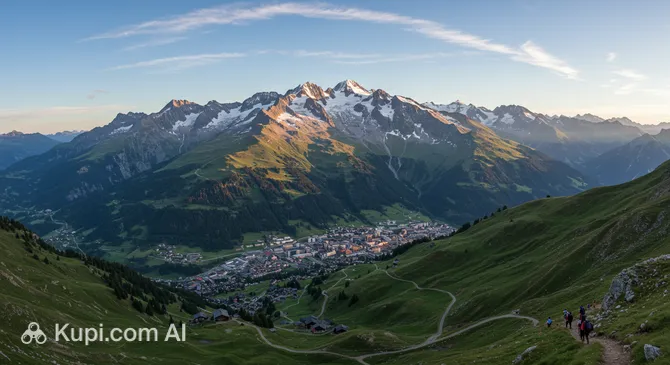
Alpe d'Huez is not just a scenic spot on the map of France, but a true magnet for adventure seekers and mountain landscape lovers. This charming town is nestled in the heart of the Oisans region, in the Grandes Rousses massif, at an impressive altitude of 1,860 meters above sea level. Thanks to its unique location, the resort is often called "The Island in the Sun," as the sun shines here for about 300 days a year, creating ideal conditions for a holiday.

Despite its compact size and population of around 1,300 people, Alpe d'Huez is famous for its warm, friendly atmosphere and is rightfully considered one of the country's most famous and modern ski resorts. Here, every guest feels welcome, and the well-developed infrastructure can satisfy the needs of even the most demanding travelers.
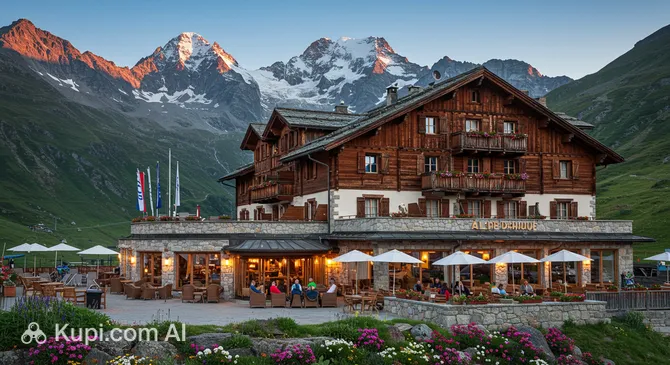
Alpe d'Huez. Illustration.
Source: Kupi.com AI

The main highlight of Alpe d'Huez is its versatility. In winter, the resort transforms into a paradise for skiers and snowboarders, offering over 240 kilometers of diverse slopes, night skiing opportunities, and even heli-skiing for the most daring. In summer, Alpe d'Huez opens its arms to hikers, climbers, and cycling enthusiasts, including the famous climb that regularly features in the Tour de France route. Additionally, you can enjoy fishing, horse riding, or simply relax by a pool with a panoramic view of the Alpine peaks.

It is easy to forget the hustle and bustle in Alpe d'Huez: active entertainment and sports await you during the day, while cozy restaurants with exquisite French cuisine, lively bars, and cinemas await in the evening. This resort is the perfect choice for those seeking a harmonious combination of active recreation and the peaceful atmosphere of an authentic Alpine village. Come to Alpe d'Huez to discover its unique charm!

You can find more interesting facts on the Alpe d'Huez city history page.

Weather Overview

The weather in Alpe d'Huez has a pronounced mountain character with distinct seasons. Winters here are cold, making them perfect for skiing: the average temperature in January is about -3.1°C, with lows dropping to -6.8°C and highs rarely exceeding 0.6°C. Summer, in turn, offers a pleasant coolness: in July and August, the average temperature stays around 15.2°C - 15.4°C, and daytime maximums can reach 20-21°C. Expect moderately warm summers with occasional precipitation and cold, snowy winters.

The level of precipitation in Alpe d'Huez is relatively low throughout most of the year, varying from 3 mm in February and July to 7 mm in December. The number of days with precipitation ranges from 12 (for example, in February, August, October) to 21 days in May. To get more detailed information about weather conditions and to plan your trip in the best possible way, we recommend visiting the Alpe d'Huez climate page.

Average monthly temperature

Average monthly precipitation

Interesting Facts

Beyond its fame as a world-class skiing destination, Alpe d'Huez hides many surprising stories and features that make it a truly unique place. Here are just a few interesting facts about this famous resort in France:

Alpe d'Huez Ski Resort. Illustration.
Source: Kupi.com AI

Traveler photos:

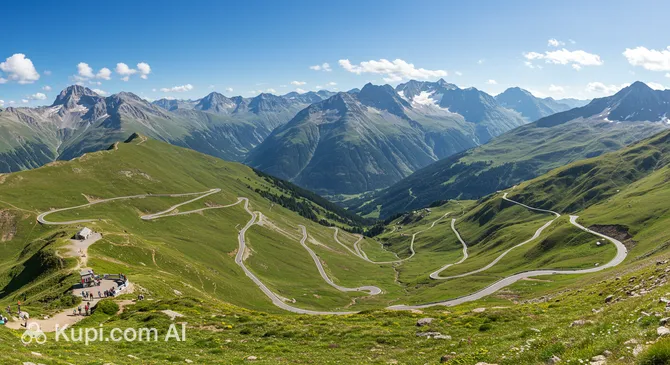
  • Alpe d'Huez is not only a paradise for skiers but also a legendary peak for cyclists. Its famous climb with 21 steep hairpin bends is one of the most iconic and challenging stages of the Tour de France. Each of these turns is named after one of the race winners, immortalizing their triumph.

  • Although the resort was founded in 1936, it gained worldwide fame after the 1968 Winter Olympics in Grenoble, when its tracks hosted the bobsleigh competitions. This event forever inscribed the Alpe d'Huez Ski Resort into Olympic history.

  • The territory of the Alpe d'Huez Ski Resort features one of the longest continuous black runs in the world—"Sarenne." It stretches for a full 16 kilometers, starting at an altitude of 3,330 meters, offering skiers a breathtaking descent with incredible views.

How to Get There

When planning a trip to this famous ski resort, it is important to think through the logistics in advance, as there are no direct flights to the slopes themselves. There is no airport in the town of Alpe d'Huez itself, so tourists usually fly into major transport hubs in neighboring regions or countries. You can find out more about how to get to Alpe d'Huez on our dedicated page, but here we will look at the main flight options.

One of the most popular options is Lyon–Saint Exupéry Airport (LYS), located in the city of Lyon. It is situated about 104 km from Alpe d'Huez. This is a major international hub that receives many flights. The journey from here by car or bus will take about 3 hours.

Many travelers also choose Geneva Airport (GVA), located in Geneva, Switzerland. The distance to the resort is about 129 km, and the travel time is approximately 3.5 hours. If you are looking for a closer option, consider Chambéry Airport (CMF) in the city of Chambéry. It is located just 63 km from Alpe d'Huez (about a 2-hour journey); however, this is a small airport that operates primarily during the winter season.

For clarity, here is a summary of the main airports:

AirportPassenger trafficDistance
Chambéry Airport169 00063 km
Grenoble-Isère Airport307 97965 km
Lyon Saint-Exupéry International Airport10.0 mln104 km
Turin Airport4.5 mln126 km
Geneva Airport17.8 mln129 km

The railway is another convenient and scenic way to reach the mountains. While there is no train station in Alpe d'Huez itself, an excellent network of trains allows you to reach the foot of the Alps, from where you can continue your journey by bus or taxi.

A key hub for tourists is the Grenoble Railway Station, located in the city of Grenoble. This is the nearest station, situated just 30 km from Alpe d'Huez. High-speed TGV trains from Paris arrive here regularly. Travel time from the station to the resort by road is about 1 hour and 5 minutes. Lyon Part-Dieu Station in the city of Lyon (about 120 km from the resort) also plays an important role, serving as a major transfer point for trains from all over Europe.

Below is information about the nearest railway stations:

StationPassenger trafficDistance
Grenoble Railway Station8.8 mln30 km
Valence TGV Station3.3 mln86 km
Lyon Part-Dieu Station40.1 mln120 km
Gare de Lyon-Perrache7.6 mln122 km
Geneva Railway Station42.1 mln126 km

Main Attractions

Alpe d'Huez, located in the French Alps, attracts tourists all year round but is especially famous for its winter activities and stunning mountain scenery. Here, everyone will find something to their liking, from thrilling ski runs to peaceful walks and soaking up the Alpine atmosphere.

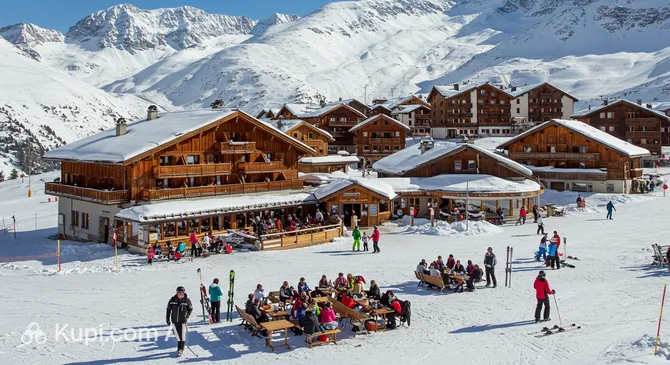
The center of attraction is undoubtedly the Alpe d'Huez Ski Resort. It offers an extensive skiing area with slopes for all skill levels, from beginners to experts. The resort is known for its sunny weather and the famous "Sarenne" run—one of the longest black runs in Europe. Breath-taking panoramic views of the Alps open up from the summit of Pic Blanc.

Alpe d'Huez Ski Resort. Illustration.
Source: Kupi.com AI

Traveler photos:

The Alpe d'Huez Resort itself is not just about ski slopes, but also a lively Alpine village. Here you will find many hotels, apartments, restaurants, bars, and shops. For those looking for entertainment beyond skiing, the resort offers an open-air ice rink, a swimming pool, a sports center, and various events throughout the season.

Alpe d'Huez French Alps Resort. Illustration.
Source: Kupi.com AI

Traveler photos:

For many tourists, Alpe d'Huez as a tourist attraction is the embodiment of the Alpine dream. The road leading to the resort with its famous 21 hairpin bends regularly becomes the stage for Tour de France stages. In summer, you can enjoy hiking and cycling along picturesque mountain trails, admiring magnificent views and breathing in the pure mountain air.

Alpe d'Huez. Illustration.
Source: Kupi.com AI

Traveler photos:

Located near Alpe d'Huez is Auris-en-Oisans, a charming and more peaceful ski resort. It is ideal for families and offers access to the shared Alpe d'Huez Grand Domaine Ski area. Auris-en-Oisans is famous for its sunny slopes, cozy atmosphere, and beautiful views of the Romanche Valley.

Auris-en-Oisans. Illustration.
Source: Kupi.com AI

Traveler photos:

Local Cuisine

The gastronomy of Alpe d'Huez is a true celebration for lovers of hearty and warming Alpine cuisine, perfectly suited for recovering strength after an active day on the mountain slopes. Local culinary traditions are based on the use of fresh, high-quality products, and recipes are often passed down from generation to generation, preserving a piece of Alpine history.

The main stars of the local table are undoubtedly cheese dishes. Be sure to try the aromatic fondue—melted cheese (often a mixture of several varieties such as Beaufort, Comté, or Emmental) into which pieces of bread are dipped. No less popular is raclette: a special cheese is melted and scraped onto boiled potatoes, served with gherkins, onions, and cured meats. Another iconic dish of the region is tartiflette, a hearty gratin made of potatoes, bacon (lardons), onions, and the famous Reblochon cheese. It is also worth tasting the local sausages and smoked meats, which perfectly complement the meal.

La Crémaillère Alpe d’Huez. Illustration.
Source: Kupi.com AI

Traveler photos:

Among drinks, Savoy wines hold a special place, harmonizing perfectly with Alpine dishes. For fans of stronger spirits, we recommend trying local herbal liqueurs, such as the famous Génépi, which has the characteristic aroma of mountain herbs. In cold weather, fragrant herbal teas and infusions are perfect for warming up.

The dining culture in Alpe d'Huez is centered around cozy restaurants and chalets where you can enjoy traditional dishes in a warm atmosphere. Many establishments pride themselves on using local products. For example, the La Crémaillère Alpe d'Huez restaurant offers guests the chance to immerse themselves in the atmosphere of traditional Savoyard cuisine. It is also worth visiting local markets, if any are held during your visit, to sample fresh farm cheeses, homemade jams, honey, and perhaps fresh pastries, such as blueberry tarts.

Travel Tips

Heading to Alpe d'Huez? This famous mountain resort in the French Alps will captivate you with its landscapes and opportunities for active recreation! To make your trip to "The Island in the Sun," as it is often called, as comfortable and fulfilling as possible, use our practical tips.

  1. Mountain Gear: Alpe d'Huez is a high-altitude resort, so the weather here is changeable. In summer, bring layered clothing, including a fleece and a windbreaker for evening walks or mountain hikes. In winter, warm waterproof clothing, thermal underwear, a hat, gloves, and high-quality sunglasses are absolutely essential, as is a high SPF sunscreen—the sun in the mountains is very strong even in cold weather. Comfortable, sturdy walking shoes are a must in any season. Don't forget an adapter for European sockets (Type E).
  2. Getting Around the Resort: Alpe d'Huez itself is a small resort, and it is convenient to get around its central part on foot. Free shuttle buses (navettes gratuites) run between different areas of the resort and to the ski lifts. Taxis are available but can be expensive, especially in high season. Renting a car is useful if you plan to explore the surroundings, but in winter, remember the need for winter tires or snow chains, and parking at the resort may be paid or limited.
  3. Money Matters: The official currency is the Euro (EUR). Bank cards (Visa, Mastercard) are accepted almost everywhere in hotels, restaurants, and shops. ATMs (distributeurs automatiques de billets) can be found in the center of the resort. It is recommended to have some cash with you for small expenses or purchases at markets. In restaurants in France, tips (pourboire) are often already included in the bill (service compris), but if the service was especially good, it is customary to leave an additional 5-10% of the bill amount.
  4. Your Health and Safety: There are pharmacies (pharmacies) at the resort where you can buy basic medicines. For more serious cases, there is a medical center that specializes in sports and skiing injuries. Alpe d'Huez is generally a safe place. Nevertheless, always keep an eye on your belongings, especially in crowded places like bars at the foot of the slopes or in lift lines. In the mountains, always consider weather conditions and warnings from the avalanche service; do not ski alone off-piste without proper training and equipment.
  5. Language and Communication: The official language is French. Staff in the tourism sector (hotels, restaurants, equipment rentals) usually speak English. However, a few phrases learned in French, such as "Bonjour" (Hello/Good day), "Bonsoir" (Good evening), "Merci" (Thank you), "S'il vous plaît" (Please), will always be warmly received by the locals. Wi-Fi is widely available in most hotels, apartments, and many cafes. For mobile internet, you can purchase a local SIM card (e.g., Orange, SFR, Bouygues Telecom) at specialized stores or some tobacco kiosks (Tabac).
  6. Local Etiquette: The French value politeness. When entering small shops, cafes, or when addressing someone, it is customary to say hello ("Bonjour" during the day, "Bonsoir" in the evening) and goodbye ("Au revoir"). In public places, especially on transport or in queues, try not to speak too loudly and respect others' personal space.
  7. What to Avoid: Try not to make noise late at night in the residential areas of the resort, as many people come here for a quiet holiday. Also, when on the ski slopes, strictly observe safety rules, trail markings, and instructions from resort staff; do not ski in closed areas—this can be dangerous for you and creates problems for rescue services.
  8. Pro Tip: Alpe d'Huez is famous for its high number of sunny days. Therefore, be sure to use sunscreen with a high protection factor (SPF 30-50) even in cloudy weather, as UV radiation in the mountains is very intense year-round. If you plan active recreation (skiing, snowboarding, cycling), check lift operating hours and trail conditions in advance—current information is usually available on the resort's official website or on information boards at the lifts.

We hope these tips help you plan the perfect trip to Alpe d'Huez and fully enjoy all the delights of this magnificent mountain resort. We wish you sunny days, great snow (if you're going in winter) or scenic trails (if in summer), and, of course, unforgettable impressions!

Entertainment & Nightlife

Alpe d'Huez, a well-known ski resort in France, offers its guests not only magnificent slopes but also a rather lively evening and nightlife, especially during the height of the winter season. The atmosphere here is relaxed and international, as mountain lovers from all over the world gather here. The main focus is on après-ski entertainment, which smoothly transitions into late-night gatherings.

After a busy day on the slopes, tourists gather in numerous bars and pubs located mainly in the central part of the resort and near the main ski lifts. Here you can meet a diverse crowd—from groups of young people to families with children (during the earlier hours). Many establishments offer live music or DJ sets. Although Alpe d'Huez is not famous for massive nightclubs like big cities, there are several places where you can dance until late at night. Some hotels and large complexes, such as the Alpe d'Huez Resort in the French Alps, also have their own bars and lounge areas with entertainment programs.

If you are looking for a place for dinner that turns into a pleasant evening, pay attention to the restaurants that stay open late. For example, the La Crémaillère Alpe d'Huez restaurant offers a cozy atmosphere and local cuisine. Generally, the nightlife is centered around the main street, Avenue des Jeux, and its adjacent blocks. Here you will find most of the bars, restaurants, and a few small clubs. There are few classic concert venues, but live music is frequently heard in the bars.

La Crémaillère Alpe d’Huez. Illustration.
Source: Kupi.com AI

Traveler photos:

Practical tips: après-ski bars usually come to life from 4:00 PM to 5:00 PM and stay open until late evening. Nightclubs and bars with dancing usually open later and can operate until 2:00 or 3:00 AM. The dress code in most places is casual—it is perfectly acceptable to come in comfortable everyday or even ski clothing (especially for après-ski). Prices in bars and restaurants reflect the status of a popular ski resort and can be higher than average. You can get around the resort at night on foot if your accommodation is in the center, or use a taxi service.

Regarding safety, Alpe d'Huez is considered a fairly safe resort. However, as with everywhere else, basic precautions should be taken, especially at night. If you need a taxi, it is better to order it by phone or through the hotel reception.

During the day, in addition to skiing or snowboarding, Alpe d'Huez offers other forms of entertainment. Guests can enjoy an open-air ice rink, a sports complex with a swimming pool, snowshoeing opportunities, or simply enjoy the stunning Alpine landscapes. While the resort is not a center for museum or theatrical life, cultural events and festivals are sometimes held here, especially during the high season.

Parks & Museums

Alpe d'Huez is not only a famous ski resort but also a place where you can enjoy magnificent Alpine landscapes and get acquainted with local culture. While there are few traditional urban parks here, the entire surrounding nature represents a vast green zone, and several interesting sites tell the story of the region's history and traditions.

The main "park" of Alpe d'Huez is undoubtedly its breathtaking mountain landscapes. In summer, the slopes covered with snow in winter transform into endless expanses for hiking and cycling. Numerous trails of varying difficulty lead to picturesque corners with panoramic views. The Alpe d'Huez Ski Resort serves as the starting point for many routes, including the ascent to the famous Pic Blanc, from where Mont Blanc is visible on a clear day. This is an ideal place for those seeking active outdoor recreation and union with nature.

Alpe d'Huez Ski Resort. Illustration.
Source: Kupi.com AI

Traveler photos:

Among the natural gems of the region, Lake Besson (Lac Besson) stands out. Located at an altitude of over 2,000 meters, this picturesque lake is a popular spot for walks and picnics. The crystal-clear water, surrounded by Alpine meadows and mountain peaks, creates a peaceful atmosphere. In summer, you can enjoy the tranquility, go fishing, or simply admire the reflection of the mountains in the water.

To gain a deeper understanding of the history and culture of this unique mountain region, it is worth visiting the Museum of Huez and Oisans (Musée d'Huez et de l'Oisans). This museum tells the story of life in the Alps over the centuries, the development of skiing, and the traditions of local residents. Exhibits include household items, vintage photographs, and artifacts related to the history of Alpe d'Huez and the Oisans Valley. This is a wonderful opportunity to learn more about the past of this famous resort.

An unusual cultural and architectural site is the Church of Notre-Dame des Neiges (Église Notre-Dame des Neiges). This modern church, built in the 1960s, is known for its unique tent-shaped architecture and impressive stained-glass windows created by the artist Arcabas. Inside the church, there is also an organ of unusual design. This place is of interest not only to believers but also to lovers of modern architecture and art.

For authentic experiences, try exploring the less popular hiking trails to enjoy the silence of the mountains away from the main routes. Also, look out for local markets or small farm shops where you can taste traditional Oisans products—this will add a special flavor to your trip to Alpe d'Huez.

Getting Around

Alpe d'Huez is a popular mountain resort, and its transport system is perfectly adapted to the needs of tourists, especially those visiting for winter sports or summer mountain activities. Getting around the resort and its surroundings is quite convenient thanks to a well-thought-out infrastructure focused on easy access to the slopes and main facilities.

The primary form of public transport within Alpe d'Huez itself consists of free shuttle buses (navettes gratuites). These buses run along several routes, connecting different areas of the resort, the main ski lifts, parking lots, and central points. Shuttle schedules are usually available at stops, at the tourist office, and on the resort's official website. This is a great way to save energy and time, especially if you are carrying ski equipment or traveling with children.

An integral part of the transport system, especially during the winter season, are the lifts: cable cars (téléphériques and télécabines) and chairlifts (télésièges). Not only do they take skiers and snowboarders to the start of the slopes, but they also serve as a kind of transport between the resort's different altitude levels, providing access to panoramic platforms and mountain restaurants. In summer, some lifts also operate, serving hikers and cyclists who want to explore mountain trails.

The payment system is simple: generally, a separate ticket is not required for the shuttles—they are free for everyone. Access to the lifts is via a ski pass, which can be purchased for one or several days, or for the entire season. Ski passes are usually bought at the lift ticket offices, at the tourist office, or online in advance, which is often more economical. Outside the winter season, special tickets or passes may be offered for hikers and cyclists to use the operational lifts.

Tourists are advised to always check the current shuttle schedule and lift operating hours, as they can change depending on the season, weather conditions, and resort capacity. Information brochures, route maps, and other useful information can be easily found at the Alpe d'Huez Tourist Office. Ski pass validation for the lifts occurs automatically when passing through the turnstiles at the stations.

In addition to public transport and lifts, you can use taxi services in Alpe d'Huez, although this will be a more expensive way to get around. For short distances within the resort itself, many prefer to move on foot, enjoying the fresh mountain air and picturesque views. In the summer season, bicycle rental is very popular, including mountain and electric models, allowing you to explore the numerous cycling tracks and resort surroundings at your own pace.

Accommodation

Alpe d'Huez, being a popular ski resort, offers tourists a wide range of accommodation options to suit various preferences and budgets. Here you will find traditional hotels of different star ratings, cozy chalets, and self-catering apartments, ideal for families or large groups. The most sought-after options are located in close proximity to the ski slopes, lifts, and the resort center, where the main infrastructure is concentrated.

In Alpe d'Huez, you can find accommodation for every taste: from more economical options to luxury residences. Among the well-known places to stay, one can highlight, for example, the Alpe d'Huez Resort, French Alps, which offers comfortable conditions and convenient access to the resort's activities.

Alpe d'Huez French Alps Resort. Illustration.
Source: Kupi.com AI

Traveler photos:

When planning a trip to Alpe d'Huez, especially during the peak ski season (usually from December to March), it is highly recommended to book accommodation in advance. This will allow you not only to choose the best option in terms of location and amenities but also, perhaps, to take advantage of better offers. The price range varies from budget studios and apartments to mid-range hotels and luxury chalets. You can book accommodation through popular online platforms or directly on the websites of hotels or apartment complexes.

Nearby Cities

For those looking to explore the surrounding area, Alpe d'Huez serves as an excellent starting point for day trips to several interesting nearby locations.

Among them, Grenoble, known as the "Capital of the Alps," stands out, located just 29 km away. This lively city offers a rich cultural program, a historic center with narrow streets, numerous museums, and the famous cable car to the Bastille, which offers breathtaking panoramic views. Another attractive destination is Chambéry (55 km), the former capital of Savoy. The city charms with its medieval Castle of the Dukes of Savoy, a picturesque old town, and the famous Fountain of the Elephants. These cities, as well as the other towns listed below, offer a variety of opportunities for day excursions.

CityPopulationDistance
Eybens9 98025 km
Saint-Martin-d'Hères38 39825 km
Meylan17 78626 km
Echirolles36 96128 km
Grenoble158 19829 km

These nearby destinations allow you to get a sense of the diverse culture and landscapes of the region.

Shopping & Souvenirs

Alpe d'Huez, being primarily a world-famous ski resort, offers shopping opportunities focused mainly on the needs of active tourists and mountain lovers. You won't find huge malls here, but you can purchase high-quality sports equipment, warm clothing, as well as pleasant souvenirs and local delicacies that will remind you of your time spent in France.

The main shopping outlets in Alpe d'Huez are concentrated in the central part of the resort, along the main streets and in the immediate vicinity of the ski lifts. These are mostly specialized sports shops offering skiing and snowboarding equipment, gear, and accessories from leading brands. You can also find boutiques with fashionable Alpine-style clothing, souvenir shops, and stores selling local products. Many of these retail outlets are part of the infrastructure of the Alpe d'Huez ski resort.

Alpe d'Huez Ski Resort. Illustration.
Source: Kupi.com AI

Traveler photos:

There are no large shopping centers in the classic sense in Alpe d'Huez. However, there are shopping galleries or small complexes that combine several shops, service centers (for example, equipment rental), and sometimes cafes. They are usually located in the resort's central buildings or integrated into large hotel complexes, providing easy access to necessary goods and services.

As for markets, permanent large food or flea markets are not a characteristic feature of Alpe d'Huez, especially during the height of the ski season. However, periodically, especially during holidays or special events, small fairs may be organized where local farmers and artisans offer their products. It is best to check for information about such events on-site upon arrival or at the resort's tourist office.

As souvenirs from Alpe d'Huez, tourists most often choose items with the resort's symbols: T-shirts, hats, mugs, magnets. Products of local artisans, such as carved wooden figures or warm knitted items, are also popular. Don't forget about gastronomic souvenirs: local cheeses (such as Beaufort or Reblochon), Savoyard sausages, Alpine honey, forest berry jams, and, of course, the famous herbal liqueur Génépi.

Shops in Alpe d'Huez usually operate from 9:00–10:00 AM until 7:00–8:00 PM. Many of them, especially smaller ones, may close for a lunch break, typically from 12:30 PM to 2:30 PM or 3:00 PM. During peak season (Christmas, New Year, February holidays), opening hours may be extended, and lunch breaks shortened or eliminated. Bank cards (Visa, Mastercard) are accepted almost everywhere. Having a small amount of cash may be useful for small purchases or at occasional fairs.

For tourists who are not residents of the European Union, a VAT refund system (Tax Free) is available in Alpe d'Huez, as in the rest of France. To take advantage of this opportunity, you must make a purchase over a set minimum amount (usually around 100 euros, but it is better to check the current amount) in one store participating in the Tax Free program on one day. When paying, ask the salesperson to issue a special check (bordereau de détaxe). This check, along with your passport and unopened purchases, will need to be presented at customs when leaving the European Union to receive the tax refund.

Reached the end of the page?

That means the route is fully explored