Support

Courchevel

About

Courchevel is not just a world-famous ski resort, but a true gem of the Alps located in France. The town is nestled on the slopes of the picturesque Tarentaise massif, in the heart of the famous Savoy region, at an altitude ranging from 1,300 to 1,850 meters above sea level. Thanks to its unique location, Courchevel is part of Les Trois Vallées (The Three Valleys) — the world's largest interconnected ski area, offering over 600 kilometers of runs for winter sports enthusiasts.
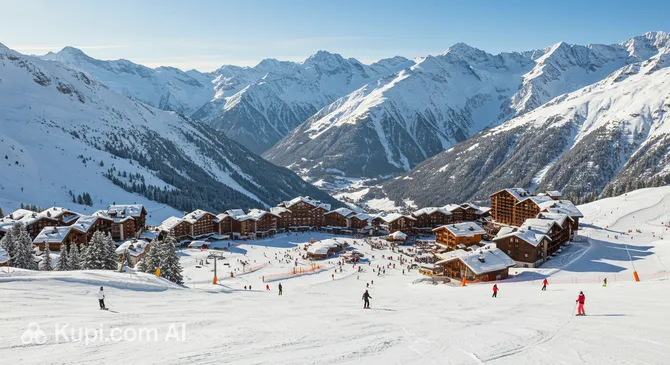
Courchevel. Illustration.
Source: Kupi.com AI

The population of Courchevel itself is about 2,360 people, but at the height of the season, this figure increases many times over due to tourists from all over the world. They come here to enjoy magnificent slopes, crystal-clear mountain air, and a unique atmosphere of luxury. The resort is unique in that it consists of five villages, each located at its own altitude and possessing its own character: Saint-Bon, Le Praz, Courchevel 1550, Courchevel 1650, and, of course, the legendary Courchevel 1850 — the epicenter of luxury and exclusive vacations.

The atmosphere of Courchevel is a harmonious blend of sophistication, Alpine coziness, and elegance. Here, French charm is evident in everything: from stylish boutiques of world-famous brands and haute cuisine restaurants (some of which are Michelin-starred) to cozy chalets offering world-class service. Courchevel attracts not only avid skiers and snowboarders but also those who appreciate high-quality relaxation, breathtaking landscapes, and impeccable service.

Visiting Courchevel means giving yourself an unforgettable experience. Here you can not only conquer snow-capped peaks but also enjoy exquisite Savoyard cuisine, stroll through fashionable shops, or simply relax while contemplating the splendor of the Alpine mountains. This resort is ideal for family vacations, romantic trips, groups of friends, and anyone dreaming of immersing themselves in a real winter fairy tale, combining active recreation with luxury and comfort.

You can find more interesting facts on the history of Courchevel page.
Weather Overview

The weather in Courchevel is typical for high-altitude Alpine resorts. Expect cold, snowy winters, ideal for ski vacations, with average January temperatures around -5.9°C, and cool, humid summers, when the average July temperature reaches +13.8°C, and rain is frequent in May and June (up to 20 rainy days per month). Precipitation is distributed throughout the year: heavy snow in winter and refreshing rain in summer. To learn more about the weather in different seasons and get detailed monthly information, visit our Courchevel Climate section.

Average monthly temperature

Average monthly precipitation

Interesting Facts

Beyond its worldwide fame as a premier ski resort, Courchevel hides many surprising details and stories. This corner of the French Alps is not just about slopes and luxury hotels, but a place with a unique past and present. Here are some interesting facts to help you see it in a new light:

Courchevel. Illustration.
Source: Kupi.com AI

Traveler photos:

  • Courchevel is home to one of the most extreme and dangerous mountain airports in the world — Courchevel Altiport. Its short runway with an 18.6% gradient is surrounded by mountains, making takeoffs and landings a real test even for the most experienced pilots.

  • The resort was purposefully designed and built after World War II. It was one of the first resorts in France where villages were not built around an existing church but created from scratch for the maximum convenience of skiers, with an emphasis on direct ski-in/ski-out access from hotels.

  • Courchevel is not just one village, but five distinct settlements located at different altitudes: Saint-Bon-Tarentaise (Courchevel 1100), Courchevel Le Praz (1300), Courchevel Village (1550), Courchevel Moriond (1650), and Courchevel 1850. Each has its own unique atmosphere and features.

  • In 2010, Courchevel received the prestigious \"Famille Plus Montagne\" label, officially confirming its status as one of the best family ski resorts in France. Every condition has been created here for vacationing with children, including nurseries, kindergartens, and specialized ski schools.

How to Get There

You can reach this famous Alpine resort in several ways, but most tourists choose to fly into one of the major international hubs followed by a transfer. Since the resort is located high in the mountains, there are no direct train services or regular commercial flights directly into the villages. You can find out more about how to get to Courchevel by exploring all available routes and modes of transport.

Courchevel itself does not have an airport that accepts regular passenger flights. Most travelers fly into Geneva Airport (GVA) in Geneva, Switzerland. It is located approximately 98 km from the resort. This is one of the most popular options due to the large number of international flights. The travel time from Geneva to Courchevel by car or bus usually takes about 2.5–3 hours, depending on weather conditions and mountain traffic.

Another convenient option is Lyon–Saint-Exupéry Airport (LYS) in Lyon, about 124 km from Courchevel. This is a major transport hub with organized transfers to the ski stations. The car journey takes about 2.5 hours. If you are looking for a closer option, consider Chambéry Airport (CMF) in Chambéry (only 62 km from the resort), although it accepts fewer flights, mostly charter and seasonal ones.

For convenience, here is a summary of the main airports:

AirportPassenger trafficDistance
Chambéry Airport169 00062 km
Turin Airport4.5 mln85 km
Geneva Airport17.8 mln98 km
Grenoble-Isère Airport307 979101 km
Sion35 929103 km

Traveling by train is also popular, although there is no railway station in Courchevel itself. The nearest major hubs allow you to reach the region, after which you'll need to transfer to a bus or taxi. A convenient arrival point can be Geneva-Cornavin station in Geneva, about 94 km from the resort. Transfers to the French Alps depart regularly from here.

You can also consider traveling via Grenoble Railway Station, located in the city of Grenoble (about 76 km from Courchevel). This is an important transport hub for the Auvergne-Rhône-Alpes region. The journey from the station to the slopes by road takes approximately 1.5–2 hours. Typically, tourists take TGV trains to Moutiers station, which is closest to the resort, but arriving at the major stations of neighboring cities is also common practice.

Below is information about the nearest major railway stations:

StationPassenger trafficDistance
Grenoble Railway Station8.8 mln76 km
Porta Susa Railway Station10 mln91 km
Porta Nuova Railway Station70 mln93 km
Geneva Railway Station42.1 mln94 km
Sion Railway Station4.5 mln105 km

Main Attractions

Courchevel, the world-renowned ski resort in the French Alps, attracts guests not only with its pristine slopes and luxurious atmosphere but also with a whole range of other fascinating places and activities. Here, everyone will find something to their liking, whether it's thrilling descents, relaxing in spas, or enjoying the Alpine scenery.

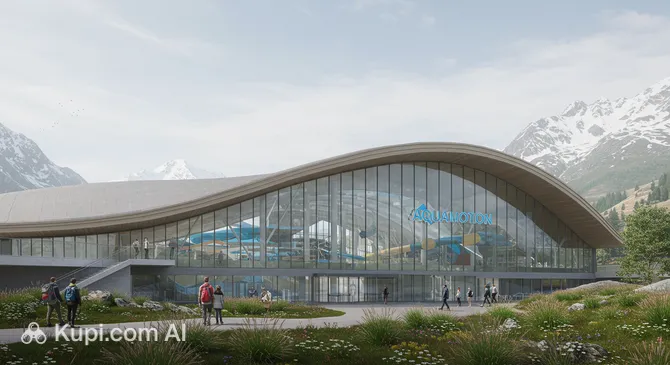
One of the main centers of attraction, especially for families and those looking for variety after an active day on the slopes, is Aquamotion. This modern aquatic center offers a wide range of entertainment: from swimming pools with water slides and surfing zones to a magnificent spa complex with saunas, hammams, and massage rooms. Aquamotion is the perfect place to relax, recharge, and have fun regardless of the weather.

Aquamotion. Illustration.
Source: Kupi.com AI

Traveler photos:

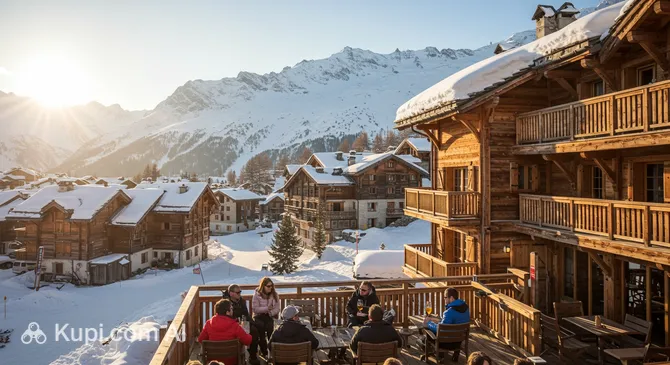
The resort of Courchevel itself can easily be called a landmark in its own right. It consists of several levels or villages, each with its own unique character and atmosphere — from the fashionable Courchevel 1850 to the more traditional and cozy lower levels. In addition to world-class skiing and snowboarding, you can enjoy walking along picturesque streets, visiting exquisite restaurants and boutiques, or simply admiring the breathtaking views of the Alpine peaks. The infrastructure of Courchevel is thought out to the smallest detail, ensuring a comfortable and unforgettable stay.

Courchevel. Illustration.
Source: Kupi.com AI

Traveler photos:

For fans of unusual experiences and aviation, a visit to the Courchevel Altiport is a must. It is one of the highest airports in Europe, famous for its short, sloped runway. The altiport is not only a functioning transport hub but also a popular spot for excursions, offering stunning views. It is common to see private planes and helicopters taking off and landing here, which is a spectacular sight in itself.

The summit of La Saulire, reaching an altitude of 2,738 meters, is one of the iconic points of Courchevel and the entire Three Valleys region. You can reach it via a cable car, and it's worth it not just for the dizzying descents on various runs, but also for the panoramic views from the top. On a clear day, you can see Mont Blanc and the endless Alpine expanses. La Saulire also features restaurants where you can grab a bite while enjoying the scenery.

Local Cuisine

The gastronomy of Courchevel is a true discovery for foodies, immersing you in the atmosphere of Alpine traditions. The local scene is dominated by Savoyard cuisine, known for its rich flavors and hearty dishes that are perfect for recovering after an active day on the slopes. Be sure to try the legendary Fondue Savoyarde, where fragrant local cheese is melted right at your table, inviting you to dip pieces of fresh baguette into it. Equally famous are Raclette, where melted cheese is served with potatoes and charcuterie, and the hearty Tartiflette — a gratin made of potatoes, bacon, onions, and Reblochon cheese.

In addition to these classic dishes, Courchevel's restaurants offer game delicacies, dishes seasoned with aromatic Alpine herbs, and magnificent desserts such as fresh blueberry tart or delicate meringues. The resort's gastronomic scene is impressive in its diversity: from cozy family-run restaurants to Michelin-starred establishments. Local chefs skillfully combine centuries-old Savoyard culinary traditions with modern gastronomic trends, creating truly unique taste experiences.

To warm up after a frosty day, try traditional hot mulled wine (vin chaud) or a local specialty — Génépi liqueur, infused with Alpine wormwood and possessing a characteristic herbal aroma and warming effect. It is also worth paying attention to Savoyard wines, which perfectly complement local dishes. Tourists and locals alike often visit farmers' markets where you can buy the freshest local cheeses, sausages, homemade jams, and fragrant mountain honey — excellent gastronomic souvenirs or ingredients for a picnic.

Dining culture in Courchevel is not just a meal but a whole ritual. Dinners in cozy chalets by the fireplace, outdoor tastings, or visiting gastronomic festivals often held in winter will leave unforgettable impressions. Whether it's a simple lunch in a mountain café with a view of snow-capped peaks or an exquisite dinner in a fine-dining restaurant, Courchevel is capable of satisfying the tastes of the most demanding gourmets, offering authentic Savoyard dishes and modern European cuisine.

Travel Tips

Planning a trip to the magnificent Courchevel? Wonderful! To ensure your journey through one of the world's most prestigious ski resorts goes smoothly and leaves only pleasant impressions, we've prepared some practical tips.

  1. Clothing and Essentials:

    Since Courchevel is primarily a ski resort, warm, layered clothing is a must, especially from December to March. Don't forget waterproof outerwear, thermal underwear, a hat, gloves, and a scarf. Sunscreen and sunglasses with a high UV filter are critical even in winter due to the high altitude and sun reflection off the snow. For walking around the villages and for après-ski, you'll need comfortable, non-slip shoes. Don't forget an adapter for French outlets (Type E).

  2. Getting Around the Resort:

    Courchevel consists of several levels (villages) connected by free shuttle buses (navettes) that run regularly. Within each village, it's convenient to get around on foot. Taxis are available but can be expensive. Renting a car is not a necessity if you plan to stay within the resort, especially since parking can be limited and pricey. If you do want to explore the surrounding area, make sure your car is equipped for winter conditions.

  3. Financial Matters:

    The official currency is the Euro (EUR). Credit and debit cards (Visa, Mastercard) are accepted almost everywhere in hotels, restaurants, and shops. ATMs are easy to find in the resort's main villages. Courchevel is known as an expensive resort, so plan your budget accordingly, especially for accommodation, dining, and ski passes. Tips in restaurants are usually 5-10% of the bill if service is not included.

  4. Health and Safety:

    Courchevel has pharmacies and medical centers ready to help, including for ski injuries. The resort is considered very safe. Nonetheless, observe standard precautions: keep an eye on your belongings, especially on the slopes and in crowded areas. If you plan to ski off-piste, always do so with an experienced guide and check the avalanche conditions.

  5. Language and Communication:

    The official language is French. However, given the resort's international status, English is widely spoken in hotels, restaurants, shops, and ski schools. Knowing a few basic French phrases, such as \"Bonjour\" (Hello), \"Merci\" (Thank you), and \"S'il vous plaît\" (Please), will be appreciated by the locals. Wi-Fi is available in most hotels, cafes, and even on some parts of the slopes. A local SIM card can be purchased upon arrival at the airport or in larger cities in the region.

  6. Local Etiquette:

    Follow general rules of politeness common in France. It is customary to say hello (\"Bonjour\") and goodbye (\"Au revoir\") when entering and leaving a shop or restaurant. In expensive restaurants and for evening events, a smart casual or even more formal dress style may be appropriate. Discretion and respectful behavior towards others are valued.

  7. What to Avoid:

    It is strictly discouraged to ski or snowboard off-piste without a qualified guide and appropriate equipment — it can be dangerous due to avalanche risks. Also, try not to leave your ski equipment unattended for long periods to avoid loss or theft.

  8. Additional Tip:

    Courchevel is part of the massive \"Three Valleys\" (Les Trois Vallées) ski area. Study the trail map and ski pass options in advance to choose the best one for your skill level and plans. Book accommodation, popular restaurants, and ski lessons well in advance, especially if your trip falls during peak season (Christmas, New Year, February holidays).

We hope these tips help you better prepare for your trip and get the most enjoyment out of your holiday in magical Courchevel. We wish you unforgettable experiences and great skiing!

Entertainment & Nightlife

Courchevel, world-famous as one of the most prestigious ski resorts, offers its guests more than just magnificent slopes; it boasts a rich entertainment program, especially once the sun sets behind the Alpine peaks. The nightlife here is vibrant and sophisticated, catering to the most discerning tastes and turning every evening into an unforgettable event.

The epicenter of evening and night entertainment is undoubtedly Courchevel 1850. This is where the trendiest bars, exclusive nightclubs, and fine-dining restaurants are concentrated, transforming into stylish lounge zones with DJ sets as night falls. The atmosphere in Courchevel's venues is predominantly elegant and cosmopolitan. The crowd is international, appreciating high-quality leisure and impeccable service. While a strict dress code isn't everywhere, smart casual or even more dressed-up looks are appropriate in most popular spots. Clubs usually come to life closer to midnight and stay open until the early morning hours.

Among the places that can diversify your evening leisure in Courchevel is Aquamotion. This large water and wellness complex offers not only daytime activities but also evening relaxation options, such as dinner in one of the restaurants with panoramic views or attending special evening events. In general, the resort of Courchevel itself provides guests with access to a wide range of entertainment, including restaurants with live music and cozy bars in hotels and chalets where you can enjoy a cocktail by the fireplace. The nightlife becomes especially lively during the peak ski season, though many establishments continue to welcome guests at other times as well.

Aquamotion. Illustration.
Source: Kupi.com AI

Traveler photos:

When planning a night out, keep in mind that prices in Courchevel match its status and can be quite high, especially in the venues of Courchevel 1850. The best time to visit clubs is after 10:00 PM or 11:00 PM. To travel between different levels of the resort or get back to your hotel at night, you can use taxis, which are recommended to be booked in advance through hotel reception or special services. Within a single level, such as Courchevel 1850, many distances can be covered on foot.

Regarding safety, Courchevel is a very calm and safe resort. The streets are well-lit, and night walks generally do not cause concern. Nevertheless, it is always worth observing basic precautions. Taxis can be called through your hotel service or found at designated stands.

During the day, Courchevel also offers plenty of entertainment beyond skiing or snowboarding. Guests can visit luxury boutiques, art galleries, relax in numerous spas (including those at Aquamotion), enjoy gastronomic delights in Michelin-starred restaurants, or simply stroll through the picturesque streets of the resort while admiring the Alpine scenery.

Parks & Museums

Courchevel, the world-famous ski resort in France, offers its guests not only world-class slopes but also magnificent natural landscapes, which are its primary \"parks.\" While traditional museums are few, cultural life and leisure opportunities are represented by modern entertainment centers and the charm of Alpine style.

The main asset of Courchevel is the surrounding Alpine expanse. In winter, it is a paradise for skiers and snowboarders, and in summer, the mountains transform into an ideal place for hiking, mountain biking, and enjoying panoramic views. The resort of Courchevel itself spans several levels, each offering unique landscapes and access to natural beauty. These mountain landscapes are a true natural park, open for exploration and adventure all year round.

Not far from Courchevel lies the majestic Vanoise National Park (Parc national de la Vanoise), the oldest national park in France. This is a vast protected area with rich flora and fauna, alpine meadows, glaciers, and high peaks. Visitors can explore the park's numerous trails, enjoying untouched nature and breathtaking views. This place is a must-visit for everyone who appreciates natural beauty and active outdoor recreation.

Courchevel is not known for a large number of traditional museums in the classic sense. The resort's focus is on sports, outdoor activities, and high-end service. However, this does not mean a complete absence of cultural experiences. Art lovers can find interesting exhibitions in private galleries that often open during the winter season, presenting works by contemporary artists and sculptors. These galleries are often located in prestigious areas of the resort, such as Courchevel 1850.

For those looking for variety after an active day in the mountains, Aquamotion is an excellent choice. This modern aqua and wellness center is one of the largest mountain water zones in Europe and offers a wide range of entertainment and services: from swimming pools, water slides, and surfing zones to spa treatments, saunas, and fitness gyms. Aquamotion is a great place for family vacations or relaxation in any weather, offering an alternative to traditional cultural sites.

Although Courchevel is a relatively modern resort, its villages retain the charm of traditional Savoyard architecture, harmoniously blending with luxurious chalets and hotels. A walk through the different levels of the resort — Courchevel Le Praz (1300), Courchevel Village (1550), Courchevel Moriond (1650), and Courchevel 1850 — allows you to appreciate this architectural diversity and the cozy atmosphere of Alpine settlements.

To dive deeper into the region's atmosphere, be sure to try local Savoyard dishes like fondue or raclette in one of the many restaurants. And for truly unforgettable experiences and a unique view of the Alpine peaks, consider a helicopter tour or a paragliding flight — the views from there are simply breathtaking!

Getting Around

Courchevel, as a renowned ski resort, offers a well-organized transportation system that allows guests to move comfortably between its various levels and villages. The transport infrastructure here is designed with tourists' needs in mind, ensuring easy access to ski slopes, restaurants, shops, and other resort facilities.

The main form of public transport in Courchevel is the free shuttle buses, known as \"navettes.\" These buses run regularly between all the resort's main levels: Courchevel 1850 (the highest and most prestigious), Courchevel Moriond (1650), Courchevel Village (1550), and Courchevel Le Praz (1300). Shuttles also connect these centers with smaller hamlets and key points such as parking lots or lift base stations. Bus service is usually frequent, especially during the peak ski season, with short intervals from early morning until late evening.

In addition to buses, an integral part of Courchevel's transport system consists of lifts: cable cars, gondolas, and chairlifts. While their primary purpose is to transport skiers and snowboarders to the slopes, many are also accessible to pedestrians. This is an excellent opportunity not only to move quickly between different altitudes of the resort but also to enjoy panoramic views of the Alpine peaks. Some lifts directly connect different villages within the resort.

The fare system in Courchevel is quite simple and tourist-friendly. Using the shuttle buses (navettes) throughout the resort is free. To use the lifts as transport (if you are not skiing), you typically need a special pedestrian pass (forfait piéton), which can be purchased for one or several trips, or for a full day. Skiers and snowboarders use the lifts as part of their ski pass. Information about the costs and types of pedestrian tickets can be obtained at lift ticket offices or tourist information centers.

To use public transport, tourists should check the shuttle schedules, which are available at bus stops, in tourist offices, in most hotels, as well as on the official Courchevel resort website or in special mobile apps. Shuttle stops are clearly marked. There is no need to validate tickets on the free shuttles. When using lifts as a pedestrian, you must purchase the appropriate ticket at the office and pass through the turnstile. Transport operating hours usually cover the entire daylight period and continue into the late evening, especially during high season.

As an alternative to public transport, taxi services are always available in Courchevel. This is a more expensive but convenient option, especially for night trips, traveling with large amounts of luggage, or for transfers to neighboring valleys. During the summer season, bicycle rentals can be useful for exploring the surroundings. However, the main focus of the resort's transport system is on the efficient operation of free shuttles and the lift network, ensuring maximum mobility for vacationers.

Accommodation

Courchevel, one of the world's most prestigious ski resorts, offers a wide range of accommodation options, primarily catering to connoisseurs of luxury and comfort. Here you will find magnificent hotels, exclusive chalets, and stylish apartments capable of satisfying the most discerning taste. While budget options are less common, they can be found, especially if you consider staying in the lower parts of the resort or planning a trip during the off-season.

The choice of area for your stay in Courchevel largely determines the character of your vacation. The resort consists of several levels, each with its own unique atmosphere: Courchevel 1850 is the heart of the resort, the highest, most prestigious, and most expensive area. This is where the most luxurious hotels, Michelin-starred restaurants, and world-class boutiques are located, as well as direct ski-in/ski-out access to the best slopes. Courchevel Moriond (1650) offers sunnier slopes and a slightly more relaxed atmosphere, making it popular with families and those looking for good value in the high-end segment. Courchevel Village (1550) is a quieter area well-connected to the rest of the resort by lifts. You can find cozy hotels and apartments here. Courchevel Le Praz (1300) is the lowest and most authentic village with traditional Alpine architecture. It offers a more secluded atmosphere and can be more affordable while maintaining easy access to the ski area.

While the provided list of attractions does not include specific hotels, Courchevel is famous for its legendary establishments such as Les Airelles, Cheval Blanc, Le K2 Palace, and many others, offering world-class service and unsurpassed comfort. Most accommodation options fall into the luxury and premium categories.

Given the immense popularity of Courchevel, especially during the peak winter season (December to March), it is strongly recommended to book accommodation well in advance — ideally several months before your intended trip. This will allow you to choose the best option in terms of location and price. Booking is available through popular international online platforms, specialized travel agencies, and directly on the official websites of hotels and apartment complexes.

Nearby Cities

For those who want to explore the surroundings, Courchevel serves as an excellent starting point for day trips to several interesting nearby locations:

CityPopulationDistance
Meribel2 0006 km
Albertville19 50232 km
Megève3 00047 km
La Ravoire8 53053 km
Passy11 23355 km

These nearby destinations offer insight into the diverse culture and landscapes of the region, complementing the holiday experience in Courchevel.

Shopping & Souvenirs

Courchevel is not only a world-famous ski resort but also a true paradise for lovers of luxury shopping. The town is famous for its exclusive boutiques offering the latest collections from international fashion houses, high-quality sports equipment, exquisite jewelry, and delicacies. Here, shopping is an integral part of a prestigious vacation, combining elegance with Alpine chic.

The main concentration of luxury shops is in Courchevel 1850, the resort's highest and most prestigious level. Strolling through its streets, such as Rue du Rocher or Rue de l'Eglise, you will discover the storefronts of the most famous brands. You can find everything here: from designer clothing and accessories to artworks and antiques. Other levels of Courchevel, such as Courchevel Moriond (1650) and Courchevel Village (1550), also offer shops but with a more accessible range, including sports goods and souvenirs.

Courchevel doesn't have giant shopping malls in the traditional sense. Instead, shopping is concentrated in elegant galleries and individual boutiques. One of the iconic spots is Le Forum in Courchevel 1850. This is not just a shopping center, but a multifunctional space where shops, restaurants, an ice rink, and other entertainment are gathered under one roof. You can find both sports gear and fashionable clothing here.

Traditional street markets are not the main feature of shopping in Courchevel, which is more boutique-oriented. However, in some parts of the resort, especially in Courchevel Le Praz (1300), you can find small shops offering local farm products like cheeses, sausages, and honey. It's also worth paying attention to gastronomic boutiques selling high-quality regional delicacies.

You can bring back many pleasant and memorable gifts from Courchevel. Savoyard specialties are popular: fragrant cheeses (e.g., Beaufort, Reblochon), meat delicacies, Alpine honey, and chocolate. It's also worth looking at products from local artisans, ceramics with Alpine motifs, warm knitwear, and, of course, souvenirs with Courchevel branding. For connoisseurs of luxury, exclusive watches or jewelry make excellent souvenirs.

Most shops in Courchevel, especially during high season (December to April), operate daily, including Sundays, often from 10:00 AM to 8:00 PM, and some boutiques may stay open later. In the off-season, hours may be reduced. Credit cards (Visa, MasterCard, American Express) are widely accepted. Cash is also used, especially in small shops.

Tourists who are not residents of the European Union can take advantage of the Tax Free system and reclaim VAT on purchases made in Courchevel. To do this, you must make a purchase of a certain amount in a participating store and correctly complete the documents at the time of purchase and at customs when leaving the EU. Typically, the minimum purchase amount is over 100 euros. Check the specific conditions directly in the stores.

Reached the end of the page?

That means the route is fully explored