Support

Aosta

About

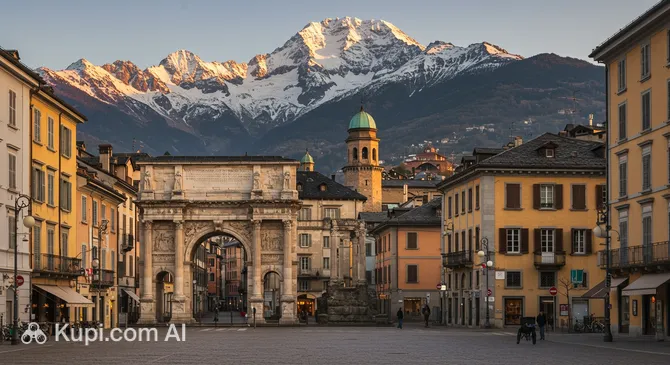
Aosta is an amazing city, nestled in the very heart of the Alps, at the foot of snow-capped peaks and surrounded by picturesque valleys. Located in the northwest of Italy, it is often called the "Gateway to the Alps" thanks to its strategic position near the famous Great and Little St. Bernard passes. With a population of just over 34,000, the city maintains an intimate and friendly atmosphere while serving as the capital of the autonomous Aosta Valley region.

Aosta. Illustration.
Source: Kupi.com AI

Its unique location at the crossroads of trade routes has left its mark on the city's appearance. The ancient history of Aosta has earned it the unofficial nickname "Little Rome in the White Paradise." Walking through the historic center, travelers can see perfectly preserved Roman monuments neighboring medieval monasteries and cozy streets where Italian and French traditions intertwine.

Aosta attracts tourists not only with its rich architectural heritage but also with incredible natural panoramas. It is an ideal destination for those who want to combine cultural leisure with active pursuits: famous ski resorts and hiking trails are nearby. Visiting this city is worth it to experience the harmony of antiquity and nature, enjoy local hospitality, and feel the special taste of life at the intersection of cultures.

Weather Overview

Aosta's climate is entirely dictated by its location in the heart of the Alps, so the weather here has a pronounced mountain character. When heading to this region, you should be prepared for significant temperature changes and the variability of the weather. To ensure your trip goes smoothly, we recommend checking the current weather in Aosta before leaving.

Winters in the city are truly harsh and frosty, creating ideal conditions for winter sports. The coldest month is traditionally January, with an average temperature of -8.0°C, while night figures can drop to -11.4°C. Summer here is mild and fresh, without the sweltering heat typical of southern Italy: in July and August, average values hover around 12-13°C, and the maximum temperature rarely exceeds 17.5°C.

Precipitation in the region is low in volume, but overcast or snowy days occur quite frequently throughout the year. Expect a cool summer with frequent rain and frosty, dry-feeling winters that turn the valley into a real snow fairy tale.

Average monthly temperature

Average monthly precipitation

Interesting Facts

In addition to its world-famous ski slopes, Aosta holds many fascinating historical secrets that make a walk through the city a real journey through time. Here are a few facts that will help you look at this Alpine corner from a new perspective:
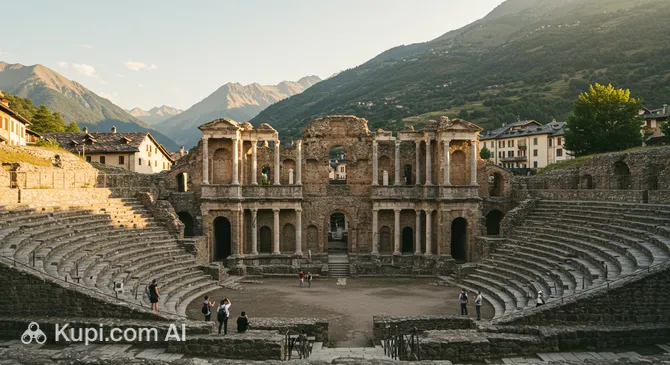
  • Aosta is proudly called "Little Rome" (Roma delle Alpi). In terms of the density of ancient monuments per square kilometer, it is second only to Italy's capital. Here, you can see the majestic Roman Theatre in Aosta, whose facade reaches 22 meters in height, and the stands once held up to 4,000 spectators.

  • The city hides unique underground structures. One of the most mysterious buildings is the Roman Cryptoporticus—a covered semi-underground gallery that in ancient times surrounded the sacred zone of the forum and was likely used as a warehouse or a cool place for walks.

  • The entrance to the old city is still guarded by the Porta Pretoria—a monumental gate with a double row of walls and three passages: a central one for wagons and side ones for pedestrians. It is one of the few structures of this type preserved in such good condition to this day.

  • Every year at the end of January, the city streets come alive thanks to the Fair of Saint Orso (Fiera di Sant'Orso). This event has a thousand-year history: craftsmen from all over the valley gather here to present traditional wood, stone, and leather products, turning the city into a huge open-air workshop.

  • Aosta is the birthplace of one of the greatest thinkers of the Middle Ages, Saint Anselm of Canterbury. The future Archbishop of Canterbury and founder of scholasticism was born here in 1033, and his legacy is honored in the city to this day.

Roman Theatre of Aosta. Illustration.
Source: Kupi.com AI

Traveler photos:

How to Get There

You can get to this Alpine corner in different ways, but most often travelers choose a combination of air travel and ground transport. Since there is no active passenger airport in the city itself, the route usually goes through major transport hubs in neighboring regions and countries. You can find more details on how to get to Aosta by studying all available options, and below we look at the most popular ones.

The closest to the resort is Turin Airport (IATA: TRN), located in the city of Turin, about 65 km from Aosta. This is a convenient option for domestic and some European flights. The journey from here by taxi or transfer now takes less time thanks to good roads—only about 1 hour 15 minutes, making it the fastest way to get to the mountains.

For those flying from further away, Milan Malpensa Airport (IATA: MXP) is an excellent choice. This is a major international hub receiving flights from all over the world. It is located in the city of Milan, at a distance of about 110 km from Aosta. The car journey will take from 1 hour 40 minutes to 2 hours, and the picturesque views along the way compensate for the travel time.

It is also worth considering Geneva Airport (IATA: GVA), located in the city of Geneva (Switzerland), about 109 km away. Despite the need to cross the border, this route is popular thanks to the convenient Mont Blanc tunnel. Travel time by car is approximately 1 hour 40 minutes.

For clarity, here is a summary of the main airports:

AirportPassenger trafficDistance
Sion35 92954 km
Turin Airport4.5 mln65 km
Geneva Airport17.8 mln109 km
Milano Malpensa Airport28.7 mln110 km
Chambéry Airport169 000112 km

Rail travel is another comfortable way to reach the region. There is a train station in Aosta itself, but it is the terminus for regional lines. Major high-speed trains arrive in neighboring large cities, from where you can transfer to a regional train or bus.

The key transfer hub is Porta Nuova Railway Station in Turin. It is located about 80 km from Aosta and serves a huge number of passengers annually. Trains regularly depart from here toward the Aosta Valley, and a car journey from the station to the resort takes just over an hour.

Porta Susa Railway Station, also located in Turin (about 78.5 km from Aosta), also plays an important role. It is a modern transport hub convenient for transfers from high-speed trains. Travel time to Aosta by taxi or bus is about 1 hour 15 minutes.

Below is information about the nearest major railway stations:

StationPassenger trafficDistance
Sion Railway Station4.5 mln55 km
Porta Susa Railway Station10 mln79 km
Porta Nuova Railway Station70 mln80 km
Geneva Railway Station42.1 mln105 km
Cadorna Railway Station15 mln111 km

Main Attractions

Aosta is a real open-air museum where every era has left its unique mark. A walk through the city turns into a fascinating journey through the centuries: from prehistoric times and the grandeur of the Roman Empire to the refined Middle Ages. Here, monuments are concentrated that do not just decorate the streets but tell the living history of the Alpine region.

One of the most recognizable symbols of the city is the majestic Arch of Augustus. Erected in 25 BC to celebrate the Roman victory over the local Salassi tribe, it greets travelers at the entrance to the historic center. This monumental structure impresses with its preservation and austere beauty, recalling the important strategic significance of the city in ancient times. Tourists come here to take stunning photos against the backdrop of the mountains and touch stones that are over two thousand years old.

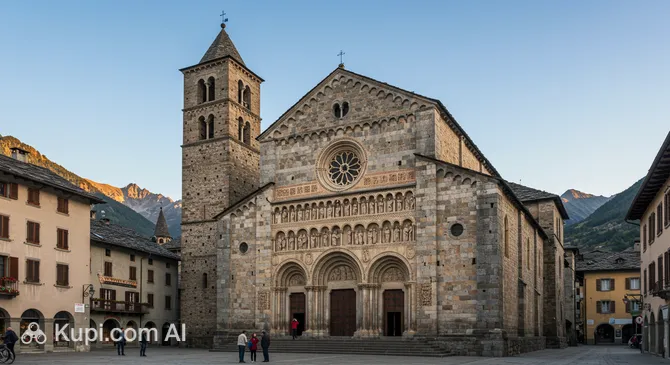
Another equally impressive place to visit is the Collegiate Church of Saint Peter and Saint Orso. It is an architectural masterpiece where early Christian and medieval traditions are harmoniously intertwined. The crown jewel of the complex is the cloister with its unique carved capitals depicting biblical scenes and moments from the life of Saint Orso. The atmosphere here is filled with silence and peace, making the church an ideal place for the quiet contemplation of art.

Collegiate Church of Saints Peter and Ursus. Illustration.
Source: Kupi.com AI

Traveler photos:

The spiritual center of the city is rightfully considered the Aosta Cathedral. Its facade is decorated with magnificent frescoes and sculptures, while the interior impresses with a wealth of detail: from floor mosaics to 12th-century stained glass windows. The cathedral is interesting because its architecture allows you to trace the evolution of styles over several centuries. Additionally, it houses a rich treasury with rare relics of sacred art.

For those who want to look even deeper into the past, the Megalithic Area - Saint-Martin-de-Corléans is a must-see. This is one of the largest archaeological parks in Europe, dedicated to prehistoric cults and rituals. The modern museum complex allows visitors to see ancient stelae, burial mounds, and traces of settlements that existed here long before the Romans arrived, immersing visitors in the mystical atmosphere of the ancient Alps.

Local Cuisine

Aosta’s cuisine is a real feast for gourmets, where rugged Alpine traditions are harmoniously interwoven with the Italian passion for high-quality products. Local gastronomy is famous for its hearty and warming dishes, perfectly suited to the high-altitude climate. The undisputed king of the table here is Fontina cheese, which has been produced in the valley for centuries. It forms the basis of the famous "fonduta valdostana"—a thick, fragrant dish traditionally eaten in the company of friends.

Travelers must try "carbonada"—tender beef stewed in red wine with spices that literally melts in your mouth. Another hallmark of the region is "seupa à la Vapelenentse" (Valdostan soup). This is a thick rustic soup made from stale bread, Savoy cabbage, and a large amount of melted cheese. Meat lovers will appreciate the local sausages, ham (such as Jambon de Bosses), and game dishes, often served with soft polenta.

The city's culinary scene is diverse: from street stalls with roasted chestnuts to cozy family establishments. To immerse yourself in the atmosphere of true Alpine hospitality, you can visit the restaurant Alpanino, where local culinary traditions are honored. Another wonderful place to experience regional flavors is Brasserie Buissier, offering guests an authentic menu in a comfortable setting.

A meal in Aosta is usually accompanied by a glass of local wine, the grapes for which are grown in the highest vineyards in Europe. And for those who want to relax after a busy day or have an aperitif before dinner, Bar Diana Garden & Spa opens its doors. In autumn, the city is particularly attractive to foodies thanks to honey, cheese, and apple festivals that turn the streets into one large tasting hall.

Travel Tips

A trip to Aosta promises to be unforgettable, but like any trip to the mountains, it requires a little preparation. To make your holiday as comfortable as possible and without surprises, we have compiled a list of useful recommendations to help you feel confident in this Alpine region.

  1. Clothing and gear. Aosta has a changeable mountain climate, so the best principle in clothing is layering. Even in summer, evenings can be cool, so a windbreaker or sweater is a must. For walking on the cobblestones of the historic center and mountain trails, choose comfortable flat shoes. If you plan to visit active churches, remember the dress code: shoulders and knees should be covered. Sockets here are European type (F and L), so you may need an adapter.
  2. Transport nuances. The city's historic center is compact and partly a pedestrian zone, so it's best to explore it on foot. For trips to the surroundings and to the lifts, it's convenient to use local SVAP buses. If you rent a car, be careful: ZTL zones (limited traffic zones) are in effect in the center, and entry into them risks a heavy fine. Taxi apps here don't work as stably as in large cities; it's more reliable to call a car by phone.
  3. Financial matters. The currency is the Euro (€). Bank cards are accepted in most restaurants and shops, but for small purchases or a snack in mountain huts (rifugio), you should always have cash with you. Tipping in Italy is not mandatory, as a service charge ("coperto") is often already included in the bill, but rounding up the amount or a couple of extra euros is always welcome.
  4. Health and safety. Aosta is a very quiet city; you can walk even late in the evening without fear. Pharmacies are marked with a green cross ("Farmacia"); if you need medicine at night or on a weekend, look for the schedule of on-duty pharmacies ("di turno") on the door. The emergency services number is 112. Water from city fountains is generally drinkable unless there is an "Acqua non potabile" sign.
  5. Language and communication. Aosta Valley is a bilingual region where Italian and French are official. Locals will appreciate it if you learn a few phrases, such as "Buongiorno" (good day) or "Grazie" (thank you). English is well understood in tourist spots, but in remote villages, communicating will be more difficult. A SIM card from local operators can be bought in communication salons with a passport.
  6. Local etiquette. Locals value politeness: it is customary to say hello when entering small shops or cafes. People here are open and friendly but respect restraint—loud conversations in public places or churches are considered bad form.
  7. What to avoid. Don't try to have dinner at 5:00 or 6:00 PM. Restaurants in Aosta open for dinner late, usually after 7:30 PM. Also, avoid ordering a cappuccino after lunch or during a meal—for Italians, this is strictly a morning drink; after a meal, it's better to order an espresso.
  8. Store hours. Keep the traditional siesta in mind. Many shops, especially small ones, close for a lunch break from approximately 12:30 to 15:30. Plan your shopping for the morning or late evening so you don't find yourself in front of closed doors.

Following these simple rules will help you quickly adjust to the local rhythm of life and get the most out of your trip. Aosta is a hospitable city that happily reveals its secrets to those who treat its traditions with respect and interest.

Entertainment & Nightlife

The nightlife in Aosta differs from that of noisy metropolises: you won't find huge rave venues or 24-hour neon madness here. Evening leisure in this Alpine city is permeated with "après-ski" culture—relaxed rest after an active day in the mountains. The epicenter of evening life is the historic center, especially Via Porta Praetoria, Via Sant'Anselmo, and Piazza Chanoux. This is where cozy wine bars, pubs, and lounge bars are concentrated, where locals and tourists gather to discuss the day's events over a glass of wine or a cocktail.

The atmosphere in these establishments is democratic and friendly. The crowd is diverse: from young people and students to established couples and families. Most places have no strict dress code; casual style or neat sportswear will be appropriate almost everywhere. The main fun begins around 6:00 PM with the traditional aperitif and continues until midnight or 1:00 AM. If you're looking for a place with a pleasant setting to start the evening, look into Bar Diana Garden & Spa. This establishment is perfect for relaxing in a cozy atmosphere and enjoying quality drinks.

For those who want to combine evening relaxation with activity, an excellent option is a trip to the Pila ski resort, located directly above the city. You can get there by cable car, which also operates in the evenings on certain days of the season. Night skiing, torchlight processions, and parties in mountain huts (rifugio) are often organized here, with music playing against the backdrop of the starry sky and snow-capped peaks.

Fans of late-night walks should check out Panificio Meridionale Da Ciccio. Despite the name referring to a bakery, this place is popular among night owls and young people wanting a snack or to keep socializing when other places are already closed. It’s a great spot to get to know the informal side of local life.

Practical tips and safety:

  • Safety: Aosta is one of the safest cities in Italy. Walking through the center at night is perfectly safe; the streets are well-lit and patrolled.
  • Transport: Night buses are rare. If you stay out late or plan a trip outside the center, it's better to find a local taxi number in advance, as catching a car "by hand" at night is almost impossible, and ride-sharing apps may not find drivers.
  • Prices: The cost of cocktails in bars ranges from 8 to 12 euros, while a glass of wine will cost 5–8 euros.

During the day, the city offers calmer, cultural entertainment. If you want a break from stone and history, head to Saumont Park—a green zone where you can have a picnic or just walk along the river. For those who crave knowledge, the Regional Archaeological Museum opens its doors, offering a fascinating immersion into the region's history through a rich collection of artifacts.

Parks & Museums

Aosta is not only a city of ancient stones and Roman ruins but also a place where nature and culture are in constant dialogue. After walking through the historic streets, tourists can relax in well-kept green zones or delve into the study of the region's rich heritage in local museums, which house treasures from prehistoric times to the present day.

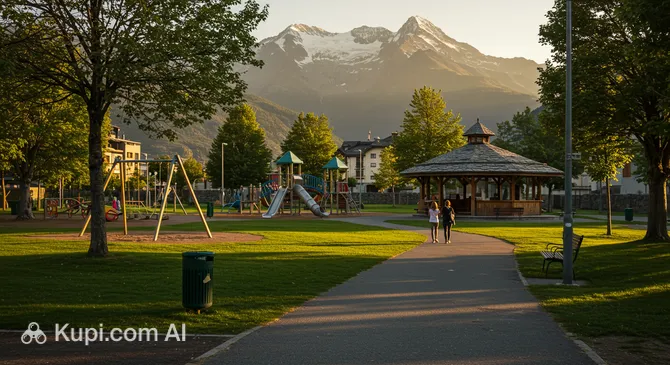
Among the city's green zones, Saumont Park is particularly notable. Located slightly north of the historic center, this park is a true natural oasis with small lakes, walking paths, and picnic areas. It is an ideal place to escape the city bustle, enjoy the view of the surrounding mountains, and breathe in the fresh Alpine air. Here you can often meet locals exercising or walking with children, which gives the place a cozy and lively atmosphere.

Saumont Park. Illustration.
Source: Kupi.com AI

Traveler photos:

Another pleasant area for walks is the promenade along the Dora Baltea river. Although not a park in the classic sense, the green strip along the rushing mountain river offers great opportunities for a promenade. The sound of the water and the panorama of snow-capped peaks create a peaceful backdrop for evening walks, allowing you to feel the power of Alpine nature without leaving the city limits.

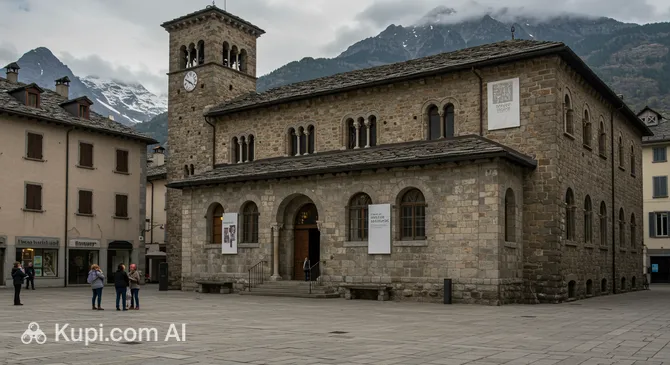
For those who want to dive deeper into history, the Regional Archaeological Museum (MAR) is a must-visit. It is located on the site of the ancient Roman gate Porta Principalis Sinistra and occupies a former monastery building. The museum's exhibition is masterfully arranged in chronological order and covers periods from the Mesolithic to the Middle Ages. Here you can see unique numismatic collections, glassware, jewelry, and even a reconstruction of a Roman funeral bed. This place allows you to piece together all the scattered historical facts you may have learned while walking through the city.

Regional Archaeological Museum. Illustration.
Source: Kupi.com AI

Traveler photos:

Connoisseurs of sacred art should visit the Museum of Cathedral Treasures (Tesoro della Cattedrale). Hidden within the walls of the cathedral, this small but impressive museum houses precious reliquaries, liturgical vestments, and cult objects created by the best masters of past centuries. The crown jewels of the collection are medieval ivory diptychs and jewelry demonstrating the highest level of craftsmanship of local artisans.

Fans of modern art and temporary exhibitions will be interested in the Centre Saint-Bénin. Located in a former church building, this exhibition hall regularly hosts prestigious exhibitions of painting, photography, and sculpture, creating an interesting contrast between ancient architecture and modern creativity.

Insider tip: If you find yourself in Aosta in the summer, check out the gardens at the Monastery of the Sisters of Saint Joseph (if they are open for special events) or simply look into the quiet courtyard of the Collegiate Church of Saint Peter and Saint Orso. These are hidden gems of silence away from the tourists, where you can sit in the shade of ancient linden trees and feel the true spirit of medieval tranquility.

Getting Around

The public transport system in Aosta is simple and convenient, although thanks to the city's compactness, many tourists prefer to move around the historic center on foot. The main form of city transport is buses, operated by the local company SVAP. The route network covers not only city neighborhoods but also connects the region's capital with nearby towns and villages in the valley. Buses run regularly, but travelers should keep in mind that on weekends and holidays, intervals may increase, and the last trips depart quite early.

A unique "highlight" of the city's transport system is the Aosta-Pila cable car (Telecabina Aosta-Pila). This is not just a tourist attraction but a full-fledged form of public transport connecting the valley floor with the ski resort and recreation area at an altitude of 1,800 meters. The lower station is within walking distance of the railway station. Modern cabins complete the climb in just 18–20 minutes, making this method of travel ideal for skiers in winter and hiking or mountain biking enthusiasts in summer.

Bus fares are paid with tickets that are valid for a certain time (usually about 60 minutes). It is most economical to purchase them in advance at newsstands or tobacco shops, which are easily recognized by the sign with the letter "T" (Tabaccheria). You can also buy a ticket from the driver when boarding, but it will cost a bit more, and it's advisable to have small change. The most important rule: upon entering the bus, you must validate your ticket in the machine to avoid a substantial fine during inspections.

As an alternative to buses, you can use a taxi, but there are nuances. In Aosta, it is not customary to "hail" a car by waving your hand on the street. Taxis wait for passengers at specially designated stands (for example, at the railway station or Piazza Manetti) or arrive by phone call. Ride-hailing apps common in major cities may work inconsistently here or not find available cars, so it is more reliable to have the number of a local dispatch service on hand.

For those who prefer independence, there is a well-developed bike rental culture in the city. Given the mountainous terrain, e-bikes are particularly popular, allowing you to handle climbs with ease. If you are traveling by car, be careful: the historic center is closed to traffic (ZTL zone), and violations are recorded by cameras. It is best to leave your car in one of the large paid parking lots on the perimeter of the old city and continue on foot.

Accommodation

Where to stay:

Aosta offers travelers a wide range of accommodation options, combining Alpine comfort with Italian hospitality. Here you can find traditional hotels with wood finishes in the chalet style, as well as modern apartments or budget guesthouses (B&B). Since the city is a popular tourist center year-round, the infrastructure is well-developed: from inexpensive hostels for young people to comfortable four-star and boutique hotels oriented toward a peaceful family vacation.

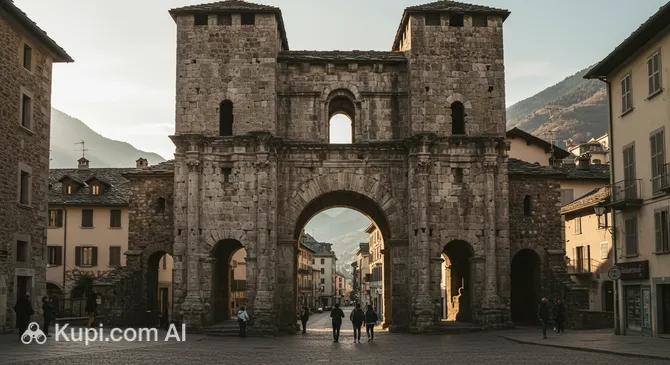
When choosing an area to stay, focus on the goals of your trip. If you came for excursions and the atmosphere of the old city, the best choice would be the historic center (inside the Roman walls). Staying here means being within walking distance of restaurants, shops, and main monuments such as Porta Pretoria. However, keep in mind that vehicle access to this zone is often restricted.

Porta Praetoria. Illustration.
Source: Kupi.com AI

Traveler photos:

For winter sports enthusiasts, the railway station area and the lower station of the cable car will be strategically convenient. Staying here, you can reach the lift leading to the Pila ski resort in minutes without wasting time on extra transfers. For those looking for silence and panoramic views, it's worth considering options on the outskirts of the city or on the hillsides surrounding Aosta, where cozy farmstays (agriturismo) are often located.

Booking tips: Aosta is a highly sought-after destination, especially in peak seasons. In winter (especially at Christmas and New Year) and in August, the best options are booked up several months in advance. You should also take care of housing in advance if your trip falls at the end of January, when the famous Saint Orso Fair takes place—during these days the city is packed with guests.

The price range varies from moderate to high. Budget travelers can count on inexpensive rooms in guesthouses, while the cost of staying in mid-range hotels and above increases during the ski season. Booking accommodation is most convenient through major online platforms, where most properties are listed, but many small family-run hotels also accept direct bookings through their websites or by email, sometimes offering better terms.

Nearby Cities

For those who want to explore the surroundings, Aosta serves as an excellent starting point for day trips to several interesting nearby locations:

Just an hour's drive away is Ivrea—a city famous worldwide for its historic carnival and the legendary "Battle of the Oranges." Additionally, it is interesting for its modern history: it is home to the unique "20th Century Industrial City" architectural complex, associated with the Olivetti company and listed as a UNESCO World Heritage site. This is a great choice for those who want to see an unusual combination of a medieval castle and avant-garde urbanism.

Fans of majestic architecture should head to Venaria Reale. The main attraction here is the grandiose royal residence of the House of Savoy—Reggia di Venaria. This palace and park ensemble is often compared to France's Versailles due to its scale, luxurious Baroque interiors, and magnificent gardens, which are especially beautiful in the spring and summer.

Also worth noting is Biella, located at the foot of the Alps. This city is known for its long traditions of wool production and high-quality textiles. However, tourists are more often attracted to the nearby Sanctuary of Oropa (Santuario di Oropa)—the most important pilgrimage site in the Alps, which houses the revered statue of the Black Madonna and is surrounded by breathtaking mountain landscapes.

CityPopulationDistance
Chamonix8 64840 km
Verbier3 00041 km
Martigny18 30145 km
Cuorgnè9 72846 km
Zermatt5 77446 km

These nearby destinations provide an insight into the diverse culture and landscapes of the region.

Shopping & Souvenirs

Shopping in Aosta is a pleasant and relaxed activity that perfectly complements a holiday in the mountains. The city does not claim to be a fashion capital like Milan, but here you can find quality clothing, sports equipment, and, of course, magnificent local delicacies. Trade here is imbued with the spirit of Alpine traditions: instead of huge faceless malls, tourists are greeted by cozy family shops and elegant boutiques integrated into the historical architecture.

The heart of the city's commercial life is the pedestrian zone in the historic center. The main route for shopping enthusiasts passes through Via Sant'Anselmo, Via Jean-Baptiste de Tillier, and the central Via Porta Praetoria. Walking here, you will find shops of famous Italian brands, jewelry salons, and souvenir stalls. This shopping artery passes through the ancient Porta Pretoria, allowing you to combine the search for new items with sightseeing of ancient monuments.

If you are interested in larger-scale shopping or supermarkets, you should pay attention to the "Gros Cidac" shopping center, located near the railway station. This is a large hypermarket where locals buy groceries, household appliances, and clothing at reasonable prices. For tourists, it is an excellent place to buy gastronomic souvenirs (cheeses, wines, sweets) cheaper than in the tourist shops in the center.

The special flavor of local trade can be experienced at the weekly market, which takes place on Tuesdays at Piazza Cavalieri di Vittorio Veneto. They sell everything here: from the freshest farm products, cheeses, and sausages to clothing and household goods. It is an ideal place to observe the lives of the townspeople and try the true tastes of the Aosta Valley region.

As souvenirs from Aosta, traditional crafts are most commonly brought back. Look for the "grolla" and "coppa dell'amicizia"—carved wooden vessels for drinking wine and coffee in a group, which are symbols of local hospitality. Gastronomic gifts are also a must: the famous Fontina cheese, Jambon de Bosses ham, and local wines will be excellent reminders of the trip.

When planning shopping, it is important to remember the store hours. Most of them are open from 9:00–9:30 to 19:00–19:30, but they necessarily close for a lunch break (siesta) from approximately 12:30 to 15:30. On Sundays and Monday mornings, many shops may be closed. Bank cards are accepted almost everywhere, but for market purchases or small souvenirs, it's better to have some cash in euros.

Tourists from non-EU countries can use the Tax Free system. Since 2024, the minimum purchase threshold for a tax refund in Italy has been reduced and now stands at 70 euros in a single store. Look for "Global Blue" or "Tax Refund" stickers in the windows and don't forget to ask for a special form when paying at the register to get a partial refund when leaving the country.
Reached the end of the page?

That means the route is fully explored