Support

Zermatt

About

Zermatt is a true gem of the Swiss Alps, nestled at the foot of the legendary Matterhorn, one of Europe's most photographed mountains. This charming town is situated at an altitude of approximately 1,600 meters above sea level in the heart of the Canton of Valais. A unique feature of Zermatt is its complete absence of internal combustion engine vehicles. Movement through its picturesque streets is carried out exclusively by electric vehicles, electric taxis, and traditional horse-drawn carriages, which gives the town a special charm and ensures exceptional environmental purity and tranquility.
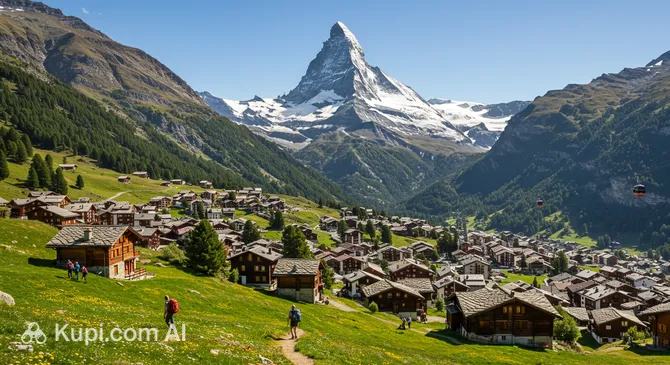
Zermatt. Illustration.
Source: Kupi.com AI

The population of Zermatt is just under 6,000 people, but during the peak tourist season, the town comes alive, transforming into a vibrant international resort with a unique atmosphere. The vibe here is steeped in the spirit of a true Alpine fairytale: traditional chalets harmoniously coexist with modern hotels, and every corner breathes adventure and union with nature. Zermatt is an iconic destination in Switzerland, attracting travelers from all over the world.

The main reasons to visit Zermatt are its breathtaking natural beauty, a superbly developed tourist infrastructure, and a huge variety of opportunities for active recreation. In winter, the resort turns into a paradise for skiers and snowboarders, offering about 360 kilometers of excellent slopes, modern lifts, and cozy mountain restaurants. In summer, Zermatt beckons hiking, mountain biking, and mountaineering enthusiasts. Numerous scenic trails lead to crystal-clear lakes, alpine meadows, and majestic glaciers.

In Zermatt, everyone will find something to their liking: from romantic strolls through ancient streets and relaxation in spa centers to breathtaking adventures at dizzying heights. This is a place where you want to slow down time and simply enjoy every moment among the majestic Alpine peaks and serene nature. Come to Zermatt to experience its unique charm!

You can find more interesting facts on the Zermatt city history page.
Weather Overview

The weather in Zermatt is typical for high-altitude Alpine resorts, with pronounced seasonal changes. Winters here are cold and snowy, creating excellent conditions for winter sports, while summers are cool, suitable for active outdoor recreation.

Average monthly temperatures in Zermatt range from approximately -9.3°C in January (minimum values can drop to -13.4°C) to +11.5°C in July (with maximum temperatures reaching +16.5°C). Expect cool summers with frequent but usually not overly heavy precipitation, and very cold, snowy winters. For example, in July there is an average of 4 mm of precipitation spread over about 17 days, and in January, also about 4 mm of precipitation occurring over 13 days, which often means snowfall. The highest number of days with precipitation occurs in May and June, up to 21-22 days per month, although the total amount of precipitation remains moderate.

To get detailed information about the climate and weather conditions in Zermatt by month, including data on sunshine hours and humidity, check out the Zermatt Climate page.

Average monthly temperature

Average monthly precipitation

Interesting Facts

Beyond its world-famous ski slopes and the majestic Matterhorn, Zermatt holds many surprising stories and features that not everyone knows about. Here are just a few that make this Alpine resort truly unique:

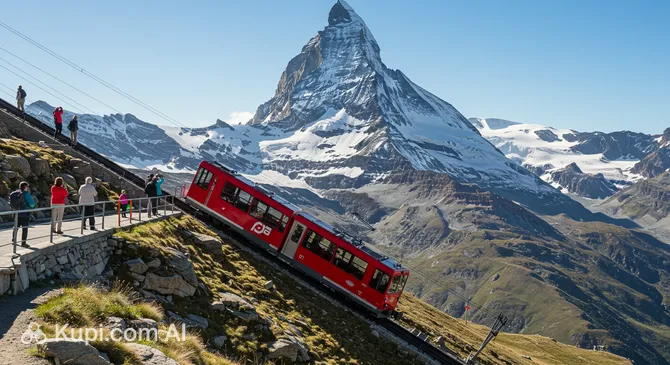
Gornergrat Railway. Illustration.
Source: Kupi.com AI

Traveler photos:

  • Zermatt is a resort that is completely free of internal combustion engine vehicles. You can only move around here by electric vehicles, bicycles, or charming horse-drawn carriages, which makes the air incredibly clean and the atmosphere peaceful.

  • The symbol of Zermatt, the majestic Matterhorn, was first conquered in 1865 by an expedition that started right from here. However, this triumph was overshadowed by tragedy: of the seven mountaineers who reached the summit, only three returned. This dramatic story became the basis for many books and films.

  • Zermatt is home to one of the highest open-air rack railways in Europe – the Gornergrat Railway. A journey on it reveals breathtaking panoramic views of Alpine peaks and glaciers, and the terminal station is located at an altitude of over 3,000 meters above sea level.

  • Local legends tell of mysterious "ghostly lights" on the Matterhorn, which can sometimes be seen on its summit on clear nights. It is believed that these are the spirits of fallen climbers guarding the mountain's peace.

How to Get There

Zermatt is a unique, completely car-free resort, so traveling here requires special planning. Usually, tourists reach the village by train from the nearby town of Täsch. You can find all the details and alternative routes by clicking the link: more about how to get to Zermatt.

Since there is no airport in Zermatt itself, travelers usually fly into major international hubs in neighboring cities or countries. One of the most popular options is Geneva Airport (GVA), located in the city of Geneva. This is a major international aviation hub receiving flights from all over the world. It is about 129 km from Zermatt. The journey by car or bus to the transfer point takes about 3.5 hours (approximately 215 minutes).

Another convenient option is Milan Malpensa Airport (MXP), located in the Italian city of Milan, about 87 km from the resort. It is also a large international airport with high passenger traffic. The trip from here by taxi or transfer will take approximately 2.5 hours (150 minutes). It is also worth mentioning the small regional Sion Airport (SIR) in the city of Sion, located only 39.4 km from Zermatt. A trip from there will take about 80 minutes.

For clarity, here is a summary of the main airports:

AirportPassenger trafficDistance
Sion35 92939 km
Milano Malpensa Airport28.7 mln87 km
Lugano Airport190 69890 km
Turin Airport4.5 mln91 km
Bern Airport57 000101 km

Railway connection is the most popular and scenic way to get to Zermatt. The town itself has a railway station, but travelers often change at major junction stations. For example, Bern Railway Station in the city of Bern is an important transport hub. It is about 106 km from Zermatt, and a trip by road (to Täsch) would take about 3 hours (180 minutes), although the train is a more preferred option.

The closest to the resort is Sion Railway Station in the city of Sion (about 38 km). From here, you can reach the outskirts of Zermatt by taxi or bus in about 80 minutes. Remember that the final leg of the journey directly into Zermatt is always completed via a special shuttle train or official taxi from Täsch, as private transport is prohibited from entering the resort zone.

Below is a table with the nearest major railway stations:

StationPassenger trafficDistance
Sion Railway Station4.5 mln38 km
Cadorna Railway Station15 mln88 km
Lugano Railway Station11.2 mln93 km
Oerlikon Railway Station34.4 mln102 km
Porta Susa Railway Station10 mln105 km

Main Attractions

Zermatt, located at the foot of the majestic Matterhorn, offers tourists many exciting attractions and activities. This Alpine resort is famous not only for its ski slopes but also for its unique natural sites and cultural landmarks.

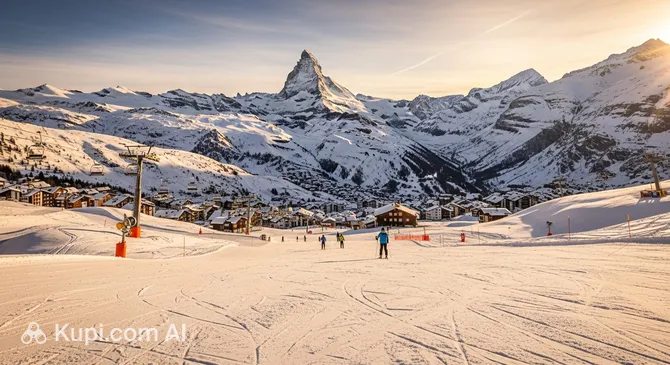
One of the main reasons to visit Zermatt is, of course, the famous Zermatt Ski Resort. It offers an extensive skiing area with slopes of various difficulty levels, suitable for both beginners and experienced skiers and snowboarders. The resort is connected to Cervinia in Italy, allowing you to ski in two countries. Stunning views and modern infrastructure make it one of the best in the world.

Zermatt Ski Resort. Illustration.
Source: Kupi.com AI

Traveler photos:

An unforgettable journey awaits you on the Gornergrat Railway. This historic rack railway will take you to an altitude of over 3,000 meters, from where panoramic views of the Matterhorn, the Gorner Glacier, and dozens of other four-thousanders open up. At the top, there is an observation deck, a hotel, and an observatory.

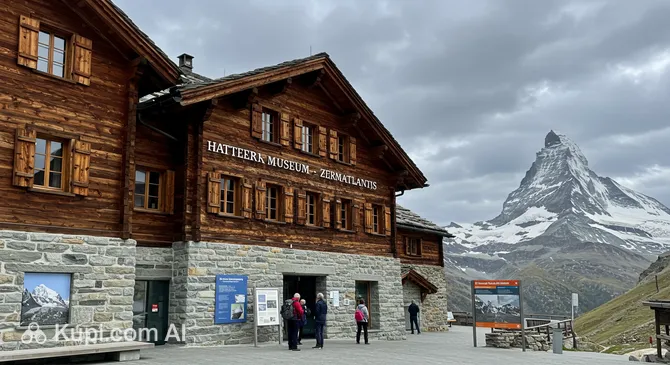
To gain a deeper understanding of the region's history and the conquest of the Matterhorn, it is worth visiting the Matterhorn Museum – Zermatlantis. The museum's exhibition tells the story of Zermatt's development from a small mountain village to a world-famous resort, as well as the dramatic story of the first ascent of the Matterhorn. This is a fascinating dive into the past of mountaineering and local life.

Matterhorn Museum – Zermatlantis. Illustration.
Source: Kupi.com AI

Traveler photos:

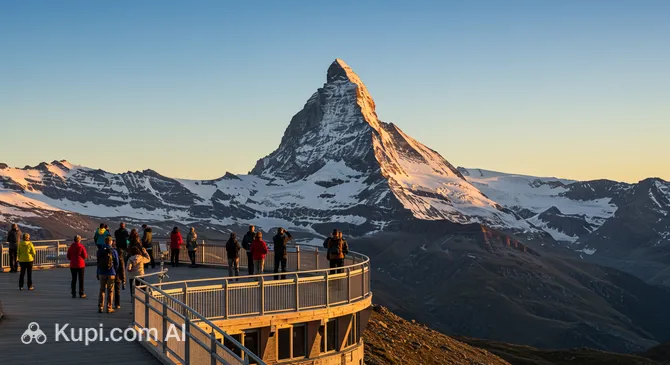
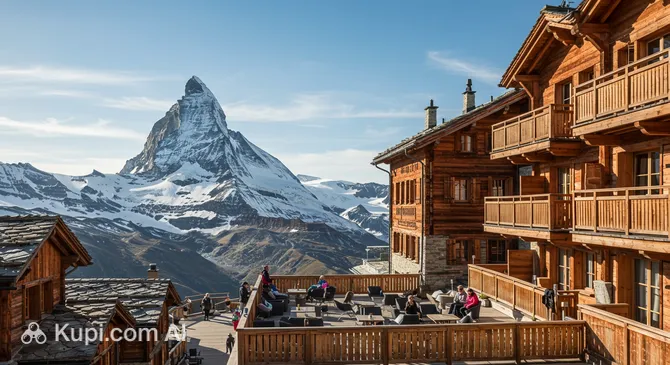
For those looking for beautiful views and starting points for hikes, Sunnegga is the perfect place. This sunny terrace, easily accessible by funicular, offers a magnificent view of the Matterhorn. In summer, numerous hiking trails start from here, and in winter, there are ski slopes. It also features Leisee Lake, a popular spot for swimming and family relaxation.

Sunnegga. Illustration.
Source: Kupi.com AI

Traveler photos:

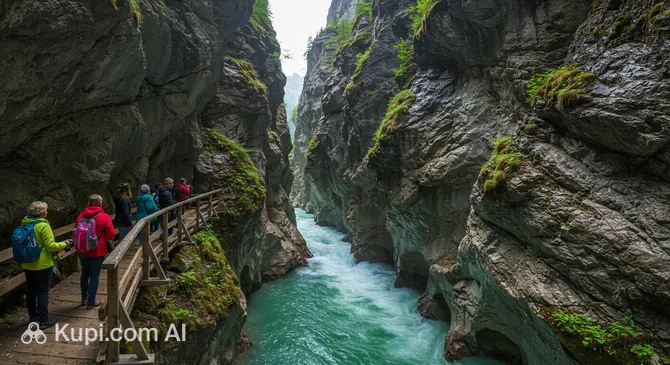
Nature lovers should definitely see the Gorner Gorge. Over thousands of years, the Gorner River has carved a deep and picturesque canyon into the rock. Specially equipped wooden bridges and ladders allow for a safe walk through the gorge, where you can admire bizarre rock formations and swirling torrents of water. This impressive natural phenomenon is located near the village.

Gorner Gorge. Illustration.
Source: Kupi.com AI

Traveler photos:

Local Cuisine

The gastronomy of Zermatt is a true immersion into the world of Alpine flavors, where Swiss, French, and Italian culinary traditions are harmoniously woven together. Local cuisine is famous for being hearty, using fresh local products, and having unique aromas that will warm you up after an active day in the mountains.

The main stars of the table in Zermatt are undoubtedly cheese fondue and raclette. Fondue is a fragrant mixture of melted cheeses with white wine, served in a special pot (caquelon), into which it is customary to dip pieces of bread. Raclette, on the other hand, consists of melted cheese scraped onto a plate and served with boiled potatoes, pickled cucumbers, and onions. In addition to these iconic dishes, be sure to try the local dried meat (such as Bündnerfleisch), homemade sausages, and the freshest dairy products from Alpine pastures.

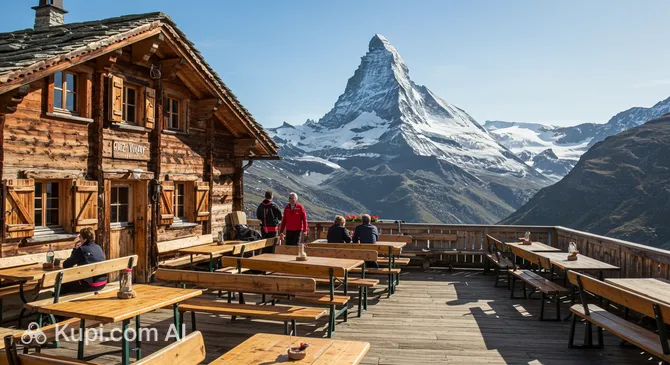
Chez Vrony. Illustration.
Source: Kupi.com AI

Traveler photos:

For those with a sweet tooth, Zermatt will delight you with exquisite desserts. Don't miss the chance to try handmade Swiss chocolate, traditional nut cakes, and airy meringues. Popular drinks include warming mulled wine (especially in winter), aromatic coffee, and, of course, local wines from the Canton of Valais, which perfectly complement any meal. For non-alcoholic choices, herbal teas or freshly squeezed juices are excellent.

The dining culture in Zermatt is diverse. There are many cozy restaurants here, from traditional mountain huts to Michelin-starred establishments, where you can enjoy both classic Alpine dishes and haute cuisine. One such notable place is the restaurant Chez Vrony, famous for its atmosphere and views. For a more informal snack, street food like fragrant rolls and fresh baguettes is ideal. And at farmers' markets, you can always find seasonal berries, local cheeses, and Alpine honey. Locals, like tourists, value the quality and freshness of products, preferring to dine in establishments that emphasize the authenticity of regional cuisine.

Zermatt's gastronomic life is also enriched by various events. In autumn, cheese fairs are often held here, and in winter, you can attend fondue festivals or wine tastings. This is a great opportunity to get to know the best products of the region and dive deeper into the culinary traditions of this charming Alpine resort.

Travel Tips

Welcome to Zermatt, the jewel of the Swiss Alps! To make your trip to the foot of the Matterhorn as comfortable and unforgettable as possible, we have prepared some practical tips.

  1. Clothing and gear for the mountains: In Zermatt, the weather can be changeable even in summer. Be sure to bring layered clothing: thermal underwear, fleece, and a waterproof, windproof jacket. Comfortable trekking boots with good grip, sunglasses, high SPF sunscreen (the mountain sun is very strong), and a hat are essential. In winter, a full set of ski gear is required. Don't forget a power adapter (type J).

  2. Getting around Zermatt without a car: Zermatt is a car-free resort. You can get here by train to Täsch station, where you will need to transfer to a shuttle train to Zermatt. In the village itself, it is convenient to get around on foot. Eco-friendly electric taxis and e-buses are also at your service. Numerous cable cars and funiculars are used to go up the mountains.

  3. Financial nuances in Switzerland: The local currency is the Swiss franc (CHF). Credit and debit cards (Visa, Mastercard) are accepted almost everywhere. American Express might not be accepted in all places. ATMs are easy to find. You can exchange currency at banks, but it's usually more profitable to use a card. Tips in Switzerland are usually included in the bill (marked as "Service compris"). However, if you particularly enjoyed the service, you can leave an additional 5-10%. Zermatt is a fairly expensive resort, so plan your budget accordingly.

  4. Health and safety in the Alps: There are pharmacies and a medical center in the village. In case of emergency, call 144. Zermatt is a very safe place, but standard precautions are still wise. It's important to remember acclimatization: the resort is at an altitude of 1,600 meters, and the lifts take you even higher. Drink more water, avoid alcohol in the first few days, and do not overexert yourself physically immediately upon arrival.

  5. Language and communication: The official language is German (Swiss dialect). However, English is widely spoken in the tourism sector, so there should be no communication problems. Useful phrases: "Grüezi" (Hello), "Danke" (Thank you), "Bitte" (Please/You're welcome). Wi-Fi is available in most hotels and many cafes. A local SIM card can be purchased upon arrival in Switzerland or in Zermatt itself.

  6. Respect local customs: The Swiss value punctuality and politeness. It is customary to greet people on hiking trails ("Grüezi"). In public places, try to speak quietly. Caring for nature is the norm, so do not leave trash and follow marked routes.

  7. What to avoid in Zermatt: Do not try to enter Zermatt in a private car – it is prohibited, and you will have to leave it in the parking lot in Täsch. It is also strongly recommended not to ignore weather warnings or slope conditions in the mountains – safety comes first.

  8. Maxing out your Matterhorn experience: To enjoy the best views of the legendary Matterhorn, check the weather forecast before heading up to observation decks like Gornergrat or Matterhorn Glacier Paradise. It is wise to book lift and train tickets in advance, especially during high season. Early morning often offers the clearest views and fewer tourists.

We hope these tips help you plan the perfect trip to Zermatt and get the most out of your stay in this amazing corner of Switzerland!

Entertainment & Nightlife

Zermatt, known for its breathtaking mountain landscapes and world-class ski slopes, also offers a vibrant and diverse nightlife, especially during the winter season. After a day spent on the slopes, the resort comes alive, offering entertainment for every taste – from lively après-ski bars to cozy lounges and clubs where you can dance until late at night.

The main concentration of evening and night venues is located along the main street, Bahnhofstrasse, and its surrounding side streets. Here you will find numerous bars, restaurants with evening programs, and several nightclubs. The atmosphere in Zermatt in the evening is very lively, especially during the peak season. The crowd mainly consists of tourists from all over the world, skiers, and snowboarders, creating an international and friendly environment. The dress code in most places is quite relaxed – ski gear during the day and smart casual in the evening are perfectly acceptable, although some more refined venues may have their own preferences.

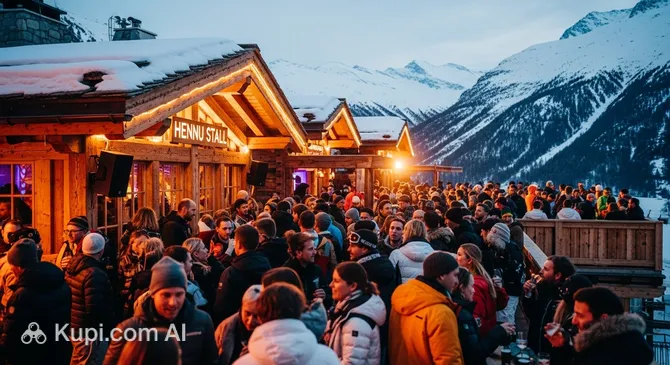
Among the popular spots for evening relaxation are après-ski bars, which start working even before sunset. One such iconic place is the Hennu Stall Après-ski Bar, known for its energetic atmosphere right at the foot of the slopes. In the evening, you can continue at one of the many bars in the center of the village, such as the La Couronne Bar, which offers a wide selection of drinks in a stylish setting. For those looking for a club atmosphere, the Blue Lounge can be an excellent choice with DJ sets and dancing until morning. Many hotels also have their own bars with live music or a cozy atmosphere, such as the Europe Hotel & Spa Bar.

Hennu Stall Après-Ski Bar. Illustration.
Source: Kupi.com AI

Traveler photos:

The best time to visit après-ski bars is immediately after the lifts close, roughly from 4:00 PM to 7:00 PM. Nightclubs usually come alive after 10:00 PM or 11:00 PM and stay open until 2:00 or 3:00 AM, and sometimes later. Prices in Zermatt are generally above average, which is typical for premium Swiss resorts. A cocktail at a bar can cost from 15-20 Swiss francs. Since Zermatt is a car-free village (except for electric vehicles), moving around it at night is easy and safe on foot. Electric taxi services are available for more distant chalets.

Zermatt is considered a very safe resort, and nighttime walks here do not cause concern. However, as elsewhere, it is worth observing basic precautions. You can call an electric taxi by phone or through your hotel reception.

During the day, Zermatt also offers plenty of entertainment. In addition to the obvious mountain activities, you can visit the interesting Matterhorn Museum – Zermatlantis, which tells the story of the conquest of the Matterhorn and the life of the region. For families with children and panoramic view enthusiasts, a trip on the Gornergrat Railway or an ascent to Sunnegga will be an unforgettable experience. While Zermatt does not have large theaters or traditional amusement parks, its natural beauty and outdoor activity options more than compensate for this.

Parks & Museums

Zermatt, the famous Alpine resort at the foot of the Matterhorn, offers not only breathtaking mountain scenery and ski slopes but also opportunities for cultural enrichment and peaceful relaxation amidst nature. Although there are few traditional city parks here, the entire surrounding nature serves as a vast green zone, and local museums house fascinating stories.

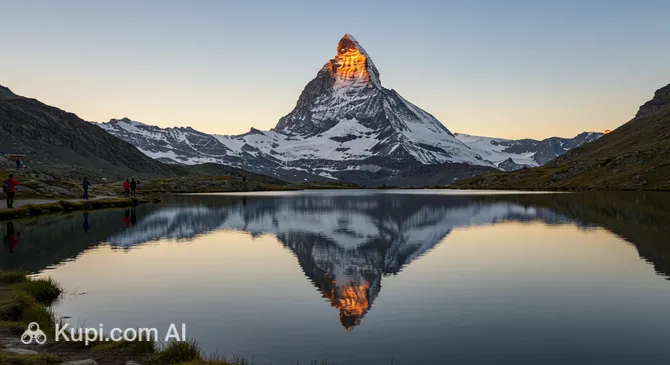
For lovers of nature and panoramic views, Zermatt is a true paradise. Instead of the usual city parks, Alpine meadows and observation decks await you here. It is definitely worth going up to Sunnegga, which offers magnificent views of the Matterhorn. In summer, you can spot marmots and enjoy walks along scenic trails, while in winter, it is a popular area for family skiing. Another iconic spot is Lake Riffelsee, famous for its almost perfect reflection of the Matterhorn in clear weather. This place is ideal for photography and peaceful contemplation. For those seeking more active experiences, the Gorner Gorge (Gornerschlucht) offers a walk along wooden bridges over a swirling torrent of glacial water – an impressive natural spectacle.

Riffelsee. Illustration.
Source: Kupi.com AI

Traveler photos:

The main cultural center of the town is undoubtedly the Matterhorn Museum – Zermatlantis. This underground museum fascinatingly tells the history of Zermatt, its transformation from a small village into a world-class resort, and the dramatic history of the first ascents of the Matterhorn. The exhibition includes reconstructed Alpine houses and mountaineering-related artifacts, making it interesting for visitors of all ages.

Matterhorn Museum – Zermatlantis. Illustration.
Source: Kupi.com AI

Traveler photos:

Among the architectural landmarks, the St. Mauritius Parish Church, located in the center of the village, stands out. This iconic building with its characteristic tower is an important part of the local landscape. Nearby is the famous Kirchbrücke bridge, which offers one of the most canonical views of the Matterhorn – a great place for memorable photos, especially at sunrise or sunset.

For an authentic experience, take a walk through the old part of Zermatt, known as Hinterdorf. Traditional wooden houses on stilts, built many centuries ago, have been preserved here. This quiet and charming place will allow you to feel the atmosphere of an ancient Alpine village.

Getting Around

Zermatt is a unique resort, known for its "car-free" status, meaning it is free of vehicles with internal combustion engines. This puts a special mark on the public transport system, making it eco-friendly and oriented towards pedestrians and special types of transport.

The main form of public transport in Zermatt itself are the electric buses (e-Bus). They run on two main routes, connecting different parts of the village, including the station, ski lift stations, and outlying areas. These buses are quiet and do not pollute the air. Additionally, electric taxis move around the village and can be ordered for more comfortable travel, especially with luggage.

To access the mountain slopes and panoramic platforms, an extensive network of cable cars, funiculars, and rack railways is used. The most famous of these are the Gornergrat Bahn train, leading to the peak of the same name with a stunning view of the Matterhorn, and the lift system to the Matterhorn Glacier Paradise, the highest mountain station in Europe accessible by cable car. These modes of transport are an integral part of a holiday in Zermatt, both in winter for skiers and in summer for hikers.

The payment system varies. Travel on electric buses in the village is often free for holders of certain guest cards or ski passes. Tickets for mountain lifts and trains can be purchased at the respective stations, at the tourist office, or online. There are various types of tickets: single, round-trip, as well as multi-day passes (e.g., Zermatt Peak Pass), which can be advantageous for frequent use of the lifts. Some general Swiss passes, such as the Swiss Travel Pass, may provide discounts or even free travel on certain routes, including the trip to Zermatt and some local attractions, but conditions for mountain railways and cable cars should be checked separately.

Practical tips for tourists: It is better to buy tickets for mountain transport in advance, especially during the peak season, to avoid queues. The schedule of electric buses and mountain lifts is available at stops, stations, and on the resort's official website. Keep in mind that lift operating hours may change depending on the season and weather conditions. Ticket validation occurs when passing through turnstiles at lift stations or during a check by a conductor.

An alternative to public transport in the village itself is walkingZermatt is compact, and many distances are easily covered on foot while enjoying the fresh mountain air. In summer, bicycle rentals are popular, including electric bikes, which allow for exploring the surroundings. As already mentioned, electric taxis are available 24/7, but their services are more expensive than public transport.

Accommodation

Zermatt offers a wide range of accommodation options to suit the needs of many different travelers, although overall the resort caters to a more affluent audience. Here you will find luxury hotels and resort complexes, cozy chalets, self-catering apartments, as well as more budget-friendly options such as guest houses and a few hostels.

Since Zermatt is a compact car-free village, most housing options are within walking distance of the main ski lifts, the railway station, and the central Bahnhofstrasse with its shops and restaurants. Many hotels offer magnificent views of the Matterhorn. The choice of area depends on your preferences: closer to the lifts for active skiing or in a quieter part of the village for a peaceful getaway.

CERVO Mountain Resort. Illustration.
Source: Kupi.com AI

Traveler photos:

Among the well-known hotels, one can highlight, for example, the CERVO Mountain Resort, offering luxury rooms and chalets with stunning views, or Hotel Bellerive, known for its hospitality and convenient location. These are just a couple of examples, and there are many other excellent options in Zermatt.

Booking Tip: It is highly recommended to book accommodation in Zermatt in advance, especially if your trip falls during the peak ski season (December to March) or the summer months (July-August). At these times, the best options are taken very quickly.

The price range in Zermatt varies from mid-range to high-end and luxury segments. It is convenient to book accommodation through popular online platforms or directly on hotel websites, which sometimes allows you to get better deals or additional services.

Nearby Cities

For those who want to explore the surroundings, Zermatt serves as an excellent starting point for day trips to several interesting nearby locations:

CityPopulationDistance
Saas-Fee1 70017 km
Visp8 00032 km
Sierre16 86035 km
Brig-Glis13 40938 km
Sion34 70838 km

For example, Sion, the capital of the Canton of Valais, will charm you with its medieval castles of Valère and Tourbillon towering over the city, and its picturesque old town. Martigny attracts art lovers with the Pierre Gianadda Foundation, where works by famous masters are exhibited, as well as interesting Roman ruins. And Brig-Glis, an important transport hub, prides itself on the impressive Stockalper Palace, one of the most significant baroque palaces in the country.

These nearby destinations provide an insight into the diverse culture and landscapes of the Switzerland region.

Shopping & Souvenirs

Shopping in Zermatt is a pleasant addition to active recreation in the mountains. Although Zermatt is not a major shopping center, you can find high-quality goods here, especially those related to skiing, Swiss quality, and local traditions. The town is famous for its sports equipment stores, watch and jewelry boutiques, and souvenir shops.

The main shopping artery of Zermatt is Bahnhofstrasse. This bustling street, leading from the railway station through the center of the village, is lined with various shops. Here you will find everything from sportswear and equipment by leading world brands to exclusive Swiss watches, jewelry, fashion clothing, traditional souvenirs, and, of course, famous Swiss chocolate.

Zermatt does not have large shopping centers in the usual sense of the word, as it is an Alpine village that preserves its traditional charm. Instead, shopping is concentrated in individual stores and boutiques located along the main street and its adjacent alleys.

There are no permanent large markets in Zermatt; however, seasonal fairs or small markets for local products and crafts may be held from time to time, especially during holiday periods. It is best to check for information about such events on-site upon arrival.

Traditional Swiss souvenirs are worth bringing back from Zermatt. Especially popular are: Swiss watches, Victorinox Swiss Army knives, high-quality Swiss chocolate, and cheeses. Souvenirs featuring the Matterhorn – from postcards and magnets to clothing and decorative items – are also popular. You can also pay attention to products by local craftsmen, such as carved wooden figurines or textiles.

Shops in Zermatt are usually open from 9:00 AM - 10:00 AM until 6:30 PM - 7:00 PM on weekdays. On Saturdays, many shops close earlier, around 5:00 PM - 6:00 PM. On Sundays, most shops, except for some souvenir and grocery stores, may be closed, especially outside the peak tourist season. Credit cards (Visa, Mastercard, American Express) are widely accepted, as are Swiss francs (CHF).

Tourists from countries outside the European Union can take advantage of the Tax Free system when making purchases over 300 Swiss francs in a single store. To do this, you must ask the salesperson for a special Tax Free form, which is then presented at customs when leaving Switzerland to receive a VAT refund.

Reached the end of the page?

That means the route is fully explored