Support

Barcelonnette

About

Barcelonnette is a wonderful corner where Alpine freshness meets the warmth of the southern sun. Located in the picturesque Ubaye Valley at an altitude of 1,135 meters, this cozy town with a population of about 2,600 people belongs to the Provence-Alpes-Côte d'Azur region. It is here that France reveals itself from an unexpected side, harmoniously combining mountain majesty and relaxed Mediterranean charm.
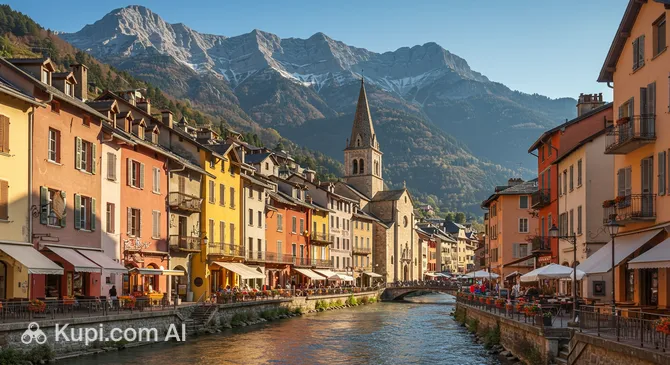
Barcelonnette. Illustration.
Source: Kupi.com AI

The town's architectural appearance is truly unique and eclectic. Walking through the streets, you will notice a surprising intertwining of Italian, Tyrolean, and Baroque styles. Special attention should be paid to the luxurious villas on the Avenue de la Libération, built in the late 19th and early 20th centuries. This unusual development is the living history of Barcelonnette, captured in stone and serving as a reminder of the region's rich heritage. One of these gems, Villa La Sapinière, is open to the public and houses the Museum of the Ubaye Valley.

The atmosphere of the town is perfect for a slow-paced holiday and enjoying the moment. The historical center, with Place Manuel and the Tour Cardinalis, is always full of life thanks to numerous cozy cafes and restaurants with terraces. Furthermore, Barcelonnette serves as a gateway to the Mercantour National Park, making it an ideal base for nature lovers. In winter, people come here for the snowy slopes, and in summer, for colorful festivals and breathtaking hiking trails. This town is definitely worth including in your itinerary to experience the unique flavor of the French Alps.

Weather Overview

The climate in Barcelonnette is typical for an Alpine region: seasons are clearly defined, and the mountain air always remains fresh. Winters are quite harsh and frosty. In January, the coldest month, the average temperature drops to -4.1°C, and at night the thermometer can fall to -8.0°C. Precipitation in the winter months is low in volume, but snow is a frequent visitor.

Spring arrives gradually, though travelers should be prepared for the whims of the weather. May stands out as the wettest month of the year: statistics show up to 20 rainy days, although temperatures already rise to pleasant levels. When planning a visit in the off-season, be sure to check the forecast so that the weather in Barcelonnette doesn't catch you off guard.

Summer in the Ubaye Valley is a time of comfortable warmth without exhausting heat. In July and August, the air warms up to an average of +20°C, which is ideal for hiking and walking. Expect a moderately warm summer with occasional precipitation and cold winters perfect for cozy evenings by the fireplace.

Average monthly temperature

Average monthly precipitation

Interesting Facts

In addition to its picturesque mountain landscapes, Barcelonnette holds many fascinating secrets and unexpected cultural connections that make it a truly special place in France.

  • Little Mexico in the Alps. One of the most surprising pages in the town's history is the mass emigration of local residents to Mexico in the 19th and early 20th centuries. Returning to the Ubaye Valley with fortunes, they built luxurious "Mexican villas", whose architecture gives this Alpine corner an exotic and unique flavor.

  • Latino-Mexican Culture Festival. Every summer in August, the town is radically transformed during a vibrant Latino-Mexican festival. For two weeks, the streets are filled with mariachi music, dancing, and colorful parades, creating the atmosphere of a true Latin American holiday.

  • Medieval Symbol. The main historical landmark of the center is the Tour Cardinalis, built back in the 15th century. It rises majestically over Place Manuel—the heart of urban life—serving as a reminder of the settlement's deep historical roots.

  • Gateway to the Wild. Barcelonnette is officially considered the gateway to the Mercantour National Park—one of the most picturesque reserves in the region. This makes the town a key point for ecotourism enthusiasts, providing access to unique biodiversity and breathtaking mountain trails.

How to Get There

A journey to the Ubaye Valley is an immersion into a world of high mountains, so the road here is a picturesque adventure in itself. Since the town is located deep in the Alps, there is no direct air or rail link, and the route usually involves a transfer to a car or bus. You can find more details on how to get to Barcelonnette by studying all available transfer and route options.

For international travelers, the main air gateway to the region is Nice Côte d'Azur Airport (NCE). It is located in Nice, about 92 km from Barcelonnette. This is a major international hub receiving flights from all over the world. A trip from the airport to the town by car will take about 2 hours and 40 minutes along beautiful mountain serpentines.

Another convenient option is Turin Airport (TRN), located in neighboring Italy, in the city of Turin (about 120 km from the resort). This is an excellent choice if you plan to enter from the Piedmont side. The journey will take approximately 3 hours and 20 minutes. It is also worth mentioning Levaldigi Airport (CUF) in the Italian city of Cuneo. Although it is a small airport, it is the closest—just 79.5 km away, and the journey from there takes about 2 hours and 20 minutes.

For clarity, here is a summary of the main airports:

AirportPassenger trafficDistance
Levaldigi Airport113 39879 km
Nice Côte d'Azur Airport14.8 mln92 km
Turin Airport4.5 mln120 km
Hyeres Airport570 140149 km
Avignon-Caumont Airport200 000150 km

If you prefer the train, it is important to note that there is no railway station in the town of Barcelonnette itself. The nearest major hubs are at a significant distance. For example, you can take a train to the Porta Nuova Station in Turin, Italy, which is about 111 km from Barcelonnette. From there, you will need to take a taxi or bus, which will take about 3 hours.

From the French side, a popular option is the Aix-en-Provence TGV Station in the city of Aix-en-Provence (142 km from Barcelonnette). High-speed trains from Paris and other major cities arrive here. A transfer from the station to the Ubaye Valley by car will take about 3 hours and 50 minutes. This is a convenient way to combine a high-speed train ride with a journey through the mountains.

Below is a table with the nearest major railway stations:

StationPassenger trafficDistance
Porta Nuova Railway Station70 mln111 km
Porta Susa Railway Station10 mln111 km
Grenoble Railway Station8.8 mln116 km
Aix-en-Provence TGV Railway Station3.7 mln142 km
Valence TGV Station3.3 mln149 km

Main Attractions

Despite its modest size, Barcelonnette is rich in cultural discoveries. A walk through the town feels like a journey through time and space, where Alpine traditions intertwine with exotic heritage. The main attractions are concentrated in the historical center and are accessible on foot, allowing you to enjoy the atmosphere without haste.

One of the most significant points of interest is the Museum of the Ubaye Valley (Musée de la Vallée), located within the walls of the magnificent La Sapinière villa. This is the only villa in France open to the general public, where you can not only appreciate the luxurious Art Deco and Art Nouveau interiors but also immerse yourself in the region's history. The museum's exhibition tells the story of the local migration phenomenon to Mexico and displays ethnographic collections, Oriental art objects, and archaeological finds. The landscape park surrounding the villa serves as a wonderful place to relax after the tour.

The heart of the town's social life invariably remains Place Manuel. Surrounded by colorful building facades, it attracts tourists with its many outdoor terraces of cafes and restaurants. In the center of the square is a beautiful fountain named after the local deputy André Manuel, who played an important role in the town's development. It is the perfect place to enjoy a cup of coffee while watching the resort's lively life and taking in the views of the surrounding mountain peaks.

The Tour Cardinalis rises majestically over the historical center. This 15th-century structure, about 40 meters high, is a preserved part of an ancient Dominican monastery. The tower impresses with its austere Gothic architecture and ancient gargoyles decorating the corners of the cornice. For tourists, it is interesting not only as a historical monument but also as a landmark visible from almost anywhere in the town, a reminder of the valley's medieval past.

Special attention deserves the famous Villa Bleue, a striking example of Barcelonnette's "Mexican" architecture. Built in 1931 for Baron Émile Chabrand, it stands out for its monumental appearance and deep blue stained-glass windows. Although the villa is private property, its exterior consistently catches the eye of travelers and photographers. The building is listed as a historical monument and is considered one of the symbols of the town's unique architectural heritage.

Local Cuisine

Barcelonnette's local cuisine is a wonderful gastronomic mirror reflecting the traditions of the Alps and Provence. Here, the harsh mountain climate meets southern hospitality, giving birth to hearty and aromatic combinations. The menu is based on natural products: the town's restaurants will offer you dishes that are perfect for warming up after long mountain walks or skiing.

A must-try on the culinary program are the classic mountain specialties. Don't miss the opportunity to try fondue and raclette—melted cheese combined with potatoes and cold cuts is prepared superbly here. Local chefs also masterfully handle river fish: dishes made from fresh trout, caught in the clean waters of the Ubaye Valley, are considered a true delicacy. Meat lovers should order a stew with fragrant Provençal herbs, which give the food a unique aroma.

A unique feature of Barcelonnette's gastro scene is its "Mexican accent." Thanks to the town's historical connection with Mexico, you can find establishments here offering spicy and flavorful Latin American dishes. This is particularly vibrant in August, during the Latino-Mexican festival, when the streets are filled with the scents of street food: tacos, nachos, and traditional sweets.

Food culture in the town is closely linked to farmers' markets. These are the best places to get to know local products: here you can taste and buy craft cheeses, mountain honey, homemade jams, and seasonal fruits. As for drinks, it is customary to accompany a meal with local wines or herbal liqueurs that are popular in this region of France. Special attention should be paid to the bread and pastries: they are prepared here according to old recipes using local flour, preserving the taste of true homemade treats.

Travel Tips

Welcome to Barcelonnette! To ensure your trip to this unique Alpine town with its unexpected Mexican flair is as comfortable and carefree as possible, we have prepared some useful recommendations based on the region's characteristics.

  1. Clothing and Essentials. Mountain weather is changeable even in summer. It can be bright and sunny during the day, but the temperature drops sharply in the evening, so the layering principle works best here. Be sure to bring a warm sweater, a windbreaker, and sunglasses (the mountain sun is very strong). Since the town is pedestrian-friendly and many streets are paved with stone, comfortable flat shoes are a must. If you plan to visit churches, avoid overly revealing clothing.

  2. Transport. Barcelonnette's historical center is compact and best explored on foot. Local public transport is limited, but during the winter and summer seasons, free shuttles run to nearby resorts (Pra-Loup, Le Sauze). If you want to freely explore the Ubaye Valley and visit the famous Col de la Bonette pass, car rental is highly recommended. Taxi apps practically don't work here; you need to book a car in advance by phone with local services.

  3. Finance. The official currency is the Euro. Cards are accepted in most restaurants and supermarkets, but it's better to have cash for market purchases, small bakeries, or souvenir shops. There are ATMs in the town center, but not many. Prices are average by French standards. Tips in France are usually included in the bill, but leaving 1-2 euros (or rounding up) for good service is considered polite.

  4. Health and Safety. Barcelonnette is a very quiet and safe place; you can walk around the town without fear at any time. Pharmacies (marked with a green cross) are located in the center, but note their hours: many close for a lunch break from 12:00 to 2:00 PM. The main safety tip concerns the mountains: never head out on difficult routes without a map, a water supply, and checking the weather forecast.

  5. Communication. The main language is French. Staff at the tourist office and large hotels speak English, but this is rare in small shops. Locals really appreciate it if you start a conversation with a greeting in their language. Download offline maps of the region, as mobile signal can disappear in the mountains. Wi-Fi is available in most cafes and in the main square.

  6. Local Etiquette. Politeness is the foundation of French social interaction. Always say "Bonjour" (Good day) when entering any shop, even if you don't intend to buy anything, and "Au revoir" (Goodbye) when leaving. On narrow streets and sidewalks, it is customary to give way to elders. In restaurants, it is not common to call a waiter by shouting; eye contact and a slight hand raise are sufficient.

  7. What to Avoid. Don't try to have dinner at "off" hours. Unlike tourist megacities, restaurants here strictly observe kitchen hours: lunch is usually from 12:00 to 2:00 PM, and dinner starts no earlier than 7:00–7:30 PM. Between these times, you can only expect drinks or cold snacks in bars.

  8. Market Days. Try to plan your visit to coincide with a Wednesday or Saturday morning. On these days, a traditional market unfolds in Place Manuel and the surrounding streets. This is the best opportunity to buy local delicacies (cheeses, sausages, honey) directly from farmers and feel the town's real, vibrant atmosphere.

We hope these tips help you feel at home in Barcelonnette. Enjoy the pure mountain air, unique architecture, and the hospitality of the Ubaye Valley—may your journey be easy and full of pleasant discoveries!

Entertainment & Nightlife

Nightlife in Barcelonnette is fundamentally different from the noise of megacities or coastal resorts. Here, you won't find huge neon signs or 24-hour raves. Evening leisure in the capital of the Ubaye Valley is primarily about coziness, warm conversation, and the famous French art de vivre (the art of living). After sunset, the town plunges into a relaxed atmosphere: in winter, it's classic "après-ski" with mulled wine by the fireplace, and in summer, long gatherings on open terraces under the starry sky.

The epicenter of evening activity remains Place Manuel and the adjacent pedestrian street, Rue Manuel. This is where most of the establishments where locals and tourists gather are concentrated. Life here buzzes until about midnight or 1:00 AM. The crowd is very diverse: from mountaineers and skiers in sports gear to couples out for a romantic dinner. The dress code in most places is completely relaxed—"casual" or "sport chic" will be appropriate everywhere.

If you are looking for specific places to have a drink, check out a few popular establishments. One of the symbols of the town's bar culture is Le Choucas. This is an atmospheric bar where music often plays and excitement reigns, perfect for meeting friends. Wine lovers should stop by the cozy wine bars in the center, where a glass of local rosé or red wine is served alongside an excellent platter of Alpine cheeses. For those who want to continue the fun with dancing until morning, it's worth noting that large nightclubs are more often located at neighboring ski stations (such as Pra-Loup), served by shuttles during the season, while Barcelonnette itself prefers the pub and lounge format.

Regarding prices and practical matters, the cost of cocktails and drinks here is average by the standards of France: a glass of beer will cost 4–7 euros, a cocktail from 8–10 euros. Most kitchens in bar-restaurants close around 9:30–10:00 PM, so plan your dinner in advance. During peak season (July-August and winter holidays), the square can be crowded, and it's better to take a table on the terrace early, around 7:00 PM.

Daytime and early evening entertainment in the town is no less interesting, though more tranquil. Besides museums, there is a cinema, Le Ciné Ubaye, located in a historic building, showing both new releases and arthouse films. For families or a group of friends, bowling is a great option. It is important to note that the bowling center is not in the town itself, but at the neighboring ski station of Pra-Loup, which can be reached by car or shuttle in just 10–15 minutes. Also, concerts and plays are regularly held in the local theater or at outdoor venues during festivals.

Safety is practically a non-issue in Barcelonnette: it is a very quiet town with a low crime rate. Night walks through the illuminated center are perfectly safe. Since the town is compact, taxi services within it are rarely needed—any hotel can be reached on foot in 10–15 minutes. If you need to go to a remote chalet or a neighboring village at night, the car must be booked in advance by phone, as it is impossible to "catch" a taxi on the street at night here.

Parks & Museums

Despite its compact size, Barcelonnette offers travelers a harmonious blend of well-kept urban spaces and wild Alpine nature, complemented by unique museum collections. Here, green zones flow seamlessly into majestic mountain landscapes, and cultural sites tell amazing stories about the connection between this corner of the Alps and distant Mexico.

The main green oasis within the town is Parc de la Sapinière. This picturesque garden surrounds the famous villa of the same name and serves as an ideal place for quiet strolls. Here you can relax in the shade of ancient trees while enjoying views of the Art Deco architecture and surrounding mountain peaks. The park is especially popular with families and those seeking tranquility in the very heart of the town.

For those craving large-scale natural experiences, Barcelonnette provides direct access to the Mercantour National Park. Although technically a vast protected area starting just outside the town limits, it is an integral part of the region's natural wealth. It is a realm of Alpine meadows, crystal lakes, and wild animals, where tourists might encounter marmots, chamois, and even see traces of wolves. Mercantour offers trails for every skill level—from easy trekking to professional mountaineering.

The cultural heart of the town is the Museum of the Ubaye Valley (Musée de la Vallée), located in Villa La Sapinière. This is a must-visit place to understand the unique phenomenon of the "Barcelonnettes in Mexico." The museum's exhibition goes far beyond local history: it features pre-Columbian art objects, Mexican crafts, and a rich ethnographic collection telling the story of life in the valley in the 19th century. The museum masterfully links the history of local emigration with Alpine traditions.

While there are no other large museums in the classical sense in the town, the architecture of Barcelonnette itself acts as an open-air museum. We are talking about the famous Mexican Villas. Walking along the Avenue de la Libération, you will see dozens of luxurious mansions built by emigrants who had struck it rich. Each villa has its own unique style—from Italian Neoclassicism to Neogothic—turning an ordinary walk into a fascinating excursion through architectural history.

Among the historical monuments, the Church of Saint-Pierre (Église Saint-Pierre) stands out. Located near the central square, it attracts attention with its austere bell tower and interior decoration. The church has been rebuilt several times and is a witness to the town's religious history, maintaining an atmosphere of peace and spirituality.

As an insider tip: take the time to visit the old town cemetery of Barcelonnette. This might seem like an unusual recommendation for tourists, but it is here that you will find the monumental family vaults of the dynasties that built the Mexican villas. These tombstones are true miniature architectural masterpieces, reflecting the ambitions and wealth of that era, and offering a completely different, quiet perspective on the town's history.

Getting Around

Since Barcelonnette is a compact Alpine town with a population of fewer than three thousand people, it does not have the public transport system typical of megacities. You won't find a metro, trams, or trolleybuses here. The historical center of the town is so cozy and small that it is best explored on foot. All main shops, restaurants, and attractions are within walking distance of each other, allowing you to enjoy the atmosphere without the need for transport within the town itself.

The main means of transport connecting the town with the outside world and neighboring settlements are the buses of the Zou! regional network. These comfortable buses connect the Ubaye Valley with major transport hubs such as the stations in Gap or Aix-en-Provence, as well as Marseille Airport. Tickets for intercity trips can be purchased in advance online on the carrier's official website or directly from the driver upon boarding (it's advisable to have small change in cash).

For tourists visiting the region for active recreation, the free shuttles (Navettes gratuites) are a real lifesaver. They run seasonally—in winter and summer—and connect the center of Barcelonnette with nearby ski resorts such as Pra-Loup and Le Sauze. This is very convenient: you can live in the town, enjoying its architecture and restaurants, and reach the slopes or the start of hiking trails for free during the day. Shuttle schedules are usually posted at the tourist office on Place Manuel and at the stops.

If you plan to explore remote corners of the valley or the famous Col de la Bonette pass, public transport may not be flexible enough. In this case, car rental is the best alternative. This will give you complete freedom of movement along the picturesque serpentines. It's worth considering that car-sharing services are not developed here, so it is better to book a car in advance at rental points.

The taxi situation in town is specific: they cannot simply be "caught" on the street with a wave of a hand. There are few cars, and they are often busy with transfers to airports or stations. It is highly recommended to book a taxi by phone in advance, especially if you need to travel early in the morning or late in the evening. Also, during the summer season, bicycle rental is very popular, especially electric bikes, which allow you to easily conquer mountain climbs.

Accommodation

Accommodation options in Barcelonnette are as diverse as its architecture. The town offers tourists a unique opportunity to stay in actual historical settings: some of the famous "Mexican villas" have been converted into cozy boutique hotels and guest houses (chambres d'hôtes). This allows you to literally live inside history. In addition, the town and its surroundings offer a wide selection of classic mid-range hotels, family holiday apartments, and campsites for lovers of maximum proximity to nature.

When choosing an area, you should start from the purpose of your visit. If the atmosphere of evening walks and proximity to restaurants are important to you, it is best to choose accommodation in the historical center, within walking distance of Place Manuel. Here you will be in the thick of things, but you should consider potential noise during festivals. For those seeking peace and privacy, options on the outskirts of town or in small villages of the Ubaye Valley are excellent. In winter, many tourists prefer to stay closer to the free shuttle stops going to the ski resorts of Pra-Loup and Le Sauze to combine the comforts of city life with skiing.

Booking tip: Barcelonnette is a popular destination, and the best accommodation options are snapped up very quickly. This is especially true for August, when the Latino-Mexican Festival takes place, and the winter holiday period (February). If you are planning a trip for these dates, it is highly recommended to book your room 3–4 months before arrival.

The price range here can be described as moderate, although it varies depending on the season.

  • Budget segment: Campsites and simple guest rooms are available starting from 50–70 euros per night.
  • Middle class: A standard room in a 3-star hotel or an apartment will cost between 90–140 euros.
  • Premium: Staying in historical villas or hotels with a high level of service starts from 150–180 euros per night.
Booking is available through major international online platforms; however, many small family-run hotels and gîtes (rural cottages) in France still welcome direct bookings through their own websites or by phone, which can sometimes result in a better price.

Nearby Cities

For those who want to explore the surroundings, Barcelonnette serves as an excellent starting point for day trips to several interesting nearby places. Its location in the valley allows for relatively quick travel to other Alpine centers or down to the famous Côte d'Azur, exchanging mountain coolness for a sea breeze.

Gap is the nearest major city and the administrative center of the Hautes-Alpes department, located just an hour's drive away. It is a dynamic and sunny city with a pleasant pedestrian center. It's worth going there to stroll through cozy squares, visit the Notre-Dame-et-Saint-Arnoux Cathedral, and enjoy shopping in local boutiques. Gap is ideal for those who want to feel the rhythm of urban life without leaving the Alpine region.

Nice offers a radical change of scenery. The legendary capital of the French Riviera beckons with its Promenade des Anglais, turquoise sea, and colorful Old Town. A day trip here is a unique opportunity to have coffee with a mountain view in the morning and enjoy seafood on the beach by lunch. The contrast between the austere architecture of Barcelonnette and the lush Baroque of Nice leaves a lasting impression.

Grasse is known worldwide as the capital of perfumery. This town, nestled in flowers, is located on the hills not far from the coast. The main point of attraction here is the historic perfume factories (Fragonard, Molinard, Galimard), which offer tours and workshops on creating your own scents. In addition to fragrances, Grasse charms with its narrow medieval streets and Provençal charm.

CityPopulationDistance
Mont Dauphin11532 km
Digne-les-Bains16 48247 km
Gap40 63149 km
Briançon11 33957 km
Borgo San Dalmazzo12 49267 km

These nearby destinations provide an insight into the region's diverse culture and landscapes, making your journey even more enriching.

Shopping & Souvenirs

Shopping in Barcelonnette is not geared towards fans of large malls and high fashion, but rather for those who appreciate authenticity and local traditions. The commercial life of the town is concentrated in pedestrian streets where you can find unique goods reflecting the culture of the Ubaye Valley. Small private shops predominate here, offering quality products and a personal touch.

The main artery for shoppers is Rue Manuel and the adjacent square of the same name. Strolling here, you will find many boutiques with clothing, decor items, and gifts. Special attention should be paid to sports equipment stores. Given the resort's mountain location, there is an excellent selection of gear for skiing, trekking, and mountaineering, which can be either purchased or rented.

To buy groceries and basic necessities, it is better to head to the outskirts of town, where large chain supermarkets are located. In the historical center itself, the retail format is closer to cozy "corner shops." This creates a special atmosphere but requires tourists to understand local specifics: the assortment here is often shaped by seasonality and the owners' personal preferences.

The true flavor of the region can be felt at the traditional markets, which operate on Wednesday and Saturday mornings. Stalls in the town squares are filled with farmer cheeses, sausages, honey, and fresh vegetables. During the summer period, night craft markets are popular, where artisans display handmade ceramics, jewelry, and wooden products for sale.

When choosing souvenirs, pay attention to local gastronomic brands. The hallmark is the Génépi liqueur made from Alpine herbs and Tomme de l'Ubaye cheese. An interesting feature of shopping in Barcelonnette is the presence of Mexican-themed goods—from spiced chocolate to vibrant textiles—related to the history of the valley's emigrants. Provençal souvenirs such as lavender, olive oil, and natural soap are also always popular.

When planning a visit to shops, remember the traditional lunch break, which usually lasts from 12:00 to 2:00 PM or 3:00 PM. Many small shops may be closed on Sundays and Mondays, although during the peak tourist season, the schedule becomes more visitor-friendly. Credit cards are accepted, but it's better to have cash euros for small purchases at the market.

Tourists residing permanently outside the European Union can take advantage of the right to a VAT refund. In France, the Tax Free system applies to purchases over 100 euros (€100.01 or more) in one store within one day. Look for "Tax Free Shopping" stickers in windows and don't forget to ask the seller to issue a special receipt, for which you will need to present your passport.

Reached the end of the page?

That means the route is fully explored