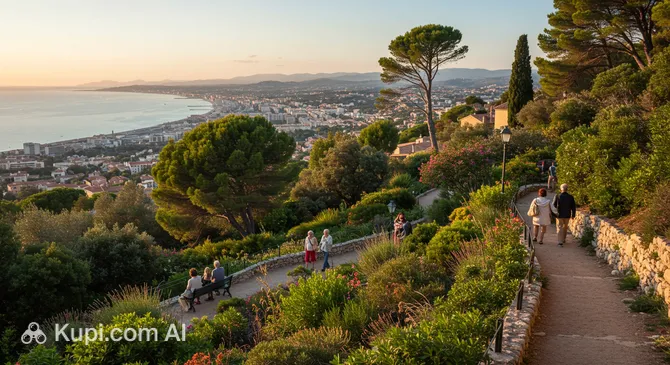
Support

CagnesSurMer

About

Cagnes-sur-Mer is a true gem of the French Riviera, nestled cozily between Nice and Antibes. This city offers travelers a unique blend of relaxed beach holidays and an immersion into medieval antiquity. Thanks to its favorable location, it has become a favorite spot for those seeking an authentic experience in the heart of one of Europe's most picturesque regions.

Located on the Mediterranean coast in the Provence-Alpes-Côte d'Azur region, the city is home to over 52,000 residents. France is known for its diversity, and it is felt particularly strongly here: the mild climate, abundance of sunny days, and picturesque hills create ideal conditions for tourism year-round.
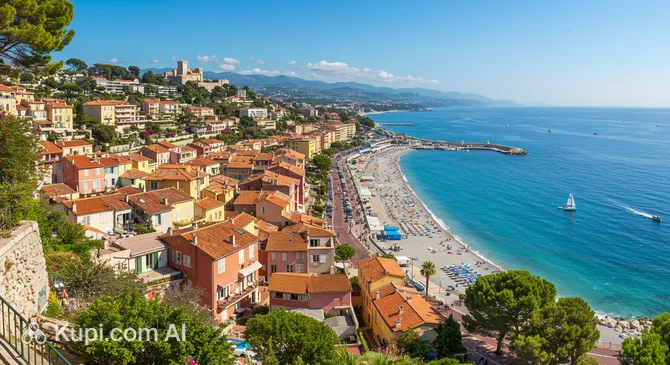
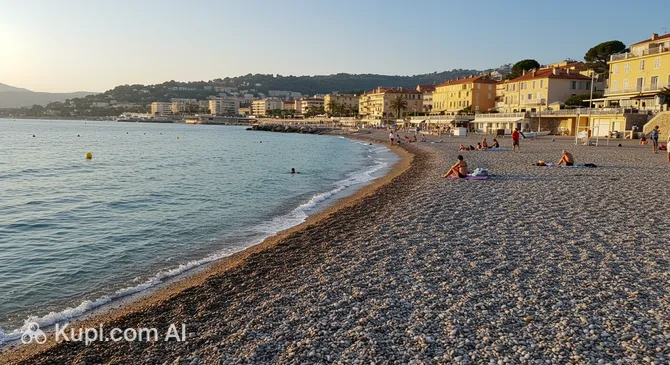
Cagnes-sur-Mer. Illustration.
Source: Kupi.com AI

The territory of Cagnes-sur-Mer is roughly divided into two contrasting parts. Along the Baie des Anges (Bay of Angels), magnificent pebble beaches and a modern promenade with cafes and restaurants stretch for 3.5 kilometers. However, as soon as you climb the hill, you find yourself in the Haut-de-Cagnes district — an ancient quarter with narrow cobbled streets. It is here that the rich history of Cagnes-sur-Mer is preserved, symbolized by the majestic Grimaldi Castle towering over the surroundings.

The city's creative heritage adds a special charm. These landscapes inspired many masters, including the famous Impressionist Pierre-Auguste Renoir, whose house-museum is surrounded by centuries-old olive trees and is open to the public. Strolls through authentic markets, views of the azure sea, and Provençal-style architecture make a stay here unforgettable.

If you dream of feeling the authentic spirit of the South, enjoying gastronomic delights, and seeing the Côte d'Azur from a new perspective, be sure to include Cagnes-sur-Mer in your itinerary. This is a place you will want to return to again and again for inspiration and tranquility.

Weather Overview

The climate of this resort is characterized by its mildness, making it attractive to visit almost year-round. The summer season here is comfortable and warm: in August, the average temperature stays around 22.5°C, and on the hottest days, the air warms up to 26.7°C. This is the best time for those who prefer sunny days, as the number of days with precipitation in July is minimal.

Winters in the region are cool but without severe frosts. In January, the average thermometer readings are around 6.2°C, and at night the temperature can drop to 2.3°C. Spring arrives gradually, however, travelers should keep in mind that May is one of the wettest months, with up to 17 rainy days recorded. To plan an ideal vacation, we recommend checking in advance what the weather in Cagnes-sur-Mer will be during your trip.

Expect warm summers, ideal for strolling, and cool winters with regular precipitation. In autumn, the "velvet season" continues in September with an average temperature of 18.4°C, but by November the air cools to 10°C, reminding of the approach of winter.

Average monthly temperature

Average monthly precipitation

Interesting Facts

Beyond its sunny beaches and ancient streets, Cagnes-sur-Mer holds many fascinating stories and unique features that can surprise even experienced travelers.
  • The city is closely linked to the history of Monaco's ruling dynasty. The majestic castle, built in the 14th century, belonged to the Grimaldi family for a long time. Today, it is a rare place where medieval architecture harmoniously coexists with a museum of modern art under one roof.

  • Cagnes-sur-Mer became the final home of the great Impressionist Pierre-Auguste Renoir. The artist was enchanted by the local light and landscapes, creating many masterpieces here. His estate, with its preserved studio and ancient olive grove, is open to the public and offers a glimpse into the life of the genius.

  • One of France's largest racecourses is located here, right on the coast. Horse racing in Cagnes-sur-Mer is not just a sport but a large-scale social event steeped in the spirit of elegance and excitement, attracting thousands of spectators.

  • The city skillfully blends history with modern trends: it is home to Polygone Riviera — a unique open-air shopping and entertainment complex. It is the first lifestyle mall in France, where shopping is combined with park walks and art appreciation.

  • Cagnes-sur-Mer carefully preserves its traditions, one of which is the annual flower festival. During these days, the streets of the Old Town are transformed into a blooming Provençal garden, while locals hold vibrant parades and treat guests to traditional dishes.

Polygone Riviera. Illustration.
Source: Kupi.com AI

Traveler photos:

How to Get There

Well-planned logistics are the key to a successful start to your vacation. Cagnes-sur-Mer is located in the heart of the Côte d'Azur, making it easily accessible for travelers. You can find out more about how to get to Cagnes-sur-Mer by considering various options, but most tourists arriving in France from abroad choose to fly.

The nearest and most convenient point of arrival is Nice Côte d'Azur Airport (NCE). It is located just 4.8 km from the city, effectively bordering it. Thanks to this proximity, the transfer to your hotel will take minimal time: a taxi or car ride usually lasts 15–20 minutes, and a bus ride takes about half an hour, depending on traffic.

An alternative option could be Marseille Provence Airport (MRS), located 158 km from the resort. Flights that are not on the Nice schedule often arrive here. The journey from here will take more time: expect about 2 hours of driving on the high-speed motorway or slightly more if you choose public transport with transfers.

Below is information on the nearest international airports:

AirportPassenger trafficDistance
Nice Côte d'Azur Airport14.8 mln5 km
Hyeres Airport570 140103 km
Levaldigi Airport113 398105 km
Marseille Provence Airport10.8 mln158 km
Genoa Cristoforo Colombo Airport1.3 mln160 km

Railway communication is another popular way to reach the coast. Although Cagnes-sur-Mer has its own station for regional trains, long-distance high-speed trains (TGV) usually arrive at large neighboring hubs. One of the key hubs is Saint-Charles Station (XRF) in Marseille (about 149 km). From there, you can reach the resort by regional train or car in approximately 2.5–3 hours.

Also convenient is the Toulon Railway Station (XZV), located 115 km away. This is an important stop on the route along the coast. A trip from Toulon station to Cagnes-sur-Mer by car or direct train will take roughly 1.5 hours.

Summary information on major railway stations in the region:

StationPassenger trafficDistance
Toulon Railway Station4 mln115 km
Aix-en-Provence TGV Railway Station3.7 mln145 km
Marseille Saint-Charles Station16.5 mln149 km
Porta Nuova Railway Station70 mln161 km
Porta Susa Railway Station10 mln162 km

Main Attractions

While Cagnes-sur-Mer is famous for its medieval atmosphere and museums, the city offers plenty of modern entertainment for tourists with a wide range of interests. From relaxed seaside recreation to gambling and active adventures, everyone will find something to their liking here.

A vacation on the French Riviera is impossible to imagine without the sea. One of the popular spots for relaxed leisure is Plage du Galet. This is a well-maintained pebble beach where you can enjoy the sound of the surf and crystal-clear water. Excellent conditions for a comfortable stay are created here: tourists appreciate the cleanliness, sunbed rentals, and proximity to cozy coastal establishments.

Pebble Beach. Illustration.
Source: Kupi.com AI

Traveler photos:

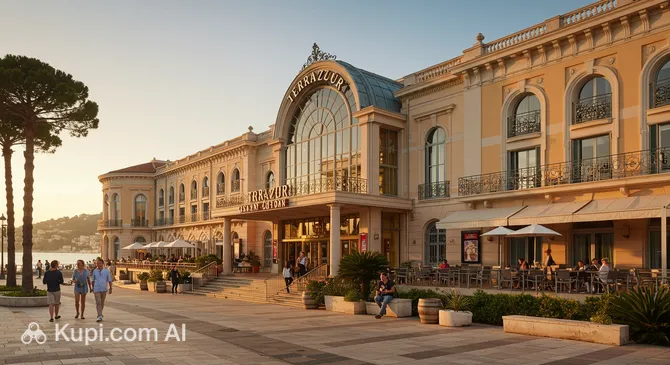
Fans of excitement and vibrant nightlife should pay attention to Casino Terrazur. This modern entertainment complex offers guests not only classic gaming tables and slot machines but also an elegant atmosphere. Besides gaming, show programs are often held here, and the complex's restaurants allow you to enjoy a fine dinner in a pleasant setting.

For those who prefer active outdoor recreation and want to take a break from the city bustle, Canyon Forest is an ideal choice. This is an adventure park located in a picturesque natural area. Ropes courses of various difficulty levels, zip lines, and obstacles among the trees provide an adrenaline rush. It is a great place for family leisure where you can test your agility surrounded by southern nature.

Canyon Forest. Illustration.
Source: Kupi.com AI

Traveler photos:

Another point of attraction for many travelers is Polygone Riviera. The unique concept of this place combines shopping and strolling: it is a huge open-air shopping center. Here, boutiques of famous brands stand alongside green alleys, fountains, and art objects, turning an ordinary shopping trip into an aesthetic pleasure.

Local Cuisine

The cuisine of Cagnes-sur-Mer is a true gastronomic mirror of the Provence-Alpes-Côte d'Azur region, where the freshness of the Mediterranean meets the aromas of Provençal herbs. The foundation of the local menu invariably remains the gifts of the sea: at morning markets, stalls overflow with freshly caught fish, oysters, mussels, and shrimp. Local chefs prepare them with sincere simplicity, generously seasoning them with olive oil, garlic, and herbs to highlight the natural flavor of the products.

Among the dishes that are definitely worth a try, the pissaladière takes the top spot — a traditional open tart with caramelized onions, anchovies, and olives. No less popular is socca — a crispy chickpea pancake best bought hot directly from street stalls. And for a full lunch, the famous ratatouille is perfect: in this sunny land, the vegetable stew acquires a special richness thanks to the quality of local tomatoes, eggplants, and zucchini.

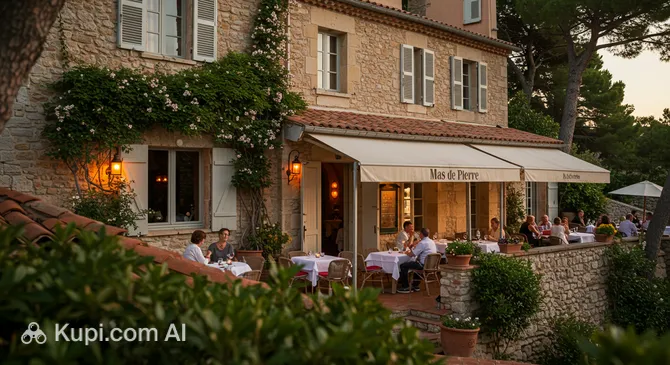
Mas de Pierre Restaurant. Illustration.
Source: Kupi.com AI

Traveler photos:

For those with a sweet tooth, the city offers exquisite fruit tartlets and homemade almond cookies, whose taste is perfectly complemented by jams made according to old family recipes. As for drinks, it is customary here to accompany a meal with a glass of Provençal rosé wine or local liqueurs. If you prefer non-alcoholic options, look out for freshly squeezed juices from citrus fruits grown in nearby orchards.

The food culture in Cagnes-sur-Mer is diverse: from bustling markets where you can taste farm products to elegant establishments. For an introduction to haute cuisine and a cozy atmosphere, you can visit Restaurant Mas de Pierre, where regional traditions are served in a modern interpretation. And if you want to end the evening with a cocktail in a pleasant setting, stop by the bar Le Sant'Ana. Gastronomic festivals, regularly held in the city, are also a great chance to immerse yourself in the world of flavors of the French Riviera.

Travel Tips

Preparing for your trip to Cagnes-sur-Mer is the key to ensuring your vacation on the French Riviera goes perfectly. We have gathered the most relevant and proven recommendations to help you avoid tourist traps and enjoy the atmosphere of this cozy French city with maximum comfort.

  1. Clothing and footwear. The climate here is mild, so in summer give preference to light natural fabrics and don't forget a head covering. However, if you plan to explore the historical part of the city (Haut-de-Cagnes), be sure to bring comfortable flat-soled shoes. Steep climbs and old cobblestones make walking in heels not only tiring but also risky.

  2. Transport. It is convenient to move around the city itself on foot or by the Lignes d'Azur bus network. To get up to Grimaldi Castle, don't waste your energy walking; use the free shuttle (navette gratuite) No. 44, which runs from the central square. For trips to neighboring Nice or Antibes, it is best to choose the train (TER) — it is faster and cheaper than a taxi and eliminates parking problems.

  3. Finances. The currency is the Euro. Bank cards are accepted almost everywhere, from restaurants to supermarkets. However, for purchases at morning markets or in small family bakeries in France, it is always worth having some cash in small denominations. Tips are often already included in the bill, but leaving 1-2 euros for the waiter is considered a sign of good manners.

  4. Health and safety. Cagnes-sur-Mer is a safe city, but you should not leave your things unattended on the beaches. Pharmacies are easily recognized by a green flashing cross; many of them work seven days a week. The sun on the Riviera is very active, so sunscreen is necessary even during spring walks.

  5. Communication. Although staff in tourist zones often speak English, local residents greatly appreciate respect for their culture. Learn a couple of basic phrases: "Bonjour" (Hello) and "Merci" (Thank you). These are magic words that instantly change attitudes towards you for the better. Free Wi-Fi is available in many public places, including the promenade and parks.

  6. Local etiquette. When entering a shop, bus, or cafe, be sure to greet the staff or driver — this is an unshakeable rule of French etiquette. Also, note the dress code: despite the resort status, walking around the city in swimsuits or shirtless (for men) is prohibited and can result in a fine.

  7. What to avoid. Do not try to have lunch between 14:00 and 19:00. At this time, most traditional restaurants close their kitchens until dinner. If you haven't managed to eat on time, look for establishments with the sign "Service Continu" (continuous service) or grab a sandwich at a boulangerie.

  8. Local tip. Visit the Cros-de-Cagnes district early in the morning. This is a historical fishing quarter where the spirit of the old Riviera still lives. Here you can buy the freshest fish directly from the boats of local fishermen — a unique experience that is impossible to get in a supermarket.

By following these simple tips, you will be able to feel confident and relaxed in Cagnes-sur-Mer, like an experienced traveler. May your trip be filled only with pleasant discoveries, delicious food, and a sunny mood!

Entertainment & Nightlife

Entertainment:

The nightlife in Cagnes-sur-Mer possesses a special charm that distinguishes it from the noisy parties of neighboring Nice or Cannes. A more relaxed and elegant atmosphere prevails here, perfect for those who value quality rest, live music, and conversation. As the sun sets, the epicenter of activity shifts closer to the coast, to the Cros-de-Cagnes district and the promenade, where restaurant lights reflect on the sea surface.

For those looking to test their luck and dive into a world of glamour, Casino Terrazur remains the main attraction. In the evening, this establishment is transformed: they don't just take bets here, but also host concerts, themed shows, and discos. It is a true entertainment hub where you can spend the whole night moving from the gaming tables to the bar and dance floor. The crowd here is respectable, so it's worth sticking to a smart casual style.

Terrazur Casino. Illustration.
Source: Kupi.com AI

Traveler photos:

If you are looking for a place with a dance atmosphere and signature cocktails, take note of the Tri Bê club. This is a popular location among locals and tourists who want to dance to modern rhythms. For those who prefer relaxing by the water's edge with a glass of champagne, Voile Rouge is worth a visit. This establishment combines the features of a beach club and a night bar, offering guests the chance to enjoy the sea breeze in a refined setting.

Practical tips for night owls:

  • Opening hours: Bars are usually open until 01:00–02:00, while clubs operate until dawn. The liveliest time is from 23:00 to 01:00.
  • Prices: The average cost of a cocktail ranges from 12 to 18 euros; entry to clubs may be paid or require a table deposit.
  • Transport and Safety: Cagnes-sur-Mer is a peaceful city, and night walks along the promenade are safe. However, to return to your hotel, especially if it is on a hill or far away, it is better to use an official taxi or apps like Uber. Night buses (Noctambus) run along the coast, but their schedule should be checked in advance.

The city's daytime cultural program is just as rich as its nighttime offerings. In their spare time from the beach, guests can visit numerous museums, including the famous Grimaldi Castle Museum, or enjoy performances at local theaters and cultural centers, which often offer outdoor programs during the summer season.

Parks & Museums

The cultural landscape and natural treasures of Cagnes-sur-Mer offer travelers the perfect balance between intellectual enrichment and outdoor relaxation. The city carefully preserves its historical heritage within museum walls, while its green zones allow visitors to enjoy the silence and beauty of Mediterranean nature away from the beach bustle.

Among the natural areas, special attention is deserved by Parc naturel des Rives du Loup. This is a picturesque green artery stretching along the banks of the Loup River. Convenient walking trails are laid out here, ideal for morning jogs or leisurely walks in the shade of the trees. This place is popular with locals seeking coolness on hot summer days and tourists wishing to see local flora and fauna.

Another unique natural corner is the gardens of the "Les Collettes" estate. Although they are inextricably linked with the name of the great artist, the territory itself is a magnificent park with centuries-old olive trees and citrus groves. A stroll here gives a sense of peace and opens up breathtaking panoramic views of the medieval part of the city and the sea. For those who prefer more active leisure surrounded by forest, Canyon Forest is an excellent choice, where nature becomes a playground for adventure.

The city's main cultural pearl is undoubtedly the Renoir Museum. It is located in the house where the famous Impressionist spent the last years of his life. Visitors can see the preserved interior, the master's personal belongings, his easel, and, of course, original paintings and sculptures. The atmosphere of the house is so lively that it seems as if the artist has only stepped out into the garden for a moment.

No less impressive is the Grimaldi Castle Museum (Château-Musée Grimaldi), which towers atop the hill in the Haut-de-Cagnes district. This 14th-century architectural monument is interesting in itself: the courtyard with arcades and painted ceilings transports guests to the Renaissance era. Inside the castle, there are two exhibitions: the Olive Tree Ethnographic Museum, telling the region's traditions, and the Mediterranean Museum of Modern Art with a rich collection of portraits of the famous singer Suzy Solidor.

The historical center of attraction remains the Haut-de-Cagnes district itself. It is a true open-air museum where every paving stone holds history. Narrow, flower-draped streets, ancient houses, and St. Peter's Church create a unique ensemble that is listed as a protected historical monument.

Insider Tip: If you find yourself at the Grimaldi Castle, be sure to climb the tower. From there, you get perhaps the best view of the Côte d'Azur — from the snow-capped Alpine peaks to Cap d'Antibes, which is particularly beautiful in the rays of the setting sun.

Getting Around

Getting around Cagnes-sur-Mer is convenient and simple even without a rental car. The city is integrated into the general transport network of the Nice metropolis (Lignes d'Azur), ensuring stable connections both within the resort and with neighboring coastal towns. Public transport here is modern, clean, and runs strictly on schedule, making it an excellent choice for tourists.

The main mode of transport is buses. The route network covers the entire city: from the Cros-de-Cagnes coastal strip to residential quarters. The most popular route for travelers is the line connecting the city with Nice and Cannes. Buses are air-conditioned, which is especially important in the summer heat. Most routes run from early morning until 21:00–22:00, but there are also special night services (Noctambus) operating on weekends and holidays.

For fast travel along the Côte d'Azur, regional TER trains are ideal. The city has two railway stations: "Cagnes-sur-Mer" (closer to the center) and "Cros-de-Cagnes" (near the beach area). A train ride to the center of Nice takes only about 15 minutes, which is significantly faster than by bus or car during peak hours. Train tickets are purchased separately from bus tickets — at station machines or online.

A true "highlight" of the transport system is the free shuttle No. 44 (Navette Gratuite). This is a small bus that runs between the central bus station and the historical district of Haut-de-Cagnes at the top of the hill. Given the steep climbs and narrow streets of the old town, this shuttle is a real lifesaver for tourists wishing to visit Grimaldi Castle without the tiring climb on foot. It runs every 15–20 minutes and operates daily.

The payment system on buses is unified with the regional network. Paper tickets are becoming a thing of the past, giving way to rechargeable cards ("La Carte") and mobile apps. You can buy a contactless card at machines at tram stops (in neighboring Nice) or at authorized points of sale. The most convenient way for a tourist is to download the Lignes d'Azur Mobile app, where you can buy tickets directly from your phone (Android and iOS) and use your smartphone for validation when boarding.

Important to remember: the ticket must be validated at every boarding, even if you are transferring within the validity of one fare (usually 74 minutes). Fines for fare evasion or unvalidated tickets are quite high. Bus drivers do not sell tickets, so take care of payment in advance.

As an alternative to public transport, the Vélo Bleu bicycle rental system is popular. Excellent cycle paths are laid out along the promenade, allowing you to breeze to neighboring resorts. Taxi services and ride-hailing apps (like Uber) are also available, but keep in mind that prices here are higher than the European average, especially in the evening.

Accommodation

Where to stay:

Accommodation options in Cagnes-sur-Mer are as diverse as the city itself, offering choices from cozy family pensions to elegant hotel complexes. Due to its location between Nice and Antibes, this resort is often chosen as a strategic base for exploring the Côte d'Azur, where prices can be slightly more affordable than in its more famous neighbors.

When choosing accommodation, it is important to consider the city's geography, as it is divided into several zones with different atmospheres. The Cros-de-Cagnes area is ideal for beach lovers. Most resort-style hotels and rental apartments are concentrated here along the coast. Staying here, you will be within walking distance of the sea, the promenade with restaurants, and the railway station, which is very convenient for trips along the coast.

For those seeking romance and authenticity, the best choice is the historical district of Haut-de-Cagnes. Staying here offers the chance to sleep in medieval stone houses, many of which have been converted into boutique hotels or bed & breakfast (chambres d'hôtes) guest houses. However, keep in mind that car access here is limited, and the steep cobbled streets can be an obstacle for travelers with heavy luggage or limited mobility.

The typical price range varies depending on the season and accommodation category. Budget options and small studios can be found starting from 70–90 euros per night. Mid-range hotels (3–4 stars) usually offer rooms from 120 to 200 euros. The luxury segment and villas with pools will cost significantly more.

Booking tip: The French Riviera is extremely popular, so it is worth planning your trip in advance. If your vacation falls in July or August, it is recommended to book accommodation 3–5 months before arrival. Also, pay attention to the dates of major events in the region (such as the Monaco Grand Prix or the Cannes Film Festival), as the demand for hotels in Cagnes-sur-Mer surges and prices rise during these periods.

Nearby Cities

For those looking to explore the surroundings, Cagnes-sur-Mer serves as an excellent starting point for day trips to several interesting nearby locations. Thanks to the well-developed transport network of the Côte d'Azur, you can easily reach the region's most iconic cities with minimal travel time.

Just 10 kilometers to the east is Nice — the heart of the Riviera. This city attracts visitors with its famous Promenade des Anglais, the colorful Cours Saleya flower market, and the rich architecture of the Old Town. In the opposite direction, literally 9 kilometers away, is Antibes. It is worth coming here to walk along the ramparts, visit the Picasso Museum in the Grimaldi Castle, and see the luxury yachts in Port Vauban.

If you want to briefly swap sea views for the charm of Provençal hills, head to Grasse. This is the perfume capital of the world, where you can visit historical factories, learn the secrets of fragrance creation, and stroll through cozy medieval streets infused with the scent of jasmine and roses.

CityPopulationDistance
Villeneuve-Loubet16 2852 km
Saint Laurent du Var29 1693 km
Biot9 7466 km
Vence18 9407 km
Antibes73 4389 km

These nearby destinations allow you to get a sense of the diverse culture and landscapes of the region, making your vacation even more rich and memorable.

Shopping & Souvenirs

Shopping in Cagnes-sur-Mer offers tourists a pleasant variety: from ultra-modern complexes to traditional Provençal markets steeped in local flavor. The city does not aim to compete with the haute couture of Paris, but it provides ideal conditions for those who want to combine a beach holiday with the purchase of quality clothing, local delicacies, and unique artisanal crafts.

Main shopping arteries are concentrated in the city center and along the coast. In the Cros-de-Cagnes district located by the sea, you can find many small boutiques with beachwear, accessories, and souvenirs. If you climb up to the historical part — Haut-de-Cagnes — shopping takes on a creative flair: the narrow streets are home to artist galleries, jewelry workshops, and shops selling handmade ceramics and jewelry.

The main gem for shopping enthusiasts is Polygone Riviera. This is the first lifestyle-concept shopping center in France, located in the open air. Here, among fountains and green alleys, over 150 stores are gathered: from popular mass-market brands to premium boutiques, as well as a cinema and a casino. It is a place where you can spend the whole day with the family, enjoying not just the shopping but also the modern architecture.

Markets are an integral part of the French lifestyle. An indoor market operates daily in the city center, where farmers offer fresh vegetables, cheeses, and sausages. Special attention should be paid to the morning fish market at the port of Cros-de-Cagnes, where fishermen sell the day's catch directly from their boats. In the summer season, night craft markets often unfold along the promenade, where you can buy original jewelry and handicrafts.

As souvenirs from Cagnes-sur-Mer, tourists most often bring back the region's gastronomic specialties. Be sure to look for locally produced olive oil, Provençal herbs, lavender sachets, and natural soaps. Given the city's artistic heritage and connection to Renoir, reproductions of paintings or items from local potters make excellent gifts.

Most shops are open from 10:00 to 19:00, but keep in mind that small private shops often close for a lunch break from 12:30 to 14:30 and do not operate on Sundays. Large shopping centers usually work without breaks and on weekends. Bank cards are accepted almost everywhere, but it is better to have cash euros for markets.

Tourists residing permanently outside the European Union can take advantage of the Tax Free (Détaxe) system. If you make a purchase over 100 euros in a single store, don't forget to ask for the special tax refund form, which you will need to present to customs when leaving the country.

Reached the end of the page?

That means the route is fully explored