Support

Frejus

About

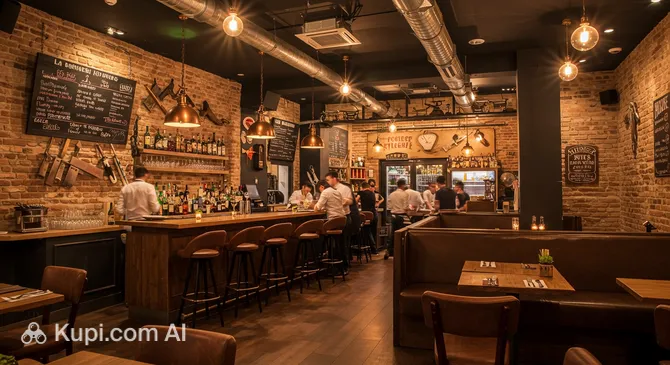
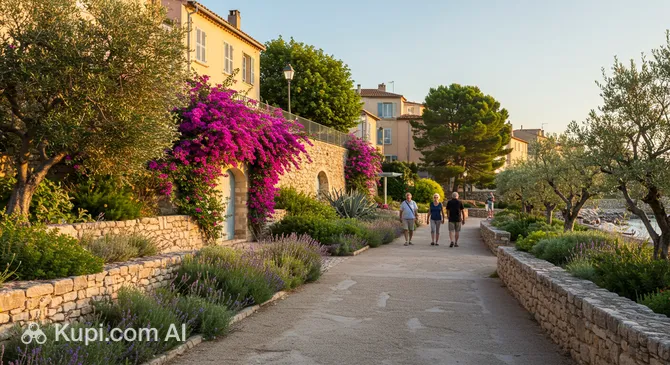
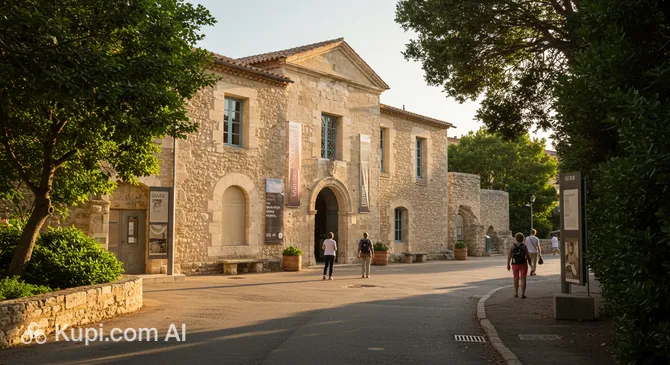
Fréjus is a charming town on the French Riviera, a true southern oasis nestled between the azure waters of the Mediterranean and the picturesque emerald hills of the Esterel Massif. Located in the Provence-Alpes-Côte d'Azur region, this town attracts visitors with its unique atmosphere, where history harmoniously blends with modernity, and ancient ruins sit alongside lively promenades.
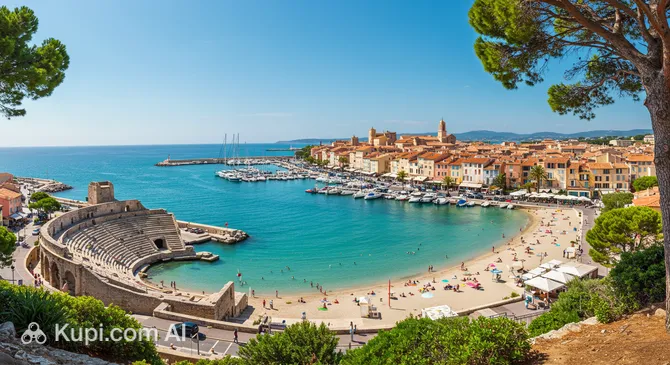
Fréjus. Illustration.
Source: Kupi.com AI

With a population of about 55,750 people, Fréjus is not only a popular resort but also an important cultural center, proudly bearing the title of "City of Art and History." It preserves impressive monuments from antiquity and the Middle Ages, such as the majestic Roman amphitheater, the remains of an ancient aqueduct, and old basilicas. A stroll through the narrow streets of the old town, where every stone breathes history, will provide an unforgettable experience.

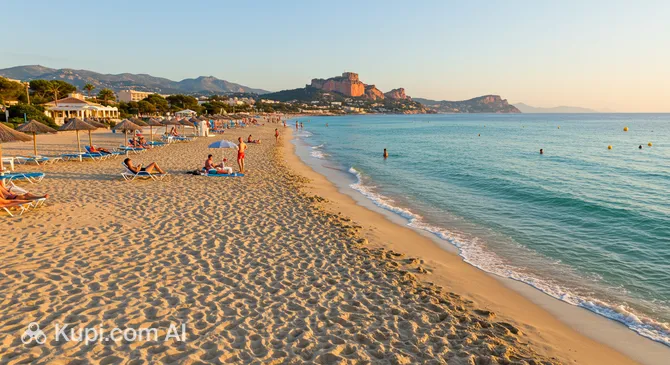
Thanks to its unique location, Fréjus offers guests a mild Mediterranean climate, sea breezes, magnificent golden beaches, and scenic green spaces, making it a wonderful year-round destination. Everyone will find something to their liking here: from relaxed seaside holidays and water sports to exploring rich history and culture in numerous museums and at vibrant local festivals. Fréjus is the perfect choice for those seeking a combination of sea, sun, cultural discovery, and authentic French charm. Come and discover this amazing corner of Provence!

You can find more interesting facts on the history of Fréjus page.
Weather Overview

The weather in Fréjus is characterized by a warm Mediterranean climate. Summers here are hot and sunny, with average temperatures in July and August around 24.6°C, and maximum values can reach 29°C. Winters are mild, with the average temperature in January being approximately 7.8°C and minimums around 4.1°C. Precipitation is unevenly distributed throughout the year: summer is quite dry (about 1-2 mm of rain per month), while in autumn, especially in October, the amount of precipitation can increase to 4 mm. The highest number of rainy days occurs in the spring months; for example, there can be up to 14 in May.

Overall, expect warm, mostly dry summers and mild, wetter winters. To find a detailed forecast and current weather conditions, you can visit the weather in Fréjus page.

Average monthly temperature

Average monthly precipitation

Interesting Facts

Beyond its famous beaches and Roman heritage, Fréjus holds many surprising stories and little-known details that make it even more attractive to curious travelers. This city on the French Riviera can surprise even the most seasoned tourist.

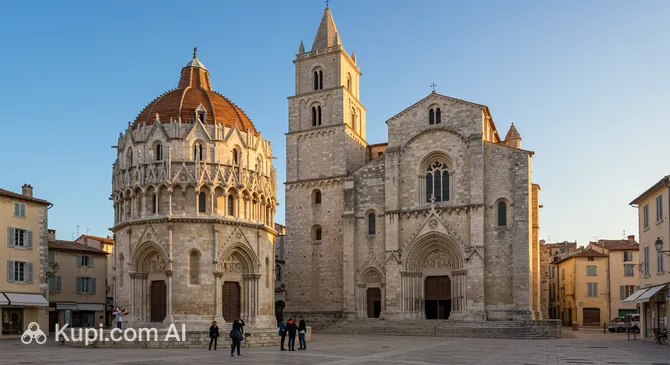
Fréjus Cathedral. Illustration.
Source: Kupi.com AI

Traveler photos:

  • Did you know that Fréjus was founded by none other than Julius Caesar himself over two thousand years ago? Originally, the city was named Forum Julii and served as an important port for the Roman Empire. To this day, you can find impressive ruins of an ancient amphitheater, aqueduct, and Roman baths, turning a walk through the city into a true immersion in history.

  • In 1959, the outskirts of Fréjus witnessed a tragic and unique event—the collapse of the Malpasset Dam. This was one of the largest hydraulic engineering disasters in 20th-century France. Today, the ruins of the dam represent an unusual attraction and serve as a reminder of the forces of nature, attracting history buffs and those seeking unconventional routes.

  • One of the most unexpected architectural treasures of Fréjus is the Hong Hien Pagoda. It was built in 1917 by Vietnamese soldiers stationed here during the First World War. This colorful pagoda is not only an exotic decoration for the city but also a symbol of its multifaceted history and connection to different cultures of the world.

  • Fréjus is famous for its vibrant traditions and rich festival life. Medieval reenactments, colorful carnivals, and appetizing gastronomic fairs are regularly organized here. The summer festivals are particularly memorable, including those held on the famous Fréjus Beach, when the city fills with music, dancing, and the aromas of Provençal treats.

How to Get There

You can reach Fréjus, a charming city on the French Riviera, in several ways, including air and rail transport, as well as by car. The choice depends on your point of departure and preferences.

For many international tourists, the primary way to get to Fréjus is by flying. The nearest airports offer convenient connections to the city:

The most popular option is Nice Côte d'Azur Airport (NCE), the region's main international airport. It is located in Nice, approximately 46 km east of Fréjus. A trip by car or taxi from the airport to Fréjus will take about 1 hour 30 minutes, depending on traffic. This very large airport handles many flights from all over Europe and other parts of the world.

Another convenient option is Hyères Airport (TLN), also known as Toulon-Hyères Airport. It is located in Toulon, about 61 km west of Fréjus. This is a small airport serving mainly seasonal and regional flights. The journey to Fréjus by car takes about 1 hour 50 minutes.

You can also consider Marseille Provence Airport (MRS), located in Marseille, about 123 km away. This is a major international airport, and while it is further away, it may offer more flight options. The drive to Fréjus takes approximately 3 hours 25 minutes.

For convenience, here is a summary of the main airports through which you can reach Fréjus:

AirportPassenger trafficDistance
Nice Côte d'Azur Airport14.8 mln46 km
Hyeres Airport570 14061 km
Marseille Provence Airport10.8 mln123 km
Levaldigi Airport113 398143 km
Avignon-Caumont Airport200 000157 km

Traveling by train is also a convenient option. Although Fréjus has its own railway station serving local and regional trains (TER), for long-distance travel and high-speed connections (TGV), it is often more convenient to use larger hubs in neighboring cities. From there, you can reach Fréjus by regional train, bus, or taxi.

The nearest major station is Toulon Railway Station, located about 74 km from Fréjus. This is a significant transport hub from which you can reach Fréjus in about 2 hours 10 minutes by car or by using the local rail service.

Another important rail hub is Marseille Saint-Charles Station (XRF), located about 111 km away. This is a very large station receiving trains from all over France and abroad. From Marseille, you can reach Fréjus by train (possibly with a transfer) or by car in approximately 3 hours 5 minutes.

Here is information on some major railway stations that may be convenient for a trip to Fréjus:

StationPassenger trafficDistance
Toulon Railway Station4 mln74 km
Marseille Saint-Charles Station16.5 mln111 km
Aix-en-Provence TGV Railway Station3.7 mln111 km
Avignon Railway Station4.5 mln166 km
Nîmes Pont du Gard Station1.1 mln185 km

In addition, Fréjus is easily accessible by car, as the city is well-connected to France's main motorway network, specifically the A8 (La Provençale). Upon arrival at one of the major airports or train stations, you can rent a car for further travel along the Côte d'Azur and the Provence-Alpes-Côte d'Azur region.

Main Attractions

Fréjus, a city with a rich history and the charming atmosphere of the Côte d'Azur, offers its guests many interesting places to visit. Here, ancient Roman ruins coexist with modern entertainment, and picturesque beaches beckon sun and sea lovers. Here are just a few attractions that you should definitely include in your itinerary.

Fréjus Cathedral. Illustration.
Source: Kupi.com AI

Traveler photos:

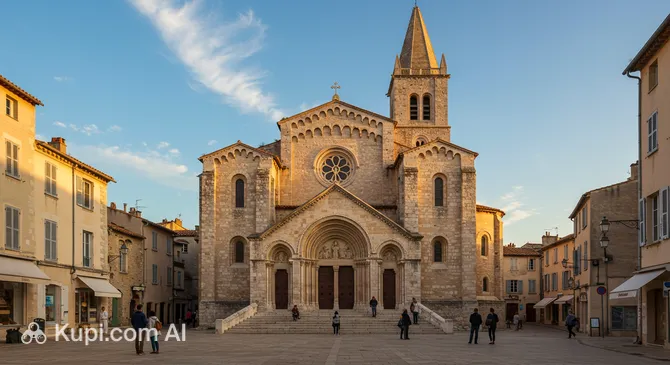
One of the city's main historical gems is the Fréjus Cathedral. This impressive architectural ensemble, which includes a 5th-century baptistery, a cloister, and the episcopal palace, takes visitors back through the centuries. The cathedral is interesting for its unique medieval architecture and the opportunity to touch the ancient history of the region.

Louis de Funès Museum. Illustration.
Source: Kupi.com AI

Traveler photos:

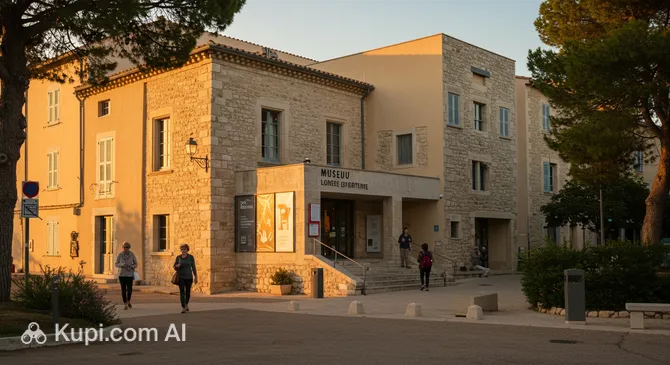
For fans of French cinema, the Louis de Funès Museum is a must-see. The exhibition, dedicated to the life and work of the great comedian, allows you to learn more about his career and see personal belongings and props from his films. This place brings back nostalgic memories and a good mood.

Fréjus Beach. Illustration.
Source: Kupi.com AI

Traveler photos:

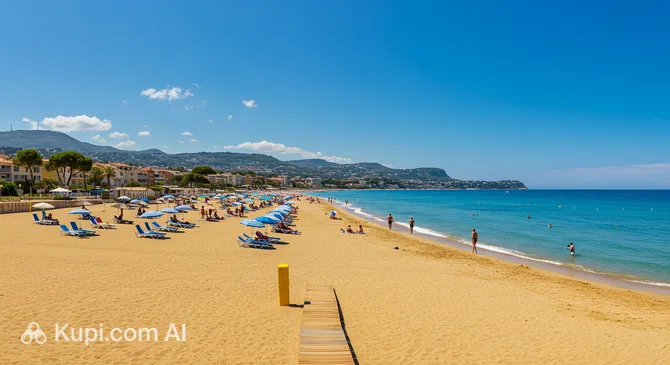
Of course, a trip to Fréjus is unthinkable without visiting its beautiful beaches. Fréjus Beach is a long stretch of golden sand, ideal for family holidays, sunbathing, and water activities. It attracts tourists with its cleanliness, developed infrastructure, and magnificent views of the Mediterranean Sea.

Parc Aurélien. Illustration.
Source: Kupi.com AI

Traveler photos:

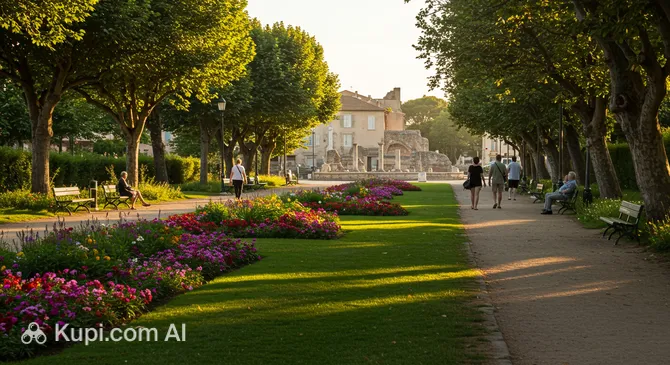
Nature lovers and those who enjoy quiet walks will love Aurélien Park. This picturesque park, located on a hill, offers not only well-kept paths and relaxation areas but also the ruins of an ancient Roman aqueduct. The park is an excellent place for a picnic, contemplating panoramic views of the city and sea, and exploring the historical heritage of Fréjus in a peaceful setting.

Local Cuisine

The cuisine of Fréjus is a vibrant reflection of the generous Mediterranean with a distinct Provençal accent. It captivates with the freshness of its ingredients, the aromas of herbs, and centuries-old culinary traditions that attract foodies from all over the world. The city's gastronomic scene offers authentic flavors of Provence, where fresh local products play the leading role.

Be sure to try the famous bouillabaisse—a thick and aromatic fish soup made from the freshest catch. Equally popular are tapenade—a savory paste made from olives and anchovies, perfect with a crusty baguette—and, of course, ratatouille—a juicy vegetable stew with herbs of Provence. Local delicacies also include fresh oysters and mussels, as well as a variety of Provençal cheeses and sausages. The base of many dishes is excellent local olive oil and aromatic sun-dried tomatoes, which are used generously in many recipes here.

Among drinks, the region's refreshing rosé wines hold a special place, perfectly complementing seafood dishes and light snacks. The local markets are bustling with life: here you can find freshly baked baguettes, focaccia, sweet croissants, and traditional Provençal vegetable and cheese pies. The markets of Fréjus are a true feast for a gourmet, offering fresh fruits, aromatic spices, honey, and homemade liqueurs.

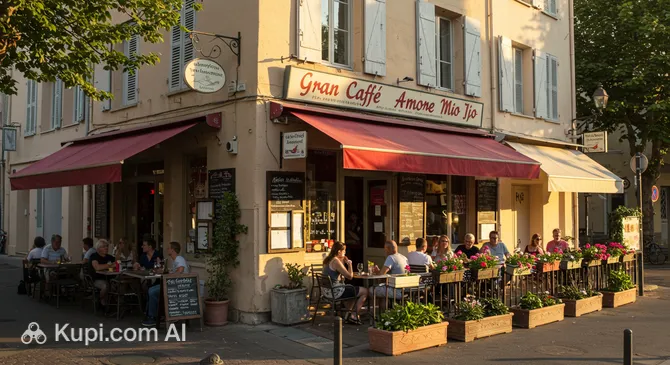
The city's numerous restaurants offer both classic Provençal dishes and modern interpretations. For instance, you can stop by the Grand Café Amore Mio to enjoy the local atmosphere and cuisine. Throughout the year, Fréjus hosts various gastronomic events: wine festivals, harvest festivals, and culinary workshops. The summer fairs on the promenade are particularly popular, where you can sample the best local dishes in the open air while enjoying the sea breeze.

Gran Caffè Amore Mio. Illustration.
Source: Kupi.com AI

Traveler photos:

Travel Tips

Planning a trip to charming Fréjus on the French Riviera? Excellent! To ensure your journey goes smoothly and leaves only pleasant impressions, we have prepared some practical tips.

  1. Clothing and Accessories:

    Located on the French Riviera, Fréjus will delight you with its Mediterranean climate. In summer, pack light clothing made of natural fabrics, swimwear, a hat, and sunscreen. In spring and autumn, warmer items and a light jacket will be useful, as evenings can be cool. Be sure to bring comfortable shoes for walking through the historical center, Roman ruins, and picturesque surroundings. Don't forget an adapter for Type E sockets if your electrical appliances have a different plug. There is usually no specific dress code for visiting churches, but modest clothing is appropriate.

  2. Getting Around the City:

    The historical center of Fréjus and the port area are great for walking. For longer trips, you can use local buses from the Agglobus Estérel Côte d'Azur network. Taxis are available but can be expensive. Renting a car is advisable if you plan to explore the Var region and the Esterel Massif, but keep in mind that parking in popular spots can be difficult in summer.

  3. Finances:

    The official currency is the Euro (€). You can exchange money at banks or exchange offices, but it is often more profitable to withdraw cash from an ATM (distributeur automatique de billets). Bank cards (Visa, Mastercard) are accepted almost everywhere. It is recommended to notify your bank of your trip to avoid card blocking. Tips in restaurants are usually included in the bill (service compris), but it is customary to leave 5-10% extra for good service.

  4. Health and Safety:

    Pharmacies (pharmacie) are easily identified by a green cross; information about duty pharmacies can be found on the door of any pharmacy or online. In case of an emergency, call 112. Fréjus is generally a safe city, but standard precautions are wise: watch your belongings in crowded places (markets, beaches, public transport) and do not leave valuables unattended. Avoid walking in poorly lit or deserted areas at night.

  5. Language and Connectivity:

    The official language is French. In tourist areas, hotels, and large restaurants, many people speak English, but knowing a few basic French phrases (Bonjour – Hello, Merci – Thank you, S'il vous plaît – Please, Parlez-vous anglais? – Do you speak English?) will be very useful and appreciated by locals. A SIM card for mobile internet can be purchased at service provider stores or some supermarkets. Wi-Fi is available in many cafes, hotels, and public places.

  6. Local Etiquette:

    It is customary to say hello when entering shops or small cafes (Bonjour during the day, Bonsoir in the evening). Politeness is highly valued: don't forget to say "please" (s'il vous plaît) and "thank you" (merci). A handshake is the standard form of greeting when being introduced. Avoid excessively loud conversations in public places, especially on transport and in restaurants.

  7. What to Avoid:

    Don't start a conversation in English without first attempting to say hello in French—it might be perceived as impolite. Also, avoid discussing sensitive political topics unless you are sure of your interlocutor's position. Do not litter on beaches and in natural areas—locals are very protective of their environment.

  8. Local Specialties:

    Fréjus is famous for its Roman sights, such as the amphitheater and aqueduct—be sure to set aside time to visit them. Visit local Provençal markets (marché provençal) to try fresh produce and buy souvenirs. Various festivals and events are often held in the city during summer—check the schedule before your trip. Also, check out Base Nature François Léotard—a large green area by the sea, ideal for relaxation and activities.

We hope these tips help you better prepare for your trip to Fréjus and enjoy every moment in this sunny corner of France. Have a great trip!

Entertainment & Nightlife

As evening falls, Fréjus transforms, offering its guests a variety of options for relaxation and entertainment. The main nightlife is concentrated in the Port-Fréjus area and along the Fréjus-Plage promenade. Here you will find many bars, restaurants with terraces, and several clubs where you can dance until morning, especially during the height of the summer season.

The atmosphere of Fréjus at night is quite relaxed and resort-like. The crowd is mixed—from tourists looking for a fun time to local residents. Most venues do not require a strict dress code; casual or smart casual styles prevail for more refined spots. Bars are usually open until late at night, and clubs start filling up closer to midnight and stay open until the early hours. If you are looking for a place for lively dancing, check out La Boucherie club, known for its energetic atmosphere.

La Boucherie. Illustration.
Source: Kupi.com AI

Traveler photos:

For a quieter evening or a dinner that transitions into late-night socializing, Fréjus has excellent restaurants. For example, Grand Café Amore Mio offers a pleasant setting for dinner, while Le Confidentiel Hotel & Spa Restaurant is suitable for those seeking a more sophisticated option. Many restaurants in the port and on the promenade also offer evening cocktails and snacks.

When planning an evening out, keep in mind that the most popular places can be crowded, especially on weekends and during the high season, so it is better to book a restaurant table in advance. Prices in bars and clubs vary but generally match the standards of the French Riviera. At night, it is most convenient to get around the city by taxi; they can be found at stands or called via an app. Fréjus is considered a fairly safe city, but standard nighttime precautions are still advisable: try to stick to well-lit and busy streets.

During the day, there is also plenty to do in Fréjus. The city is rich in historical sites, such as the Fréjus Cathedral. Museum lovers can visit the Louis de Funès Museum, the Naval Museum, or the nearby Archaeological Museum of Saint-Raphaël. For family fun, amusement parks like Fun City or escape rooms like Total Xscape are perfect. And the beautiful beaches, including Fréjus Beach and Saint-Aygulf Beach, are ideal for sunbathing and water sports.

Parks & Museums

Fréjus offers its guests not only the magnificent beaches of the Côte d'Azur but also charming green spots for relaxation and interesting museums that preserve the city's rich cultural and historical heritage. Everyone will find something to do here, whether it's a quiet walk in a park or an immersion into the history of the region.

Among the city's green oases, Aurélien Park (Parc Aurélien) stands out. It is a vast territory where you can enjoy Mediterranean flora, see the ruins of an ancient Roman aqueduct, and simply take a break from the city bustle with a picnic. Another picturesque spot is the Jardin Bonaparte, located on an elevation that offers magnificent panoramic views of the Port of Fréjus and the bay. This well-maintained garden is ideal for leisurely strolls and photography. Of course, one cannot forget the famous beaches, such as Fréjus Beach, which is a wonderful place for sunbathing and swimming.

Bonaparte Garden. Illustration.
Source: Kupi.com AI

Traveler photos:

The cultural life of Fréjus is also rich. One of the most visited and original is the Louis de Funès Museum, dedicated to the life and work of this legendary French comedian. The museum's exhibition will be of interest not only to devoted fans of his talent but also to anyone interested in the history of French cinema. Naval history enthusiasts should visit the Naval Museum (Musée des Troupes de Marine), which tells in detail about the glorious pages of these units' history. Although the Archaeological Museum of Saint-Raphaël is located in the neighboring town, its collection of ancient artifacts found in the region is also of great interest to history lovers.

Museum of the Marine Troops. Illustration.
Source: Kupi.com AI

Traveler photos:

Fréjus is proud of its rich historical heritage. A visit to the Fréjus Cathedral (Cathédrale Saint-Léonce de Fréjus) is a must—it is not just a church, but an entire architectural ensemble, including a 5th-century baptistery, one of the oldest in France, and an elegant cloister. Also worthy of attention is the Basilique Notre-Dame de la Victoire, built in the 19th century in a Neo-Byzantine style and featuring impressive interior decoration.

Basilica of Our Lady of Victory. Illustration.
Source: Kupi.com AI

Traveler photos:

To fully experience Fréjus, we recommend strolling through the narrow streets of the old town early in the morning, before they fill with tourists, and inhaling the aroma of fresh pastries from local bakeries. Also, don't pass by the small craft shops and art galleries—you can find unique souvenirs there and get acquainted with the work of local masters.

Getting Around

When planning your travels around Fréjus, you'll find that the city and its surroundings are primarily served by a bus network. This is the most common and affordable type of public transport, allowing you to reach key points in the city, beaches, and neighboring towns like Saint-Raphaël. Buses run on regular routes, connecting the center with suburban areas.

The fare system in Fréjus is fairly standard for French cities of this size. You can purchase tickets directly from the bus driver, though this may be slightly more expensive. A more cost-effective option is often to buy tickets at special kiosks, tobacco shops (tabac), or via mobile apps if offered by the local transport operator. There are single-trip tickets as well as passes for multiple trips or a specific period (for example, a day or a week), which can be convenient for tourists planning to use transport actively. Prices are generally moderate.

Tourists are advised to check the bus schedule in advance, especially if planning trips in the early morning, late evening, or on weekends when intervals between buses may increase. Tickets must be validated upon entering the bus using special validation machines. Information on routes and schedules can usually be found at bus stops, tourist information centers, or on the transport company's website. Main bus hubs are usually located near the train station or central squares.

In addition to public transport, there are other ways to get around Fréjus. Taxis are available but are a more expensive option. For exploring the coastal zone and the city center, a bicycle can be an excellent choice—rental points are common, especially during the tourist season. Many parts of Fréjus, including the historical center and the promenade, are perfectly suited for walking. For trips to neighboring cities on the Côte d'Azur, you can use regional trains (TER), which also have a station in the city.

Accommodation

In Fréjus, travelers will find a variety of accommodation options to suit different preferences and budgets. The selection ranges from budget-friendly apartments and campsites to comfortable mid-range hotels and more luxurious villas, which are particularly popular with families and large groups. Short-term rentals are also available, allowing you to feel like a local.

The most sought-after areas for tourists to stay are coastal zones such as Fréjus-Plage and Saint-Aygulf, due to their proximity to the sea, restaurants, and entertainment. The historical city center is also attractive for those who want to immerse themselves in the atmosphere of an old town and be near attractions like the Fréjus Cathedral. Port Fréjus offers modern apartments with views of the yachts and easy access to the promenade.

Saint-Aygulf Beach. Illustration.
Source: Kupi.com AI

Traveler photos:

While the provided list doesn't include specific hotels, Fréjus offers a wide choice of hotels across various categories. You can find both small family-run hotels and larger hotel complexes with swimming pools and other amenities. The price range varies from budget options to premium offerings, especially during the peak season.

As for booking, it is recommended to take care of this well in advance, especially if your trip falls in the summer months (July-August) when the demand for accommodation is at its highest. Most hotels and apartments can be booked through popular online platforms, directly on hotel websites, or through travel agencies. This allows you to compare prices and choose the most suitable option.

Nearby Cities

For those who want to explore the surrounding area, Fréjus serves as an excellent starting point for day trips to several interesting nearby locations:

Among the many options, special attention should be paid to such gems of the French Riviera as the famous Cannes (only 26 km away), known for its film festival, magnificent Croisette promenade, and sandy beaches. No less attractive is Antibes (35 km), which charms with its ancient Fort Carré, the Picasso Museum, and the picturesque Port Vauban. And for fans of fragrances, a visit to Grasse (29 km) is a must—the perfume capital of the world, where you can learn the secrets of perfume making.

CityPopulationDistance
Saint-Raphaël36 0273 km
Roquebrune-sur-Argens14 9378 km
Le Muy9 28814 km
Sainte-Maxime14 44816 km
Mandelieu-la-Napoule21 99820 km

These nearby destinations provide insight into the diverse culture and landscapes of the region, complementing the experience of staying in France.

Shopping & Souvenirs

Fréjus offers pleasant shopping opportunities, combining the charm of Provençal boutiques with the convenience of modern shopping centers. The city isn't famous for exclusive goods, but you can find high-quality local products, handmade items, and souvenirs that reflect the spirit of the Provence-Alpes-Côte d'Azur region.

The main shopping areas are concentrated in the historical center of Fréjus, where narrow streets host numerous small shops offering clothing, accessories, delicacies, and gifts. It's also worth a stroll along the Port-Fréjus promenade, where you can find shops with beach gear, souvenir stalls, and fashionable clothing boutiques.

For more concentrated shopping, you can visit shopping centers. For example, the Shopping Center Puget-sur-Argens, located nearby, offers a wide selection of famous brand stores, a hypermarket, and restaurants. Another option is La Galerie, where you can also find a variety of goods.

Puget-sur-Argens Shopping Center. Illustration.
Source: Kupi.com AI

Traveler photos:

Markets hold a special place in the Fréjus shopping scene. Traditional Provençal markets take place several times a week in different parts of the city. Here you can buy fresh local products (fruits, vegetables, cheeses, olives), spices, herbs of Provence, honey, as well as products from local artisans, textiles, and souvenirs. Evening markets are often organized in summer, creating a special atmosphere.

As souvenirs from Fréjus, it's worth bringing home traditional Provençal goods: lavender soap and sachets, locally produced olive oil, ceramics with characteristic patterns, textile items (tablecloths, towels), and local wines, such as Côtes de Provence rosés. History lovers might enjoy something related to the city's Roman heritage.

Shops in Fréjus are usually open from 9:00-10:00 to 12:00-12:30 and from 14:30-15:00 to 19:00-19:30. Many small shops may be closed on Sundays and Mondays, as well as during the lunch break (siesta), especially in the off-season. Large supermarkets and shopping centers often work without a break and may be open on Sunday mornings. Bank cards (Visa, Mastercard) are widely accepted, but small shops or markets might require cash.

Tourists from non-European Union countries can take advantage of the Tax Free / Détaxe system when making purchases above a certain minimum in one store in one day. To do this, you must ask the seller for a special form (bordereau de vente à l'exportation) and present it along with the goods at customs when leaving the EU.

Reached the end of the page?

That means the route is fully explored