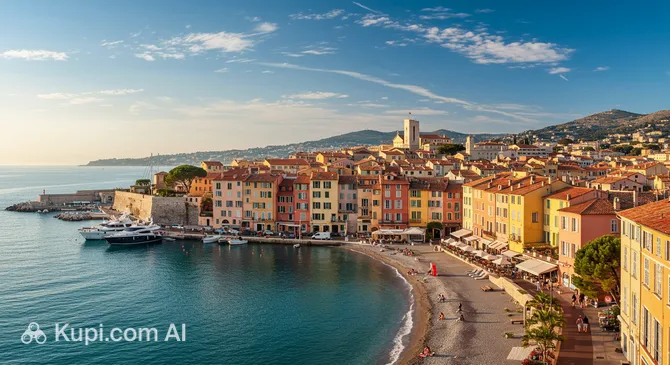
Antibes is a true gem of the French Riviera in France, nestled comfortably on the Mediterranean coast between the famous cities of Nice and Cannes. This charming town in the Provence-Alpes-Côte d'Azur region is famous for its unique atmosphere, where history harmoniously intertwines with modernity, and the air is filled with creativity and sea freshness.
Antibes. Illustration.
Source: Kupi.com AI
Antibes occupies a picturesque bay framed by pine groves and fragrant gardens. The mild Mediterranean climate, fresh sea breeze, and stunning views of the azure waters make it an ideal destination year-round. With a population of about 73,000, Antibes retains the charm of a provincial town despite its popularity. Administratively, it is merged with Juan-les-Pins, a famous resort area renowned for its jazz festivals and vibrant beach life.
The city attracts tourists with its diverse attractions. Be sure to stroll through the narrow streets of the Old Town, surrounded by ancient ramparts, and visit the famous Picasso Museum, located in the Grimaldi Castle where the artist once lived and worked. No less impressive are the walks along the scenic Cap d’Antibes peninsula with its luxury villas and secluded coves. Antibes is also famous for its golden beaches and lively markets where you can immerse yourself in the local flavor.
Antibes is a place where everyone will find something for themselves: from quiet contemplation of natural beauty and historical monuments to active recreation and gastronomic discoveries. Let this city enchant you with its southern charm and hospitality!
When planning a trip to Antibes, expect a typical Mediterranean climate. Summers here are hot and sunny: the average air temperature in July and August is around 22-23°C, with minimal rainfall (1-2 mm). Winters in Antibes are mild, with an average temperature of about 7°C in the coldest months (January-February) and also a small amount of precipitation (2-3 mm). The highest rainfall usually occurs in October (about 5 mm). You can find more about the weather by month on the Antibes Climate page.
Average monthly temperature
Average monthly precipitation
Interesting Facts
Beyond its famous beaches and rich history, Antibes holds many surprising details and lesser-known stories. This city on the Côte d'Azur can surprise even the most seasoned traveler.
Picasso Museum. Illustration.
Source: Kupi.com AI
Traveler photos:
Antibes is not just a charming resort, but one of the oldest cities on the French Riviera. It was founded by the Greeks in the 5th century BC and was originally called Antipolis, which translates as "the city opposite"—it was named so because of its location across from Nikaia (modern-day Nice).
The famous Picasso Museum in Antibes owes its existence to a short but incredibly productive period of the artist's work in 1946. Legend has it that Pablo Picasso, arriving in the city without art supplies, painted his masterpieces with paints provided by local residents—these were ordinary boat paints!
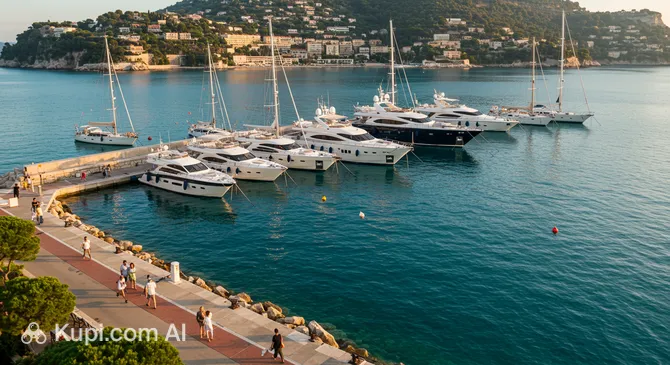
Port Vauban in Antibes is known as the largest marina in the Mediterranean by total capacity. However, not everyone knows about its most exclusive section—the "Billionaires' Quay" (Quai des Milliardaires). Some of the largest and most luxurious superyachts in the world moor here, and the quay itself is considered one of the most expensive yacht berths.
Antibes, or more specifically its integral part Juan-les-Pins, is the home of one of the oldest and most prestigious jazz festivals in Europe—Jazz à Juan. Since 1960, it has annually attracted global jazz stars and thousands of music lovers, turning the city into the true jazz capital of the Riviera during the event.
How to Get There
There are several ways to get to Antibes, a charming town on the French Riviera in France. The most popular options are flying and taking the train, thanks to the city's convenient location and good transport links with the region's major hubs.
The main airport serving Antibes is Nice Côte d'Azur Airport (NCE). It is located in Nice, only about 11.3 km east of Antibes. This is a very large international airport with a wide selection of flights. A taxi or car ride from Nice Airport to Antibes usually takes about 30–40 minutes, depending on traffic. There are also regular buses from the airport to Antibes.
Another significant option is Marseille Provence Airport (MRS), located in Marseille, approximately 155 km west of Antibes. This is also a major international airport. The drive from here to Antibes takes about 2–2.5 hours. For some travelers, Toulon-Hyères Airport (TLN) in Toulon, located about 96 km from Antibes, might be convenient, although it is significantly smaller.
For convenience, here is a summary of the main airports used to reach Antibes:
Traveling by train is another convenient way to reach Antibes. If your route involves arriving at major regional hubs, consider Marseille Saint-Charles Station (XRF), located about 144.5 km from Antibes, or Toulon Railway Station (XZV), located about 109.1 km away. Both stations are significant transport hubs. From Marseille or Toulon, you can easily reach Antibes on regional trains (TER); the journey takes between 1.5 and 2.5 hours depending on the departure station and train type.
Furthermore, Antibes has its own railway station (Gare d'Antibes), which is perfectly integrated into the regional TER (Transport Express Régional) network and accepts high-speed TGV trains from Paris, Marseille, Nice, and other major French cities, as well as international services. Arriving directly at Antibes station is generally the most direct and convenient way to reach the city by rail.
If you are planning a route through major nearby rail hubs, here is information on some of them:
Additionally, Antibes is easily accessible by car. The city is conveniently located near the A8 motorway (La Provençale), making it accessible for those traveling along the Côte d'Azur by car or planning to rent one upon arrival in the region.
Main Attractions
Antibes, a charming town on the French Riviera in France, attracts tourists not only with its magnificent beaches but also with its rich history and culture. Here, everyone will find something to their liking, from ancient fortifications to world-class museums and picturesque natural spots. Here are just a few key attractions to include in your Antibes itinerary:
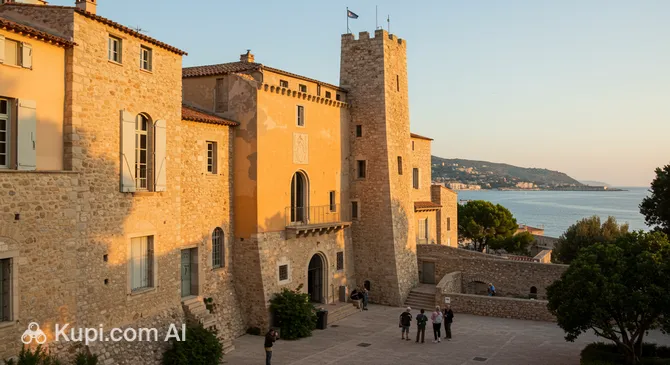
One of the city's main gems is the Picasso Museum. It is located in the ancient Grimaldi Castle, where Pablo Picasso himself lived and worked in 1946. Visitors can see a unique collection of his paintings, drawings, and ceramics created during this prolific Antibes period. The atmosphere of the castle, with its historical walls and views of the Mediterranean Sea, adds a special charm to exploring the great artist's work.
Picasso Museum. Illustration.
Source: Kupi.com AI
Traveler photos:
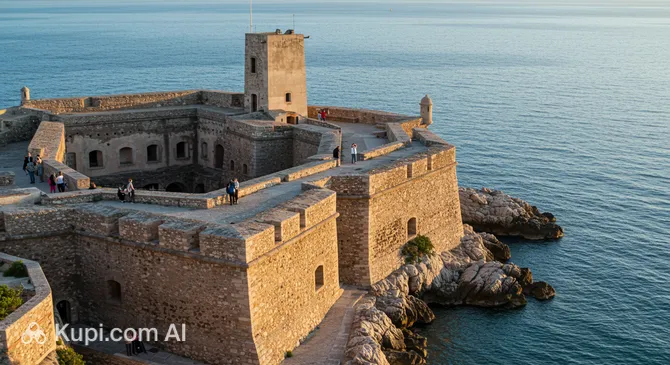
Nearby rises the majestic Fort Carré. This impressive 16th-century star-shaped fortress once served to protect the city from sea invasions. Today, the fort attracts tourists with its rich history (Napoleon Bonaparte was even imprisoned here), powerful architecture, and, of course, panoramic views of Antibes, the azure waters, and the distant Alpine peaks. A tour of the fort is a true journey back in time.
Fort Carré. Illustration.
Source: Kupi.com AI
Traveler photos:
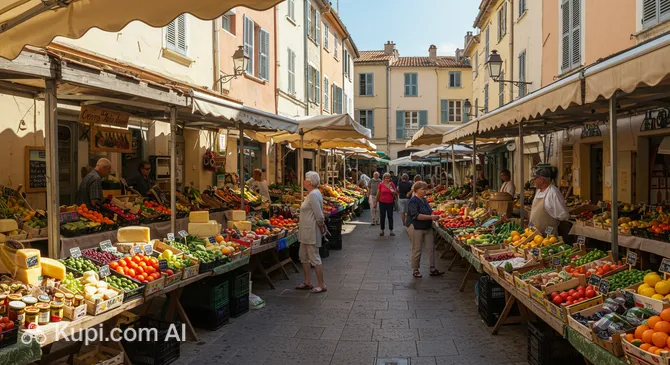
To feel the authentic spirit of Provence, be sure to visit the Provençal Market (Marché Provençal). Located under a covered hall in the Old Town, this colorful market is filled daily with the aromas of fresh fruits, vegetables, cheeses, olives, flowers, and local spices. Here you can not only buy delicacies and handmade souvenirs but also simply enjoy the lively atmosphere and bright colors of the South of France.
Provençal Market. Illustration.
Source: Kupi.com AI
Traveler photos:
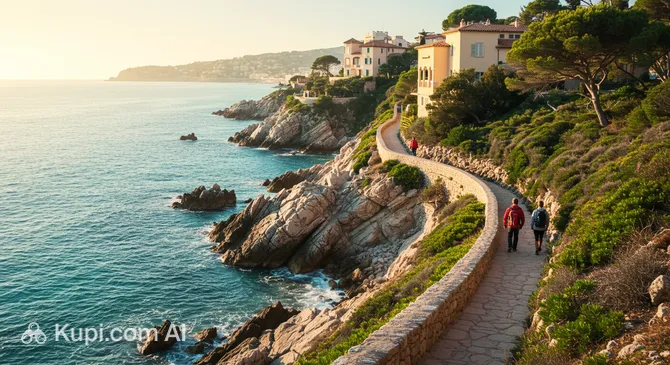
For nature lovers and those seeking breathtaking views, the Cap d’Antibes Coastal Path (Sentier du Littoral) is a must. This picturesque hiking trail circles the famous Cap d'Antibes headland, offering stunning views of the Mediterranean, hidden coves, luxury villas, and wild nature. Walking the path is a wonderful opportunity to enjoy the beauty of the Côte d'Azur and take unforgettable photos.
Cap d'Antibes Coastal Path. Illustration.
Source: Kupi.com AI
Traveler photos:
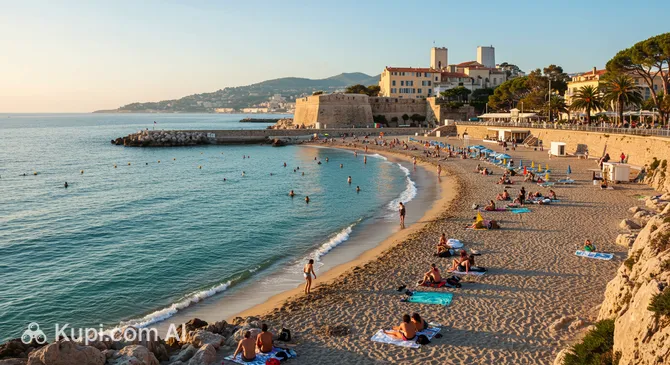
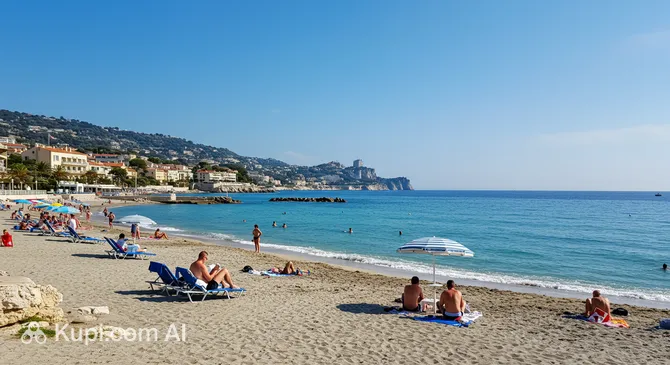
And, of course, a holiday in Antibes is unthinkable without visiting its famous beaches. Salis Beach (Plage de la Salis) is one of the city's most popular public beaches. It attracts visitors with its fine golden sand, clear water, and magnificent views of the old fortifications of Antibes and Cap d’Antibes. It is an ideal place for relaxed rest, sunbathing, and a refreshing swim.
Salis Beach. Illustration.
Source: Kupi.com AI
Traveler photos:
Local Cuisine
The cuisine of Antibes is a vivid reflection of the bounty of Provence and the freshness of the Mediterranean. The city's gastronomic scene will delight foodies with a combination of traditional recipes and modern culinary trends. Here, everyone will find a dish to their taste, from simple rustic fare to exquisite restaurant masterpieces highlighting the richness of local products.
Be sure to try the famous bouillabaisse—a rich fish soup made from several types of fresh fish. Another iconic regional dish is the Salade Niçoise, a perfect combination of tuna, anchovies, fresh vegetables, and eggs drizzled with fragrant olive oil dressing. Seafood lovers should sample the freshest oysters, mussels, scallops, and langoustines. Don't forget about tapenade—a savory paste made of olives, capers, and anchovies, traditionally served with fresh, crusty baguette.
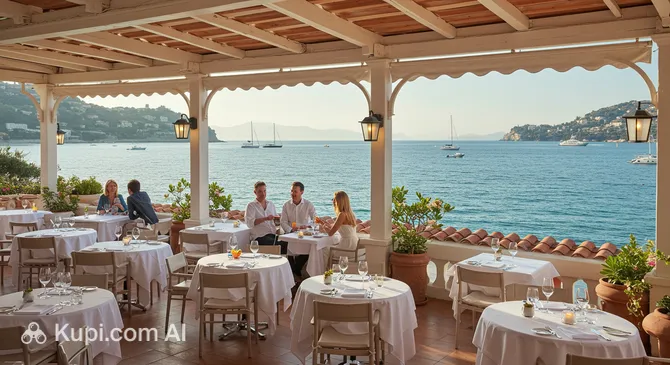
Locals and tourists enjoy food in a variety of places: from cozy bistros and family-run restaurants to elegant fine-dining establishments, such as the Eden-Roc Restaurant. Markets occupy a special place in the gastronomic life of Antibes. The heart of the city is the Provençal Market (Marché Provençal), where you can find the freshest local products: vegetables, fruits, cheeses, olives, honey, and spices. It is a great place to feel the local flavor and purchase delicacies.
Eden-Roc Restaurant. Illustration.
Source: Kupi.com AI
Traveler photos:
Among drinks in Antibes, local Provençal wines are popular, especially rosés, which perfectly complement seafood dishes. On a hot day, natural lemonades and freshly squeezed juices are refreshing. For dessert, treat yourself to delicate almond pastries or fragrant ice cream, such as lavender flavor. Gastronomic Antibes is a true celebration of taste that will leave unforgettable impressions and a desire to return again.
Travel Tips
Planning a trip to charming Antibes on the French Riviera? To ensure your journey goes smoothly and leaves only the most pleasant impressions, we have prepared some practical tips to help you navigate this beautiful corner of France.
Clothing and Essentials by Season: The climate in Antibes is Mediterranean. In summer, you will need light clothing, swimwear, sunscreen, a hat, and sunglasses. In spring and autumn, it's worth bringing warmer layers and a light jacket, and in winter, warmer clothes, including a waterproof jacket. It is crucial to bring comfortable shoes for walking on the cobbled streets of the old town and the scenic paths of Cap d'Antibes. Don't forget a universal adapter for Type E sockets used in France. When visiting churches, such as the Cathedral of Our Lady of the Immaculate Conception, choose modest clothing that covers shoulders and knees.
Getting Around Town: Antibes is a fairly compact city, especially its historical part, which is best explored on foot. For longer trips, for example, to neighboring Juan-les-Pins or Cap d'Antibes, you can use the local Envibus network. Antibes railway station provides convenient connections to other cities on the French Riviera. Taxis are available but can be expensive; ride-hailing apps also operate. Renting a car is convenient for exploring the Provence-Alpes-Côte d'Azur region, but keep in mind that parking in Antibes, especially in summer, can be a real challenge and quite costly.
Financial Matters: The official currency is the Euro (EUR). You can exchange money at banks or exchange offices (bureaux de change), but it is often more profitable to withdraw cash from ATMs (distributeurs automatiques de billets), which are widely available. Credit and debit cards (Visa, Mastercard) are accepted almost everywhere; American Express less frequently. Before your trip, check with your bank for terms of using cards abroad. An approximate daily budget per person (excluding accommodation) can be 70–150 euros, depending on your preferences. Tipping in France is usually included in the bill (service compris), but if the service was especially good, you can leave 5–10% of the amount.
Health and Safety: Pharmacies (pharmacies) are easy to find by the green cross; information about on-duty pharmacies (pharmacie de garde) operating at night and on weekends is usually posted on the doors of nearby pharmacies. For emergency medical assistance, call 112. It is recommended to have travel insurance. Antibes is considered a very safe city. Nevertheless, observe standard precautions: keep an eye on your belongings in crowded places (markets, beaches, public transport) to avoid pickpockets. There are virtually no serious dangers or "unsafe" neighborhoods in Antibes.
Language and Connectivity: The official language is French. In tourist areas, hotels, and restaurants, many people speak English, but knowing a few basic phrases in French (Bonjour – Hello, Merci – Thank you, S'il vous plaît – Please, Excusez-moi – Excuse me) will be very helpful and appreciated by the locals. A SIM card with internet access can be purchased at mobile phone shops or some supermarkets. Free Wi-Fi is available in many cafes, restaurants, and hotels, as well as in some public areas.
Local Etiquette: The French value politeness. When entering a shop or cafe, it is customary to say hello ("Bonjour" during the day, "Bonsoir" in the evening). When addressing someone, start with a polite greeting. A handshake is appropriate when meeting someone. In public places, try not to speak too loudly. If you want to take a photo of someone, politely ask for permission.
Things to Avoid: Try not to start a conversation immediately in English without first checking if the person speaks English ("Bonjour, parlez-vous anglais?"). Also, avoid excessively loud talking and noisy behavior in public places, especially on transport and in restaurants—it may be perceived as impolite.
Special Tip – Markets and Beaches: Be sure to visit the famous Provençal Market (Marché Provençal) in the old town (open daily in the morning, except Mondays from September to May). Here you will find the freshest local products, flowers, spices, and cheeses—this is the true spirit of Provence! Regarding beaches, public ones like Plage de la Gravette can be crowded in high season. For more comfort, consider private beaches or go in search of secluded coves on Cap d'Antibes.
We hope these tips help you better prepare for your trip and fully enjoy every moment of your stay in sunny and hospitable Antibes. We wish you an unforgettable journey along the French Riviera!
Entertainment & Nightlife
Antibes, a charming town on the French Riviera, offers its guests not only sunny beaches and cultural attractions but also a rich evening and nightlife. As the sun sets, the ancient streets and the waterfront come alive, filled with a special atmosphere of Mediterranean fun. While Antibes is better known for its cozy bars and restaurants than for loud nightclubs, everyone will find entertainment to their taste here.
The main concentration of evening venues is in the Old Town (Vieil Antibes) and near Port Vauban. Wandering through the narrow cobbled streets of the Old Town, you will discover many attractive bars, wine cellars, and restaurants where you can enjoy an aperitif or spend the entire evening. The waterfront also offers establishments with beautiful views of the yachts and the sea, creating an ideal setting for a romantic dinner or a sunset cocktail.
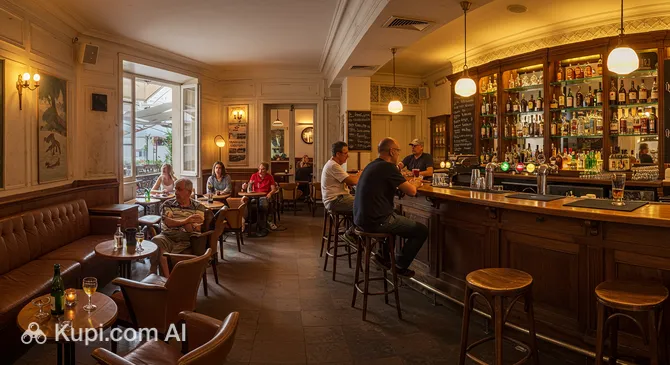
The nightlife atmosphere in Antibes is predominantly elegant and relaxed. The crowd here is a mix of locals and tourists from all over the world. Many bars offer live music—from jazz to modern hits. Popular spots include Pam Pam, known for its Brazilian atmosphere and exotic cocktails, and the stylish Le Cafe Brun, where you can spend a cozy evening with a glass of wine. Some restaurants, such as the Bistro and Rooftop Restaurant, offer not only exquisite cuisine but also stunning views, making dinner particularly memorable.
Pam Pam. Illustration.
Source: Kupi.com AI
Traveler photos:
Most bars and restaurants stay open until late at night, especially during the summer season. Venues usually start to fill up after 8:00–9:00 PM. The dress code in most places is smart casual; while there are no strict rules, elegant attire is appropriate, especially if you plan to visit more refined establishments. Prices can vary: from quite democratic in small bars to high in prestigious restaurants and lounge bars. The average cost of a cocktail is 10–15 euros.
Getting around Antibes at night is quite easy. The central areas, especially the Old Town, are compact and perfect for walking. These areas are considered safe, but as with anywhere, basic precautions should be taken. If you need to get to a more distant area or hotel, you can always call a taxi. It is best to check the contact details of local taxi services in advance or use ride-hailing apps.
During the day, Antibes also offers plenty of entertainment. Art lovers will appreciate the Picasso Museum, located in the Grimaldi Castle, or the Fernand Léger National Museum. For families, the Antibes Land Park amusement park is a great choice, while nature enthusiasts can walk the scenic Cap d’Antibes Coastal Path or visit Exflora Park. Don't forget to stop by the colorful Provençal Market for local delicacies and souvenirs.
Picasso Museum. Illustration.
Source: Kupi.com AI
Traveler photos:
Thus, Antibes offers a harmonious combination of daytime activities and evening entertainment, allowing every guest to enjoy their holiday in the unique atmosphere of the French Riviera.
Parks & Museums
Antibes, a sparkling gem of the French Riviera, captivates not only with its azure waters and the charm of its old streets but also offers travelers a rich selection of green oases for relaxation and cultural treasuries that carefully preserve its centuries-old history and priceless artistic heritage.
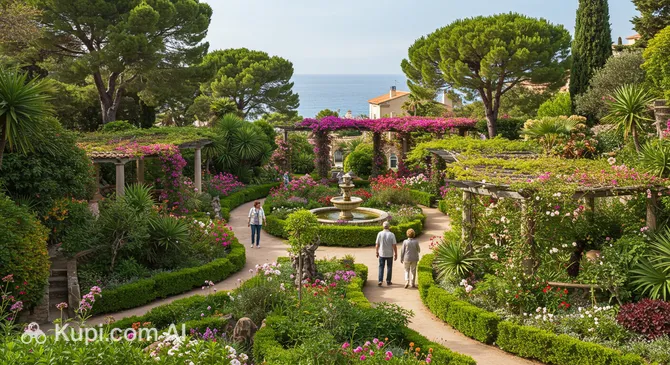
For lovers of nature and peaceful strolls, Antibes has prepared several truly wonderful places. One of them is Exflora Park (Parc Exflora)—a magnificent botanical garden spanning 5 hectares. Here you can admire plants from all over the Mediterranean, a delightful rose garden, and an ancient olive grove. It is an ideal place for a leisurely walk and enjoying the intoxicating scents of the south.
Exflora Park. Illustration.
Source: Kupi.com AI
Traveler photos:
No less impressive as a natural attraction is the Cap d’Antibes Coastal Path (Sentier du Littoral), which offers breathtaking views of the endless sea, secluded picturesque coves, and luxury villas. A walk along this path will provide you with unforgettable impressions and magnificent shots for your photo album.
One should not forget the famous beaches of Antibes, such as Salis Beach. This is a wonderful place where you can not only bask in the sun and tan but also enjoy crystal clear water and a refreshing sea breeze while inhaling the salty air of the Riviera.
The cultural life of Antibes is equally rich and diverse. The city is rightfully proud of its museums, among which a special place is occupied by the Picasso Museum in Antibes. Located within the walls of the historical Grimaldi Castle, whose windows offer magnificent views of the sea, it houses a significant collection of the great artist's works created during his prolific stay in Antibes in 1946. A visit to this museum is a must for all admirers of 20th-century art.
Picasso Museum Antibes. Illustration.
Source: Kupi.com AI
Traveler photos:
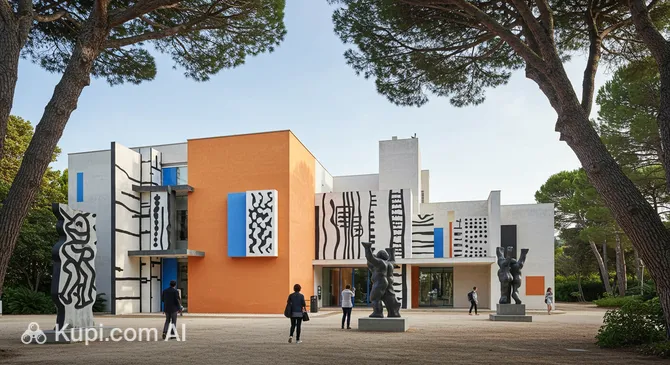
Another important cultural site is the Fernand Léger National Museum, located in nearby Biot and dedicated to the work of this outstanding modernist artist. Its monumental mosaics on the facade and bright, expressive canvases inside leave a lasting impression.
Fernand Léger Museum. Illustration.
Source: Kupi.com AI
Traveler photos:
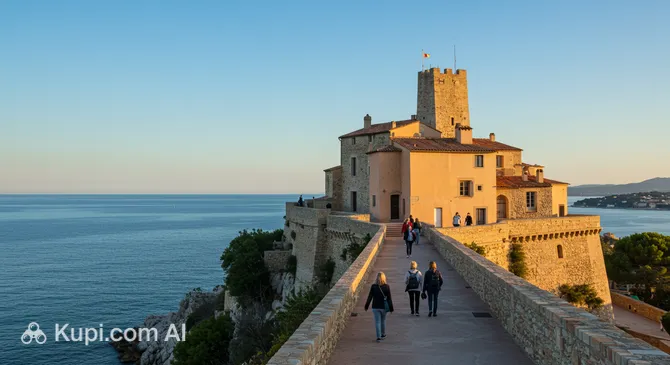
The history of Antibes literally comes alive in its numerous architectural monuments. The majestic Fort Carré, built in the 16th century by order of King Henry II and later improved by the famous military engineer Vauban, rises proudly above the port, offering visitors panoramic views of the city, the azure sea, and the distant peaks of the Alps. Its unique star shape and rich history, linked among others to Napoleon Bonaparte, consistently attract many tourists. A walk along the old city walls will also allow you to immerse yourself in the atmosphere of the past and enjoy magnificent views of the Old Town and Port Vauban.
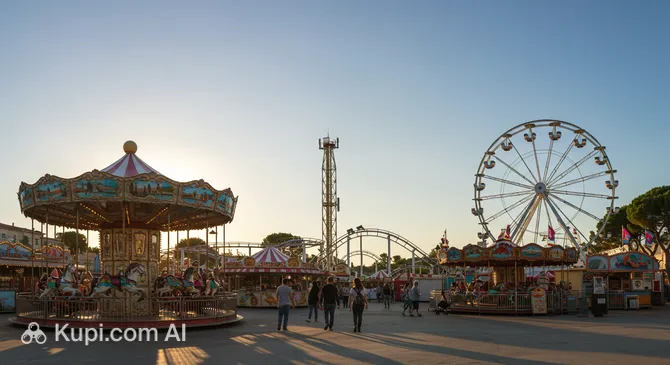
For a family holiday with children, the Antibes Land Park amusement park is perfect, offering attractions for all tastes and ages—from extreme roller coasters to fun carousels for the youngest visitors.
Antibes Land Park. Illustration.
Source: Kupi.com AI
Traveler photos:
And if you want to feel the authentic spirit of Provence and taste local delicacies, definitely stop by the Provençal Market (Marché Provençal). Every morning (except Mondays in winter), it fills the covered galleries of Cours Masséna with the aromas of fresh fruits and vegetables, fragrant spices, exquisite cheeses, bright flowers, and other local products.
For those seeking secluded and particularly picturesque corners, head for a walk to Billionaires' Bay (Anse de l'Argent Faux) on Cap d'Antibes—this spot, hidden from most tourist routes, amazes with its wild, pristine beauty and peaceful atmosphere.
Billionaires' Bay. Illustration.
Source: Kupi.com AI
Traveler photos:
Also, do not miss the opportunity to simply wander aimlessly through the narrow, cobbled streets of the Old Town (Vieil Antibes), discovering charming courtyards, ancient fountains, and local craft shops where you can find unique souvenirs to remember your trip to Antibes.
Getting Around
Getting around Antibes and its surroundings is quite convenient thanks to a well-developed public transport system. The main mode of transport in the city is the bus. The local bus network is called Envibus and covers not only Antibes itself but also nearby communes, including Juan-les-Pins, Vallauris, Biot, and Villeneuve-Loubet. Buses run according to a schedule that can be found at stops or on the network's official website.
The fare system in Antibes is fairly simple. You can purchase a ticket directly from the driver when boarding the bus, although this will be slightly more expensive. A better option is to buy tickets in advance at special machines, tobacco shops (Tabac), or Envibus agencies. There are single tickets as well as booklets of several tickets (carnet), which are cheaper. For those planning to travel a lot, day or week passes may be available. The approximate cost of a single ticket is about 1.50–2 euros. Don't forget to validate your ticket when entering the bus.
Buses usually start running early in the morning, around 6:00–7:00 AM, and finish late in the evening, roughly by 9:00–11:00 PM, depending on the route and the day of the week. In the summer season, some routes may operate longer. For planning trips, it is convenient to use mobile apps or the transport company's official website. It is also worth noting that Antibes is connected to other cities on the French Riviera, such as Nice and Cannes, by rail. TER (Transport Express Régional) trains are a fast and convenient way to travel along the coast.
In addition to public transport, other ways of getting around are available in Antibes. Taxis can be found at designated stands or called by phone, although this is a more expensive option. Bicycle rentals are also popular in the city—an excellent way to explore the picturesque streets and waterfronts at your own pace. Given the compactness of Antibes' historical center, many of its attractions are easily reached on foot. For tourists wishing to see the main sights of the old town and the coast without extra effort, a small tourist train ("petit train touristique") runs, offering sightseeing tours.
Accommodation
Antibes offers a variety of accommodation options to suit the needs of any traveler. Here you will find everything from budget hostels and cozy guesthouses to mid-range hotels, luxury resorts, and private apartments or villas available for rent. This wide selection allows you to find the perfect place to stay according to your preferences and budget.
When choosing accommodation, it is worth paying attention to a few key areas. The Old Town (Vieil Antibes) charms with its historical atmosphere, narrow streets, and proximity to iconic sites like the Picasso Museum and the Provençal Market. For those looking for a more vibrant setting and beach holiday, the Juan-les-Pins district is ideal, known for its sandy beaches, casino, and nightlife. The area around Salis Beach is also popular for its picturesque views and easy access to the sea. If you prefer a quieter stay, consider options on Cap d'Antibes, where exclusive villas and hotels are nestled among lush greenery.
Plage des Ondes. Illustration.
Source: Kupi.com AI
Traveler photos:
Price ranges for accommodation in Antibes vary from very affordable options to premium offerings. In general, the cost of staying is higher during the peak summer season (July–August). To guarantee the best choice and prices, especially if your trip coincides with a popular time, it is recommended to book your accommodation in advance. You can use popular online platforms or contact chosen hotels or apartment owners directly for searching and booking.
Nearby Cities
For those who want to explore the surroundings, Antibes serves as an excellent starting point for day trips to several interesting nearby locations:
These nearby destinations offer a glimpse into the diverse culture and landscapes of the Provence-Alpes-Côte d'Azur region. Each trip promises new discoveries, whether it be the charming streets of ancient towns, famous waterfronts, or the picturesque landscapes of the French Riviera.
Shopping & Souvenirs
Antibes offers charming shopping opportunities where the atmosphere of an ancient town blends with modern boutiques and markets. The city is particularly famous for traditional Provençal goods, fresh local products, handmade items, and artistic souvenirs. Here you can find unique pieces in small shops as well as goods from well-known brands.
The main shopping areas of Antibes are concentrated in its historical center. Stroll through the picturesque pedestrian streets, such as Rue de la République, Rue James Close, and their adjacent alleys. Here you will find many small clothing boutiques, jewelry stores, art galleries, and souvenir shops offering authentic Côte d'Azur products.
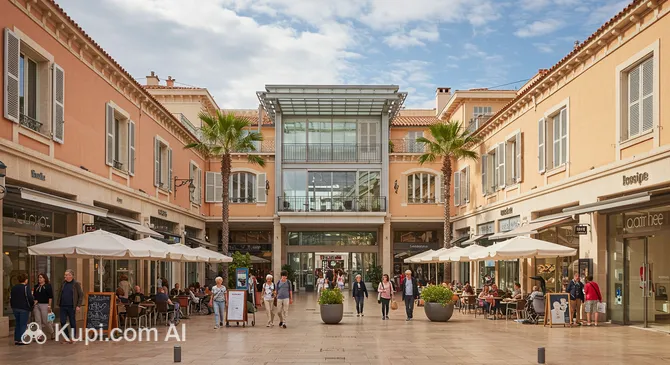
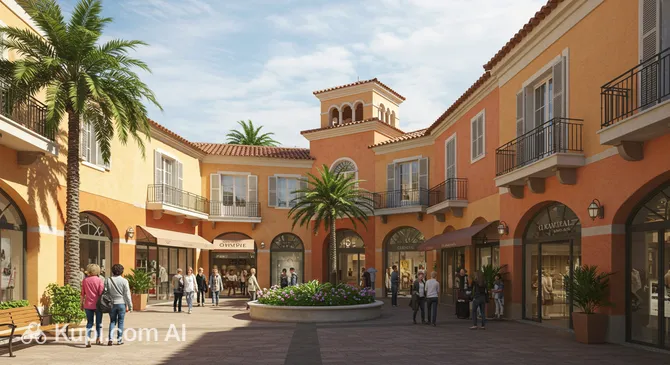
For those who prefer a more concentrated shopping experience under one roof, there are several shopping centers in Antibes. For example, you can visit the Antibes Shopping Center or the Olympie Shopping Center, which feature a selection of clothing, footwear, accessories, and other goods.
Antibes Shopping Center. Illustration.
Source: Kupi.com AI
Traveler photos:
Markets hold a special place in the Antibes shopping scene. The jewel of the city is the famous Provençal Market (Marché Provençal), located in the Old Town under a covered gallery. Daily (except Mondays in winter), you can buy the freshest fruits, vegetables, flowers, aromatic spices, olives, cheeses, deli meats, and, of course, fresh fish and seafood. In the afternoons on weekends, a craft market often unfolds in the same spot, where local artisans sell their creations.
Provençal Market. Illustration.
Source: Kupi.com AI
Traveler photos:
As souvenirs from Antibes, tourists often choose traditional Provençal goods: aromatic herbs (thyme, rosemary, lavender), extra virgin olive oil, handmade soap with natural extracts, ceramics with characteristic patterns, textiles (tablecloths, towels), and, of course, works by local artists inspired by the beauty of the French Riviera. Glassware and small nautical souvenirs are also popular.
Most shops in Antibes are open from approximately 10:00 AM to 7:00 PM. Many small shops and boutiques may close for a lunch break, usually from 12:30 or 1:00 PM until 2:30 or 3:00 PM. Large stores and shopping centers generally operate without a break. During the tourist season (summer), working hours may be extended, and some shops are also open on Sundays. The most common payment methods are cash (Euros) and bank cards (Visa, Mastercard). American Express is not accepted everywhere.
Olympie Shopping Center. Illustration.
Source: Kupi.com AI
Traveler photos:
Tourists from countries outside the European Union can take advantage of the Value Added Tax (VAT) refund system (Tax Free) when making purchases over a certain amount in a single store (usually from 100 euros, though the threshold may vary). To do this, you must ask the seller for a special Tax Free form and present it along with your purchases at customs when leaving the EU.