Support

Biot

About

Biot is a picturesque and incredibly cozy town located in the heart of the French Riviera, nestled between bustling Nice and fashionable Cannes. Situated just a five-minute drive from the Mediterranean coast, it offers tourists a unique combination of relaxed beach holidays and immersion in the region's authentic culture. It is here that France reveals itself as a country of refined taste and centuries-old traditions.

Despite its modest size and population of about ten thousand people, the town possesses a special charm and a rich heritage. The past of this place is inextricably linked with knightly orders: a Templar fortress was once located here. The fascinating history of Biot can be traced in its ancient architecture, narrow cobbled streets, and an overall atmosphere of tranquility that so attracts travelers tired of the hustle and bustle of megacities.
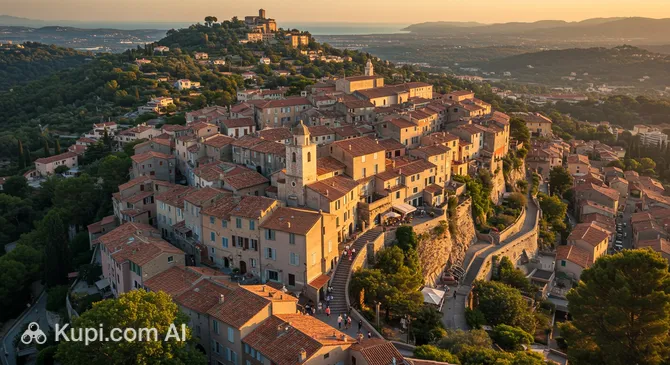
Biot. Illustration.
Source: Kupi.com AI

Today, Biot is known worldwide as a city of arts and crafts. Dozens of talented designers, jewelers, ceramicists, and painters live and work here. The town gained special fame for its glassblowers, who create unique "bubble" glass. Many workshops are open to visitors, allowing guests not just to buy a souvenir, but to personally witness the magic of creating masterpieces. Art lovers should also visit the Fernand Léger National Museum, which boasts an impressive collection of works by this master.

The gastronomic component of the trip will delight connoisseurs of Mediterranean cuisine. The cozy terraces of local restaurants and cafes invite you to relax after your walks and enjoy local delicacies. Biot is an ideal destination for those seeking inspiration, appreciating craftsmanship, and wanting to discover the creative soul of Provence.

Weather Overview

Biot's climate is typical of the south of France: it is mild, temperate, and conducive to walking for most of the year. Summer here is truly warm: in July and August, average maximums reach 26.6°C — 26.9°C. This is the most popular time to visit, although even in the height of the season, overcast days are possible.

Winter months bring cool weather, but there are no severe frosts here. In January and February, the temperature usually ranges from 2.5°C at night to 11.6°C during the day. Transitional seasons also have their own characteristics: for example, May, although it delights with warmth up to 18.9°C, is statistically a month with frequent precipitation (up to 17 days with rain).

Expect a warm, comfortable summer and a cool winter with regular but usually light rain. Before your trip, be sure to check the forecast so that the weather in Biot doesn't catch you by surprise and allows you to enjoy all the beauties of this cozy town.

Average monthly temperature

Average monthly precipitation

Interesting Facts

In addition to its famous workshops and cozy streets, Biot hides many surprising details that form its unique character. Here are a few facts that will help you look at this town in a new way:

  • The secret of "bubble" glass. The town gained worldwide fame thanks to a unique technique by local master Éloi Monod. He turned what is usually considered a manufacturing defect—air bubbles inside the material—into the main artistic feature that made Biot famous throughout Europe.

  • Knightly heritage. The town has deep historical roots connected to the Knights Templar. Biot actually developed around their fortress, and the medieval spirit is still felt in the architecture of the old center, attracting history buffs.

  • Centuries-old pottery traditions. Although the town is more commonly associated with glass today, its artisanal fame began as early as the 16th century with pottery. Biot was a major center for ceramic production, and many modern masters continue these ancient traditions in their studios.

  • A green ring of parks. Unlike many coastal towns densely packed with hotels, Biot is surrounded by the extensive natural parks of Valmasque and Brague. There are not only hiking and botanical trails here, but also special paths for horseback riding.

  • A home for the avant-garde. The town became a sanctuary for the legacy of the great artist Fernand Léger. Having a National Museum of this level in a small town is a rare phenomenon, highlighting Biot's status as an important cultural center.

How to Get There

When planning a trip to the French Riviera, it is important to think about logistics in advance, as this region offers many travel options. You can find all the ways to get to the town on our dedicated page, and below we will look at the main transport hubs located nearby.

The most convenient way to get to Biot is by air. The town itself does not have its own airport, but that's not a problem: just a few kilometers away is Nice Côte d'Azur Airport (IATA: NCE). It is located in the city of Nice, about 9.7 km from your destination. This is a major international hub receiving flights from all over the world. The journey from the terminal to the center of Biot by taxi or transfer will take only about 25–30 minutes. This is the most preferred option for most tourists due to its proximity and excellent transport links.

If tickets to Nice are unavailable, you can consider an alternative—Marseille Provence Airport (IATA: MRS). It is located in the city of Marseille, at a distance of about 153.8 km. A trip by car or transfer along high-speed motorways will take approximately 1 hour 50 minutes. If you choose public transport (bus or train with transfers), the travel time will increase to 3–4 hours.

For clarity, here is a summary of information on the main airports:

AirportPassenger trafficDistance
Nice Côte d'Azur Airport14.8 mln10 km
Hyeres Airport570 14097 km
Levaldigi Airport113 398111 km
Marseille Provence Airport10.8 mln154 km
Genoa Cristoforo Colombo Airport1.3 mln166 km

Traveling by rail is also popular in France. Large high-speed trains (TGV) usually stop in the major cities of the region. You can arrive at Toulon Railway Station, which is about 109.7 km from Biot. From there, you can get there by taxi or rental car, which will take about 1 hour 15 minutes with light traffic.

Another significant hub is Saint-Charles Station (Marseille). It is located in Marseille, at a distance of 143.6 km from Biot. This is the largest station in the region, receiving many international trains. Travel time by road from the station to the destination will be approximately 1 hour 45 minutes. Usually, tourists use these stations as transfer points, switching to local regional trains (TER) that go directly to stations near Biot.

Below is information about the nearest major railway stations:

StationPassenger trafficDistance
Toulon Railway Station4 mln110 km
Aix-en-Provence TGV Railway Station3.7 mln140 km
Marseille Saint-Charles Station16.5 mln144 km
Porta Nuova Railway Station70 mln166 km
Porta Susa Railway Station10 mln167 km

Main Attractions

Biot offers travelers a wonderful combination of medieval architecture and modern art. The town's main attractions are compactly located, allowing you to explore them at a leisurely pace while enjoying the Provencal atmosphere. Here are the places you should definitely include in your walking itinerary.

The Fernand Léger National Museum is perhaps the most famous cultural point on the town's map. Located at the foot of the hill, the museum is dedicated to the work of the famous French avant-garde artist. The building itself is a work of art: its facade is decorated with a huge colorful mosaic created from the master's sketches. Inside, there is an impressive collection of Léger's paintings, ceramics, and stained glass, spanning his entire creative career. Tourists find this place interesting not only for the exhibition but also for the picturesque garden surrounding it, where sculptures are harmoniously integrated into the Mediterranean landscape.

La Verrerie de Biot (The Biot Glassworks) is a legendary place where the famous "bubble glass" technique was born in 1956. This is not just a shop or a gallery, but a real eco-museum. The main reason to visit the factory is the opportunity to see the masters at work in the "Halle des Verriers." You can watch as the red-hot mass is transformed into elegant vases and glasses right before your eyes. This mesmerizing sight provides a better understanding of the region's artisanal traditions.

Place des Arcades is the historical heart of Biot and one of the most photographed locations in the town. This ancient square, surrounded by buildings from the 13th and 14th centuries, has preserved its medieval spirit. Characteristic stone arches, decorated with flowers and climbing plants, create a uniquely cozy atmosphere. It is pleasant to just sit in one of the cafes here, examining architectural details that recall the times when the town belonged to the Knights Templar and the Knights of Malta.

The Church of Saint Mary Magdalene is an important historical and architectural monument towering over the old town. Built in the 15th century on the site of an old Romanesque church, it attracts attention with its austere beauty. Inside, a real treasure awaits tourists: two 16th-century altarpieces, one of which is the "Virgin of the Rosary" by Louis Bréa, a prominent artist of the Nice school. A visit to the church allows you to touch the spiritual heritage of Biot and enjoy the silence beneath the ancient vaults.

Local Cuisine

Biot's cuisine is a gastronomic embodiment of sunny Provence, where every meal turns into a small celebration. Proximity to the Mediterranean Sea and the region's fertile lands define the basis of the local menu: fresh vegetables, aromatic herbs, olive oil, and seafood reign supreme here. The food in this town is characterized by rich flavors and a noble simplicity that hides the highest quality of ingredients.

The main dish that you should definitely try is Ratatouille. This famous vegetable stew made of eggplant, zucchini, and bell peppers is prepared with special care in Biot, generously seasoned with local spices. It is often served with fresh crusty bread or rice. Due to the proximity of the coast, Bouillabaisse—a thick and rich fish soup that has become a legend of the south of France—holds a place of honor on restaurant menus. Magnificent local cheeses, often served as an exquisite dessert or snack, also complete the gastronomic picture.

It is customary to accompany a meal with drinks that reflect the character of the region. On hot days, a glass of cool Rosé wine, for which this area is famous, is an ideal choice. If you want to feel like a true local, order Pastis before dinner—a traditional anise-flavored aperitif usually diluted with ice water to achieve a milky-white hue. Among non-alcoholic drinks, freshly squeezed juices and lemonades made from local citrus fruits are popular.

The dining culture in Biot encourages leisurely relaxation. Locals and tourists prefer to have lunch and dinner on the cozy outdoor terraces of restaurants, enjoying views of the ancient streets. For those who prefer a quicker snack, there are small street cafes and eateries. Farmer's markets deserve special attention: here you can buy the freshest products and organize an authentic picnic in nature, enjoying the true taste of the region.

Travel Tips

A trip to Biot promises to be an unforgettable immersion in the atmosphere of Provence, but a little preliminary preparation will make your holiday much more comfortable. We have collected practical recommendations for you that will help avoid small organizational difficulties and allow you to focus on the beauty of this artisanal town.

  1. Clothing and footwear. Biot is a medieval hill town with many steps and steep cobbled streets. Comfortable flat shoes (sneakers or sandals) are your main ally; heels here will not only be uncomfortable but also dangerous. In summer, give preference to light natural fabrics and don't forget a hat for the sun. If you plan to enter active churches, choose clothing that covers your shoulders and knees as a sign of respect for traditions.

  2. Transport nuances. The historical center of the town is completely pedestrianized, and it is best to get around on foot. To travel around the surroundings, it is convenient to use the regional Envibus network, connecting the town with Antibes and the coast. If you rent a car, be prepared for the fact that parking spaces in the center (especially free ones) are hard to find in the high season—it is better to leave your car in intercept parking lots at the foot of the hill.

  3. Finance and payment. The official currency is the euro (€). Bank cards are accepted in most restaurants, museums, and large workshops; however, small souvenir shops or the market may ask for cash. There are ATMs in the town, but there are few, so it is better to withdraw a small amount in advance. Tips in France are usually already included in the bill, but rounding up the amount or adding a couple of euros on top is considered a sign of good manners.

  4. Health and safety. Biot is a very quiet and safe place. Pharmacies are easily recognizable by a flashing green cross; pharmacists often speak English and can help with minor ailments. The single emergency number is 112. Tap water is safe to drink, but many tourists prefer bottled water due to the specific mineral content.

  5. Language and communication. The main language of communication is French. In tourist areas, glassblowing workshops, and museums, staff usually speak English, but knowing basic phrases (greeting, gratitude) in French will endear you to the locals. Wi-Fi is available in many cafes and hotels. For constant communication, it is more convenient to buy a local prepaid SIM card (for example, Orange or SFR) at tobacco kiosks or mobile phone shops in large neighboring cities.

  6. Local etiquette. In France, politeness is a ritual. Always say "Bonjour" (hello) when entering a shop, cafe, or even a bus, and "Au revoir" (goodbye) when leaving. This is not just a formality but a mandatory norm. In glassblowing workshops, do not touch exhibits with your hands without permission—the glass can be fragile or even hot if the master has just finished the work.

  7. What to avoid. Do not try to drive a car into the narrowest streets of the old town, even if the navigator suggests a route there—the risk of getting stuck or scratching the car is very high. Also avoid noisy behavior in the streets after 22:00: the acoustics of the stone alleys amplify sounds, and locals value peace and quiet.

  8. Tip for connoisseurs. If you want to see the process of creating the famous glass without the crowds of tourists, come to the workshops first thing in the morning at opening time. At this time, glassblowers are most active, and the halls are cooler, which is especially relevant in the summer heat.

By following these simple tips, you can feel at home in Biot and avoid typical tourist mistakes. May your acquaintance with this corner, where France demonstrates its artisanal mastery, be filled only with pleasant discoveries and inspiration!

Entertainment & Nightlife

Nightlife in Biot differs significantly from the noisy resorts of the French Riviera. Here you won't find neon signs for massive nightclubs or thumping discos. Evening Biot is a realm of "art de vivre" (the art of living): quiet strolls through medieval alleys, long dinners on terraces, and intimate events. The town goes to sleep quite early, so the main focus here is on gastronomy and atmospheric gatherings over a glass of wine.

The historical heart of the town, especially the area around Place des Arcades, becomes the center of attraction in the evening. This ancient square with its arcades is incredibly transformed in the light of the lanterns. The crowd here is respectable: couples looking for romance and those who appreciate a peaceful evening. The dress code in most establishments is relaxed but elegant (smart casual); beachwear would be inappropriate in the evening.

For a pleasant evening, several iconic spots are worth noting. Les Arcades is the oldest establishment in town, functioning as a restaurant, bar, and gallery. Here you can not only have dinner but also spend time in an authentic setting steeped in history. Another popular spot is Le Piccolo, where excellent wines and snacks are served on a cozy terrace, perfect for leisurely conversation. Locals also love to drop by Cucina to enjoy Italian motifs on the menu and a warm atmosphere.

During the summer season, the town's nightlife becomes more vibrant thanks to the "Les Nocturnes d'Art" festival. During these days (usually Thursdays), artists' workshops, glassblowers, and galleries stay open until late at night. The streets fill with live music, street performances take place, and the entire town turns into one large open-air cultural venue. This is the best time to see Biot lively and festive.

If you crave dancing until dawn and large-scale parties, you should head to the coast. The famous resort of Juan-les-Pins, known for its nightclubs and casinos, is just a 15-20 minute drive away. Biot serves as the perfect "safe harbor," from which it is easy to reach the epicenter of the party scene, but pleasant to return to for a peaceful night's sleep.

Practical Tips and Safety:

  • Biot is a very safe town; night walks here are comfortable even for solo travelers.
  • Public transport runs rarely late in the evening. If you plan to stay out late or travel to neighboring cities, install taxi apps (such as Uber) in advance, as catching a car on the street at night is almost impossible.
  • The average bill in evening establishments corresponds to the level of the French Riviera: a glass of wine will cost 6–10 euros, and cocktails start from 12 euros.

During the day, France offers other types of entertainment in this region. Biot is famous for its museums and outdoor activities. Be sure to visit the famous glassblowing workshops to see the process of creating "living" glass, or stop by the Fernand Léger National Museum. For nature lovers, picturesque routes are laid out around the town along the Brague River, ideal for hiking before your evening relaxation.

Parks & Museums

Biot harmoniously combines the charm of medieval architecture with a richness of natural landscapes. For tourists, this town reveals itself not only as a center of crafts but also as a green oasis where you can take a break from the hot sun of the French Riviera in shady parks or immerse yourself in the world of high art and local history in local museums.

Parc de la Brague (The Brague Nature Park) is the true "green lungs" of the region, stretching over hundreds of hectares around the town. The park is ideal for outdoor enthusiasts and family walks. A picturesque hiking trail runs along the Brague River, where you can enjoy the cool even in the height of summer, listen to birdsong, and see typical Mediterranean vegetation. This place is particularly valued by tourists for the opportunity to have a picnic in nature just a few minutes from the city bustle.

Another important green area is the Frédéric Mistral Garden. Although much smaller in size, this cozy nook in the very center of town offers a wonderful opportunity for a short break. It is pleasant to sit on a bench here, enjoying the scents of flowering plants and the view of the ancient stone facades surrounding the garden.

The cultural life of the town is inconceivable without the Fernand Léger National Museum. Built on land purchased by the artist himself shortly before his death, this museum possesses one of the most significant collections of his works in the world. Visitors are greeted by a grand facade decorated with mosaics, and inside hundreds of paintings, drawings, and ceramic pieces await, reflecting the evolution of Cubism and Modernism. This space is interesting because it allows you to trace how France influenced world art in the 20th century.

For those who want to better understand the town's roots, the Museum of History and Ceramics (Musée d'Histoire et de Céramique Biotoises) is a must-visit. Before the era of glassblowers, the town was famous for its potters, who produced huge jars for storing oil and grain—so-called "jarres." The exhibition features ancient photographs, household items, and, of course, samples of ceramics that tell the story of the daily life of local residents throughout the centuries.

Among the historical monuments, the Porte des Tines and the Porte des Migraniers deserve special attention. These surviving elements of the 16th-century medieval fortifications serve as picturesque entrances to the old town and recall the times when Biot was an important defensive point. A walk through these arches seems to transport travelers back in time.

Insider Tip: Few people know that in the vicinity of Biot there is a unique Bonsai Museum (Musée du Bonsaï). This is a private open-air collection featuring miniature trees grown with incredible patience and skill. The place has a special Zen atmosphere and will be a real discovery for those seeking solitude and Eastern aesthetics in the middle of Provence.

Getting Around

The transport system of Biot has its own characteristics, shaped by its medieval architecture and the terrain. Since the historical center is located on top of a hill, there are no subways or trams here. The main means of transport for tourists and locals are the buses of the Envibus network, which connect the town with the coast, the railway station, and neighboring Antibes. These buses are easily recognizable by their modern design and bright livery.

The Gare de Biot railway station is a key transport hub. However, travelers should be careful: the station is not in the town itself, but by the coast, about 4 kilometers from the historical center. Regional TER trains arrive here, running along the French Riviera. Walking from the station to the village with luggage can be exhausting due to the constant uphill climb, so upon arrival, it is recommended to transfer to a bus (routes No. 10 or No. 21) or take a taxi.

To pay for bus fare, it is convenient to use the Envibus Ticket mobile app, which allows you to buy tickets online. You can also purchase a ticket from the driver upon boarding, but for this, it is better to have small cash, as large bills may not be accepted. The validation system is mandatory: the ticket must be stamped every time you board, even if you are transferring within one trip.

If you are traveling by car, remember that the heart of Biot is a pedestrian zone with narrow cobbled streets where regular transport is prohibited. You will have to leave your car in one of the free or paid parking lots located at the foot of the town. During the high tourist season (July-August), free shuttles (Navette) often run from the parking lots to the center, which significantly eases the climb.

In the evening, when buses run less frequently, taxis and services like Uber are popular. For those who enjoy an active lifestyle, bicycle rentals are available, but you should take into account the significant elevation changes. In recent years, France has been actively developing infrastructure for electric bicycles, and Biot is no exception: a trip on such transport will allow you to enjoy the views without extra physical effort.

Accommodation

The choice of accommodation in Biot has its own specifics, dictated by the town's historical character and location. Since the town itself is small, there are no huge hotel complexes here, but France in this region offers an excellent selection of cozy options: from authentic guest houses within medieval walls to comfortable residences with pools in the surroundings. Tourists have access to apart-hotels, classic hotels, as well as the high-level campsites popular on the French Riviera.

In terms of neighborhoods, the location should be chosen based on the goals of the trip and the availability of a car. The Historical Center (Le Village) is ideal for romantics wishing to wake up in an ancient house with a view of terracotta roofs. However, keep in mind that car access here is limited, and you will have to walk on cobblestones with your luggage. For those traveling by car, it is more convenient to stay in the Sophia-Antipolis area or at the foot of the hill: more modern hotels with their own parking and spacious grounds are located here.

A feature of Biot is its well-developed culture of camping and glamping. In the Brague River valley, there are complexes offering not just a place for a tent, but full bungalows and mobile homes with all amenities, swimming pools, and restaurants. This is an excellent choice for families with children and budget travelers who want to be closer to nature without sacrificing comfort.

Booking Tip: Biot is a popular destination, especially in July and August when arts festivals take place. Accommodation in the historical center and good spots in campsites get snapped up very quickly. It is recommended to book your stay at least 3–4 months before the trip if you plan to visit during the high season.

The price range varies from medium to high. Budget options (from 60–80 euros per night) can be found in campsites or small studios on the outskirts. A room in a good hotel or an authentic guest house (B&B) will cost an average of 120–180 euros. Booking is most convenient through major international online platforms, although many private apartment owners ("gîtes") readily accept direct bookings through their websites.

Nearby Cities

For those who want to explore the surroundings, Biot serves as an excellent starting point for day trips. The town's location in the heart of the French Riviera allows you to swap the quiet of artisanal streets for the glitz of world-famous resorts in just a few minutes, each of which possesses its own unique character.

Just a few kilometers away is Antibes—a city that combines the strength of ancient fortress walls with the luxury of Port Vauban, where giant yachts are moored. Here, you should definitely visit the Picasso Museum in the Grimaldi Castle and take a walk through the colorful Provencal market. This is an ideal place for those seeking a balance between history and a relaxed beach holiday.

Slightly to the east is Nice—the unofficial capital of the French Riviera. People come here to walk along the legendary Promenade des Anglais, get lost in the labyrinths of the Old Town, and enjoy Belle Époque architecture. The city offers an incredible variety of museums, restaurants, and shops, being the undisputed center of the region's cultural life.

Fans of glamour and cinema should head to Cannes. A walk along the Boulevard de la Croisette in the shade of palm trees, a tour of the Palais des Festivals, and a climb to the old Le Suquet quarter will provide plenty of impressions. This destination is not just about the red carpet, but also beautiful sandy beaches and the opportunity to take a boat to the picturesque Lérins Islands.

CityPopulationDistance
Villeneuve-Loubet16 2854 km
Cagnes-sur-Mer52 1786 km
Antibes73 4386 km
Vallauris27 3647 km
Valbonne13 4867 km

These nearby destinations provide a complete overview of the diverse culture and landscapes of Provence. Thanks to the short distances, you can easily visit any of these cities in the morning and return to cozy Biot by dinner time.

Shopping & Souvenirs

Shopping in Biot is significantly different from the usual shopping experience in large resort towns. Here you won't find endless rows of mass-market boutiques or luxury clothing brands. The main value of local shopping is exclusivity and handmade work. The town bears the honorary title "Ville et Métiers d'Art" (City of Arts and Crafts), so the main focus here is on author's pieces: from the famous glass to jewelry and ceramics. It is an ideal place for those looking for unique interior items and gifts with a soul.

The heart of commercial life in the historical center is Rue Saint-Sébastien. Strolling along this picturesque cobbled artery, you will encounter many shop windows hiding the workshops of artists and craftsmen. Here, you can not only buy a finished product but often chat with the creator themselves. It is also worth exploring the alleys branching off from the Place des Arcades, where cozy galleries and small souvenir shops selling Provencal textiles and fragrances are hidden.

In the medieval village itself, there are no large shopping centers, which allows it to maintain its authentic appearance. However, if you need large-scale shopping with well-known international brands, France offers excellent opportunities very nearby. Just a 10-15 minute drive away, in neighboring Cagnes-sur-Mer, is Polygone Riviera—a huge open-air shopping complex combining shopping, art, and entertainment. This is one of the region's most modern malls, where you can find everything from clothing to electronics.

For lovers of gastronomy and local flavor, the Provencal Market is a mandatory part of the program. It usually takes place in the Place des Arcades on Tuesday mornings (the schedule may change depending on the season). Here, local farmers offer the freshest vegetables, fruits, cheeses, olives, and sausages. The market atmosphere is very lively and friendly; it is the best place to "taste" the region and buy edible souvenirs.

The main souvenir worth bringing home from the trip is, of course, "bubble glass" (Verre de Biot). Vases, glasses, decanters, and jewelry made of glass with thousands of tiny air bubbles inside are the town's calling card. You can purchase them at the famous "La Verrerie de Biot" at the foot of the town or in numerous designer boutiques in the center. Also look out for local ceramics (especially traditional jars), olive wood products, and handmade natural soaps.

When planning your shopping, remember the traditional daily routine. Most private shops and workshops open around 10:00, but close for a lunch break from 12:30 to 14:30 (and sometimes until 15:00). Trading activity winds down by 19:00 in the evening. Many shops may be closed on Sundays, although in the high tourist season, the schedule becomes more flexible. Visa and MasterCard are accepted almost everywhere, but for market purchases or small souvenirs, it's better to have some cash in euros.

Tourists residing permanently outside the European Union can take advantage of the Tax Free (Détaxe) system. If you make a purchase in one shop for more than 100.01 euros, don't forget to ask the seller to issue a tax refund form (bordereau de détaxe). This will allow you to get a part of your spent funds back (usually around 12%) at the airport when leaving the country.

Reached the end of the page?

That means the route is fully explored