Support

La Ciotat

About

La Ciotat is a true Mediterranean gem, nestled comfortably between Provence and the French Riviera. This charming town is located just 33 kilometers from Marseille and 40 kilometers from Toulon, on the shores of the picturesque Golfe d’Amour (Gulf of Love), which seems to invite you to linger by the edge of the azure waves and breathe in the scent of the sea breeze.

Situated in the heart of the Calanques National Park, La Ciotat is surrounded by unique red cliffs and picturesque coves whose whimsical shapes—sometimes resembling an eagle's beak or a dog's head—spark the imagination. With a population of about 36,000 people, the town retains the coziness and unique atmosphere of a small Provencal town in France. Here, every corner breathes history, and the rhythm of life is measured and harmonious.
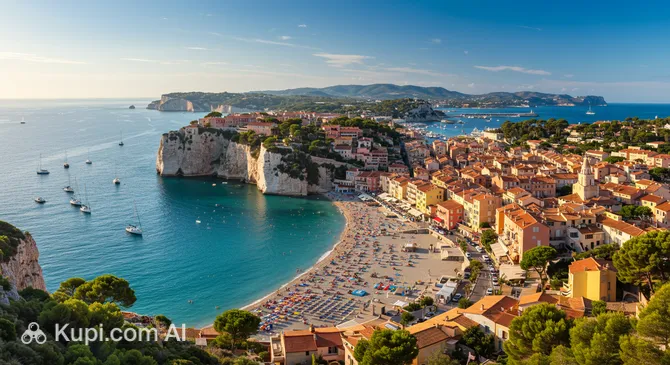
La Ciotat. Illustration.
Source: Kupi.com AI

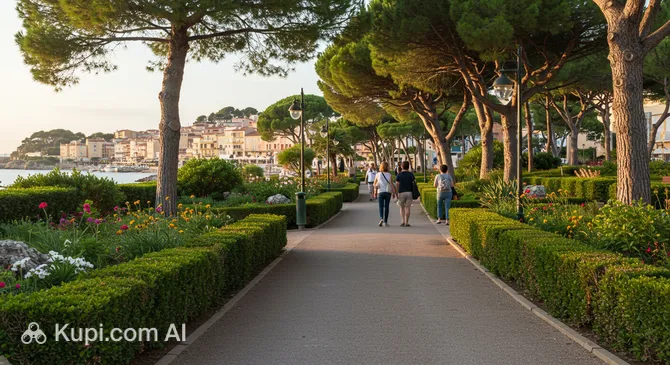
La Ciotat is not only a popular seaside resort but also an important port city, where modern yachts sit alongside old fishing boats, and charming embankments are perfect for leisurely strolls. The town seems designed for enjoying seascapes and exploring rocky inlets. A special mood always reigns here: a wonderful combination of Mediterranean serenity, southern temperament, and true French charm.

Discover La Ciotat—a town that attracts travelers seeking authentic experiences, vibrant colors of nature, and a real taste of Provence. This is a place where you can truly relax your soul and enjoy the beauty of southern France.

You can find more interesting facts on the page dedicated to the history of La Ciotat
Weather Overview

The climate in La Ciotat is typically Mediterranean, which means mild winters and hot, sunny summers. The average temperature in the warmest months, July and August, stays at a comfortable level of around 24-24.2°C, while maximum daytime temperatures can reach nearly 28°C. A characteristic feature of the summer period is the minimal amount of precipitation: for example, in July there is practically none (0 mm), while in June and August, only about 1 mm falls. In winter, the weather remains mild: the average temperature in January is about 8.2°C, and in December, it is 9.1°C. At night, the temperature can drop to 5-6°C. Precipitation in winter is more likely compared to summer, amounting to about 2-3 mm per month, with the number of rainy days ranging from 7 to 11.

Thus, La Ciotat is characterized by a warm and very dry summer, ideal for a beach holiday, and a mild winter with little rainfall. The spring and autumn months offer pleasant moderate temperatures, perfect for walking and exploring the surroundings. For more detailed information about weather conditions in different seasons and months, you can visit the Climate of La Ciotat page.

Average monthly temperature

Average monthly precipitation

Interesting Facts

In addition to its picturesque beaches and charming streets, La Ciotat holds many surprising stories and facts that make this town truly unique. Here are just a few of them:

Calanque de Figuerolles. Illustration.
Source: Kupi.com AI

Traveler photos:

  • La Ciotat is the cradle of world cinema! It was here, in the Eden Theater, that the Lumière brothers first presented their famous film "Arrival of a Train at La Ciotat" to the public in 1895. This screening marked the birth of cinema, and the Eden Theater is still operational and considered the oldest active cinema in the world.

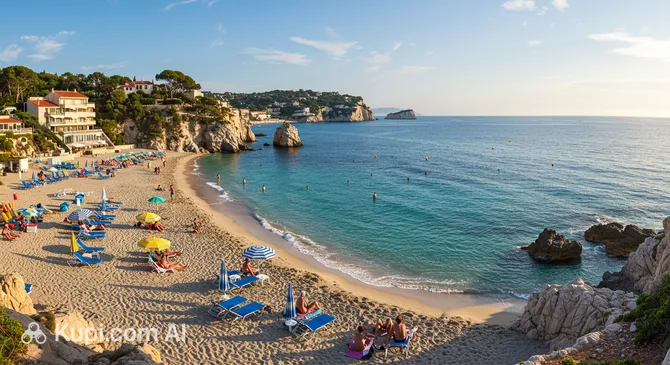
  • Local coves, such as Mugel Park and Calanque de Figuerolles, are famous not only for their beauty but also for the unique reddish hue of the rocks. This distinguishes them from the famous white calanques of neighboring Cassis. The whimsical shapes of the rocks, resembling animals and birds, have given them their names.

  • Every year, La Ciotat hosts an impressive historical festival dedicated to the events of 1720. At that time, during the plague epidemic, the town became a true "granary of Provence," the only port supplying the region with food. During the festival, residents dress in 18th-century costumes, recreating the atmosphere of those heroic times.

  • In March, La Ciotat becomes a center of maritime traditions, hosting a major regional boat show. On the promenade, you can see both modern luxury yachts and antique fishing boats, demonstrating the city's rich maritime heritage.

How to Get There

There are several ways to reach the picturesque town of La Ciotat, and the best choice depends on your location and preferences. The main transport hubs through which tourists arrive in the region are international airports and major railway stations.

For air travelers, the most convenient option is often Marseille Provence Airport (MRS). This large international airport is located in Marseille, about 43 km from La Ciotat. From here, you can reach the center of La Ciotat by taxi, rental car, or public transport (for example, by bus with a transfer) in approximately 1 hour 20 minutes to 1 hour 40 minutes, depending on traffic and the chosen method.

Another significant international airport is Nice Côte d'Azur Airport (NCE), located in Nice. It is further away, about 141 km from La Ciotat, and the journey from there will take approximately 3.5-4 hours. Nevertheless, it is one of the main airports on the French Riviera with a wide choice of flights. It is also worth considering Toulon-Hyères Airport (TLN), located in Toulon, just 45 km from La Ciotat. This is a smaller airport serving mainly regional and some European destinations, but the trip to La Ciotat from here will take about 1 hour 20 minutes to 1 hour 40 minutes.

For clarity, here is summary information on the main airports serving the La Ciotat direction:

AirportPassenger trafficDistance
Marseille Provence Airport10.8 mln43 km
Hyeres Airport570 14045 km
Avignon-Caumont Airport200 00099 km
Garons Airport260 000116 km
Nice Côte d'Azur Airport14.8 mln141 km

Traveling by train is another popular and comfortable way to get to La Ciotat, especially if you are moving within France or from neighboring European countries. Although there is no major international railway station in La Ciotat itself, there are important transport hubs nearby. The main one is Saint-Charles Station in Marseille (Gare de Marseille-Saint-Charles), located about 23 km from La Ciotat. This is a very large railway hub serving high-speed TGV trains and regional trains. From Saint-Charles station, La Ciotat can be reached by local train (TER), bus, or taxi in about 45-60 minutes.

Toulon Railway Station is also relatively close, about 27 km from La Ciotat. This is also a significant station from which you can continue your journey to La Ciotat by local transport, which will take about 50-70 minutes.

Below is information about the nearest railway stations:

StationPassenger trafficDistance
Marseille Saint-Charles Station16.5 mln23 km
Toulon Railway Station4 mln27 km
Aix-en-Provence TGV Railway Station3.7 mln42 km
Avignon Railway Station4.5 mln106 km
Nîmes Pont du Gard Station1.1 mln114 km

Additionally, La Ciotat is well-connected by roads to other cities on the French Riviera and Provence. If you are traveling by car, you can easily reach the city via the region's scenic routes.

Main Attractions

La Ciotat, a charming town on the French Riviera, offers its guests many interesting places to visit. Here, everyone will find something to their liking: from picturesque natural spots to historical beaches.

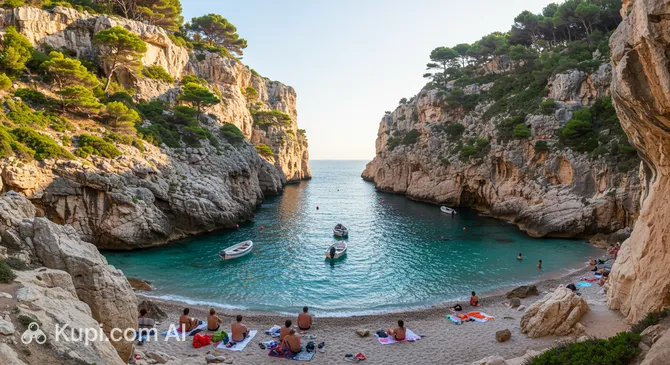
One of the most impressive natural attractions is the Calanque de Figuerolles. This picturesque cove, surrounded by sheer ochre-colored cliffs, is striking in its wild beauty. Crystal-clear water and a secluded atmosphere make it an ideal place for swimming, snorkeling, and simply enjoying nature. Unusual rock formations, including the famous "Eagle's Rock," attract photographers and lovers of secluded walks.

Calanque de Figuerolles. Illustration.
Source: Kupi.com AI

Traveler photos:

Not far from the Calanque de Figuerolles is Mugel Park. This botanical garden and natural park spans 17 hectares at the foot of the Bec de l'Aigle ("Eagle's Beak") rock. The park is famous for its variety of Mediterranean flora, shady alleys, and panoramic views of the sea and the town. It is a wonderful place for leisurely strolls and picnics, where you can hide from the summer heat.

Mugel Park. Illustration.
Source: Kupi.com AI

Traveler photos:

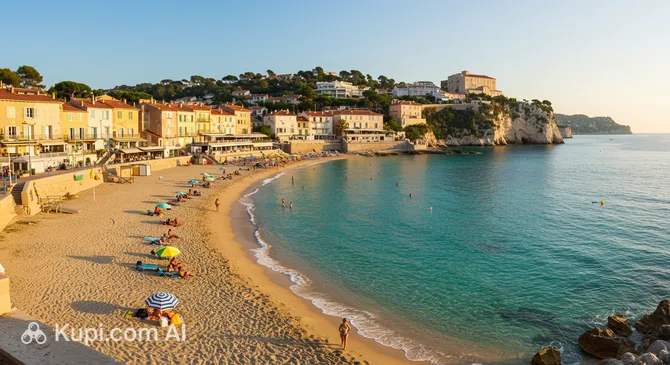
For beach lovers, Lumière Beach is a must-visit. This beach has special historical significance, as it was here that the Lumière brothers filmed one of their first movies, "Arrival of a Train at La Ciotat." Today, it is a popular spot for family holidays with fine sand, clean water, and all the necessary infrastructure. Its spacious promenade is perfect for walks.

Lumière Beach. Illustration.
Source: Kupi.com AI

Traveler photos:

It is also worth noting Grande Plage de La Ciotat, the town's largest sandy beach. It stretches for several kilometers and offers many water activities, cafes, and restaurants. Thanks to its size, you can always find a comfortable spot to relax, even at the height of the season.

Local Cuisine

La Ciotat is a true gastronomic oasis where the aromas of Provence harmoniously intertwine with the freshness of the Mediterranean. The foundation of local cuisine is, of course, fish and seafood. In numerous small restaurants and at lively markets, a rich selection of fresh mussels, oysters, and sea urchins awaits you. But the main gem that is definitely worth a try is bouillabaisse—the famous Provencal fish soup, which is prepared here in a special way, often according to family recipes passed down from generation to generation.

Beyond bouillabaisse, La Ciotat's gastronomic scene will delight you with other iconic dishes. Be sure to taste pissaladière—an appetizing open tart with onions, anchovies, and olives, as well as tapenade—a fragrant paste of olives, capers, and anchovies that pairs perfectly with a fresh, crusty baguette. Don't forget local delicacies: fragrant lavender honey, farm goat cheeses, and, of course, excellent olive oil, which gives every dish a unique Provencal touch.

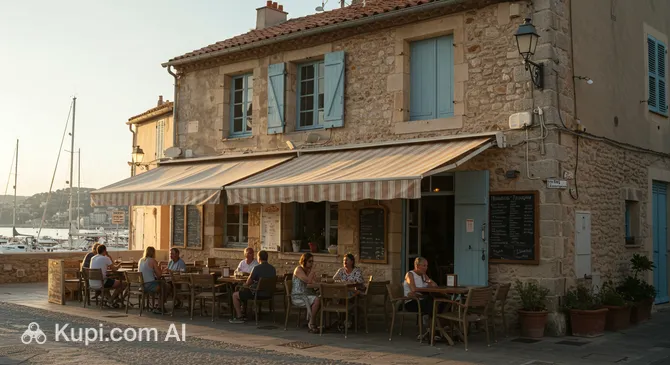
The food culture in La Ciotat is steeped in southern hospitality. Locals and tourists alike enjoy meals in cozy restaurants, such as La Barque Restaurant, as well as at colorful farmers' markets where you can purchase the freshest products. The town is known for its gastronomic festivals, where you can get acquainted with seasonal dishes and local producers. Summer evenings are particularly atmospheric when street tastings are often held on the promenade, creating a festive vibe.

La Barque Restaurant. Illustration.
Source: Kupi.com AI

Traveler photos:

To finish your meal, try traditional Provencal desserts. Sample calissons—delicate almond candies, fragrant fruit tarts, or a refreshing sorbet made from local citrus. And, of course, no meal in Provence is complete without a glass of chilled rosé wine from the surrounding vineyards, which perfectly complements the taste of local dishes.

Travel Tips

Planning a trip to charming La Ciotat on the French Riviera? These practical tips will help you better prepare and enjoy every moment of your stay in this sunny town with a rich history and picturesque landscapes.

  1. Clothing and Essentials: A Mediterranean climate prevails in La Ciotat. In summer, pack light clothing, swimwear, a hat, sunglasses, and sunscreen. In spring and autumn, layered clothing will be useful, and in winter, warmer items, including a light jacket. Be sure to bring comfortable shoes for walks along the promenade, through the old town, and the calanques. Don't forget a European adapter (Type E) for electrical appliances. When visiting churches, such as the Église Notre-Dame-de-l'Assomption, choose modest clothing that covers your shoulders and knees.
  2. Transport: It is convenient to get around La Ciotat on foot, especially in the center and along the coast. For longer trips, you can use local buses from the Ciotabus network. Taxis are available but can be more expensive. Renting a car will be useful if you plan to explore the surroundings of France, such as the Calanques National Park or other cities in the Provence-Alpes-Côte d'Azur region; however, keep in mind that parking can be difficult in high season.
  3. Finances: The official currency is the Euro (EUR). ATMs (distributeur automatique de billets) are easily found throughout the city. Credit and debit cards (Visa, Mastercard) are widely accepted in most shops, restaurants, and hotels. International cards usually work without problems. You can exchange currency at banks. An approximate daily budget for food and entertainment can range from 50 to 150 euros per person, not including accommodation. In restaurants, a service charge (service compris) is often included in the bill; if not, a tip of 5-10% of the bill amount is appropriate for good service.
  4. Health and Safety: Pharmacies (pharmacie) are marked with a green cross; information about on-duty pharmacies can be found on the door of the nearest one or online. In case medical assistance is needed, EU citizens can use an EHIC card. For all tourists, it is highly recommended to have travel insurance. The emergency number is 112. La Ciotat is a fairly safe town, but standard precautions, such as watching your personal belongings in crowded places and on beaches, are always advisable. Avoid leaving valuables in plain sight in your car.
  5. Communication: The official language is French. In tourist zones, many people speak English, but knowing a few basic phrases in French (e.g., "Bonjour" – Hello, "Merci" – Thank you, "S'il vous plaît" – Please, "Parlez-vous anglais?" – Do you speak English?) will be very helpful and appreciated by locals. A SIM card with internet access can be purchased at mobile phone shops or supermarkets. Free Wi-Fi is often available in cafes, restaurants, and hotels.
  6. Local Etiquette: The French value politeness. When entering a shop or a small cafe, it is customary to say hello ("Bonjour") and goodbye ("Au revoir"). A handshake is the standard form of greeting with strangers. In communication, try to be reserved and not too loud in public places.
  7. What to Avoid: Try not to start a conversation immediately in English; it's better to say hello in French first. Also, avoid discussing sensitive topics such as politics or personal finances with people you don't know well. Don't be late for planned meetings or excursions, as punctuality is valued.
  8. Special Feature of La Ciotat: The town is known as one of the cradles of cinematography—it was here that the Lumière brothers filmed one of the first movies, "Arrival of a Train at La Ciotat." Visit the Eden Théâtre, the oldest active cinema in the world. Also, don't miss the chance to explore the famous calanques (rocky inlets), such as the Calanque de Figuerolles or Calanque du Mugel, accessible on foot or by boat.

We hope these tips make your trip to La Ciotat as comfortable and memorable as possible. Enjoy the sun, the sea, the Provencal cuisine, and the unique atmosphere of this beautiful corner of France!

Entertainment & Nightlife

When the sun sets over the Mediterranean, La Ciotat transforms, offering its guests a cozy and lively atmosphere for evening relaxation. Although the town is better known for its picturesque beaches and calanques, the nightlife here also has its charm, especially during the summer season. Most entertainment is concentrated around the Old Port and its adjacent streets, where you can find many bars, restaurants with terraces, and a few nightlife venues.

The center of evening entertainment is undoubtedly the promenade along the Old Port (Vieux Port) and the surrounding streets. A relaxed Mediterranean atmosphere prevails here: people enjoy dinner in the open air, sip wine in bars overlooking the yachts, or simply take a stroll. The crowd is mixed—from locals to tourists. Most establishments do not require a strict dress code; the style of clothing is usually casual and resort-like. Bars and restaurants are typically open until midnight or 1:00 AM, while some clubs operate until the early morning hours.

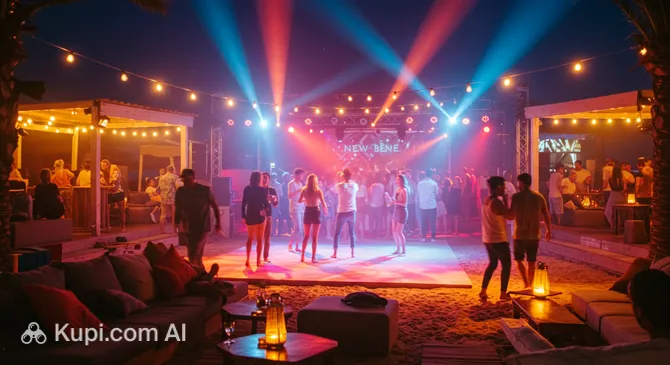
New Béné. Illustration.
Source: Kupi.com AI

Traveler photos:

If you are looking for a place to dance, check out the New Bene club, which offers various musical themed nights. For a pleasant dinner followed by cocktails, La Barque Restaurant is an excellent choice, known for its cuisine and atmosphere. Many bars along the promenade also feature live music or DJ sets on weekends, creating a festive mood.

The best time to start your evening program is after 8:00 PM, when the daytime heat subsides and restaurants fill up with patrons. Prices in La Ciotat's establishments are generally moderate but can vary depending on the level and location. Getting around the city center at night is easy on foot. For trips to more distant areas or back to the hotel, you can use taxi services. It is recommended to book a taxi in advance, especially during peak season, or ask the restaurant or bar staff to call one for you.

La Ciotat is considered a fairly safe city for nighttime walks, especially in busy tourist zones like the promenade and the center. Nevertheless, it is always wise to follow standard precautions: keep an eye on your belongings and avoid poorly lit, deserted streets late at night. You can call a taxi by phone through local services or apps, if available, or by asking the establishment's staff.

During the day, La Ciotat offers plenty of other activities. Guests can enjoy relaxing on famous beaches like Capucins Beach or Lumière Beach, explore the picturesque Calanque de Figuerolles, or take a walk through Mugel Park. You can also visit small local museums to learn more about the town's history. While La Ciotat doesn't have large theaters or major amusement parks like big metropolises, its natural beauty and cozy streets more than compensate, offering a peaceful and fulfilling holiday.

Parks & Museums

La Ciotat, a charming town on the French Riviera in France, offers its guests not only magnificent beaches but also beautiful green corners for relaxation, as well as interesting cultural sites that tell the story of the region's history and traditions.

One of the most picturesque spots is Mugel Park. This botanical garden, spread over 12 hectares at the foot of the Bec de l'Aigle ("Eagle's Beak") rock, impresses with its variety of Mediterranean flora, exotic plants, and magnificent views of the sea. It is an ideal place for walks and picnics away from the city bustle.

Mugel Park. Illustration.
Source: Kupi.com AI

Traveler photos:

Another green gem is Parc Domaine de la Tour. This historical park surrounds an old manor and offers visitors shady alleys, well-kept lawns, and a peaceful atmosphere. It is perfect for family holidays and leisurely strolls, allowing you to touch the city's history.

Domaine de la Tour Park. Illustration.
Source: Kupi.com AI

Traveler photos:

Nature lovers should definitely visit the Calanque de Figuerolles. This picturesque cove with a pebble beach, surrounded by whimsical reddish cliffs, is one of the symbols of La Ciotat. People come here to enjoy crystal-clear water and impressive landscapes. Although it is not a park in the traditional sense, it is an iconic natural site, perfect for photos and relaxing by the water.

Calanque de Figuerolles. Illustration.
Source: Kupi.com AI

Traveler photos:

Speaking of cultural heritage, one cannot fail to mention the Musée Ciotaden. Located in a former 17th-century chapel building, it houses a rich collection of exhibits telling the town's history, its maritime traditions, the development of shipbuilding, and, of course, the Lumière brothers and the birth of cinema. Visiting the museum is a fascinating dive into La Ciotat's past.

An iconic landmark for the town is the Eden Théâtre—the oldest active cinema in the world, where one of the first public film screenings by the Lumière brothers took place in 1895. While it is primarily a cinema, its historical value makes it an important cultural site attracting both cinephiles and curious tourists. Attending a screening or a tour of the theater allows you to touch the dawn of cinematography.

For an authentic experience, stroll through the old port early in the morning when fishermen return with their catch, or explore lesser-known inlets like the Calanque du Mugel, located next to the park of the same name, to enjoy silence and communion with nature. Also, take note of the Notre-Dame de la Garde chapel, which offers a panoramic view of the town and the bay.

Getting Around

Navigating La Ciotat is quite simple thanks to the town's compact size and a well-developed public transport system based primarily on buses. This is the most convenient and economical way to move around the town and its surroundings.

The main public transport operator in La Ciotat is the Ciotatbus network. Buses connect various districts, including the center, beaches, railway station, and shopping areas. Routes are well-planned and cover most places of tourist interest. During the summer season, additional routes may be introduced or the frequency of service increased on popular directions, such as to the famous calanques (coves).

The fare payment system is fairly standard. Tickets can be purchased directly from the driver when boarding the bus, although this may be slightly more expensive. A better option is to buy tickets in advance at special points of sale, tobacco shops (tabac), or via mobile apps, if offered by the operator. There are various types of tickets: single, multi-trip (carnets, which are usually more profitable and can reduce the cost of one trip by 20-30%), as well as daily (about 3.30 euros) or weekly passes (about 10 euros), convenient for active tourists. Don't forget to validate your ticket every time you board the bus.

Buses in La Ciotat usually start running early in the morning and finish late in the evening, but the exact schedule depends on the specific route and the day of the week (intervals may be longer on weekends and public holidays). It is recommended to check the schedule at stops or on the transport company's official website in advance.

In addition to buses, there are other ways to get around La Ciotat. Taxis are available; they can be found at ranks near the station, in the city center, or called by phone. This is a more expensive but comfortable option, especially for trips with luggage or at night. In the warmer months, bicycle rentals are popular—an excellent way to leisurely explore the promenade and picturesque corners of the town. Also, keep an eye out for car-sharing; while it may not be as widely represented as in big metropolises, its availability is worth checking through relevant apps, as it can be a convenient option for trips to the surroundings or if you need a car for a short period. For short walks around the city center, along the port and beaches, walking is, of course, ideal.

One of the features of La Ciotat is the maritime shuttles (navettes maritimes), which connect the port with Green Island (Île Verte) and some calanques during the tourist season. This is not only transport but also an opportunity to enjoy a boat trip and coastal views. Additionally, a small tourist train (petit train touristique) may run in the town, offering sightseeing tours of the main attractions.

Accommodation

In La Ciotat, travelers will find a variety of accommodation options to suit different preferences and budgets. The choices range from cozy guesthouses and self-catering apartments to hotels of various categories. Particularly popular areas for staying are those located near picturesque beaches, such as Grande Plage de La Ciotat, or within walking distance of the Old Port and the city center, where main restaurants, shops, and attractions like Mugel Park are concentrated.

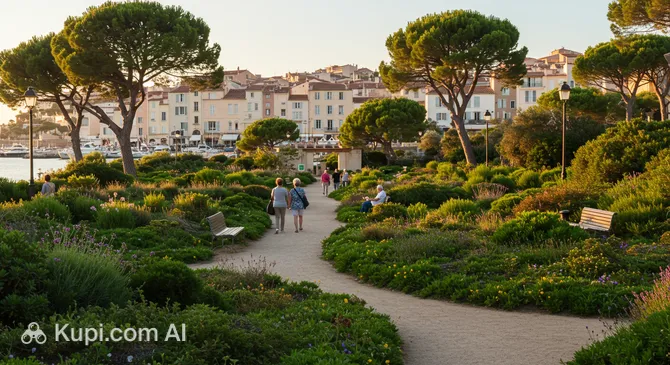
Grande Plage of La Ciotat. Illustration.
Source: Kupi.com AI

Traveler photos:

While the town offers a wide selection of hotels, from budget-friendly to more comfortable ones, it is recommended to plan your stay in advance. This is especially true during the peak tourist season in the summer months, as well as during major local events or festivals. Early booking not only guarantees availability but often allows you to secure better rates.

The price range for accommodation in La Ciotat can satisfy both budget travelers and those seeking a higher level of comfort. You can find and book a suitable option through popular online booking platforms, travel aggregators, or by directly contacting the chosen hotel or apartment owner. Many establishments offer different room types and services, so it is worth carefully reviewing the offers before making a decision.

Nearby Cities

For those looking to explore the surroundings, La Ciotat serves as an excellent starting point for day trips to several interesting nearby places:

Just 14 km from La Ciotat is Aubagne, a charming Provencal town known as the birthplace of the writer and filmmaker Marcel Pagnol. Here you can immerse yourself in the atmosphere of his works while strolling through the streets, visit workshops making traditional santons (clay figurines), and enjoy views of the Garlaban hills.

Marseille, the second-largest city in France, is located about 24 km to the west. This vibrant port metropolis with a thousand-year history offers many attractions: from the colorful Old Port and the Basilica of Notre-Dame de la Garde with its panoramic views to the famous rocky inlets—the Calanques, ideal for hiking and boat trips.

At a distance of about 27 km to the east lies Toulon, the main naval port of France on the Mediterranean. The city attracts visitors with its picturesque bay, one of the most beautiful in Europe. Be sure to take the cable car up Mount Faron to enjoy breathtaking views of the city and coast, and visit the interesting Maritime Museum.

In addition to these iconic places, the region offers other options for short excursions, shown in the table below:

CityPopulationDistance
Saint-Cyr-sur-Mer11 5809 km
Aubagne47 53514 km
Le Castellet40014 km
Le Beausset9 84516 km
Sanary-sur-Mer16 88917 km

These nearby destinations provide insight into the diverse culture and landscapes of the region.

Shopping & Souvenirs

Shopping in La Ciotat is a pleasant addition to a beach holiday and discovering the charm of Provence. The town is not a major fashion center, but it offers a good selection of local goods, souvenirs, and everything needed for a comfortable stay. Here you will find small boutiques, craft shops, and stores reflecting the spirit of the French Riviera.

Main shopping areas are concentrated around the Old Port (Vieux Port) and on the adjacent pedestrian streets of the historical center. Strolling along Rue des Poilus and neighboring alleys, you will discover many shops selling clothes, shoes, and accessories, as well as stalls with local delicacies and handmade items. The atmosphere here encourages leisurely shopping and searching for unique finds.

La Ciotat does not have large shopping malls in the usual sense found in big metropolises. However, you can find several supermarkets and small shopping galleries in the town and its surroundings, offering essentials, food, and some chain brands. For more extensive shopping with a wide selection of international brands, it is worth heading to nearby large cities like Marseille or Toulon.

Traditional Provencal markets hold a special place in the La Ciotat shopping scene. Usually once a week (often on Tuesdays and/or Sundays, but it's better to check the schedule locally), lively trade unfolds in one of the central squares or along the promenade. Here you can buy fresh local products—fruits, vegetables, cheeses, olives, honey—as well as spices, textiles, ceramics, soap, and other products from local artisans. It is a great place to feel the local flavor and acquire authentic goods.

As souvenirs from La Ciotat, it is worth bringing back traditional Provencal items: lavender soap and sachets, extra virgin olive oil, fragrant Herbes de Provence, and ceramics with local motifs. Maritime-themed items, ship models, and, of course, souvenirs related to the history of cinema are also popular, as it was in La Ciotat that the Lumière brothers filmed one of their first movies. Don't forget local wines and liqueurs.

Shops in La Ciotat are usually open from 9:00-10:00 to 12:00-13:00 and then after a lunch break (siesta) from 15:00-16:00 to 19:00-19:30. During the tourist season, some shops, especially in the promenade area, may work without a break and stay open longer in the evening. Large supermarkets usually have longer working hours. Bank cards (Visa, Mastercard) are accepted almost everywhere, but it's better to have cash at markets and in small shops.

For tourists from countries outside the European Union, a value-added tax (Tax Free) refund system operates in France. If you have made purchases over a certain amount (usually starting from 100 euros in one shop on one day), you can arrange a partial VAT refund. To do this, ask the shop for a special Tax Free check and present it along with your purchases at customs when leaving the EU.

Reached the end of the page?

That means the route is fully explored