Support

Museum of Art and Cultural History

About

The Museum of Art and Cultural History (MKK) is one of the most significant cultural spaces in Germany. Founded in 1883, it is considered the oldest institution of its kind in the Ruhr region. The museum is housed in a magnificent former savings bank building designed in an exquisite Art Deco style, which itself is a major draw for tourists visiting the city of Dortmund.
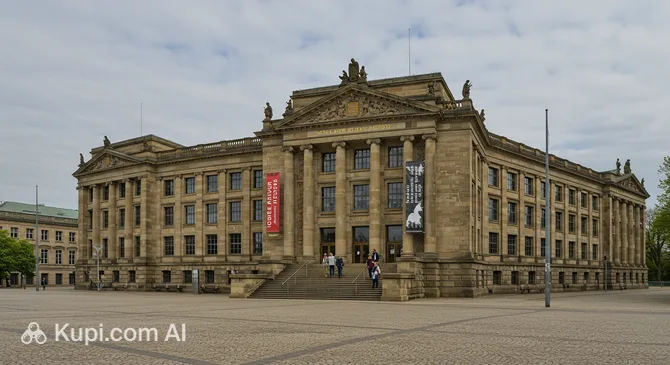
Museum of Art and Cultural History
Museum of Art and Cultural History. Иллюстрация. Источник: Kupi.com AI

The museum's exposition offers guests a fascinating journey through the centuries. It features unique artifacts illustrating the region's development from the Stone Age to the bustling 20th century. Of particular note is the 'Little National Gallery', which houses masterpieces by renowned artists such as Caspar David Friedrich and Max Slevogt.

In addition to paintings and sculptures, the museum is famous for its unique collection dedicated to the history of surveying (geodesy). Rare measuring instruments and antique devices make this part of the exhibition truly exclusive. Thanks to its high rating and rich collection of applied arts, the MKK remains a must-visit destination for all history enthusiasts.

Contacts

To plan your visit and get details about upcoming exhibitions, you can use the official communication channels. The museum staff is always ready to help visitors navigate the current displays. Below is the up-to-date contact information for your convenience.

How to contactContact
AddressHansastraße 3, 44137 Dortmund, Germany
Phone+49 231 5025522
Websitewww.dortmund.de

What to Do

At the Museum of Art and Cultural History, visitors can immerse themselves in exploring a rich collection spread across three thematic floors. It is worth carefully examining the archaeological finds and ancient relics, as well as the unique Westphalian furniture, which vividly demonstrates the evolution of tastes from austere Gothic to elegant Art Nouveau.

Be sure to visit the rooms featuring Romanticism paintings and don't miss the rare exhibition dedicated to surveying instruments—a true treat for those who appreciate the history of science. The museum regularly hosts temporary exhibitions where works by masters such as Paul Cézanne and Édouard Manet can be seen. Although the labels for the exhibits are in German, the architectural beauty of the building and the artistic value of the artifacts make the visit worthwhile for every guest.

Getting There

The Museum of Art and Cultural History is located at Hansastraße 3, right in the heart of the city's activity. Thanks to its proximity to the Main Station (Dortmund Hauptbahnhof), getting there is extremely easy: a walk from the platforms will take no more than 5–10 minutes. This makes the museum an ideal starting point for exploring the center on foot.

If you prefer public transport, use the trams or buses that stop in the immediate vicinity of Hansastraße. Those ordering a taxi from central districts will reach the site in minutes. Travelers with their own cars should keep in mind that the museum is located near a busy pedestrian zone, so it is recommended to leave your vehicle in one of the paid parking lots near the station.

Ближайший город: Dortmund

History & Facts

The museum's history began in 1883 with a small collection of historical objects that eventually grew into the richest collection in the Ruhr area. During its first decades, the holdings were actively expanded with archaeological finds and folk art. By 1930, the institution had fully established itself as a significant museum of fine arts, acquiring important canvases by artists of the Romanticism era.

A landmark stage in the museum's life was 1983, when it moved to its current building. This grand structure was built in 1924 by architect Hugo Steinbach for the municipal savings bank. The elegant Art Deco interiors were carefully adapted for exhibition halls, creating a unique backdrop for the exhibits.

Notably, in the 1980s, the museum was directed by Gerhard Langemeyer, whose work made a huge contribution to the development of the collection. He later became the city's Lord Mayor, continuing to support cultural initiatives. Today, the MKK is not just a repository of antiquities but a living center that tells the history of the region from the 'Stone Age' to the modern achievements of the 'new city.'

Time Needed

To explore the permanent exhibitions on three floors at a relaxed pace and spend time with the collection on the history of surveying, most visitors need 2 to 3 hours. This is the optimal amount of time to feel the atmosphere of each era without rushing.

For true art lovers who want to study the 'Little National Gallery' in detail or visit current temporary exhibitions, we recommend setting aside about 4 hours. The museum building invites thoughtful observation, and the wealth of applied art details can hold your attention for a long time.

Working Hours

Please note the museum's opening hours when planning your cultural itinerary. The institution is closed to visitors at the beginning of the week; however, it offers extended hours mid-week for the convenience of locals and tourists.

  • Monday and Tuesday: Closed
  • Wednesday and Thursday: 11:00 AM – 8:00 PM
  • Friday – Sunday: 11:00 AM – 6:00 PM
DayWorking hours
ПонедельникЗакрыто
ВторникЗакрыто
Среда11:00 – 20:00
Четверг11:00 – 20:00
Пятница11:00 – 18:00
Суббота11:00 – 18:00
Воскресенье11:00 – 18:00

Nearby

The museum's convenient location in the city center allows tourists to easily combine their cultural program with visits to other interesting spots. Exploring the surroundings can significantly enrich your experience, revealing new facets of leisure—from active games to peaceful walks in parks.

Below are some notable locations situated near the museum:

NameDistance
domicil0.1 km
St. Reinold's Church0.4 km
Thier-Galerie Dortmund0.5 km
Gamer Dortmund0.6 km
Dortmund U-Tower0.7 km
The Londoner1.2 km
Dortmund Brewery Museum1.4 km

Reached the end of the page?

That means the route is fully explored