Support

Duisburg Zoo

About

Duisburg Zoo (Zoo Duisburg) is one of the largest and most famous zoological parks in Germany, located in a picturesque setting on Kaiserberg hill. Situated on the border between the cities of Duisburg and Mülheim an der Ruhr, it covers an area of about 15.5 hectares, allowing for the creation of spacious and modern enclosures for its inhabitants.

A particular point of pride and a major draw for thousands of visitors is one of Europe's largest dolphinariums. Additionally, Duisburg Zoo is world-renowned for its successful koala breeding program, which has been in place since 1994. Seeing these adorable Australian animals is a rare opportunity, as this is one of the few places in Europe where they are found.
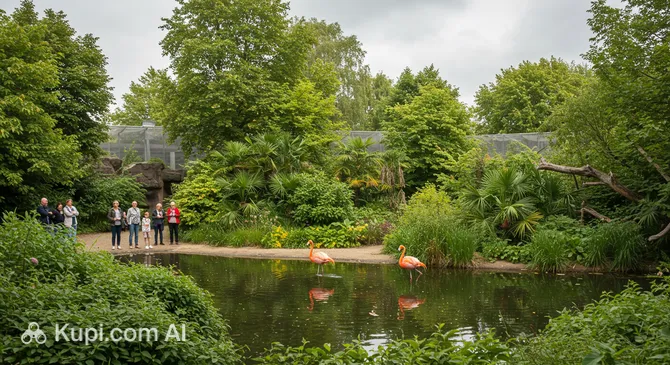
Duisburg Zoo. Illustration.
Source: Kupi.com AI

Traveller photos:

The zoo also makes a significant contribution to the conservation of rare species. It successfully breeds exotic animals such as fossas from Madagascar and vibrant red river hogs. Visiting this place is not just about entertainment, but a chance to discover the amazing diversity of the animal world and learn about the importance of its preservation.

Contacts

To plan your visit to Duisburg Zoo, use its physical address: Mülheimer Strasse 273, 47058 Duisburg. To ensure your trip is as comfortable as possible, we recommend checking the internet for the latest information on opening hours and ticket prices before you go.

How to contactContact
AddressMülheimer Str. 273, 47058 Duisburg, Germany
Phone+49 203 60444250
Websitezoo-duisburg.de

What to Do

Visitors to Duisburg Zoo can expect to meet more than 2,000 animals representing about 280 species from all corners of the globe. During a walk along its well-kept paths, you can observe the lives of majestic elephants, graceful giraffes, formidable tigers, and, of course, the famous koalas and wombats. The zoo is also home to marine animals like walruses and penguins, as well as many other rare and exotic creatures.

One of the main highlights of the zoo is the dolphinarium, where vibrant and educational shows featuring dolphins are held daily. This is one of the few places in Germany where you can see such a performance, and it never fails to delight spectators of all ages. In addition, the zoo regularly organizes themed tours and educational programs that provide a deeper look into the world of wildlife.

The zoo is perfect for a family day out. Its territory features various themed zones, modern playgrounds, and a petting zoo, where the youngest visitors can interact with domestic animals, such as goats. For a comfortable stroll, there are cozy cafes and numerous rest areas where you can grab a snack and recharge for further discoveries.

Getting There

Getting to Duisburg Zoo is very convenient by both public transport and private car. From the center of Duisburg, especially from the central railway station, buses and trams run regularly. Look for transport heading to the Zoo/Uni stop, which is located in the immediate vicinity of the zoo entrance. The journey doesn't take long, making this one of the simplest and most popular ways to visit.

For those who prefer traveling by car, the zoo is located at Mülheimer Strasse 273. There is a convenient parking lot right next to the main entrance where you can leave your vehicle during your visit. This is particularly handy for families with young children or those planning to spend the entire day at the zoo.

If you are coming from nearby cities like Dusseldorf, the journey is also quite easy. A train to Duisburg's central station takes only 15-20 minutes, as they run very frequently. Once you arrive at the station, you can easily transfer to local transport that will take you straight to the zoo, or take a taxi.

Nearest city: Duisburg

History & Facts

The history of Duisburg Zoo began in May 1934, when it was founded. Just two years later, in 1936, the first elephant arrived, which was a major event for the city. However, its peaceful development was interrupted by the Second World War, which brought significant destruction to the zoo. Sadly, during the course of the war, most of the animals either perished or escaped.

By the beginning of 1946, only a few surviving animals remained in the zoo, and its future was in doubt. But in the summer of that same year, a new chapter in its history began: colleagues from Munich Zoo provided invaluable support by sending several train cars with new inhabitants to Duisburg. This gesture of solidarity allowed the zoo to be reborn, and in 1952, the first post-war elephant arrived, symbolizing a return to normal life.

The following decades were marked by landmark openings that shaped the modern look of the zoo. In 1958, a spacious enclosure for penguins, walruses, and seals was opened, and 1965 saw the opening of the famous dolphinarium. This was a truly pioneering event, as the dolphins that arrived here were the first in Germany. Today, such dolphinariums remain a rarity, and Duisburg Zoo is one of only three places in the country where you can see these amazing marine mammals.

Time Needed

To fully enjoy a visit to Duisburg Zoo and see all its inhabitants, you should set aside at least 4–5 hours. This will be enough time to leisurely walk through all the main exhibits, visit the dolphinarium, and relax in one of the dining areas. The zoo is quite large, and to meet its diverse residents without rushing, it’s best to plan for at least half a day.

A key event to include in your plan is the famous dolphinarium show, which is held several times a day. It is recommended to check the performance schedule in advance to properly plan your route through the zoo. You should also consider animal feeding times, which can be interesting for both children and adults. For family outings with kids, the visit may take even longer, as little visitors will surely want to spend time at the playgrounds.

Working Hours

Duisburg Zoo is open to visitors daily and year-round; however, opening hours may vary depending on the season. During the summer period (from March to October), the zoo typically stays open later, while in the winter (from late October to February), it closes earlier. To ensure your trip goes perfectly, we strongly recommend checking the current schedule on the official zoo website before your visit. You should also check whether tickets need to be booked in advance, especially if you plan to visit on weekends or holidays.

Special attention should be paid to the dolphinarium performance schedule, as it is one of the zoo's main highlights. In the summer season, from March 1 to October 31, dolphin shows take place three times a day: at 11:30 AM, 2:30 PM, and 4:00 PM. In the winter, the number of performances is reduced to two—at 11:30 AM and 3:00 PM. Special schedules may apply during the Christmas holidays and on New Year's Eve. Since the shows are very popular, it’s best to arrive a little early to secure good seats.

9:00 – 19:00

Nearby

A visit to Duisburg Zoo is an exciting adventure in itself, but to make your trip truly unforgettable, it’s worth exploring its surroundings. The city of Duisburg and all of Germany are rich in interesting places, many of which are within walking distance or a short ride from the zoo. This is a great opportunity to combine a love for nature with educational walks.

Getting to know nearby attractions will allow you to dive deeper into the city's atmosphere, see it from different perspectives, and enrich your overall experience. Just a few kilometers from the exotic animal enclosures, you'll find cultural sites, parks, and unique monuments from the industrial era.

NameDistance
Duisburg Aquarium0.2 km
Kaiserberg0.5 km
Wild Boar Enclosure1.3 km
INDIE2.3 km
Küppersmühle Museum2.3 km
Forum Duisburg2.6 km
Taboulé Restaurant2.6 km

Reached the bottom of the page?

Looks like you know this route inside out