Support

Reiss-Engelhorn-Museen (Museum Zeughaus)

About

The Reiss-Engelhorn Museums (Zeughaus Museum) is more than just an exhibition space; it is one of the largest museum complexes in Germany, located in the historic center of Mannheim. The heart of the complex is the majestic building of the former arsenal (Zeughaus), built at the end of the 18th century. This late Baroque architectural monument houses approximately 1.2 million exhibits within its walls, covering vast segments of human history.
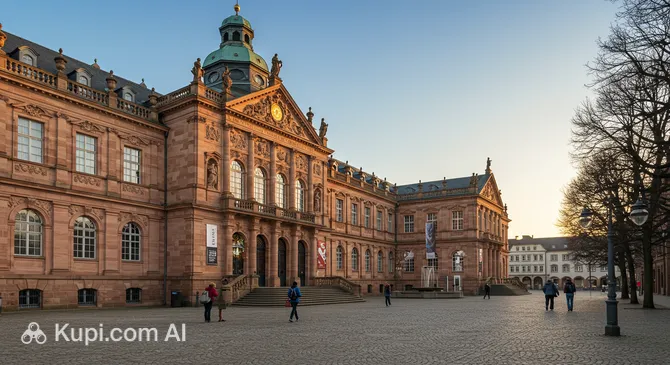
Reiss-Engelhorn Museums (Zeughaus Museum)
Reiss-Engelhorn Museums (Zeughaus Museum). Иллюстрация. Источник: Kupi.com AI

The museum complex, often abbreviated as REM, is named after its patrons, Carl and Anna Reiss-Engelhorn. Spanning over 11,000 square meters, it features four main thematic areas: archaeology, world cultures, art and photography history, and unique displays dedicated to music and theater. This venue is rightfully considered the main cultural hub of the region, offering visitors a fascinating journey through the centuries.

Of particular value are the collections of 17th-century Dutch painting, exquisite antique porcelain, and artifacts from ancient civilizations. As the last monumental building from the era when the city was the residence of the Electors, the Zeughaus Museum is a major exhibit in its own right, telling the story of the city's imperial past and its architectural ambitions.

Contacts

To plan your visit to the Reiss-Engelhorn Museums (Zeughaus Museum), it is helpful for travelers to have current contact information on hand. Below are the key details to help you find your way or contact the complex administration.

How to contactContact
AddressZeughaus, C5, 68159 Mannheim, Germany
Phone+49 621 2933771
Websitewww.rem-mannheim.de

What to Do

A visit to the Reiss-Engelhorn Museums is an opportunity to see rare treasures of sacred art and a magnificent collection of Frankenthal porcelain. On the ground floor of the Zeughaus, visitors encounter antiquity: from elegant Hellenic vases to mysterious Etruscan and Roman artifacts. Each hall here is designed to highlight the beauty and significance of ancient finds as effectively as possible.

On the second floor, guests can immerse themselves in the aesthetic world of the Belle Époque. Here, you can trace the evolution of fashion and examine antique clocks, furniture, and exquisite outfits from past eras. Of particular interest are the painting and graphic art rooms, featuring canvases by world-class masters. The third floor is traditionally dedicated to the history of Mannheim theater, where unique documents include original materials from the first production of Friedrich Schiller's play "The Robbers."

The museum is famous for its high-caliber temporary exhibitions, which often become world-class events—whether they focus on the Normans, the history of the Staufer dynasty, or the ancient treasures of Turkmenistan. For a deeper immersion, we recommend using the interactive multimedia guides via a special app, which make exploring the archaeological finds in the basement and the historical collections a truly exciting activity for the whole family.

Getting There

The museum complex is located in the heart of the historic center at Zeughaus, C5. Thanks to the city's unique layout, the arsenal building is quite easy to find—it is situated within the "squares" (quadrate) sector near the Marktplatz and the lively Planken shopping street. From any point in the central part of the city, the museum is just a few minutes' walk away.

For those who prefer public transport, trams and buses stop near the museum. If you arrive at the main station (Mannheim Hbf), the walk to the museum takes about 15–20 minutes, or you can take a tram to shorten the travel time. Travelers coming from Frankfurt Airport will find it most convenient to take a high-speed train, which reaches Mannheim in just 30–40 minutes.

Drivers should keep in mind that traffic in the city center can be heavy and parking spaces are limited. It is recommended to leave your car in one of the indoor parking garages downtown and continue on foot, enjoying the atmosphere of the "City of Squares" and the proximity of the Rhine and Neckar rivers. Taxis are also a readily available and convenient option for a quick ride from the station or hotel right to the doors of the Zeughaus.

Ближайший город: Mannheim

History & Facts

The history of this site is inextricably linked to the era when Mannheim served as the residence of the Electors of the Palatinate. The Zeughaus building, which houses the main part of the exhibition today, was built between 1777 and 1779 by decree of Elector Carl Theodor. It became the last grand monumental structure of that period, completing the architectural character of the residence city.

The complex received its current name in honor of Carl and Anna Reiss-Engelhorn, honorary citizens of the city whose contribution to the cultural development of Mannheim is hard to overstate. Over time, the museum outgrew the walls of the old arsenal: in 1988, an additional modern building was opened, significantly expanding the exhibition space and allowing the treasures accumulated over centuries to be presented to the public.

For many years, the REM museums have acted as guardians of the region's rich heritage. Large-scale research has been conducted here, including multi-year projects on Roman archaeology. Interestingly, the museum's concept itself reflects the spirit of Mannheim—a city with a geometrically precise layout founded by Elector Frederick IV back in the 17th century. A visit to the museum allows for a better understanding of how this cultural and scientific center of Germany has developed over the centuries.

Time Needed

When planning a visit to the Reiss-Engelhorn Museums, you should consider the scale of the collections. If your goal is to take a brief look at the main masterpieces in one or two halls, it will take about 2–3 hours. This time is quite sufficient to view the treasury or the porcelain collection at a leisurely pace.

For those who want to explore the entire complex in detail, including the archaeological finds in the basement and the temporary themed exhibitions, it is worth setting aside half a day (4 to 6 hours). The extensive halls dedicated to the history of theater, music, and fashion require a thoughtful visit, especially if you decide to use the multimedia guides.

Working Hours

The museum maintains a consistent schedule, making it easy to fit into a tourist itinerary. Please note that Monday is a closing day—the complex is closed to visitors at this time.

From Tuesday to Sunday, the doors of the Reiss-Engelhorn Museums are open from 10:00 AM to 5:00 PM. This provides ample time to enjoy the exhibitions in natural daylight, which especially highlights the architectural details of the old arsenal.

DayWorking hours
ПонедельникЗакрыто
Вторник10:00 – 17:00
Среда10:00 – 17:00
Четверг10:00 – 17:00
Пятница10:00 – 17:00
Суббота10:00 – 17:00
Воскресенье10:00 – 17:00

Nearby

The museum's location in the central "squares" district makes it an ideal starting point for further exploration of the city. A walk through the surrounding area will allow you to see Mannheim's main symbols and immerse yourself in its dynamic life.

NameDistance
Jesuit Church Mannheim0.2 km
Parade Square0.4 km
Uzun Stone Oven Pide Restaurant0.4 km
Novus Restaurant & Cafe0.5 km
Mannheim Palace0.6 km
Medina Sultan Halal Steakhouse0.6 km
Ojigi0.7 km

Reached the end of the page?

That means the route is fully explored