Support

Solingen

About

Solingen is a true gem hidden among the green hills and dense forests of North Rhine-Westphalia. Located between the major hubs of Düsseldorf and Cologne, this city of about 160,000 people has managed to preserve its unique, almost intimate atmosphere. For many travelers, Germany reveals a new, unexpectedly cozy side here.

Solingen. Illustration.
Source: Kupi.com AI

Worldwide, Solingen is known by the proud title of the "City of Blades." For centuries, the finest knives, scissors, and cutlery have been produced here, becoming a benchmark of quality. The fascinating history of Solingen permeates every corner of the city, from old workshops to modern museums, where blacksmithing traditions are harmoniously intertwined with innovation.

However, this city is not just an industrial center but a genuine natural oasis. The picturesque Wupper River valley, well-kept parks, and protected conservation areas make it an ideal place for long walks. It is easy to find harmony here, enjoying the silence of the forest just a few minutes away from busy city streets. Come to Solingen to personally experience its hospitality and see how carefully the past is honored while looking confidently toward the future.

Weather Overview

The climate in this region can be described as temperate and mild, making travel comfortable at almost any time of year. Sweltering heat or severe frosts are rare here, but an umbrella will be your faithful companion, as high humidity and precipitation are characteristic of all seasons.

Summer in the city is usually pleasant and not stifling: in July and August, the average temperature is about 19°C, and during the day the air warms up to a comfortable 23°C. Winters here are cool but not harsh; in January, the thermometer most often stays around +3...+5°C. It is worth considering that December is often the gloomiest month, when the number of days with precipitation can reach twenty.

Overall, expect a warm summer with occasional rain and cool, humid winters without severe freezes. To choose the ideal dates for walks in the "City of Blades" and pack your luggage correctly, we recommend checking the detailed monthly weather in Solingen in advance.

Average monthly temperature

Average monthly precipitation

Interesting Facts

In addition to its worldwide fame as the "City of Blades," Solingen holds many fascinating secrets and unique traditions that often escape the attention of hurried tourists. Here are a few facts that reveal the character of this place from an unexpected side.

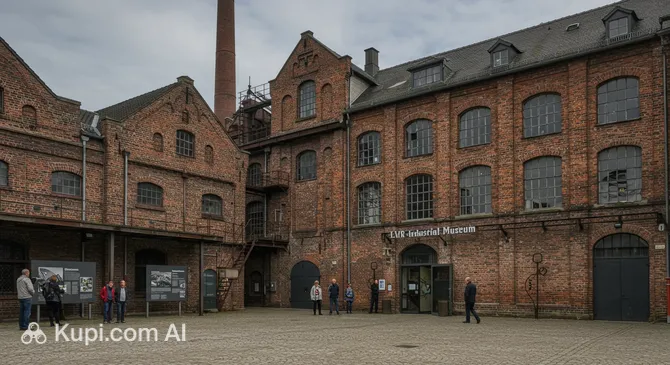
LVR Industrial Museum Hendrichs Drop Forge. Illustration.
Source: Kupi.com AI

Traveler photos:

  • A Name Protected by Law. The name "Solingen" is not just a geolocation; it is the only city in the world whose name is legally protected as a trademark. According to a special decree, this stamp can only be put on knives and scissors if all the key stages of their processing actually took place within this industrial district.

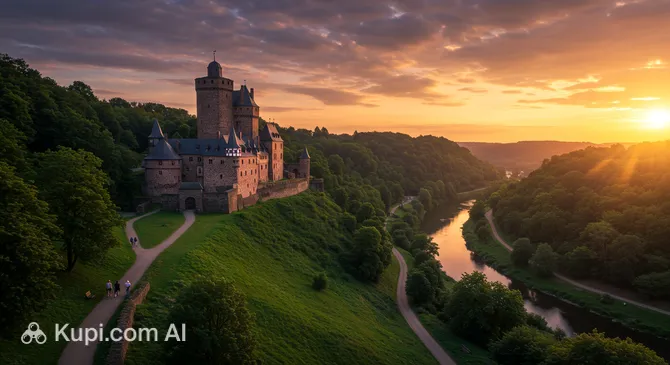
  • The Largest in the Region. The majestic Schloss Burg on the Wupper River is the largest reconstructed castle in the entire state of North Rhine-Westphalia. Its history spans more than eight centuries, and for a long time, it served as the ancestral residence of the powerful Counts of Berg.

  • A Museum Without Display Cases. The city is home to the amazing LVR Industrial Museum Hendrichs Drop Forge, which is a factory preserved in time. Everything remains as it was at the moment of closure: from huge hammers to worker lockers, allowing for complete immersion in the atmosphere of last century's blacksmithing craft.

  • The "Horned Taxi." Solingen is one of the very few German cities that has maintained an extensive network of trolleybuses. Local residents are proud of their eco-friendly transport, which they affectionately call "Stangentaxi" (pole taxi), and consider it one of the hallmarks of the city streets.

How to Get There

When planning a trip to the "City of Blades," it is important to think through your route in advance. Thanks to its favorable location in the densely populated Rhine-Ruhr region, getting here is easy. You can find out more about how to get to Solingen by studying all available options, but most often, tourists choose a flight to the nearest major air hubs or a train journey.

There is no airport in Solingen itself, but just 25 km away is Düsseldorf International Airport (IATA: DUS). This is one of the region's key air hubs, receiving flights from all over the world. A trip from here by taxi or transfer usually takes a comfortable 30–40 minutes. Another convenient option is Cologne/Bonn Airport (IATA: CGN), located 33 km from the city. The journey by car from this terminal takes about 40–50 minutes, depending on traffic.

For clarity, here is a summary of the main nearby airports:

AirportPassenger trafficDistance
Dusseldorf International Airport20 mln25 km
Cologne Bonn Airport10 mln33 km
Dortmund Airport3.1 mln53 km
Weeze Airport2.0 mln81 km
Maastricht Aachen Airport230 93297 km

The railway connections for which Germany is famous make the train an excellent alternative to a car. Solingen is integrated into a network of high-speed and regional lines, but many travelers arrive via major junction stations nearby. For example, Cologne Central Station is about 27 km away, and Düsseldorf Hauptbahnhof is only 21 km away. From these stations, you can quickly reach the center of Solingen by S-Bahn or regional express trains.

Below are the nearest major railway stations:

StationPassenger trafficDistance
Leverkusen Mitte Station5.5 mln17 km
Dormagen Railway Station2.2 mln21 km
Düsseldorf Hauptbahnhof91.3 mln21 km
Messe/Deutz Station27 km
Cologne Central Station113.2 mln27 km

Main Attractions

Solingen is a city that knows how to surprise. Here, industrial heritage neighbors picturesque parks, and modern shopping spaces fit harmoniously into the historical landscape. A stroll through local attractions will allow you to see the different facets of this unique German corner.

One of the main points of attraction for tourists remains the LVR Industrial Museum Hendrichs Drop Forge. This is not just an exhibition, but living history frozen in metal. Located in a former scissor factory, the museum allows visitors to immerse themselves in the atmosphere of the Industrial Revolution. You will see authentic machines, tools, and blacksmith workstations, as if the craftsmen had just stepped out for a break. This place is a must-visit to understand why Solingen is called the world capital of blades.

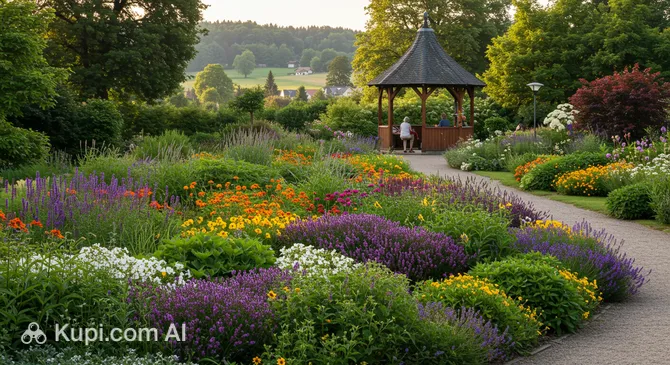
Solingen Botanical Garden. Illustration.
Source: Kupi.com AI

Traveler photos:

For those seeking solitude and the beauty of nature, the Solingen Botanical Garden is the perfect spot. This green oasis spreads over a vast area and offers guests a variety of flora, from local plants to exotic species. Walking along well-kept alleys, resting by the ponds, and visiting the greenhouses will provide a sense of peace and harmony away from the city bustle. The garden is beautiful at any time of year, but it is especially impressive during the blooming season.

Fans of contemporary art and creative spaces should check out Südpark Solingen. This district, which emerged around a former station, has turned into a real cultural cluster. Here, in the historical "Güterhallen" (freight halls) buildings, you can find artists' workshops, galleries, and studios. Südpark is a place for meetings, exhibitions, and creative energy, where you can not only get acquainted with modern art but also enjoy some leisure time in the park area.

If you want to dedicate time to shopping, head to Hofgarten Solingen. This is a modern shopping center that has become the new heart of city life. It brings together popular brands, cozy cafes, and restaurants. The architecture of the complex is successfully integrated into the urban landscape, making it a convenient place for both shopping and simply relaxing after a busy day of sightseeing.

Local Cuisine

Solingen's gastronomic scene is a hearty and cozy reflection of Rhineland traditions, seasoned with local flavor. Here, simple but high-quality food is preferred, which is not surprising for a city of master craftsmen. The culinary hallmark of the area is "Solingen Blood Sausage" (Solinger Blutwurst). This dish, which has a rich flavor, is traditionally served with stewed cabbage and smooth mashed potatoes—an ideal choice for a filling lunch after walks in the hilly terrain.

Lovers of unusual combinations should try "Pickert"—savory potato pancakes fried to a golden crust. You can find them both on restaurant menus and at street fairs, where there is also a cult of meat delicacies. Various sausages prepared by local butchers are famous for their quality. Bakeries are not far behind: be sure to stop by one of the confectioneries to taste fresh rolls, pretzels, and sweet pies baked with special care.

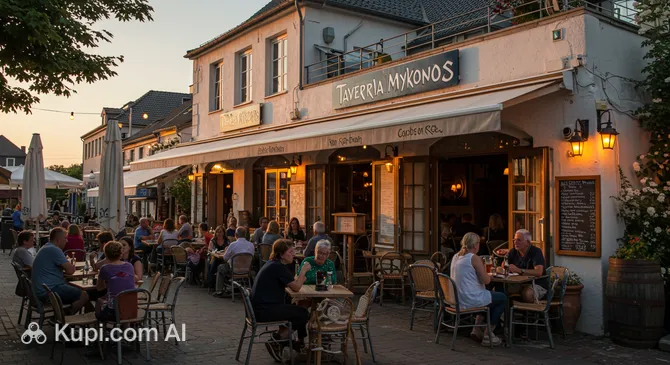
Taverna Mykonos. Illustration.
Source: Kupi.com AI

Traveler photos:

Regarding drinks, locals prefer traditional German beer, which is served everywhere. However, refreshing apple cider is no less popular, perfectly complementing the taste of local snacks. The food culture in the city is diverse: from quick bites at markets to long gatherings in cozy establishments.

The city's gastronomic map is not limited to German classics. You can find places for every taste. For instance, Taverna Mykonos is popular, where the welcoming atmosphere and delicious food attract both locals and tourists. Regular gastronomic festivals turn Solingen into a real point of attraction for foodies wishing to get acquainted with the authentic flavors of the region.

Travel Tips

Solingen is a city with a special character, where picturesque hilly terrain harmoniously combines with a rich industrial history. To ensure your introduction to the "City of Blades" is as comfortable and carefree as possible, we have gathered a few proven practical tips for you.

  1. Clothing and Weather. The climate in the Bergisches Land region is changeable, and rain is not uncommon in any season. The best solution is the principle of layering clothes and having a light raincoat or compact umbrella. Be sure to bring comfortable flat-soled shoes: the city is situated on hills, so you will be walking up and down a lot, and historic areas often have cobblestones.

  2. Transport. Solingen is proud of its unique trolleybus network (O-Bus), which is one of the few remaining in Germany. This is an eco-friendly and convenient way to get around. VRR unified transport system tickets are also valid for buses and S-Bahn trains. Taxis are easy to call via popular apps or find at stands near stations, but renting a car is only worth it for trips to the remote corners of the region.

  3. Finances. The official currency is the Euro (€). While Visa and Mastercard are accepted in supermarkets and large restaurants, Germany is conservative regarding payments. Small bakeries, souvenir shops, or kiosks may only accept cash or local cards. Always carry a small supply of bills. It is customary to leave a tip of 5–10% of the bill or simply round the amount up.

  4. Health and Safety. The city is calm and safe for tourists. Pharmacies (Apotheke) are easily recognized by a red letter "A"; information about the nearest 24-hour on-duty pharmacy is usually posted on the door of any closed pharmaceutical point. The tap water here is of excellent quality and can be drunk without hesitation.

  5. Communication and Language. Free Wi-Fi is available at stations and in some types of transport, but for reliability, it is better to purchase a local prepaid SIM card at any supermarket. Many residents, especially young people, speak English, but a polite greeting in German ("Guten Tag" or "Danke") always makes a good impression.

  6. Local Etiquette. Germans value punctuality and following rules. When entering a small shop, it is customary to greet the staff. Remember that Sunday is a day of silence and rest (Ruhetag), when almost all shops are closed, including grocery stores, so shopping should be taken care of in advance.

  7. What to Avoid. Never walk on dedicated cycle paths—this is a high-danger zone where cyclists' rights are strictly observed. It is also not recommended to cross the street on a red light, even if the road is empty: locals perceive this as a lack of manners, especially if children are nearby.

  8. Souvenir Tip. When buying famous Solingen knives, look for the "Solingen" stamp on the blade. This is a legally protected quality mark ensuring that key production stages took place specifically in this city. It is best to purchase such items at factory brand stores or in museums to avoid fakes.

We hope these recommendations help you easily plan your visit and avoid minor troubles during your trip. Solingen is a welcoming region that gladly reveals its secrets to those ready to respect its traditions and enjoy its unique atmosphere.

Entertainment & Nightlife

Solingen is a city that prefers coziness and heartfelt conversations over loud parties until dawn. The nightlife here has its own special "Bergisch" rhythm: steady, friendly, and devoid of big-city pretense. If you are looking for massive raves and multi-story clubs, locals will most likely advise you to take a train to Cologne or Düsseldorf. However, if your goal is to spend a pleasant evening in good company, enjoy live music, or have a delicious dinner, Solingen has plenty to offer.

The evening hub of the city is the Ohligs district. Thanks to its proximity to the railway station and the pedestrian zone, many bars, pubs (Kneipen), and bistros are concentrated here. The atmosphere is democratic: there is practically no dress code, and the style of clothing is casual. The crowd is diverse, ranging from students to elderly couples stopping by for a glass of beer after a day's work. In the city center (Mitte), life quietens down a bit earlier, but you can still find cozy spots around the market square.

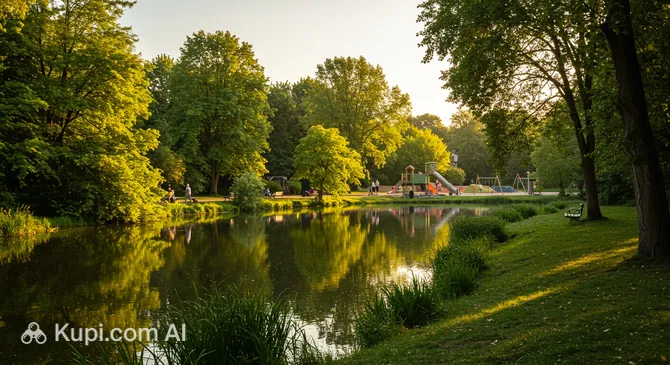
South Park Solingen. Illustration.
Source: Kupi.com AI

Traveler photos:

A special place in the city's cultural and evening life is occupied by Südpark Solingen. The former freight station has transformed into the "Güterhallen" creative quarter. Vernissages, meetings with artists, and intimate concerts often take place here in the evenings. It is an ideal place for those seeking intellectual leisure and an inspiring atmosphere. A stroll among the historic brick buildings lit by lanterns provides a special aesthetic pleasure.

The gastronomic component is an important part of evening leisure in Solingen. Many restaurants stay open until late evening, turning into places for long gatherings. For example, you can have a great time at Taverna Mykonos. A lively atmosphere of Greek hospitality reigns here, making it excellent for dinner with friends or family. It is best to book a table in advance, especially on Fridays and Saturdays.

If you want to combine an evening walk with shopping or are just looking for a place to grab a bite before a movie, it is worth stopping by Hofgarten Solingen. This shopping center is open until 8:00 PM (supermarkets and the food court may stay open longer) and often serves as a starting point for an evening route through the city center.

Practical tips for night owls:

  • Transport: Night buses (NachtExpress) run on weekends, but their schedule is limited. On weekdays, public transport is infrequent after midnight. The most reliable way to get to your hotel is by taxi. Apps like Uber or FreeNow work, but a classic phone call is often more reliable.
  • Prices: The average check in a bar for a glass of beer (0.3–0.5 l) is 3–5 euros; cocktails cost 8–12 euros. Many traditional pubs only accept cash, so be sure to have bills with you.
  • Safety: Solingen is a safe city. Walking through the center or the Ohligs district after dark does not cause concern. However, as elsewhere, it is worth being more careful near stations late at night.

As for daytime entertainment, the city's cultural calendar is quite full. The Solingen Theater and Concert Hall (Theater und Konzerthaus) regularly hosts tours by symphony orchestras, theater troupes, and comedy shows. For family holidays, numerous parks and museums telling the story of the region's industrial past are suitable. Solingen knows how to entertain its guests without excessive noise, offering high-quality and soulful relaxation.

Parks & Museums

Solingen is often associated exclusively with metal and fire, but in fact, it is one of the greenest cities in the Bergisches Land region. Parks here transition smoothly into dense forests, and museum collections go far beyond industrial production, offering guests a deep immersion into world art and the history of crafts.

Among the natural areas, Müngsten Bridge Park (Brückenpark Müngsten) deserves special attention. Located at the foot of the famous Müngsten Bridge—the highest railway viaduct in Germany—this landscape park offers picturesque trails along the Wupper River. It is an ideal spot for picnics on the lawns and observing the late 19th-century engineering marvel that towers majestically over the valley.

If you are looking for serenity, stop by the Solingen Botanical Garden. The uniqueness of this place is that it is maintained by a local foundation and volunteers. In addition to well-kept flower beds and a heather garden, there is a Tropical House where you can see exotic flora even in cloudy weather. Another interesting example of integrating nature into the urban environment is Südpark Solingen. This space blurs the boundaries between a park and an art gallery: modern sculptures are placed right among the greenery, creating a unique creative atmosphere.

The city's cultural program is unthinkable without a visit to the German Blade Museum (Deutsches Klingenmuseum), located in the historic Gräfrath district. This world-class institution houses a rich collection of cold weapons and cutlery covering thousands of years of human history. Here you can learn how the knife evolved from a simple survival tool to a high-status work of art.

To understand the industrial soul of the region, it is worth visiting the LVR Industrial Museum Hendrichs Drop Forge. The exhibition is unique because it allows you to see not just finished products, but the very process of their creation in a real factory from the last century. Art lovers will be interested in the Solingen Art Museum (Kunstmuseum Solingen), known for its "persecuted art" collection dedicated to the works of authors whose art was banned during difficult periods of German history.

Insider tip: To get to know the surroundings, take a walk along the "Corkscrew Trail" (Korkenziehertrasse). This former railway line, converted into a smooth pedestrian and cycle path, connects the city's main parks and museums, allowing you to move between attractions without tiring climbs up the hills.

Getting Around

Getting around Solingen is convenient and, surprisingly for a small city, quite unusual. The main highlight of the local transport system is the trolleybus, or as it's called here, the "O-Bus" (Obus). Solingen is one of only three cities in Germany to have preserved this eco-friendly mode of transport. The yellow and blue "horned" vehicles are the backbone of the city network, running on main routes with high frequency. They easily handle the region's steep hills, where regular buses would struggle. In addition to trolleybuses, classic diesel and modern battery-powered buses serve the outlying districts.

Railway transport plays an important role in connecting the districts, as the city is quite spread out. The main transport hub is Solingen Hauptbahnhof (located in the Ohligs district). Regional express trains and S-Bahn commuter trains (lines S1 and S7) depart from here. The famous S7 line, which passes over the country's highest railway bridge, connects the center of Solingen (Solingen Mitte station) with the main station and neighboring cities. This is the fastest way to get from one part of the city to another.

Solingen is part of the VRR (Verkehrsverbund Rhein-Ruhr) transport association. This means there is a unified fare system: the same ticket is valid for trolleybuses, buses, and trains within the paid zone. For travel within the city, you will need a Category A ticket (Preisstufe A). For tourists, it is most economical to purchase a TagesTicket (day pass), which allows unlimited travel for the day for one person or a group of up to five people. If you plan to travel around the region a lot, consider buying a 24- or 48-hour ticket.

Tickets can be purchased from machines at stops and railway stations (the menu usually has an English option), from bus drivers (often cash only and not on all routes), or via mobile apps such as the VRR App or DB Navigator. Buying through an app is often more convenient as it saves searching for change. An important detail: if you bought a paper ticket from a machine without a specified date and time, it must be validated (entwerten) before starting your journey. Orange or red validators are located at the entrance to the vehicle or on the platforms. A ticket without a stamp is considered invalid, and fines for fare dodging in Germany are high.

As an alternative to public transport, you can use a taxi. Official service vehicles are cream-colored, run on a meter, and are easy to find at taxi stands near the station or in the center. Popular ride-hailing apps also work, but wait times may be slightly longer than in megacities. For active leisure enthusiasts, bicycle rentals are available, but keep the terrain in mind: Solingen is located on hills, so unprepared tourists are better off choosing electric bikes (E-Bikes). For peaceful cycling, the "Corkscrew Trail"—a level path laid out along a former railway route—is ideal.

Accommodation

Solingen offers travelers a cozy and peaceful stay, distinct from the hustle and bustle of major metropolises. The hotel sector here is primarily represented by small private hotels, guest houses (Gasthaus), and modern apartments. You won't find huge five-star resorts from global chains in the city; instead, the emphasis is on family hospitality, middle-class comfort, and an individual approach to every guest. For budget travelers, hostels and inexpensive pensions are available.

The choice of district to stay in depends largely on the purpose of your trip and your mode of transport:

  • Ohligs. This district is ideal for those planning to travel frequently outside the city. The main railway station is located here, with high-speed trains departing for Cologne and Düsseldorf. Ohligs is a lively area with a pedestrian zone, many cafes, and a good selection of business-class hotels.
  • Gräfrath. If you are looking for romance and a historical atmosphere, choose this district. Staying here will allow you to wake up to views of the old market square, half-timbered houses, and cobblestones. This is the most picturesque part of the city, where museums and cozy restaurants are concentrated, but there are fewer accommodation options, and they should be booked in advance.
  • Mitte (Center). The central district is convenient for those who want to be in the thick of things and have access to the main bus routes. Staying here provides easy access to shops and urban infrastructure.

By staying in the center, you will be within walking distance of modern shopping venues like Hofgarten Solingen, which is especially convenient for shopping enthusiasts and those who prefer to have everything they need close at hand.

Booking tip: While Solingen is rarely as overcrowded with tourists as neighboring Cologne, the situation changes drastically during major international trade fairs (Messe) in the nearby megacities. During these periods, prices can rise and rooms can sell out very quickly, as many trade fair visitors choose Solingen as a more affordable and quieter alternative. When planning your trip, be sure to check the region's events calendar.

The price range in the city can be described as moderate. The cost of living here is generally lower than in Düsseldorf or Cologne. Booking is easiest through popular international online platforms, but many small family-run hotels also take bookings directly through their websites or by email, sometimes offering better terms or included breakfast.

Nearby Cities

For those who want to explore the surroundings, Solingen serves as an excellent starting point for day trips to several interesting nearby places. Very close is Wuppertal, famous for its unique suspension railway (Schwebebahn), which seems to float over the river and city streets. Fans of football and beautiful parks should check out Leverkusen, home to a magnificent Japanese Garden—an oasis of silence and tranquility. And neighboring Remscheid, the birthplace of the discoverer of X-rays, will be interesting for its museums and picturesque views of reservoirs.

CityPopulationDistance
Haan30 4846 km
Leichlingen28 0319 km
Hilden55 76410 km
Remscheid111 77010 km
Wermelskirchen34 76510 km

These nearby destinations offer an insight into the region's diverse culture and landscapes, perfectly complementing the impressions from a visit to the "City of Blades."

Shopping & Souvenirs

Shopping in Solingen has its own unique character, setting it apart from neighboring fashion capitals like Düsseldorf. People come here not so much for haute couture as for items that last for decades. The city is world-famous for its steel products, so the main goal for most tourists is acquiring high-quality knives, cutlery, and manicure sets. Nevertheless, there is also classic retail infrastructure with pedestrian zones and modern centers, providing comfortable leisure.

The heart of the city's trade is the Mitte (Center) district. The main shopping artery is Hauptstraße, where clothing, shoe, and accessory stores are concentrated. However, many locals prefer the Ohligs district for walking and shopping. Its pedestrian zone along Düsseldorfer Straße is considered one of the coziest in the city: there is less bustle, and many private boutiques, bookstores, and cafes create a pleasant atmosphere for leisurely shopping.

The central destination for shopping under one roof is the modern Hofgarten Solingen shopping center. Located right in the city center, it brings together dozens of popular European brand stores, electronics supermarkets, and a food court. It is a convenient location to update your wardrobe or buy everything you need in rainy weather when walking the streets is not very comfortable. The center's architecture is harmoniously integrated into the urban landscape, making it an important focal point.

Market culture is alive and well-loved by citizens in Solingen. Regular weekly markets (Wochenmarkt) take place in the central squares of the districts, offering fresh farm produce, flowers, and local pastries. The most famous event is the "Zöppkesmarkt"—the region's oldest and largest flea market, held once a year in September. It is a true city festival where you can find antiques, vintage items, and unique souvenirs in an atmosphere of general merriment.

The main souvenir from Solingen is, undoubtedly, steel. Knives, scissors, and razors with the "Solingen" stamp are considered a benchmark of quality worldwide. Tourists should look out for products from famous local brands such as Zwilling J.A. Henckels, Wüsthof, or Böker. It is most economical to buy these goods at factory outlets (Werksverkauf), of which there are many in and around the city. Additionally, an excellent choice of themed souvenirs is offered by the shop at the LVR Industrial Museum Hendrichs Drop Forge, where you can purchase items made in the traditional style.

Shops in Solingen generally operate from Monday to Saturday from 10:00 AM to 7:00 PM or 8:00 PM. Large shopping centers and supermarkets are open longer, but small shops might close as early as after lunch on Saturday. Sunday is a rest day for all retail, except for bakeries and flower shops, which may open in the morning. As for payment, Visa and Mastercard are accepted at large outlets, but in small souvenir shops, at markets, and at kiosks, cash euros remain the most reliable means of payment.

Tourists residing permanently outside the European Union can take advantage of the Tax Free system. When buying goods above a certain threshold (usually 50 euros) in stores marked with the Global Blue sign or similar, ask for a special tax-free form. When leaving the EU and presenting your purchases at customs, you can get a refund of part of the value-added tax, making the acquisition of famous Solingen knives even more advantageous.
Reached the end of the page?

That means the route is fully explored