Support

Barbara Baths

About

The Barbara Baths are an impressive archaeological site located in one of Germany's oldest cities, Trier. During the Roman Empire, this complex was the largest bathing facility north of the Alps, spanning a colossal area of approximately 42,000 square meters. Today, the site offers a unique window into the ancient past, allowing tourists to touch the history of Augusta Treverorum.
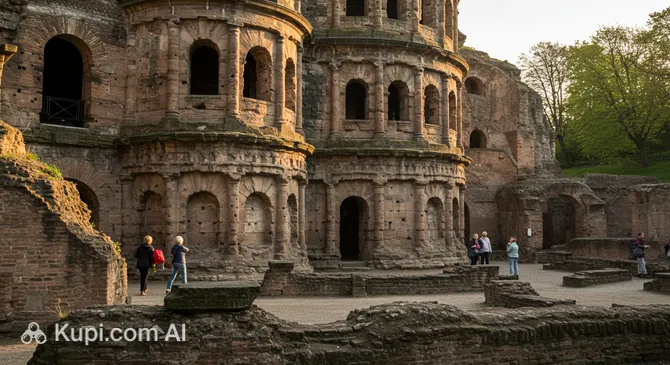
Barbara Baths. Illustration.
Source: Kupi.com AI

Traveler photos:

As part of a UNESCO World Heritage site, the Barbara Baths have preserved fragments of walls, foundations, and a complex system of underground utility systems. It is more than just ruins; it's a true open-air archaeological park where you can see the scale of ancient infrastructure and appreciate the skill of ancient Roman engineers.

Visitors can explore the grounds via specially equipped walkways. Information boards with detailed reconstructions help visualize what this grand complex looked like in its heyday, when it served as the main center for hygiene and social life for the residents of the Roman city.

Contacts

When planning a visit to the Barbara Baths in Trier, we recommend checking the current opening hours and visiting conditions in advance. As the site is an important open-air historical monument, access information may be updated depending on the season or ongoing restoration work.

How to contactContact
AddressSüdallee, 54290 Trier, Germany
Phone number+49 651 4608965

What to Do

The main reason to visit the Barbara Baths is the opportunity to take a fascinating walk through the territory of an ancient archaeological complex. Footbridges built over the ruins allow for a detailed look at the surviving structures, including the remains of furnaces, water pipes, and the famous Roman underfloor heating system — the hypocaust. Numerous information boards and diagrams clearly explain the layout of each part of the baths, from the changing rooms to the pools with varying water temperatures.

Of particular interest to history buffs are the underground service corridors. Here, you can see the "backstage" of ancient daily life: water drainage channels and the foundations of the furnaces that once provided comfort to thousands of visitors. Walking through these galleries allows you to feel the atmosphere of the past and better understand the engineering genius of the ancient Romans.

Visiting the complex is easy to combine with other ancient treasures of the city, such as the Amphitheater or the Porta Nigra. For those wanting a deeper dive into the subject, Trier often hosts themed tours dedicated to Roman bathing culture, which always include these monumental ruins on their route.

Getting There

The Barbara Baths are conveniently located in the southern part of Trier's historical core at Südallee, 54290. If you are already in the city center, you can reach the ruins on foot in just 10–15 minutes. The route from the main market square passes through picturesque streets and is well-marked with tourist signs indicating the name of the complex.

For those who prefer public transport, the "Barbarathermen" bus stop is located directly opposite the attraction on Kaiserstraße. It is served by city route No. 9, allowing you to quickly reach the site from other parts of the city. The complex is also within walking distance of the Moselle embankment, making it a convenient stop during a stroll along the river.

Travelers arriving by car can use the parking on Lorenz-Kellner-Straße, located just a couple of minutes' walk from the entrance to the archaeological park. If you are driving to Trier from Luxembourg or Frankfurt, follow the signs to the city center and the embankment, taking the main city thoroughfares toward Südallee.

Nearest city: Trier

History & Facts

The history of the Barbara Baths began in the 2nd century AD, when the Roman city of Augusta Treverorum was experiencing its greatest prosperity. The complex was so large that it could accommodate hundreds of citizens at once, serving not just as a place for bathing but as a vital social hub. The modern name became attached to the ruins much later — it is associated with the Monastery of St. Barbara, which was located nearby in the Middle Ages but has not survived to the present day.

After the fall of the Roman Empire and the city's decline, the baths gradually began to fall into disrepair. In the 17th century, they met the fate of many ancient structures: the monumental building began to be used as a free quarry for building materials. For example, in 1610, a significant amount of stone from the complex walls was removed to build a Jesuit college in Trier, which explains the lack of high walls above ground today.

Despite the large-scale destruction of past centuries, the foundations and underground structures survived, becoming an invaluable site for archaeologists. Today, the Barbara Baths are recognized as a UNESCO World Heritage site. They stand as a living testament to the former greatness of Roman Germany, preserved so that future generations can study the foundations of ancient urban planning and engineering.

Time Needed

For a standard visit to the Barbara Baths, most travelers need about 45–60 minutes. This is usually enough time to leisurely walk along the pedestrian bridges, study the main information boards with reconstructions, and look into the surviving underground corridors.

If you are a true connoisseur of ancient archaeology and enjoy reading every description in detail, or if you plan to take many photos from different angles, you should allow about 1.5 hours for your visit. A visit to this complex is often combined with a walk to the river or exploring neighboring attractions in the southern part of Trier's historical center.

Working Hours

You can visit the Barbara Baths daily, although the opening hours depend directly on the time of year. During the peak tourist season, from April to September, the complex is usually open to visitors from 10:00 to 18:00. In the shoulder months (March and October), the doors close an hour earlier, and during the winter period — from November to February — the ruins can be viewed from 10:00 to 16:00.

Please note that the last entry to the grounds usually stops 30 minutes before closing. As the schedule may change due to public holidays or special events, we recommend checking the current information on the city's official tourism portal or the website of the center for ancient heritage before your trip to Trier.

Nearby

Exploring the surroundings of the Barbara Baths will allow you to more fully experience the multilayered history of Germany's oldest city. The complex's location in the southern part of Trier's center provides easy access to other iconic sites, each adding its own color to the overall travel experience.

Just a few minutes' walk away are the Roman Baths at the Viehmarkt, where ancient ruins stand alongside a modern architectural pavilion. Also nearby is the famous Karl Marx House, offering a dive into the history of later eras. A walk through this area is a great way to combine viewing the majestic heritage of Rome with visiting museums and cozy city restaurants.

NameDistance
Karl Marx House0.5 km
masons Restaurant Trier0.6 km
Viehmarkt Roman Baths0.6 km
Trier Galerie0.8 km
Friedrich-Wilhelm Wine Bar0.9 km
Plaza Grill Restaurant & Lounge0.9 km
Main Market Square1 km

Have you reached the end of the page?

So the route has been studied inside and out