Support

Heraklion Archaeological Museum

About

The Heraklion Archaeological Museum is one of the most important cultural treasures not only in Crete but in all of Greece. Located in the heart of Heraklion, it is considered the world's premier museum dedicated to the unique Minoan civilization. For anyone interested in ancient history and art, a visit here offers a true immersion into a mysterious world that existed thousands of years ago.

The museum's exhibition covers an impressive period of 5,500 years, from the Neolithic era to Greco-Roman times. The collections are housed in twenty rooms of a modern, earthquake-resistant building designed by the famous architect Patroklos Karantinos. Here, you will see artifacts found during excavations across the island, including the famous palaces of Knossos, Phaistos, and Malia. The exhibits include pottery, jewelry, weapons, and everyday items that tell the story of the birth and rise of Europe's oldest civilization.
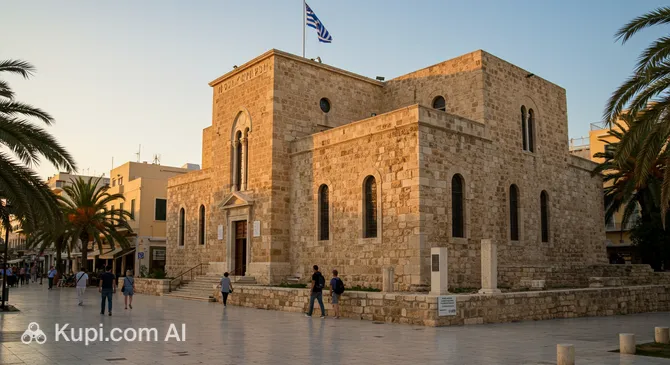
Heraklion Archaeological Museum. Illustration.
Source: Kupi.com AI

Traveler photos:

The world-famous masterpieces of Minoan art deserve special attention. The museum houses the mysterious Phaistos Disc, whose script remains undeciphered, the delicate "Snake Goddess" figurines, a bull's head rhyton, and the famous golden pendant of two bees. Also on display are original frescoes from the Palace of Knossos, including the famous "Prince of the Lilies." These exhibits are not just archaeological finds but true works of art that amaze with their craftsmanship.

Contacts

For the most up-to-date information regarding opening hours, ticket prices, and current exhibitions, it is recommended to contact the Heraklion Archaeological Museum directly. Below are the official contact details for reaching the museum administration.

How to contactContact
AddressΞανθουδίδη και, Chatzidaki 1, Iraklio 712 02, Greece
Phone number+30 281 027 9000
Websitewww.heraklionmuseum.gr

What to Do

A visit to the Heraklion Archaeological Museum is a unique opportunity to literally touch history. The main activity for visitors is exploring the vast collection of artifacts that tell the story of the emergence and development of Europe's oldest civilization. The exhibition is organized chronologically, allowing you to trace the evolution of Cretan culture from the Neolithic era to the Roman period. You can see unique items, including the famous Phaistos Disc with its undeciphered script, elegant snake goddess figurines, ritual vessels, jewelry, weapons, and everyday objects from the Minoan era.

A special place in the exhibition is reserved for the original frescoes moved from the Palace of Knossos and other Minoan complexes. Visitors can examine famous images in detail, such as the "Bull-Leaper" and the "Prince of the Lilies," which are striking for their vivid colors and artistic skill. Beyond admiring the antiquities, guests can delve deeper into history through the information panels and multimedia materials accompanying the exhibits.

For those who want to get the most out of their experience, the museum offers other activities as well. It frequently hosts temporary exhibitions dedicated to specific aspects of Cretan history or recent archaeological finds. Visitors can join themed guided tours or use an audio guide for independent exploration. The museum also offers educational programs for adults and children, making it an interesting destination for families. After touring the exhibition, you can relax in the cafe or stop by the museum shop, which sells high-quality replicas of the exhibits, books, and souvenirs.

Getting There

The Heraklion Archaeological Museum is conveniently located in the heart of Heraklion, making it easily accessible for most tourists. One of the simplest ways to reach the museum is on foot. If you are near the central square or strolling through the historic part of the city, the walk will take very little time. For those who prefer public transport, there are bus stops near the museum, and taxi services are always available.

If you are arriving in the city via Heraklion Airport, getting to the museum is also straightforward. A taxi or city bus ride will take approximately 15–20 minutes. Thanks to its central location, a visit to the museum can easily be included in a self-guided walk through the historic center of Heraklion, combining it with exploring other significant city landmarks.

Nearest city: Heraklion

History & Facts

The history of this famous museum began quite modestly. In 1883, the Educational Association of Heraklion created the first collection of archaeological finds, which eventually grew to such a scale that it required a dedicated space. An interesting fact: the site for the future museum was not chosen by chance — it was decided to build it on the ruins of the Catholic Monastery of Saint Francis. This monastery, once one of the most significant in Crete, was destroyed by an earthquake in 1856, and its preserved remains can still be seen in the museum garden today.

Construction of the first specialized building for the collections began in the early 20th century, but the museum acquired its modern appearance later. In 1935, construction started on a new, earthquake-resistant building designed by the prominent Greek architect Patroklos Karantinos, a representative of the Modernist school. Work had to be suspended for several years, during which time the priceless treasures were carefully hidden for preservation. It was only in 1952 that the renovated museum reopened its doors to visitors, presenting the rescued artifacts.

Since then, the museum has continued to evolve to accommodate more and more finds from excavations across the island. In 1964, an additional wing was added to the main building, significantly expanding the exhibition and making it more complete and logical for visitors. Thanks to these efforts, the Heraklion Archaeological Museum is rightfully considered the primary guardian of the Minoan civilization's heritage and one of the most important museums not only in Greece, but in the entire world.

Time Needed

When planning a visit to the Heraklion Archaeological Museum, you should allow 2–3 hours to fully appreciate its extensive collection. This time is usually sufficient to leisurely walk through the main halls, carefully examine the world-famous masterpieces of the Minoan civilization, and form a cohesive impression of Crete's history, which spans over 5,500 years. The museum consists of 27 rooms located on two floors, each dedicated to a specific period or theme, from the Neolithic era to Roman times.

Of course, the duration of your visit can be adjusted based on your interests and available time. If you are short on time, a quick tour of the main exhibits — such as the Phaistos Disc, the "Snake Goddess" figurines, and the original frescoes from the Palace of Knossos — can take about an hour and a half. However, for true history buffs and those who wish to dive deeper into the details by studying the information boards or using an audio guide, a visit can easily stretch to half a day or more.

Working Hours

The Heraklion Archaeological Museum is open to visitors year-round, although its operating hours may change depending on the season. During the summer tourist period, from April 1 to October 31, the museum is typically open from 08:00 to 20:00. During the winter season, from November 1 to March 31, the schedule is generally reduced. Before your visit, it is highly recommended to check the current opening hours on the museum's official website, as they are subject to change, including on national holidays.

To avoid long queues, especially during the peak tourist season, it is recommended to purchase tickets online in advance. This will not only save you time but also guarantee your entry to the museum. An electronic ticket can simply be shown at the entrance on a smartphone screen. Some services also offer combined tickets that include museum entry and an audio tour.

DayOpening hours
Monday8:00 – 20:00
Tuesday8:00 – 20:00
Wednesday1:00 – 20:00
Thursday8:00 – 20:00
Friday8:00 – 20:00
Saturday8:00 – 20:00
Sunday8:00 – 20:00

Nearby

Visiting the Archaeological Museum is just one part of discovering the rich history of Heraklion. Thanks to the museum's prime location in the heart of the city, the surrounding area offers many other interesting spots just a few minutes' walk away. A stroll through the nearby streets will allow you to immerse yourself deeper in the atmosphere of the Cretan capital, where Venetian architecture intertwines with Ottoman heritage and modern life.

Exploring the nearby attractions will enrich your experience and help you form a more complete picture of the city's cultural and historical diversity. In just a few hours, you can see iconic monuments, visit other museums, or simply relax in one of the cozy cafes, observing the leisurely pace of Heraklion.

NameDistance
Statue of Eleftherios Venizelos0.2 km
Basilica of Saint Mark0.3 km
Swing Thing0.3 km
Museum of Ancient Greek Technology0.3 km
Church of Saint Titus0.3 km
Morosini Fountain0.4 km
Bembo Fountain0.4 km

Have you reached the end of the page?

So the route has been studied inside and out