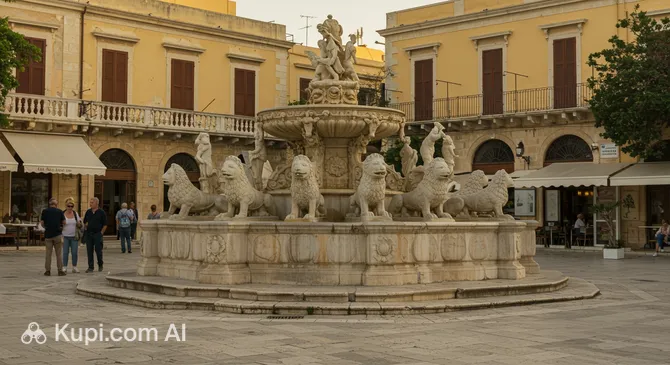
In the very heart of Heraklion, on the bustling Lions Square, lies one of Greece's most recognizable landmarks — the Morosini Fountain. This is not just a beautiful monument, but a true symbol of the city and an outstanding example of Venetian architecture that has been perfectly preserved to this day. The fountain was officially opened in 1628 and named after Francesco Morosini, the governor who initiated its construction.
The architectural appearance of the fountain is impressive in its elegance. The central basin is supported by four stone lions — a symbol of the power of the Venetian Republic, which ruled Crete at the time. The basin is decorated with relief images of Greek mythological themes, including tritons, dolphins, and other sea creatures. The composition was once crowned by a majestic statue of Neptune (or Poseidon), which, unfortunately, has been lost.
Traveler photos:
In addition to its aesthetic value, the Morosini Fountain was a vital engineering structure of its time. Its main task was to provide the city with clean drinking water. For this purpose, a complex 15-kilometer aqueduct was built to bring water to the center of Heraklion from mountain springs. Thus, the fountain served not only as an ornament but also as a vital urban infrastructure facility, making it a unique monument of history and engineering.