Support

Olafsvik

About

Ólafsvík is a picturesque fishing town nestled comfortably on the northern coast of the famous Snæfellsnes Peninsula. It is a place where the rugged beauty of nature harmoniously intertwines with the steady pace of the local community's life. For many travelers, this is where Iceland reveals its most authentic side: fresh ocean breezes, a bustling harbor, and views of the majestic mountains surrounding the settlement.
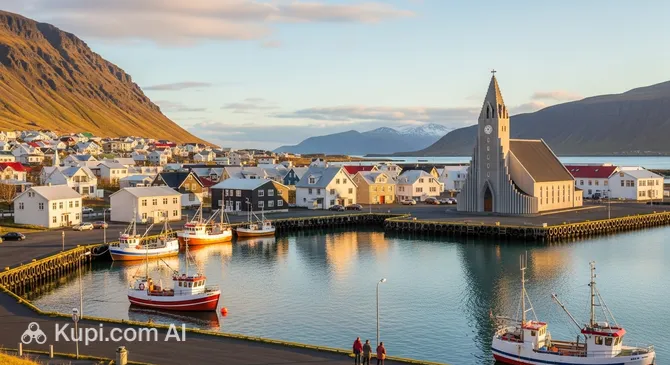
Olafsvik. Illustration.
Source: Kupi.com AI

Despite its modest size and population of about 1,000 people, the town plays an important role in the life of the Vesturland region. Notably, the rich history of Ólafsvík sets it apart from other settlements: back in the 17th century, it became the first place in the country to receive an official commercial license from the Danish king. Today, it is a thriving port considered an excellent spot for gastronomic tourism and marine wildlife watching.

Among the town's main attractions, one cannot fail to notice the avant-garde Ólafsvíkurkirkja church. Its unusual silhouette, consisting of numerous triangles, symbolizes the shape of a fish and the surrounding cliffs, making it a true masterpiece of modernist architecture. Hiking enthusiasts will appreciate the Bæjarfoss waterfall, located on the eastern edge of town; a gentle trail leads to it, offering breathtaking panoramas of the ocean.

Ólafsvík makes an excellent base for your journey around the peninsula. Here, you will find comfort, hospitality, and ideal conditions to rest before exploring the Snæfellsjökull glacier and other natural wonders of the region.

Weather Overview

Ólafsvík's climate has a pronounced maritime character: the ocean smooths out temperature fluctuations, preventing severe frosts in winter but also not allowing the air to warm up much in summer. The weather here is changeable, so layered and waterproof clothing will be your best ally at any time of year.

The summer months are considered the most favorable for travel. In July and August, the average temperature stays at 10°C, sometimes rising slightly above 11°C. This is a comfortable time for whale watching and walking along the coast, although rain is possible even in the height of the season—statistics show from 12 to 14 rainy days per month.

Winter here is quite mild for Icelandic latitudes, but dark and damp. In January and February, the average temperature fluctuates around 0°C, rarely dropping below -1.5°C. However, the feeling of cold can be intensified by wind and high humidity: the number of days with precipitation in the winter period reaches 19 per month.

When planning your trip, be sure to check the current weather in Ólafsvík to be prepared for the whims of local nature. Expect cool summers with occasional rain and mild but damp winters with frequent precipitation.

Average monthly temperature

Average monthly precipitation

Interesting Facts

In addition to its main attractions, Ólafsvík hides many fascinating secrets and historical records that not all travelers know about. This town is capable of surprising even those who think they are well-acquainted with Icelandic culture.

  • The country's first trading town. Ólafsvík is proud of its status as a pioneer in the island's commercial history. It was here in 1687 that the first official trading license in Iceland was issued by the Danish king, making this small port the most important economic hub of the century.

  • Fish-shaped architecture. The town's famous church is not just abstract modernism. It is believed that its silhouette, consisting entirely of triangular forms, resembles dried cod (klipfisk) when viewed from above or at a certain angle—the main export product that fed the locals for centuries.

  • The region's oldest building. In the center of town, "Gamla Pakkhúsið" (The Old Warehouse) has been preserved—a black wooden building constructed in 1844. Today, it is not just an architectural monument but a living museum, where a shop with local crafts still operates on the ground floor, preserving the spirit of ancient trade.

  • The bridal veil waterfall. Right above the town hides the Bæjarfoss waterfall, which locals often compare to a bride's veil because of its wide and graceful flow. Despite its beauty, it often goes unnoticed by tourists hurrying to the glacier, even though it is just a few minutes' walk from residential houses.

  • Legend of foundation. The town bears the name of its first settler—the Viking Ólafur Belgur. According to legend, he chose this place back in the 9th century, appreciating the fish-rich waters and the protected bay, which still serves as a reliable shelter for ships today.

How to Get There

When planning your route to this picturesque corner of the Snæfellsnes Peninsula, it is important to think through the logistics in advance. Since Iceland is characterized by complex terrain and long distances, the town is located some distance away from the main transport arteries. Most travelers prefer to rent a car to enjoy the views along the way, or use the bus service. You can find out more about how to get to Ólafsvík to choose the best option for your trip.

Ólafsvík does not have its own airport, so tourists usually arrive in the capital region. The country's main gateway is Keflavík International Airport (KEF). It serves Reykjavík and handles the vast majority of international flights. The distance from the terminal to Ólafsvík is about 114.5 km. The trip by car or transfer will take approximately 3 hours 15 minutes. This is a modern transport hub where you can rent a car immediately.

If you are traveling on domestic airlines or arriving from Greenland, a convenient alternative is Reykjavík Airport (RKV). It is located practically in the center of the capital, 120.3 km from Ólafsvík. Travel time by car is about 3 hours 20 minutes. Despite its smaller passenger flow, this airport is critically important for local connections.

Below is information about the nearest and significant airports that may be useful when planning your route:

AirportPassenger trafficDistance
Keflavik International Airport8.3 mln115 km
Reykjavik Airport500 000120 km
Isafjordur Airport33 000132 km
Akureyri Airport200 000276 km

It is worth noting that there is no rail service on the island. The main mode of transport remains the roads. The path to Ólafsvík is an adventure in itself, passing through lava fields and the ocean coast, so the drive will not feel tedious.

Main Attractions

The attractions in Ólafsvík are compactly located within the town and its immediate surroundings, allowing you to see them without long drives. The main focus here is not on the pomposity of monuments, but on the atmosphere and the opportunity to touch the local way of life.

Ólafsvíkurkirkja Church deserves attention not only from the outside but also from within. If you are lucky enough to find the doors open (usually during the summer season), be sure to step into the hall. The interior is striking with its light score: thanks to the special design of the windows, sunlight creates an amazing play of shadows and highlights inside. It is a great place to enjoy the silence and appreciate the boldness of engineering from within, while examining the details of the altar crafted by local artists.

A visit to the Regional Museum in Pakkhúsið is a chance to literally travel back in time. Instead of a dry examination of exhibits, head up to the ancient attic where an exhibition of fishing gear and household items is laid out under the creak of wooden floorboards. Here, you can physically feel the cramped and harsh conditions in which Icelanders of past centuries lived. On the first floor, there is often a cozy cafe where it is pleasant to drink hot coffee surrounded by 19th-century interiors after the tour.

It is worth climbing up to the Bæjarfoss waterfall not just for the flow of water itself, but for the perspective. The trail leading up serves as a magnificent observation deck. From this height, you get perhaps the best view of the town's colorful rooftops and the endless ocean horizon. It is an ideal location for panoramic photos, especially during the "golden light" hours before sunset.

The town harbor is the main departure point for wildlife lovers. Ólafsvík is considered one of the best spots in Iceland for watching marine giants. It is here that the chances of seeing orcas and sperm whales are at their highest, as deep waters come close to the shore. We recommend booking seats on the boats in advance, as there are always many people wanting to head out to sea with the local captains.

Local Cuisine

Ólafsvík's gastronomic map is inextricably linked to its status as an active fishing port. The foundation of the local menu is the freshest seafood, which reaches restaurant kitchens literally hours after being caught. In Iceland, the natural taste of products is highly valued, so fish is often prepared with a minimum of spices to simply emphasize its natural quality and freshness.

Among the dishes that are a must-try, plokkfiskur leads the way—a thick and hearty stew of cod or haddock mixed with boiled potatoes, onions, and a creamy bechamel sauce. This is a true home classic, perfectly warming in windy weather. The region is also famous for its langoustines; they are usually served simply baked with garlic butter, lemon, and fresh bread.

Meat lovers will enjoy the famous Icelandic lamb. Sheep here graze freely in the mountains, feeding on wild herbs and moss, which gives the meat a uniquely mild aroma. The most popular serving option for lunch is kjötsúpa, a traditional rich meat soup with vegetables, which locals consider the best remedy for the cold and fatigue after walks.

As for drinks, the town's main asset is ordinary tap water. It comes from the purest mountain springs, is not chlorinated, and is considered one of the tastiest in the world. From alcoholic beverages, brave tourists can try Brennivín—a strong caraway schnapps often called "Black Death." It is customary to serve it as a digestif or as an accompaniment to fermented shark (hákarl), although not everyone decides to try this specific delicacy.

The food culture in Ólafsvík is devoid of capital city pretense. You won't find establishments with a strict dress code here; the atmosphere in restaurants and cafes is always relaxed and friendly. Locals and tourists often dine in small, cozy establishments by the harbor, enjoying the view of the fishing boats. Many restaurants are located in historical wooden buildings, which adds a special flavor of antiquity and comfort to the meal.

Travel Tips

A trip to Ólafsvík promises to be unforgettable, but the harsh nature of the Vesturland region requires special preparation from tourists. To ensure your stay in this cozy port town goes perfectly and comfortably, we have gathered several important practical recommendations to help you plan your trip.

  1. Clothing and gear. The weather on the peninsula changes instantly, so the main principle is layering. Even in summer, you will need a windproof jacket with a hood, waterproof pants, and thermal underwear. Be sure to take sturdy trekking boots: they will be useful both for walks on the town piers and for the climb to the waterfall. An umbrella is useless here due to strong winds.
  2. Transport. Ólafsvík itself is so compact that it is best to get around on foot. However, for trips to the surroundings, renting a car is almost mandatory. Public transport (buses) runs infrequently, and there are no taxi services or Uber in town. Be prepared for narrow roads and watch out for sheep that may wander onto the highway.
  3. Finances. The local currency is the Icelandic króna (ISK), but you will hardly need cash. In Iceland, cards are accepted absolutely everywhere: from small cafes to toilets at attractions. Tipping is not customary, as it is usually already included in the bill, but if you really liked the service, you can simply round up the amount.
  4. Health and safety. Ólafsvík is a very safe place with virtually zero crime. The main threat can be nature: be careful on the coast, as ocean waves can be unpredictable. There is a pharmacy (Apótek) in town, but it does not work around the clock, so it's better to pack a personal first-aid kit in advance. The emergency number is 112.
  5. Communication and language. The official language is Icelandic, but almost all locals speak English fluently. Wi-Fi is available in most hotels and cafes. For navigation on the road, we recommend buying a local SIM card at the airport upon arrival, as the signal in remote corners of the region can be unstable with roaming partners.
  6. Local etiquette. Icelanders value cleanliness very highly. If you decide to visit the local pool (which is highly recommended for getting to know the culture), remember the strict rule: you must wash thoroughly in the shower without a swimsuit before putting on your swimming gear and entering the water. Ignoring this rule is considered rude.
  7. What to avoid. Never buy bottled water in stores—it's a waste of money. The tap water in Ólafsvík is pure, tasty, and safe. Also, it is strictly forbidden to step on moss outside of the trails: it grows for decades and dies from a single touch of a sole.
  8. Shopping and groceries. Note that grocery stores in small towns close early (often at 6:00 PM or 7:00 PM), and on weekends they may operate on a shortened schedule. If you plan on self-catering, stock up on groceries in advance. Alcohol is sold only in specialized state stores, Vínbúðin, which are open for only a couple of hours a day.

By following these simple tips, you can avoid everyday troubles and fully focus on the atmosphere of the northern land. May your introduction to Ólafsvík be filled only with pleasant discoveries and the warm hospitality of the locals!

Entertainment & Nightlife

Nightlife in Ólafsvík has its own special Nordic character, which differs greatly from the usual rhythm of big cities. Here, you won't find noisy nightclubs with neon signs, discos until morning, or red-light districts. Evening leisure in this fishing town is primarily about coziness, gastronomic pleasures, and contemplating the rugged nature in the company of friends or locals.

The center of evening life is the harbor area. It is here, along Ólafsbraut street, that the main activity is concentrated after sunset. The atmosphere in the establishments is as democratic and relaxed as possible: it is customary to come in whatever you've been wearing all day—trekking boots and woolen sweaters. A dress code is non-existent, and the crowd is a colorful mix of local fishermen discussing their catch and tourists from all over the world sharing impressions of their trip through Iceland.

Among specific places where you can spend a pleasant evening, the Sker restaurant stands out. It is located right by the water and is famous not only for its cuisine but also for its excellent selection of local craft beers and wines. This is the main meeting point in town, where calm music plays in the evenings and the windows offer views of bobbing boats. Another popular spot is the restaurant at the Hraun hotel. The atmosphere here is a bit more intimate, with a bar area where you can order cocktails or try the famous Icelandic schnapps. Kitchens in these places usually close around 9:00 PM – 10:00 PM, but on Friday and Saturday, the bar may stay open until midnight.

An important part of Ólafsvík's "nightlife" are natural phenomena that depend on the season. In summer, during the period of the midnight sun (from June to July), the sun practically never sets, allowing you to walk, take photos, and even play golf at three in the morning. In winter, the main attraction is hunting for the Northern Lights. Thanks to low light pollution, the outskirts of town, especially the area around the Bæjarfoss waterfall, become an ideal platform for observing the dancing lights in the sky.

Practical tips for evening relaxation:

  • Opening hours: Be prepared for the town to quiet down early. If you are planning dinner, it is better to arrive no later than 8:00 PM. After 10:00 PM, finding an open kitchen will be problematic.
  • Alcohol: Alcohol prices in bars are high, as they are everywhere in the country. If you want to save money, it is better to buy drinks in advance at the state store Vínbúðin (it closes early, check the opening hours).
  • Safety: Ólafsvík is absolutely safe for night walks. There are no dangerous neighborhoods. The only threat is the weather: in winter, the pier can be very slippery, and the wind from the ocean can be piercing.
  • Transport: There is no night public transport or taxi services like Uber here. The town is small, so any place can be reached on foot in 10–15 minutes.

In terms of daytime entertainment that flows into the evening, the cultural program here is concise. Travelers visit the Maritime Museum in the old Pakkhúsið building to learn about the life of fishermen or head out on whale-watching excursions. In the evening, the best way to end the day is a visit to the local geothermal pool, which is often open until late and allows you to relax in hot water under the open sky.

Parks & Museums

Despite its modest size, Ólafsvík offers travelers a surprising combination of natural beauty and cultural heritage. There are no huge city parks in the traditional sense, but nature itself has created unique green zones around the town, and carefully preserved historical buildings serve as living monuments to the past.

The main natural gem within the town limits is the area around the Bæjarfoss waterfall. It is not just a picturesque stream of water, but also a wonderful place for walks: the slopes around the waterfall are covered with soft moss and grass, creating a natural park for picnics and relaxation. Having climbed the trail along the stream, you will find yourself on a natural observation deck, from where a view of the town and the ocean opens up. For those seeking more grand impressions, Ólafsvík serves as a gateway to the Snæfellsjökull National Park. Although the park itself covers a huge territory of the peninsula, the drive to its borders from the town takes just minutes, opening access to lava fields, black beaches, and the famous glacier.

The cultural life of the town is concentrated around its historical center. The main exhibition space is the Regional Museum in Pakkhúsið. Located in the oldest building in the region, built in 1844, this museum immerses visitors in the atmosphere of 19th-century Icelandic life. The exhibition on the top floor detailedly recreates living rooms of that time and demonstrates the tools of fishermen, allowing one to understand how hard the work was that lay at the foundation of the town's prosperity. The building itself, with its tarred wooden walls, is an important architectural monument.

Another iconic cultural site is the Ólafsvíkurkirkja church. Although it is an active temple, it also functions as a kind of gallery of modern art and architecture. Concerts are often held inside thanks to the excellent acoustics, and the unusual stained-glass windows and altar by local masters attract art lovers from all over the country.

For those who want to see hidden corners, we recommend paying attention to the small park area Sjómannagarðurinn (Sailors' Garden) by the church. This is a quiet and touching place with a monument to lost sailors, where you can sit in silence and feel the deep connection of local residents with the ocean, which is impossible to feel in more crowded tourist spots.

Getting Around

The public transport system in Ólafsvík has its own characteristics, dictated by the modest size of the town and its remoteness from the capital. Here you won't find a metro, trams, or trolleybuses. The town is so compact that most locations within its limits are accessible on foot, and the transport network is primarily oriented towards connecting with other settlements on the peninsula and in the country.

The only type of public transport running through the town are the yellow buses of the Strætó national network. Ólafsvík is served by a route that connects towns on the northern coast of the Snæfellsnes Peninsula. Buses run strictly according to the schedule, but trips can be infrequent (usually several times a day or even less often on weekends), so it is critically important for tourists to check the schedule in advance on the official website or in the app.

For paying fares and planning routes, it is most convenient to use the official Klapp mobile app (available for iOS and Android). In it, you can buy single tickets or passes for a certain period. This is the most reliable way, as drivers do not always accept cash, and bank cards may not work directly on the bus on remote routes. After purchase, the ticket in the app must be activated upon boarding.

Inside the town itself, walking remains the best way to get around. The distance from the harbor to the waterfall or the church can be covered in 10–15 minutes. There are sidewalks along the main streets, and car traffic is calm. There is no specially designated bicycle infrastructure, but the roads are suitable for cycling if the weather permits. Bicycle rental points are rare and operate seasonally, usually at hotels or campsites.

It is important to consider that familiar taxi services such as Uber or Bolt do not work in Ólafsvík. Classic taxis are also absent as an organized service. If you need to reach a distant attraction without waiting for a bus, the only reliable alternative is car rental. This gives freedom of movement throughout the Vesturland region regardless of the whims of the weather and public transport schedules.

Accommodation

In Ólafsvík, as in many small Icelandic towns, the choice of accommodation is limited but characterized by a special northern coziness. Here you won't find huge hotel chains or luxury five-star resorts. The basis of the hotel stock consists of mid-range hotels, family guesthouses, and comfortable cottages for those who prefer privacy. For the most budget-conscious travelers, a well-equipped campsite operates during the summer period.

Since the town is very compact, the division into districts is quite arbitrary, and you can reach the center on foot from any place of residence. However, accommodation in the harbor area and on the main street (Ólafsbraut) is particularly convenient due to its proximity to restaurants, a supermarket, and the tourist information center; the windows here often offer picturesque views of the ocean and fishing boats. Housing on the eastern outskirts, closer to the Bæjarfoss waterfall, is suitable for those seeking maximum silence and wanting to admire the mountains right from their doorstep.

Among specific accommodation options, travelers often choose local hotels that combine the functions of lodging and a community center. For example, hotels with on-site restaurants are popular, as they solve the dinner question after a long day. You can also find cozy apartments in and around town that allow tourists to cook fresh seafood bought from local fishermen.

Booking tip: Ólafsvík is an important stop on the popular tourist route around the Snæfellsnes Peninsula, and the number of rooms in town is small. It is strongly recommended to book accommodation 3–6 months before your trip, especially if you plan to visit during the high season (July–August). Attempting to find a place "day of" in the summer can end in failure.

The price range varies from medium to high, which is typical for all of Iceland. The most budget option remains camping, while hotels and private cottages belong to the more expensive segment. Booking is available through major international online platforms, but many small family guesthouses also take reservations directly through their websites or by email.

Nearby Cities

For those looking to explore the surroundings, Ólafsvík serves as an excellent starting point for day trips to several interesting nearby locations:

The country's capital, Reykjavík, is within reach for a busy full-day trip. This is an ideal destination for those who want to swap the calming silence of a fishing town for a dynamic cultural life, visit the majestic Hallgrímskirkja church, numerous museums, or simply stroll along the lively Laugavegur shopping street.

Another fascinating option is Hafnarfjörður, often called the "lava town." It is famous for its legends of elves and its annual Viking festival. Here, travelers can immerse themselves in a mystical atmosphere by walking through parks built right among frozen volcanic rocks and enjoy the coziness of an ancient port.

It is also worth paying attention to Keflavík. While many travelers know it solely as the location of the airport, the town itself offers interesting attractions, such as Viking World and the Museum of Rock 'n' Roll, making it a great destination for an educational visit.

CityPopulationDistance
Grundarfjordur87021 km
Stykkisholmur1 10050 km
Patreksfjordur2 60079 km
Bildudalur15088 km
Reykholar11893 km

These nearby destinations provide insight into the diverse culture and landscapes of the region, significantly expanding the geography of your Icelandic journey's impressions.

Shopping & Souvenirs

Shopping:

Shopping in Ólafsvík is purely utilitarian and authentic in nature. In this small fishing town, you won't find large shopping centers, brand boutiques, or noisy malls. Local trade is focused on providing residents and travelers with essentials, food, and unique handmade items. For tourists, this is an opportunity to purchase not mass-market souvenirs, but things with a history, created by local craftsmen.

All the commercial life of the town is concentrated along the main street—Ólafsbraut. This is where the main shops, a pharmacy, a post office, and service points are located. A walk along this street will take very little time but will allow you to find everything you need to continue your journey along the Snæfellsnes Peninsula, from warm socks to fresh bread.

There are no classic shopping malls in Ólafsvík. The role of the main general store is performed by the local supermarket (usually of the Kjörbúðin chain or similar), located in the center. Here you can buy food, household chemicals, and basic camping supplies. It is also worth mentioning the state alcohol store Vínbúðin, which is the only place where you can legally purchase alcohol stronger than 2.25%. Note that its opening hours are very limited.

The most interesting place, resembling an indoor craft market, is the shop on the first floor of the historical Pakkhúsið building. This is not just a souvenir shop, but a space where local residents sell the results of their creativity. Here you can find knitted items, paintings by local artists, ceramics, and crafts made of wood or lava. The atmosphere of the ancient warehouse adds a special flavor to the process of choosing gifts.

If you are wondering what to bring back from Ólafsvík, pay attention to the following items:

  • Lopapeysa: A traditional Icelandic sweater made from the wool of local sheep. In Pakkhúsið, you can often find sweaters hand-knitted by local grandmothers, which guarantees the highest quality and uniqueness of the pattern.
  • Harðfiskur: Dried fish (usually cod or haddock), which Icelanders eat as a snack with butter. In a fishing town, it is always the freshest and tastiest.
  • Lava items: Jewelry or small interior items made from the region's volcanic rocks.

Shops in the town usually open at 10:00 or 11:00 and work until 18:00 on weekdays. On Saturday, the working day is often shortened to 14:00 or 16:00, and on Sunday most retail outlets, except perhaps the grocery supermarket, are closed. Payment is almost everywhere made with bank cards; even when buying a small souvenir, cash may not be needed, although having a small amount in króna as a backup won't hurt.

Tourists not residing in Iceland can use the Tax Free system. If your purchase amount in one store exceeds 6,000 ISK, be sure to ask the seller for a special "Tax Free" receipt. By filling out the form, you will be able to get a refund of part of the VAT (usually around 14%) at Keflavík Airport before departure. Look for Global Blue or Tax Free Worldwide logos on shop doors.

Reached the end of the page?

That means the route is fully explored