Support

Keflavik

About

Keflavik is more than just a city; it is a true gateway to amazing Iceland for most travelers. This is where the country's main international airport is located, welcoming guests with its rugged but incredibly alluring Nordic beauty.

Keflavik. Illustration.
Source: Kupi.com AI

The city is nestled on the southwest coast on the Reykjanes Peninsula, washed by the waters of the Atlantic Ocean. With a population of about 16,500, Keflavik is part of the municipality of Reykjanesbær. Its atmosphere is a harmonious blend of maritime romance—thanks to its authentic port—and a modern pace of life. Here, ocean winds meet lava fields and vast mossy plains, creating unique landscapes.

Keflavik attracts visitors with more than just its convenient location; it is an excellent starting point for exploring the Reykjanes Peninsula. The city is known for its music festivals that fill it with special energy, and its unique museums where you can delve deeper into local culture and history. Not far from Keflavik is the world-famous Blue Lagoon, a geothermal spa where you can relax in healing waters after a busy day.

Stroll through the cozy streets of Keflavik, enjoy the fresh sea air, and visit local cafes and fish shops. This city is a great place to start your unforgettable journey through the land of ice and fire or to spend some quality time before your flight home, taking a piece of Icelandic charm with you.

You can find more interesting facts on the history of Keflavik page.

Weather Overview

The weather in Keflavik is characterized by a cool maritime climate. Summers here are quite fresh, with average temperatures in July and August around 10-11°C, while maximum values rarely exceed 12°C. Winters are mild for this latitude but windy, with average temperatures in January and December around 0.8-0.9°C. Precipitation is distributed relatively evenly throughout the year, with the highest number of rainy days in the winter and spring months, although the total amount of precipitation is moderate, usually 3-5 mm per month. Expect a cool summer with frequent but light precipitation, and cold, damp winters.

To learn more about weather conditions in different seasons, you can read detailed information about the Keflavik climate.

Average monthly temperature

Average monthly precipitation

Interesting Facts

Beyond its obvious charms related to its proximity to the international airport and the rugged beauty of the Atlantic Ocean, Keflavik holds many surprising stories and facts that make it truly special. This city is not just a gateway to Iceland, but a place with a rich past and a vibrant cultural life.

  • Keflavik is home to Iceland's only Icelandic Museum of Rock 'n' Roll (Rokksafn Íslands). Here you can dive into the history of the local music scene, from early imitations of foreign stars to modern Icelandic performers known worldwide.

  • Every year on the first weekend of September, the city lights up for the "Ljósanótt" (Night of Lights) festival. This major cultural event features concerts, exhibitions, street performances, and a grand fireworks display, attracting visitors from all over the country and symbolizing the farewell to summer.

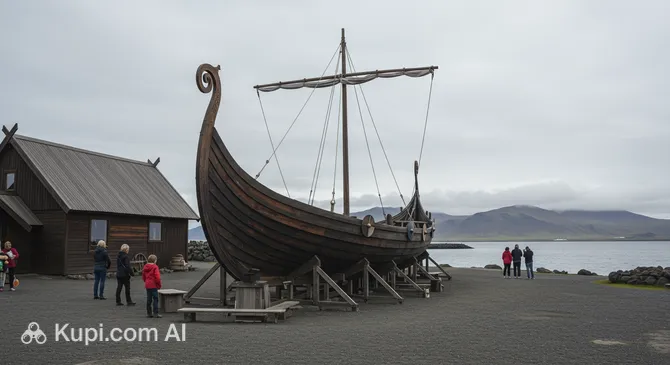
  • One of the city's main attractions is the Viking World museum (Víkingaheimar). Its centerpiece is an impressive replica of a 9th-century Viking ship, "Íslendingur" (The Icelander), which even completed a transatlantic voyage in 2000 to commemorate the millennium of Leif Erikson's discovery of America.

  • Historically, Keflavik was an important fishing center. As early as the 16th century, long before a permanent settlement was established, fishermen came here to set up seasonal camps for winter cod fishing in the rich Atlantic waters.

Viking World. Illustration.
Source: Kupi.com AI

Traveler photos:

How to Get There

The most convenient way to reach the city of Keflavik, located on the Reykjanes Peninsula in southwestern Iceland, is by air. The city is a major transport hub thanks to the country's main international airport being in its immediate vicinity.

The primary point of arrival for most tourists heading to Keflavik is Keflavik International Airport (KEF). This major international airport, though administratively often linked with Reykjavik, is located just 2.8 km from the center of Keflavik. In fact, the airport is situated within the municipality of Reykjanesbær, of which Keflavik is the center. A transfer to the city by taxi or bus takes about 25 minutes. The airport handles the vast majority of international flights to Iceland.

The smaller Reykjavik Airport (RKV) is located directly in the capital, Reykjavik, about 33.5 km east of Keflavik. It primarily serves domestic flights within Iceland, as well as some international flights to Greenland and the Faroe Islands. If your itinerary includes a connection to a domestic flight or if you are arriving from these locations, you can reach Keflavik from this airport by taxi or scheduled bus in about 1 hour and 10 minutes.

For convenience, here is a summary of the main airports serving the region:

AirportPassenger trafficDistance
Keflavik International Airport8.3 mln3 km
Reykjavik Airport500 00033 km
Isafjordur Airport33 000231 km
Akureyri Airport200 000282 km

From the airports to Keflavik and other points on the Reykjanes Peninsula, specialized shuttle buses (such as Flybus or Airport Direct) operate. Taxi services and numerous car rental offices are also available. Renting a car is a popular choice for exploring Iceland, allowing for freedom of movement around the island.

Main Attractions

Keflavik, known to many as the gateway to Iceland due to its international airport, offers travelers several interesting sites worth visiting. This city on the Reykjanes Peninsula can surprise you with its unique attractions.

One of the most significant landmarks is Viking World (Víkingaheimar). This museum offers a true immersion into the Viking Age. Its main exhibit is an impressive full-scale replica of the Viking ship "Íslendingur" (the Icelander), which in 2000 retraced Leif Erikson's legendary voyage to North America. Visitors can not only see the ship but also learn a great deal about the history of seafaring, Viking settlements, and their culture. This site is fascinating for both adults and children captivated by stories of brave explorers.

Viking World. Illustration.
Source: Kupi.com AI

Traveler photos:

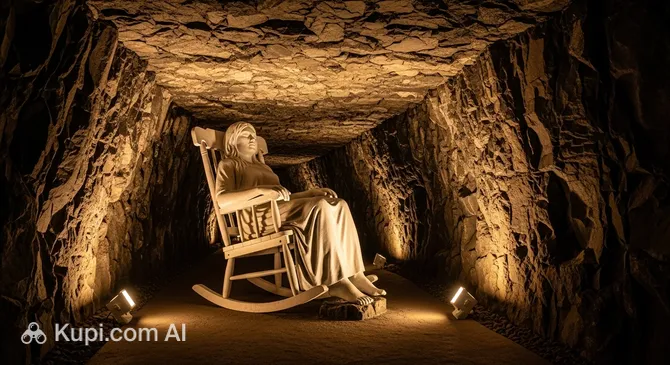
For those interested in Icelandic folklore and looking for something unusual, a visit to the Giantess Cave (Skessuhellir) is a must. Located by the harbor, this cave is home to a massive figure of a sleeping giantess, a character from Icelandic children's stories. This charming spot is especially popular with families, adding a touch of magic to the trip. Legend has it that if you stay quiet, you can hear her breathing.

Giantess Cave. Illustration.
Source: Kupi.com AI

Traveler photos:

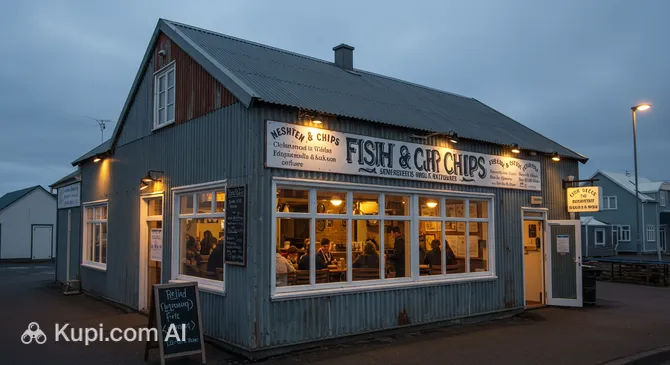
After walking and exploring cultural sites, you can get a taste of the local cuisine. A great choice for this is Issi Fish and Chips. This is a popular spot among both locals and tourists, serving the freshest fish caught in local waters, prepared in the classic "fish and chips" style. It is a wonderful opportunity to try an authentic dish and experience the taste of Iceland in a relaxed setting.

Issi Fish and Chips. Illustration.
Source: Kupi.com AI

Traveler photos:

These Keflavik attractions provide a better understanding of the history, culture, and daily life of this Icelandic city, making a stop here much more than just a transit point.

Local Cuisine

The gastronomic scene in Keflavik is a true reflection of its seaside spirit, where the freshest gifts of the Atlantic Ocean take center stage. If you want to experience authentic Icelandic flavors, Keflavik offers many interesting discoveries. The foundation of the local cuisine is, undoubtedly, fish and seafood in all its variety.

Be sure to try the traditional dish plokkfiskur—a gentle and hearty cod and potato stew that will warm you up in any weather. No less popular is the famous Icelandic smoked salmon, which has a subtle aroma and delicate taste. For those who aren't afraid of culinary experiments, there is local exotic fare like hákarl, fermented Greenland shark meat, whose taste is truly memorable. And, of course, you shouldn't miss out on skyr—a thick Icelandic yogurt resembling cream cheese, served with fresh berries, jam, or honey. It makes for a wonderful dessert or a healthy breakfast.

In Keflavik, you'll find cozy cafes where you can enjoy freshly baked rye bread (rúgbrauð) with butter, taste a rich fish soup, or simply have a cup of aromatic coffee. It's a great way to take a break and soak in the local atmosphere. Locals and tourists often choose seafood-focused restaurants for lunch or dinner, many of which are located near the port. For example, to try classic fish and chips with an Icelandic twist, you can visit Issi Fish and Chips.

As for drinks, when it comes to alcohol, Brennivín is worth mentioning—a traditional Icelandic schnapps often called "Black Death" due to its potency and black label. It is usually served chilled in small portions. Among non-alcoholic drinks, coffee is a favorite, which Icelanders love dearly, as is the pure Icelandic water straight from the tap. You can also find skyr-based drinks.

In addition to restaurants and cafes, take a look at local markets or small grocery stalls if you get the chance. There you might find homemade jams from local berries, various smoked meats, and other delicacies. In the summer, small food festivals are sometimes held, where locals share their culinary secrets and treat guests to signature dishes. Overall, Keflavik's cuisine is a blend of freshness, simplicity, and respect for tradition that will undoubtedly delight any gourmet.

Travel Tips

Planning a trip to Keflavik? Wonderful! To ensure your journey through this Icelandic city goes smoothly and leaves only pleasant impressions, we have prepared some practical tips.

  1. Clothing and Essentials: The weather in Iceland, and in Keflavik specifically, is very changeable, even within a single day. Be sure to bring layered clothing: thermal underwear, a fleece sweater, and windproof and waterproof jacket and trousers. Don't forget a hat, gloves, and a scarf regardless of the season. Comfortable waterproof footwear with good grip is critical. For electronics, you may need a European adapter (Type F).
  2. Transport in and around the City: Keflavik is a small city, and its center can be explored on foot. However, for exploring the surroundings and the natural beauty of Iceland, car rental is highly recommended. Public transport within the city itself is limited, but there are buses connecting Keflavik with Reykjavik and other towns. Taxis are available but can be expensive. Many rental agencies are located at Keflavik Airport (KEF).
  3. Finances: The local currency is the Icelandic Króna (ISK). Credit and debit cards (Visa, Mastercard) are accepted almost everywhere, even for small purchases. Cash may be needed for some guesthouses in remote areas or for buses, but in Keflavik, this shouldn't be an issue. ATMs (hraðbanki) are easy to find. Tipping in Iceland is not mandatory, as service charges are typically included in the bill, but it is always appreciated for good service.
  4. Health and Safety: Keflavik, like all of Iceland, is a very safe place. Pharmacies (Apótek) are available in the city, but not all operate 24/7. In case of medical emergencies, call 112 (the unified emergency number). Standard precautions, such as watching your personal belongings, apply. The main hazards are unpredictable weather and natural conditions, so always check the forecast and road conditions before heading out.
  5. Communication: The official language is Icelandic. However, the vast majority of Icelanders speak excellent English, especially in the tourism sector. Learning a few phrases in Icelandic (e.g., "Góðan daginn" – good day, "Takk" – thank you) is a nice gesture. A SIM card with a local number and data can be purchased at the airport or in electronics stores/supermarkets in town. Wi-Fi is widely available in hotels, cafes, and public places.
  6. Local Etiquette: Icelanders value politeness, honesty, and punctuality. It is customary to remove your shoes when entering a private home. Pay special attention to respecting nature: do not leave trash, stay on marked paths, and do not disturb wildlife. Bathing in geothermal pools is an important part of the culture; you must wash thoroughly with soap without a swimsuit before entering the pool.
  7. What to Avoid: Do not underestimate the weather—it can change drastically in a short time. Do not attempt to pet or feed Icelandic horses without the owner's permission, even if they seem very friendly by the roadside. Also, off-road driving is strictly prohibited; it causes irreparable damage to the fragile Icelandic nature and carries heavy fines.
  8. Additional Tip: Keflavik is located very close to the famous Blue Lagoon. If you plan to visit, book your tickets online in advance, especially during peak season, as capacity is limited. Keflavik is also a convenient starting point for a trip around the Reykjanes Peninsula with its volcanic landscapes and geothermal areas.

We hope these tips help you better prepare for your trip and get the most enjoyment out of your stay in Keflavik. Have a great journey!

Entertainment & Nightlife

While Keflavik is not a metropolis with a bustling 24-hour scene, it does offer pleasant options for evening and night-time relaxation. The nightlife here is mainly concentrated along the main street, Hafnargata, and its surrounding areas. The atmosphere in local venues is usually relaxed and friendly, encouraging conversation with both locals and fellow travelers.

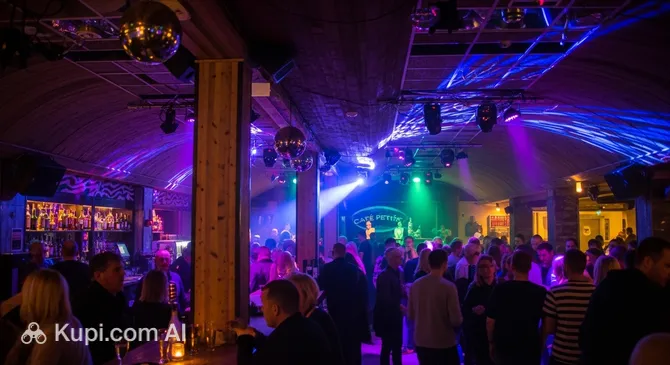
The core of night-time entertainment in Keflavik consists of bars and restaurants, some of which stay open late, especially on weekends. If you are looking for a place with music and a chance to dance, check out Kaffi Petite. This venue is known for its lively atmosphere and is a popular spot for those wanting to extend their evening. Typically, such places begin to fill up closer to midnight, and the dress code in most Keflavik establishments is quite casual—smart casual is perfectly appropriate.

Cafe Petite. Illustration.
Source: Kupi.com AI

Traveler photos:

For a dinner that can smoothly transition into an evening hangout, the city has several worthy restaurants. For instance, you could stop by Issi Fish and Chips for fresh seafood in an informal setting or choose Oriento for Asian cuisine. While these are not nightclubs in the strictest sense, they offer a cozy environment for an enjoyable evening.

In practical terms, you can get around central Keflavik at night on foot, as the main establishments are located fairly close together. If you are staying on the outskirts or need to get to your hotel late at night, it is better to use a taxi. Information on calling a taxi can be obtained at your hotel or directly at bars and restaurants. Keflavik is considered a safe city, though standard precautions, as in any other place, are always advisable.

During the day, there is also plenty to do in Keflavik and its surroundings. History and culture enthusiasts can visit the Viking World museum to immerse themselves in the era of Norse seafarers. For those who prefer natural beauty, a trip to the Giantess Cave, a unique geological formation on the coast, can be very interesting.

Parks & Museums

Keflavik, located on the picturesque Reykjanes Peninsula in Iceland, offers its guests not only the rugged beauty of Northern nature but also fascinating cultural opportunities. The city and its surroundings are rich in both natural sites and interesting museums that introduce visitors to the region's history and modern life.

While there aren't many traditional parks in Keflavik itself, its coastal location and unique landscapes provide excellent opportunities for outdoor walks. The city's surroundings are famous for their volcanic scenery and proximity to the Atlantic Ocean. One notable spot, especially for families with children, is the Giantess Cave (Skessuhellir). This is an interesting natural attraction linked to local legends about a friendly giantess who, according to lore, lives in this cave by the harbor. Walks along the coast will also offer unforgettable views and the chance to enjoy the fresh sea air.

Giantess Cave. Illustration.
Source: Kupi.com AI

Traveler photos:

Keflavik's cultural life is centered around several key museums. Undoubtedly, one of the main attractions is the Viking World museum (Víkingaheimar). Here, visitors can see an impressive full-size replica of the Viking ship "Íslendingur," which in 2000 retraced Leif Erikson's journey to North America. The museum's exhibits tell the story of the Vikings, their seafaring, and their culture.

Viking World. Illustration.
Source: Kupi.com AI

Traveler photos:

Another important cultural center is Duushús (Duus Museum). This complex houses several exhibition spaces under one roof: the Reykjanes Art Museum, the Reykjanes Heritage Museum, and the Reykjanes Maritime Center. Here you can explore the region's art, history, and maritime heritage. The buildings themselves are of historical value.

For music lovers, Keflavik has a special surprise—the Icelandic Museum of Rock 'n' Roll (Rokksafn Íslands). The city has a rich musical history and is often called the "Liverpool of Iceland" or "Beatles Town" due to the influence of American military bases and the rock music boom in the 20th century. The museum chronicles the history of Icelandic popular music from the early 20th century to the present day.

To truly feel Keflavik's authentic atmosphere, take a walk along its harbor, observing the daily life of a fishing town, or stop by one of the cozy local cafes. This will help you better understand the character of this unique Icelandic city.

Getting Around

Getting around Keflavik and its surroundings is not very difficult for tourists, even though the city does not have an extensive metro or tram system typical of larger metropolises. The main form of public transport here is buses. They provide both intra-city connections and links to other settlements, including the capital.

The Strætó bs bus network serves the Suðurnes region, including Keflavik. Routes connect key points in the city and allow travel to neighboring towns. Additionally, from Keflavik International Airport (KEF), which is effectively the main gateway to Iceland, specialized shuttles (such as Flybus or Airport Direct) run regularly to Reykjavik and back. These shuttles are a convenient way to reach the capital or return to the airport.

The fare payment system is quite simple. On Strætó city buses, payment is usually made in cash directly to the driver upon boarding, so it is recommended to carry small change. You can also use the Strætó mobile app to purchase tickets. For airport shuttles, tickets can be bought online in advance (which is often cheaper), at special kiosks in the arrivals terminal, or directly from the driver if there are seats available. The cost of travel on city routes is relatively low, while a transfer to Reykjavik will be more expensive—it is best to check current prices on the carriers' websites.

Tourists should note that buses run on a schedule, which can be found at stops, on the official Strætó website, or in their app. During the winter period or in bad weather conditions, schedule changes or cancellations are possible, so it is always useful to check for current information. Public transport hours may be limited in the evenings and on weekends, especially on less popular routes.

In addition to buses, taxi services are widely available in Keflavik. This is a more expensive but comfortable option, especially for trips with heavy luggage or at night. Taxi stands are located at the airport and in the city center. Given the nature of Iceland, many tourists prefer to rent a car directly at Keflavik Airport. This provides maximum freedom for exploring the island. In Keflavik itself, due to its compact size, getting around on foot is also quite comfortable, especially in the central part. Bicycle rentals are less popular due to the often windy and changeable weather.

Accommodation

Keflavik offers travelers a wide range of accommodation options to suit different needs and budgets. Here you can find cozy guesthouses and apartments for self-catering, as well as hotels of various categories—from budget-friendly to more comfortable mid-range options. Many tourists choose to stay in Keflavik upon arrival in Iceland or before their departure due to its proximity to the international airport.

Most lodging options in Keflavik are concentrated either in the immediate vicinity of Keflavik International Airport (KEF)—which is very convenient for transit passengers or those with early departures/late arrivals—or within the city itself. Staying in the city provides an opportunity to experience the local atmosphere and visit cafes and shops. Given Keflavik's compact size, most points of interest and infrastructure are within easy reach.

The city features various hotels and guesthouses that provide a comfortable stay. While the provided list of attractions does not name specific hotels, you can easily find many options online, from family-run pensions to modern hotels catering to tourists and business travelers.

When planning your trip, especially during the high tourist season (typically the summer months and the New Year holiday period), it is recommended to book your accommodation in Keflavik in advance. This will help ensure a better selection and more favorable prices. The most popular booking methods are international online platforms and direct inquiries on hotel websites. The price range varies, with both economical options and mid-range offers available to match your preferred level of comfort and service.

Nearby Cities

For those looking to explore the surroundings, Keflavik serves as an excellent starting point for day trips to several interesting nearby locations:

Among the most popular destinations is the capital, Reykjavik, just a thirty-minute to one-hour drive away. This vibrant city offers numerous cultural attractions, including the impressive Hallgrímskirkja church, the modern Harpa Concert Hall, and multiple museums detailing Iceland's history and art. Also worth visiting is Hafnarfjörður, known as the "town on the lava" and famous for its close ties to Icelandic folklore, including tales of elves and "hidden people." Here you can stroll through picturesque lava fields or visit a themed Viking village. Nearby is Kópavogur, Iceland's second-largest city, which boasts modern architecture like the Kópavogskirkja church and the Gerðarsafn Art Museum.

CityPopulationDistance
Hafnarfjordur29 97430 km
Gardabaer16 29932 km
Kópavogur34 14034 km
Reykjavik135 68834 km
Borgarnes1 96268 km

These nearby destinations allow for a deeper immersion into the diverse culture, history, and unique natural landscapes of the Southern Peninsula region and the Icelandic capital area.

Shopping & Souvenirs

Keflavik, as a major transport hub for Iceland due to its international airport, offers tourists basic shopping opportunities. The city is not famous as a large shopping center; however, you can find stores with essential goods as well as purchase some traditional Icelandic souvenirs. The main focus of shopping here is on convenience for travelers rather than a wide range of boutiques or designer stores.

Most commercial activity in Keflavik is concentrated along the city's main street, Hafnargata. Here you will find most of the shops, including supermarkets, pharmacies, souvenir shops, and small boutiques. A walk down Hafnargata will give you a good idea of the local retail offerings.

There are no large shopping malls in Keflavik in the conventional sense. If you are looking for large-scale shopping with many stores under one roof, it is better to head to Reykjavik, where the choice of shopping complexes is significantly wider. In Keflavik itself, shopping is more local and intimate.

Large, permanent markets are not a typical feature of the Keflavik shopping scene. Seasonal fairs or small sales by local artisans may occasionally take place, but for regular markets with a wide selection of goods, the capital is a better destination.

From Keflavik, as from Iceland in general, it is worth bringing back unique souvenirs that reflect the spirit of the country. Look for products made from Icelandic wool, especially the famous "lopapeysa" sweaters. Volcanic lava jewelry, handmade ceramics, and souvenirs featuring puffins—a symbol of Iceland—are also popular. In the shops, you can also find high-quality Icelandic cosmetics made from natural ingredients, as well as local delicacies like dried fish or Icelandic chocolate.

Most shops in Keflavik are typically open Monday through Friday from approximately 10:00 to 18:00. On Saturdays, hours may be shorter, and many shops are closed on Sundays, with the exception of some supermarkets and souvenir shops in tourist areas. Bank cards (credit and debit) are accepted almost everywhere in Iceland, so carrying a large amount of Icelandic Króna (ISK) cash is not necessary. However, a small amount of cash can be useful for minor purchases or in the rare cases where cards are not accepted.

Tourists from countries outside the European Economic Area can take advantage of the Tax Free system when shopping in Iceland. This allows for a refund of part of the VAT (Value Added Tax) on goods purchased over a certain amount. Typically, stores participating in the Tax Free system will have a corresponding sticker. Don't forget to ask the salesperson for a special Tax Free receipt and present it along with your purchases at the airport before departure to process the tax refund. Detailed information about the procedure and the minimum purchase amount should be clarified directly in the shops or at Tax Free refund points at Keflavik Airport.
Reached the end of the page?

That means the route is fully explored