Support

Jal Mahal

Nearby interesting places

About

Jal Mahal, which translates to "Water Palace," is one of the most mesmerizing sights in the city of Jaipur, India. Located in the middle of serene Lake Man Sagar, the palace creates the illusion that it is floating on the water's surface. This unique architectural monument is particularly impressive at sunrise and sunset, when its red sandstone silhouette and reflection in the water create a truly magical scene.
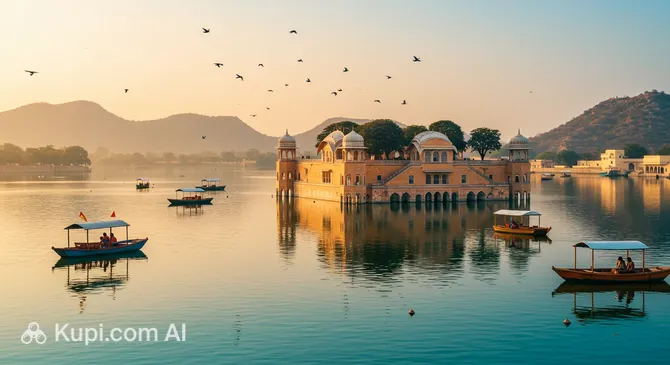
Jal Mahal. Illustration.
Source: Kupi.com AI

Traveler photos:

The architecture of Jal Mahal is a harmonious blend of Rajput and Mughal styles. The building is decorated with elegant carved balconies, pavilions, and chhatri domes typical of Rajasthani architecture. The palace has five floors; however, its main feature is that the four lower floors are hidden underwater when the lake is full. Only the top level remains visible, giving the structure a mysterious and ethereal appearance.

Originally, this structure was built as a hunting lodge for the Maharaja and his entourage. Later, in the 18th century, the palace and the lake were reconstructed and expanded by order of Maharaja Jai Singh II. Today, Jal Mahal is not only a testament to the rich history and architectural skill of the past but also a popular tourist destination, attracting travelers with its scenic beauty and unique location.

Contacts

Since Jal Mahal is situated in the middle of Lake Man Sagar and is currently closed to the public, it does not have direct contact information such as a phone number or an official website for ticket bookings. You can admire this architectural wonder from the promenade, which offers a stunning view. Reaching the site is easy, as it is located on Amer Road, connecting Jaipur and Amer Fort — you can get here by taxi, auto-rickshaw, or local bus.

How to contactContact
AddressJal Mahal, Amer, Jaipur, Rajasthan 302002, India
Websitewww.tourism.rajasthan.gov.in

What to Do

Although access to the interior of Jal Mahal is currently restricted for tourists, the area around it offers many experiences. The main reason people come here is to enjoy the picturesque views of the palace, Lake Man Sagar, and the surrounding hills. The promenade has become a favorite spot for photo shoots and leisurely walks, especially at sunset, when the palace and its reflection in the water look most captivating.

To see the "Water Palace" more closely, you can take a boat trip on the lake. From the water, the best angles are revealed not only of Jal Mahal itself but also of the Jaipur skyline. Such a trip allows you to fully appreciate the scale and beauty of this unique structure. Life is buzzing on the shore: here you can try local street treats, buy souvenirs to remember your trip to India, and simply immerse yourself in its colorful atmosphere.

For nature lovers, this place is also of interest. During certain seasons, Lake Man Sagar attracts many migratory birds, making it appealing for birdwatchers and observers alike. Thus, a visit to Jal Mahal is not just about seeing an architectural masterpiece, but also about spending pleasant time on the shores of a scenic lake.

Getting There

Getting to Jal Mahal is quite simple, as it is one of Jaipur's key landmarks. The palace is located approximately 4–5 kilometers north of the city center, right on the busy road leading to the famous Amber Fort. A trip from the central part of the city by taxi, auto-rickshaw, or local bus usually takes no more than 15–20 minutes. Thanks to its convenient location, visiting the "Water Palace" is easy to include in any tourist itinerary.

For those traveling through India by train, the nearest major railway station is Jaipur Junction. From there, you can easily use city transport to reach Lake Man Sagar, where the palace stands. Additionally, Jal Mahal is part of popular tourist routes connecting it with other iconic sites like the City Palace and Amber Fort, allowing you to see several attractions in one trip.

Nearest city: Jaipur

History & Facts

The history of Jal Mahal dates back to the late 17th century, when Maharaja Madho Singh I ordered its construction in 1699. It was originally intended not as a full-scale palace, but as an elegant hunting lodge. The Maharaja and his entourage used it for duck hunting trips and royal picnics against the backdrop of picturesque landscapes. At that time, the building stood in the middle of a valley that was later flooded to create Lake Man Sagar.

The "Water Palace" acquired its current appearance in the 18th century thanks to the efforts of Maharaja Jai Singh II, who significantly rebuilt and expanded it. It was then that exquisite architectural elements were added, giving it a special refinement: chhatri domes and the beautiful Chameli Bagh terraced garden. After the reconstruction, Jal Mahal was used for receiving noble guests, holding lavish celebrations, and water-based entertainment, becoming one of the jewels of Jaipur.

For a long time, the palace was abandoned and gradually fell into disrepair. Water seepage and the lake becoming waterlogged caused serious damage to its structure. However, in the 21st century, large-scale restoration work was undertaken to return Jal Mahal to its former glory. Thanks to these efforts, the palace was saved from destruction and today stands once again as one of the main symbols of India, delighting travelers with its fairytale appearance.

Time Needed

An average visitor typically needs 1 to 1.5 hours to explore Jal Mahal. This time is sufficient to fully enjoy the views of the palace from the promenade, take memorable photos, stroll leisurely along Lake Man Sagar, and perhaps take a short boat ride for a closer look. Since access to the interior of the palace is closed, the main focus is on contemplating this architectural marvel from the shore or the water.

The duration of your visit can vary depending on your interests. If you just want a quick glimpse of the "Water Palace" and a few snapshots, 30 minutes will suffice. However, if you plan to catch a picturesque sunrise or sunset, when the palace and its reflection in the water look especially magical, it's worth setting aside more time. You can also linger to watch the birds attracted by the lake or browse the local vendors offering souvenirs and street food on the promenade.

Working Hours

You can admire Jal Mahal from the promenade at any time of day, as access to the observation deck at Lake Man Sagar is open 24/7 and is free of charge. This allows travelers to enjoy views of the palace in bright daylight as well as in the magical atmosphere of sunrise or sunset.

It is important to know that entry inside the palace itself is closed to tourists. However, to see the architecture up close, you can go on a boat trip. Such excursions are usually available to visitors daily, from approximately 6:00 AM to 6:00 PM. You don't need to book tickets in advance for viewing from the shore, but it's best to check with local operators on the promenade for the availability and schedule of boat tours.

Nearby

Visiting Jal Mahal is just the starting point for exploring Jaipur's rich heritage. Exploring the surroundings of the "Water Palace" allows for a deeper dive into the history and culture of this amazing city. In the immediate vicinity of Lake Man Sagar, there are many other significant sites, each telling its own unique story and offering new experiences.

Exploring nearby attractions will enrich your trip by showcasing the diversity of architectural styles and historical eras that the "Pink City" is famous for. From majestic forts guarding the peace of ancient rulers to unique temples and museums — new discoveries await you just a few kilometers from Jal Mahal.

NameDistance
Pratap Celebrity Wax Museum1.6 km
Ele Experience Farm2.5 km
Jaigarh Fort3.1 km
Amber Palace3.6 km
Sheesh Mahal, Amber Fort3.6 km
Hawa Mahal3.8 km
City Palace3.8 km

Have you reached the end of the page?

So the route has been studied inside and out