Support

Agra Fort

About

Agra Fort, also known as the Red Fort or Lal Qila, is a majestic fortress in the city of Agra, India. This massive red sandstone fortress once served as the residence of the Mughal emperors and is an outstanding architectural monument of that era. Located on the banks of the Yamuna River, the fort is just 2.5 km from the world-famous Taj Mahal, forming a single historical ensemble with it.
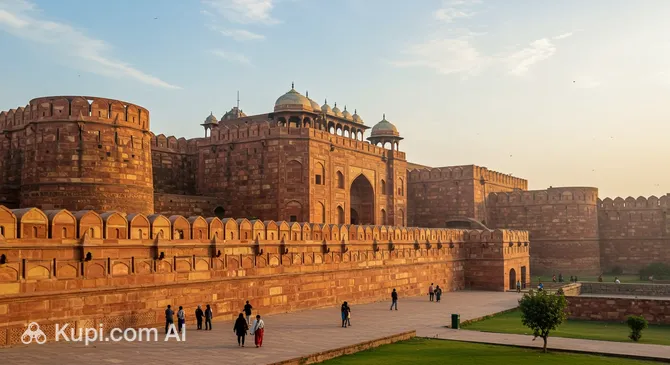
Agra Fort. Illustration.
Source: Kupi.com AI

Traveler photos:

Built primarily in the 16th century under Emperor Akbar, the fort is essentially a city within walls about 2.5 km long. Its architecture is a harmonious blend of Persian, Timurid, and Indian styles. Later, Akbar's grandson, Shah Jahan, who built the Taj Mahal, added elegant white marble structures to the fort, decorated with precious stones and gold.

In 1983, Agra Fort was designated a UNESCO World Heritage site, highlighting its exceptional cultural and historical value. Today, it is one of India's most popular attractions, drawing tourists with its grandeur and rich history. It is worth noting that a portion of the fort's territory is still used for military purposes and is closed to visitors; however, the accessible part of the complex is breathtaking in its splendor.

Contacts

To plan your visit and confirm the latest information regarding opening hours and ticket prices, it is highly recommended to consult official sources. The primary and most reliable source is the attraction's official website, where all current data for visitors is published.

How to contactContact
AddressAgra Fort, Rakabganj, Agra, Uttar Pradesh 282003, India
Phone number+91 562 222 6431
Websitewww.tajmahal.gov.in

What to Do

A visit to Agra Fort is a unique opportunity to immerse yourself in the rich history and culture of the Mughal era. Once inside, you can explore numerous palaces, audience halls, mosques, and other historical buildings. Each structure holds its own unique story and impresses with its architectural features, allowing visitors to feel the greatness of the past.

Among the most significant buildings that are a must-see, several gems stand out. Look for the Jahangiri Mahal (Jahangir's Palace), the grand Diwan-i-Aam (Hall of Public Audience), and the more refined Diwan-i-Khas (Hall of Private Audience). Also, don't miss the Moti Masjid (Pearl Mosque) and the octagonal Musamman Burj tower, from where, according to legend, Shah Jahan gazed at the Taj Mahal during the final years of his life.

Strolling through the fort grounds is about more than just architecture. Some viewpoints offer picturesque vistas of the Yamuna River and the legendary Taj Mahal, providing stunning photo opportunities. Leisurely walking through the courtyards and gardens, you can fully appreciate the sophistication of the Mughal style with its intricate carvings and harmonious proportions.

Getting There

Getting to Agra Fort is easy, as it is located in the central part of the city of Agra. This makes it easily accessible for tourists from any point in the city. You can use a rickshaw, taxi, or local bus. If you are arriving in Agra by train, the journey from the Agra Cantt railway station to the fort takes about 20–30 minutes by taxi or rickshaw.

For tourists traveling from Delhi, there are several convenient options. The fastest way is by train, which will get you to Agra in approximately 2–3 hours. Alternatively, you can take a bus or taxi via the Yamuna Expressway, which takes about 3–4 hours depending on traffic. Many travelers also opt for day trips from Delhi, which typically include visits to both Agra Fort and the famous Taj Mahal, allowing you to see the city's two main gems in a single day.

Nearest city: Agra

History & Facts

The history of Agra Fort dates back to the 16th century. A brick fortress called "Badalgarh" originally stood on this site but had fallen into disrepair by that time. Recognizing Agra's strategic importance, the Mughal Emperor Akbar decided on a massive reconstruction. Construction began in 1565 and lasted eight years, with more than 4,000 craftsmen involved in the work. Red sandstone, brought from the Barauli area in Rajasthan, was used as the primary material.

Initially, the fort served primarily military purposes, but over time, it was transformed into a luxurious palace complex. Particularly significant changes occurred during the reign of Shah Jahan, Akbar's grandson. It was he who ordered many of the red sandstone structures to be replaced with elegant white marble buildings decorated with precious stones, giving the fort even greater splendor. These changes reflected not only the ruler's architectural tastes but also his desire to create a residence that matched the beauty of his main creation, the Taj Mahal.

For nearly two centuries, Agra Fort was not just a residence, but the political heart of the Mughal Empire, from where vast territories were governed. Interestingly, one of the iconic events in the fort's history occurred before its major reconstruction: in 1530, Emperor Humayun, Akbar's father, was crowned here. Ironically, for Shah Jahan, the fort became not only a symbol of power but also a place of imprisonment—his own son Aurangzeb kept him under arrest here during the final years of his life.

Time Needed

To fully explore Agra Fort, it is recommended to set aside 2 to 3 hours. This is usually enough time to explore the main attractions inside the fortress, such as the palaces, audience halls, and mosques, without rushing, as well as to enjoy the architectural details and take photos. A standard route provides a general idea of the grandeur and history of this unique place.

If you have a deep interest in history and architecture or plan to use the services of a guide for detailed information about each site, you should plan for up to 4 hours. This approach will allow for a more thoughtful exploration of the complex, including gems such as the Jahangiri Mahal, Diwan-i-Khas, and Musamman Burj, as well as finding the best spots for panoramic shots of the Taj Mahal from the fortress walls.

Working Hours

Agra Fort is open to visitors year-round, seven days a week. Typically, the opening hours are from sunrise to sunset, which corresponds roughly to 6:00 AM to 6:00 PM. This allows guests to fully enjoy the beauty of the fortress in daylight. To avoid large crowds and intense heat, especially during the summer months, it is recommended to plan your visit for early morning or late afternoon.

Although tickets can be purchased directly at the ticket windows at the entrance, it is highly recommended to buy them online in advance. This will help you avoid long lines and save time for sightseeing. As opening hours may change depending on the season or for other reasons, it is always useful to check the current information on the official website of the Archaeological Survey of India (ASI) or on Agra tourism portals before your visit.

Nearby

A visit to Agra is not limited to just seeing the world-famous monuments. To dive deeper into the history and culture of this amazing city, it is worth paying attention to other attractions located in the immediate vicinity of Agra Fort. Many of them are within walking distance, allowing you to create a rich and interesting itinerary for the whole day.

A stroll through the fort's surroundings will reveal lesser-known but equally significant architectural and historical gems. You can see other palaces, temples, and memorials, each telling its own chapter in the chronicles of India and the Mughal era. This is an excellent opportunity to see the city from different perspectives and gain a more complete understanding of its rich heritage.

NameDistance
Agra Fort0 km
Shish Mahal (Glass Palace)0.2 km
Anguri Bagh0.2 km
Amar Singh Gate0.3 km
Jahangir Palace0.3 km
Chhatrapati Shivaji Maharaj Memorial0.4 km
Shri Mankameshwar Temple0.6 km

Have you reached the end of the page?

So the route has been studied inside and out