The Taj Mahal is not just a building, but a true jewel of Muslim art in India and one of the most recognizable architectural masterpieces in the world. Located in the city of Agra on the banks of the Yamuna River, this majestic white marble mausoleum was built in the 17th century by order of Emperor Shah Jahan in memory of his beloved wife, Mumtaz Mahal. Today, it is recognized as a UNESCO World Heritage site and is rightfully included in the list of the New Seven Wonders of the World.
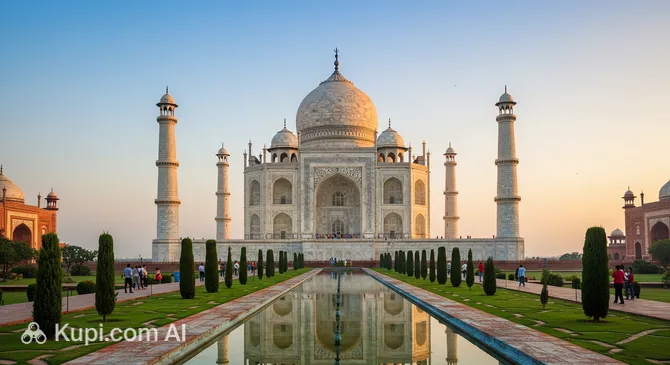
Traveler photos:
In fact, the Taj Mahal is not a single mausoleum but an entire architectural complex spanning approximately 17 hectares. It includes a monumental gateway leading to a paradise garden with canals and fountains, a red sandstone mosque, and a guest house (jawab) located symmetrically across from the mosque. Every detail of the complex is meticulously planned, creating a sense of perfect harmony and completeness.
The main magic of the Taj Mahal lies in its ability to change its appearance throughout the day. The translucent marble walls appear dazzlingly white under the bright sun, take on delicate pink tones at sunset, and acquire a silvery glow in the moonlight. The exquisite stone carving and inlay with precious and semi-precious stones make its appearance truly unforgettable, turning the structure into an eternal symbol of great love frozen in stone.