Support

Amar Singh Gate

About

Amar Singh Gate is more than just an entrance; it is a majestic portal into history and the primary active access to the famous Red Fort in Agra, one of India's most important historical and architectural complexes. Located on the southern side of the mighty fortress, the gate immediately catches the eye with its massive red sandstone construction, serving as a brilliant example of the Mughal architectural style. It provides an impressive introduction to the wonders hidden behind the fort's walls.
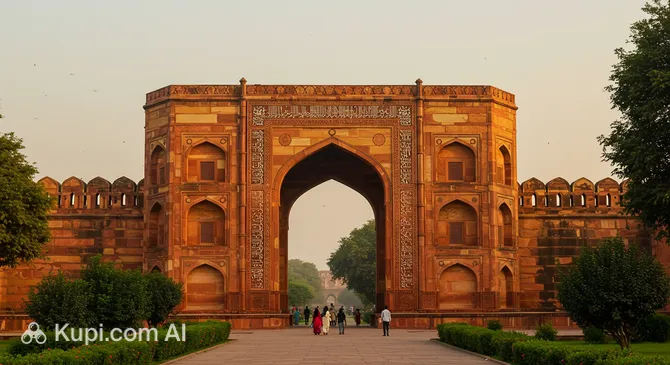
Amar Singh Gate. Illustration.
Source: Kupi.com AI

Traveler photos:

Originally designed with defensive needs in mind, Amar Singh Gate features a distinctive curved shape. This clever design was intended to make it difficult for enemies to attack and to strengthen the fortress's defense, making it not only beautiful but also a strategically vital fortification element. Today, thousands of curious tourists from all over the world pass through it daily, seeking to touch history and experience the grandeur of the Red Fort, which is rightfully included in the UNESCO World Heritage list.

Passing through Amar Singh Gate is a kind of journey through time. Once inside, you enter an area that holds memories of powerful rulers, court intrigues, and the splendor of a bygone era. It is an iconic historical site where a fascinating acquaintance with one of the country's most impressive fortifications begins, and a must-visit for everyone traveling to Agra.

Contacts

Amar Singh Gate is a significant historical site in Agra, usually functioning as part of a larger complex, so there are no separate contact details for it. To visit the gate, you should follow the routes to the main historical ensemble of which it is a part.

For up-to-date information on opening hours, access conditions, and ways to visit the entire complex, we recommend checking the official tourism portals of Agra in advance or inquiring at local information services on-site.

How to contactContact
AddressAgra Fort, Rakabganj, Agra, Uttar Pradesh 282003, India

What to Do

Amar Singh Gate, located in Agra, India, serves not only as an impressive entrance to the famous Red Fort but also as a landmark in its own right. Visitors can examine its majestic architecture, typical of the Mughal era, paying attention to the details and power of this historical structure. Passing through this gate is an opportunity to literally step across the threshold into another historical era.

Beyond Amar Singh Gate lies access to the vast Red Fort complex. Tourists can spend time exploring numerous historical buildings: from audience halls like the Diwan-i-Am (Hall of Public Audience) to exquisite palaces, ancient mosques, and picturesque gardens. Many of these structures are decorated with intricate stone carvings and marble inlays, testifying to the high skill of the craftsmen of that time.

A walk through the inner courtyards and along the massive fortress walls is of particular interest, offering views of the fort's grounds and a chance to fully soak in the atmosphere of the Mughal era. In addition to the already mentioned Diwan-i-Am, it is worth exploring the many inner courtyards and towers of the fortress, each holding its own secrets and offering new perspectives for studying the rich history of this place.

Getting There

Amar Singh Gate is one of the entrances to the famous Red Fort, located in the heart of Agra, India, near the scenic banks of the Yamuna River. Reaching this historical landmark is quite easy. You can use taxi services or a more exotic option—an auto-rickshaw, which are available from almost any point in the city. Public transport also runs to the Red Fort. A trip from central Agra usually takes 10 to 20 minutes, depending on the traffic situation.

If you are arriving in Agra by train, the city's main railway station, Agra Cantt, is just 2.5 kilometers from the Red Fort, where Amar Singh Gate is located. For those planning to combine visits to several iconic sites, it is useful to know that the world-famous Taj Mahal is approximately 2 kilometers away. Local guides offering their services and tour buses can usually be found near the fort entrance. Parking is provided for those traveling by private or rental transport.

Nearest city: Agra

History & Facts

Built in 1565 by order of Emperor Akbar as an integral part of the Red Fort's defense system in Agra, Amar Singh Gate originally served as one of its key bastions. It received its current name later, in memory of the valiant Mughal-era commander Amar Singh Rathore. Throughout its long history, these gates have been silent witnesses to many pivotal moments.

The defensive purpose of Amar Singh Gate is clearly reflected in its architecture. Its characteristic curved shape was not just a design choice but a clever tactical solution: it effectively hindered direct attacks, especially from war elephants frequently used in sieges during that era. This design also provided the fort's defenders with a significant advantage, allowing them to effectively target enemies who managed to breach the first line of defense. According to legend, a deep moat once surrounded the gate, teeming with crocodiles, making it particularly impenetrable.

Amar Singh Gate also left its mark on later chapters of history. For instance, it was through this gate in 1803 that British General Lake entered the Red Fort, a landmark event that influenced the region's future. To this day, despite the existence of other historical entrances like Delhi Gate, which is either closed or rarely used, the Amar Singh Gate remains the primary and only entrance open to the public, leading to the treasures of the Agra Red Fort.

Time Needed

Viewing Amar Singh Gate itself as a standalone architectural element will likely not take much of your time. About 15–30 minutes is usually enough to appreciate its historical significance, the detailed craftsmanship, and take a few memorable photos. It is important to remember that this famous gate is one of the main entrances to the vast Red Fort complex in Agra, so a visit to it is most often part of a longer exploration of the entire fortress.

If you plan to not just look at Amar Singh Gate but also explore the main attractions of the Red Fort it leads to, general recommendations suggest setting aside between 1.5 and 3 hours. This time will allow you to walk through the gate without rushing, immerse yourself in the fort's history, explore its palaces, halls, and other interesting features, and fully experience the atmosphere of this majestic site in Agra.

Working Hours

Amar Singh Gate, part of the majestic Red Fort in Agra, is open to visitors daily. According to available information, you can pass through this historical gate from 6:00 AM to 6:00 PM. It is important to know that Amar Singh Gate is the main entry point into the Red Fort grounds, making it a key starting point for your exploration of this outstanding landmark in India.

While the daily schedule implies year-round accessibility, it is always a good idea to confirm the current details. We recommend checking the official Red Fort website or contacting local tourist information centers before planning your visit. This will help you find out about any possible changes to the schedule due to holidays or special events, as well as the need for advance ticket booking if applicable.

DayOpening hours
Monday6:00 – 18:00
Tuesday6:00 – 18:00
Wednesday6:00 – 18:00
Thursday6:00 – 18:00
FridayClosed
Saturday6:00 – 18:00
Sunday6:00 – 18:00

Nearby

A visit to such a significant landmark as Amar Singh Gate is often just the starting point for a deeper exploration of Agra. Exploring the surrounding area not only broadens your horizons but also provides a more complete understanding of the rich history and culture of this amazing Indian city.

Near Amar Singh Gate, there are many other interesting sites, each capable of offering new experiences. A stroll through nearby locations will help you discover hidden gems and get a better feel for the atmosphere of Agra. Here are some of them:

NameDistance
Chhatrapati Shivaji Maharaj Memorial0.1 km
Jahangir Palace0.2 km
Anguri Bagh0.2 km
Agra Fort0.3 km
Shish Mahal (Glass Palace)0.3 km
Agra Fort0.4 km
Shri Mankameshwar Temple0.9 km

Have you reached the end of the page?

So the route has been studied inside and out