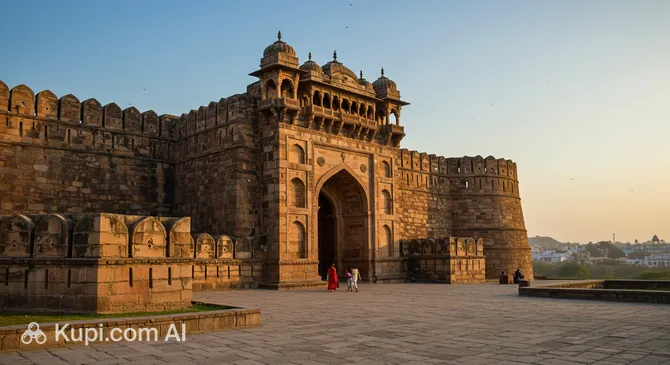
Jhansi Fort is a majestic historical fortification rising on the rocky Bangira Hill above the city of Jhansi in the state of Uttar Pradesh, India. Due to its location, the fort not only dominates the cityscape but also offers visitors breathtaking panoramic views of the surroundings. It is one of the key attractions in the region, drawing history and architecture enthusiasts from all over the world.
Jhansi Fort. Illustration.
Source: Kupi.com AI
Traveller photos:
This site is inextricably linked with the name of the legendary ruler Rani Lakshmibai, one of the most revered heroines in the country's history. The fort, also known as Kila Rani Jhansi, served as her residence and became the epicenter of the famous 1857 rebellion. The walls of this fortification preserve the memory of the courage and dramatic events that played a vital role in Indian history.
Visitors can explore the massive granite walls, which are up to 6 meters thick, as well as the bastions and internal structures of the fort, which are prime examples of Indian fort architecture. A walk through its grounds is a true immersion into the past, allowing you to feel the atmosphere of bygone eras and learn more about the lives of the rulers and the heroic defense of the fortress.
Contacts
As Jhansi Fort is a historical site, there is no single contact phone number for inquiries. To plan your visit, it is recommended to focus on its actual location and check official tourism portals for the most up-to-date information regarding opening hours and ticket prices.
A visit to Jhansi Fort is an opportunity to dive headfirst into history and enjoy impressive views. Guests are free to explore its numerous bastions, majestic gates, and spacious courtyards. By climbing the fortress walls, you will be rewarded with breathtaking panoramic views of the city of Jhansi and its surrounding landscapes.
Inside the fortress, you will find well-preserved historic buildings, ancient cannons, and commemorative plaques that tell of the fort's heroic past. To gain a deeper understanding of the site's significance, it is worth joining one of the guided tours. Guides tell fascinating stories about the life of the legendary ruler Rani Lakshmibai and key moments of the fortress's defense during the uprising, making the visit particularly educational.
In addition to the fort itself, there is a small museum on the grounds dedicated to the history of the region and the fortress. The exhibition complements the experience of the walk and helps organize what you've learned. It is also worth visiting the Rani Mahal palace, which is located in close proximity to the fort and is another important historical site related to the life of the famous ruler.
Getting There
Getting to Jhansi Fort is quite easy, as it is located in the heart of the city of Jhansi. This central location makes it highly accessible for travelers. For example, the fort is only about 3 kilometers from the city's main railway station. This distance can be comfortably covered by taxi or a colorful local auto-rickshaw, or you can even walk if you'd like to enjoy the city's atmosphere.
The city of Jhansi itself is an important transport hub in India, which makes trip planning much simpler. It is a major railway station with regular trains arriving from metropolises like Delhi and Mumbai. Additionally, you can reach the city by intercity bus or car from neighboring towns, giving travelers flexibility in choosing their route.
Getting around Jhansi is also quite convenient. The city has a well-developed public transport system that allows you to easily reach not only the fort but also other interesting attractions. You can also reach the fort by taking a bus to the "Jhansi Museum" stop. This opens up great opportunities for a full exploration of the city and its surroundings.
Nearest city: Jhansi
History & Facts
The history of Jhansi Fort dates back to 1613, when it was built by order of the ruler of the Orchha Kingdom, Raja Bir Singh Deo. Originally constructed as a stronghold for the Bundela dynasty, the fort occupied a strategic position atop the rocky Bangira Hill, allowing for control over the surrounding territories. From the very beginning, this powerful citadel was designed as a key military and administrative center for the region.
In the 18th century, the fortress came under the control of the Marathas, and its appearance changed significantly. In 1742, the military commander Naru Shankar made the fort his residence and expanded it substantially. It was during this period that the massive walls were erected—reaching heights of up to nine meters in some places—turning the fort into one of the most impregnable fortifications in central India. These improvements made it an even more formidable and significant fortress.
However, the fort gained worldwide fame due to the events that unfolded in the mid-19th century. It became a primary symbol of resistance during the Indian Rebellion of 1857–1858. It was here that the legendary ruler Rani Lakshmibai led the heroic defense of Jhansi against British forces. The siege of the fortress and the desperate courage of its defenders forever etched Rani Lakshmibai's name into history, making her a national heroine of India and turning the fort into a monument of unyielding will and the struggle for freedom.
Time Needed
When planning a visit to Jhansi Fort, you should allow for 2 to 3 hours. This is generally enough time for a thorough and leisurely exploration of the fortress's main attractions. During this period, you will have time to walk along the massive walls, explore the key buildings and bastions, and enjoy the panoramic views from the hilltop.
The recommended 2–3 hours will allow you to immerse yourself in the atmosphere of this historical site without rushing. You can not only walk the entire grounds but also pay attention to details: examine the old cannons, visit the small museum inside the fort, and take memorable photos. If you have a deep interest in history or wish to join a guided tour, it might be worth setting aside a bit more time to fully appreciate the heritage of Rani Lakshmibai and her era.
Working Hours
Jhansi Fort is generally open to visitors year-round, allowing you to experience this historical gem at any time. The fortress welcomes guests daily, usually from 6:00 AM to 6:00 PM. However, it is recommended to check the current schedule before your trip, as it may change slightly depending on the season or on public holidays.
Advance booking for fort entry is usually not required; tickets can be purchased at the box office on-site. However, to make your visit even more memorable, consider attending the evening sound and light show, which tells the story of the fortress and the heroic defense by Rani Lakshmibai. Tickets for this performance are purchased separately. For the most accurate information on hours and events, it is best to consult official tourism portals.
7:00 – 18:00
Nearby
Visiting the majestic Jhansi Fort is just the beginning of your acquaintance with the rich history and culture of Jhansi. To get a more complete picture of this amazing place in India, it is worth setting aside time to explore its surroundings. Many iconic sites are located in close proximity to the fort, making it easy to create a packed itinerary for the whole day.
A stroll through the areas surrounding the fortress will allow you to discover other facets of the city—from spiritual centers to modern entertainment. The convenient location of the attractions provides an opportunity to combine historical immersion with a leisurely exploration of the cultural life of Jhansi.