Support

Rumi Darwaza

About

Rumi Darwaza is a majestic triumphal gateway and one of the most impressive architectural symbols of the city of Lucknow in India. Built in 1784, it is an outstanding example of Nawab-era architecture. Often referred to as the "Turkish Gate," its name points to its architectural connection with the Ottoman Empire—specifically, the gates of ancient Constantinople, which served as its prototype.
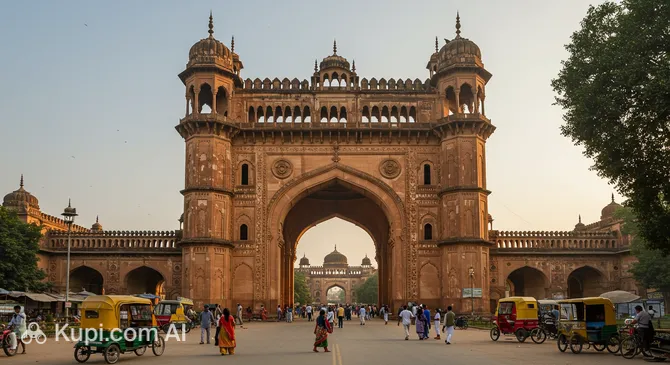
Rumi Darwaza. Illustration.
Source: Kupi.com AI

Traveller photos:

Erected by order of Nawab Asaf-ud-Daula, this gateway was part of a project to provide jobs for residents during a famine. Thus, Rumi Darwaza became not only an architectural masterpiece but also a symbol of compassion and support. It stands over 18 meters (60 feet) tall, making it a monumental entrance to the old city. The gateway is situated between two other important landmarks—Bara Imambara and Chota Imambara.

The architectural style of Rumi Darwaza represents a unique fusion of Mughal and Persian traditions, known as the "Lakhnaviyat" style. The facade is richly decorated with intricate carvings, floral patterns, and ornate latticework, showcasing the high level of craftsmanship of the time. Today, Rumi Darwaza is not just a historical monument but also a vibrant part of the city, with traffic still passing through it, connecting Lucknow's past and present.

Contacts

Since Rumi Darwaza is a public historical monument and part of the city's infrastructure, it does not have a dedicated contact number or visitor office. The gateway is open to visitors 24/7 and is free of charge, as a busy road passes through it. You can reach this attraction, located in the heart of Lucknow between Bara Imambara and Chota Imambara, using any local transport, including taxis or auto-rickshaws.

How to contactContact
Address17/11 Hussainabad Road, Lajpat Nagar Colony, Lajpat Nagar, Machchhi Bhavan, Lucknow, Uttar Pradesh 226003, India
Websitereadwritetips.com

What to Do

A visit to Rumi Darwaza offers tourists the chance to enjoy the majestic view of this architectural masterpiece and take impressive photos against its backdrop. Travelers can examine in detail the intricate carvings and floral patterns decorating the facade. The gateway is especially beautiful in the evening when it is illuminated, creating a truly magical atmosphere perfect for strolls and photo sessions.

Exploring the gateway often becomes part of a fascinating walking tour through the old city. A popular tourist route might start at the Teele Wali Masjid mosque, pass through the famous Bara Imambara complex and the bustling Chowk area, and end at the gate itself. This allows you to not only see the main architectural monuments but also immerse yourself in the authentic atmosphere of Lucknow.

Life is bustling around Rumi Darwaza: along the way, you can stop by numerous shops selling souvenirs, local handicrafts, and even ancient coins. Additionally, it's a great opportunity to get acquainted with the local cuisine. Be sure to try thandai—a traditional drink made from milk with almonds, saffron, and spices, which is offered in local cafes. Since Rumi Darwaza is located right next to the Bara Imambara complex, it's convenient to combine visits to these two iconic attractions.

Getting There

The Rumi Darwaza gateway is located in the central part of Lucknow, making it easily accessible for tourists. Most of the city's architectural monuments are located close to each other, so the historical district where Rumi Darwaza stands can be reached by local transport—rickshaws, taxis, or buses. However, the historical center is best explored on foot to fully soak in its atmosphere.

For those who prefer walking, there is a popular tourist route. It usually starts at the Teele Wali Masjid mosque, passes through the famous Bara Imambara complex and the colorful Chowk area, and leads directly to Rumi Darwaza. This path allows you to see several of the city's key attractions in one leisurely stroll.

Travelers arriving in Lucknow from other cities in India can take advantage of convenient transport links. The city has Chaudhary Charan Singh International Airport, as well as a major railway station and bus terminal. From any of these transport hubs, you can easily reach the city center and Rumi Darwaza by taxi or public transport.

Nearest city: Lucknow

History & Facts

There is more behind the creation of the majestic Rumi Darwaza than just architectural ambition. Its construction in 1784 was initiated by Nawab Asaf-ud-Daula as a humanitarian project. During those years, the region suffered from a severe famine, and the construction of the monument became a way for thousands of Lucknow residents to find work and food. Thus, Rumi Darwaza has forever entered history not only as an architectural monument but also as a symbol of a ruler's care and compassion for his people in difficult times.

The construction of the gateway was part of a large-scale urban development program implemented during the same period. Alongside Rumi Darwaza, another grand complex—Bara Imambara—was built, employing around 22,000 people. These two structures are the most prominent examples of the unique "Lakhnaviyat" architectural style that emerged in Lucknow during the 18th and 19th centuries. This style harmoniously combined elements of national Indian and European architecture, defining the city's unique appearance.

The reign of Asaf-ud-Daula was a time of both architectural and cultural flourishing. As the Mughal Empire weakened, the center of Muslim culture gradually shifted from Delhi to Lucknow. The city turned into a vibrant arts hub, and Urdu poetry reached such heights that Lucknow came to be known as the "Shiraz of India". Thus, Rumi Darwaza is not just a gateway but a witness to the city's golden age when architecture, poetry, and a unique court culture flourished.

Time Needed

You won't need much time to see Rumi Darwaza itself. For an average tourist, 30 to 60 minutes is usually enough to admire the architecture, take some photos, and feel the atmosphere of the place. Since it is a monumental gate rather than a complex with many halls to explore, most of the time is spent on an exterior inspection and a detailed look at the rich décor.

However, keep in mind that Rumi Darwaza is rarely visited in isolation from other iconic Lucknow landmarks. The gateway is part of a single historical ensemble along with nearby attractions like Bara Imambara. Therefore, most travelers include it in a longer itinerary through the old city. To leisurely explore all these monuments and fully immerse yourself in the region's history, it is recommended to set aside half a day or even a full day for your walk.

Working Hours

Since Rumi Darwaza is a public architectural monument and an integral part of the city's road network, with busy traffic passing through it, the gateway is available for viewing 24/7 and free of charge. This means that visiting it requires no advance booking or ticket purchase. The attraction is open to everyone at any time of year.

You can visit the gateway at any time convenient for you. However, for the best photos and a less crowded environment, it is recommended to come early in the morning. Evening is also a wonderful time for a visit when the lighting is turned on, creating a special, magical atmosphere. While the gateway itself is always open, when planning a comprehensive tour, it's worth checking the opening hours of neighboring attractions like Bara Imambara and Chota Imambara in advance, as they follow a specific visiting schedule.

Open 24/7

Nearby

Seeing the majestic Rumi Darwaza is just the beginning of your acquaintance with Lucknow's rich historical heritage. To fully experience the city's unique atmosphere, it's worth exploring other attractions located in the immediate vicinity. A stroll through the neighborhood will allow you to piece together a complete picture of the Nawabs' "golden age" and see how closely the fates of this amazing city's iconic monuments in India are intertwined.

Many of the key spots are within a few minutes' walk of each other, making this area ideal for walking tours. Each of the nearby attractions complements the story of Rumi Darwaza, revealing new facets of the Awadh region's culture and architecture.

NameDistance
Bara Imambara0.3 km
Hussainabad Clock Tower0.5 km
Chota Imambara0.8 km
1857 Memorial Museum, Residency1.7 km
The Residency1.9 km
Safed Baradari2.9 km
Regional Science City3.5 km

Reached the bottom of the page?

Looks like you know this route inside out