Taman Ayun Temple, whose name poetically translates from Indonesian as "beautiful garden," is one of the most iconic and revered shrines on the island of Bali. Located near the village of Mengwi, about 17 kilometers from the island's capital, Denpasar, this royal Hindu temple attracts visitors with its peaceful atmosphere and magnificent architecture, serving as an important part of Indonesia's cultural heritage.
Traveler photos:
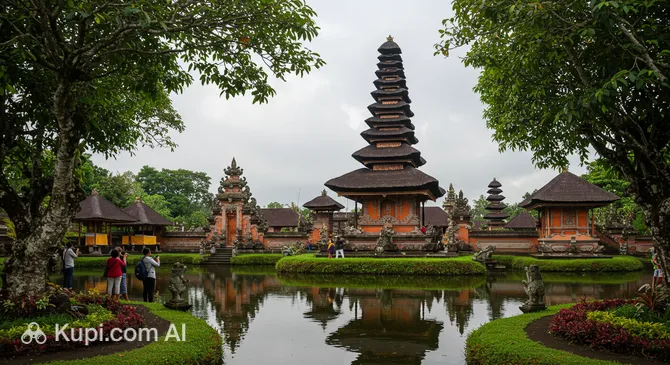
Taman Ayun is more than just a temple; it is a whole temple complex with an extensive garden, ranking as the second-largest on Bali after the famous Besakih Temple. Its uniqueness lies in being surrounded by a wide man-made canal filled with water, creating the impression that the temple is floating on an island. You can enter the grounds via a graceful bridge leading to the richly decorated central gates.
The architecture of Taman Ayun Temple represents a classic Balinese style with multi-tiered meru pagodas symbolizing the sacred Mount Meru—the abode of the gods. The temple's inner courtyards are divided into several levels, each with its own sacred significance and accessible for visits with certain restrictions, highlighting the hierarchical structure of Balinese Hinduism.
In 2012, Taman Ayun Temple, along with its adjacent subak irrigation systems, was included in the UNESCO World Heritage List. This recognition highlights not only the architectural and historical value of the temple itself but also the uniqueness of the Balinese cultural philosophy "Tri Hita Karana," which strives for harmony between humans, nature, and the spiritual world, and is vividly embodied in this "beautiful garden."