Support

Tirta Empul Temple

About

Tirta Empul Temple (Pura Tirta Empul) is one of the most revered Hindu water temples in Bali, located near the town of Ubud in Indonesia. This place is steeped in spirituality and tranquility, attracting pilgrims and tourists from all over the world. The temple is famous for its sacred springs, whose water is believed to have healing powers and is used for purification rituals. The name of the temple translates as "Holy Spring."

The temple complex, founded as far back as 962, is an extensive area with several courtyards and pools that are filled with crystal-clear water directly from the ground. Visitors can observe or even participate in the traditional Balinese purification ritual "melukat," passing through a series of fountains, each intended for spiritual cleansing. This is a unique experience that allows you to touch the living traditions of the island.
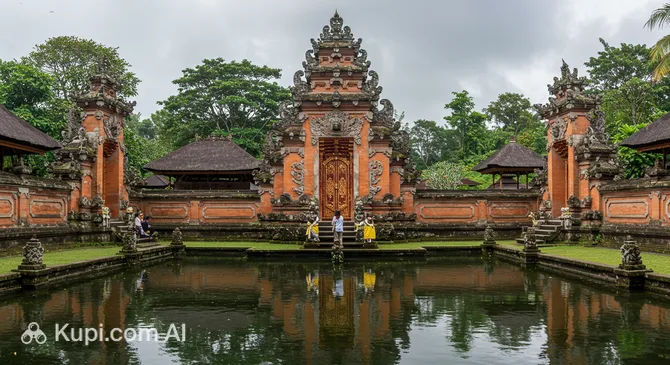
Tirta Empul Temple. Illustration.
Source: Kupi.com AI

Traveler photos:

Being not only a place of worship but also an important cultural landmark, Tirta Empul is considered one of the oldest religious structures in Bali. Its peaceful atmosphere and beautiful architecture, set against a backdrop of lush tropical greenery, make it a must-visit for anyone wishing to better understand the island's culture and spiritual life.

Contacts

Tirta Empul Temple does not have a public phone number or an official website for inquiries. To plan your visit, it is best to check the latest information regarding opening hours and visiting rules directly on-site or at tourist centers in the nearest town, Ubud. The temple is located nearby, and you can reach it either independently or as part of a guided tour group.

How to contactContact
AddressTampaksiring, Gianyar Regency, Bali 80552, Indonesia

What to Do

The main reason visitors come to Tirta Empul is the opportunity to participate in a purification ritual in the holy water pools. This deeply symbolic act is open to everyone, regardless of their faith. Before the ritual, you must change into a special sarong, which can be obtained at the entrance. The ritual itself involves passing sequentially under the streams of several fountains, each of which, according to belief, carries a specific blessing — from spiritual cleansing to healing. The entire process follows specific rules of Hindu tradition, so it is important to listen carefully to explanations or observe the locals.

In addition to the ritual baths, the temple grounds offer other activities. You can take a leisurely stroll through the picturesque courtyards, examining numerous pavilions and shrines dedicated to the gods of the Hindu pantheon, such as Vishnu, Shiva, and Brahma. The complex is nestled in greenery, creating a peaceful atmosphere for relaxation and meditation. You can also take beautiful photographs against the backdrop of ancient architecture and observe the colorful ceremonies frequently held by the Balinese. At the temple entrance, there is a small market where you can purchase souvenirs, often at better prices than in tourist centers, and sample local cuisine.

Getting There

Tirta Empul Temple is located in the village of Tampaksiring, approximately 15–20 kilometers northeast of Ubud. The most convenient way to get there is by rented transport — either a car or a scooter — or by taxi. A trip from the center of Ubud usually takes no more than 30–40 minutes, depending on traffic. The route passes through the scenic roads of central Bali, making the drive itself a part of a fascinating journey.

Another popular and convenient option is to hire a driver with a car for the whole day. This allows you to combine your visit to the temple with other iconic sites in the region, such as the Tegalalang rice terraces or other nearby temples. Many tour companies also offer ready-made excursions that already include a visit to Tirta Empul, eliminating the need to plan the logistics yourself. Public transport in this part of the island is not well-developed, so it is not the most practical way for tourists to get around.

For those traveling by their own or rented transport, there is a spacious parking lot for cars and buses at the entrance to the temple complex. This makes a visit to the temple comfortable, allowing you to leave your vehicle in the immediate vicinity of the attraction.

Nearest city: Ubud

History & Facts

The history of Tirta Empul Temple dates back centuries and is closely intertwined with ancient Balinese beliefs. According to data found on old inscriptions, the temple complex was founded in 962 AD. Its creation occurred during the reign of the Warmadewa dynasty, specifically under the ruler Sri Chandra Bhaya Singha Warmadewa. Initially, the temple was dedicated to the Hindu god Vishnu, and the pool complex for ritual ablutions built at that time has been preserved to this day and continues to serve its purpose.

The origin of the spring itself is shrouded in a mythological legend about a battle between good and evil. Legend has it that the powerful but godless Balinese king Mayadenawa used black magic to poison the river from which the warriors of the god Indra drank. To save his army from certain death, Indra struck his staff against the ground, and in that very spot, a spring of healing holy water gushed forth, resurrecting the fallen soldiers and granting them healing. This legend explains why the water at Tirta Empul is still considered sacred and possessed of purifying power.

The name of the temple itself, "Tirta Empul", translates from Balinese as "holy water spring" or simply "Holy Spring," which directly refers to this ancient story. Thus, the temple is not just an architectural monument but a place where myth and reality converge. For over a thousand years, pilgrims and travelers have come here to touch living history and experience the miraculous power of the sacred waters, created, according to belief, by the god Indra himself.

Time Needed

For a full visit to Tirta Empul Temple, it is recommended to set aside 1 to 2 hours. This time is usually sufficient to leisurely walk through the entire complex, participate in the purification ritual in the sacred springs, admire the unique architecture, and take memorable photos. You will also have time to browse the small market at the exit, where souvenirs and local crafts are sold.

The exact amount of time you spend at the temple will depend on your interests. If your main goal is to participate in the "melukat" purification ritual, you should allow more time, especially during peak hours when there may be queues at the fountains. The ritual itself requires certain preparation and a sequence of actions. For those who only plan to tour the grounds without entering the water, one hour may be enough to enjoy the peaceful atmosphere of the site and its scenic views.

Working Hours

Tirta Empul Temple welcomes visitors all year round. According to the information provided, the temple doors are open to tourists daily from 8:00 to 17:00, including holidays. To avoid large crowds of tour groups and fully enjoy the peaceful atmosphere of this holy place, it is recommended to plan your visit for the early morning, before 10:00.

As a rule, advance ticket booking for individual visits is not required — they can be purchased at the entrance. However, keep in mind that during major Balinese ceremonies or religious holidays, opening hours may change, and access to some parts of the complex may be temporarily restricted. For the most up-to-date information, it is recommended to check details at local tourist centers in Ubud or with your guide immediately before your trip.

8:00 – 18:00

Nearby

A visit to Tirta Empul Temple is a deep dive into Bali's spiritual life, but an introduction to this amazing region would be incomplete without exploring its surroundings. The Tampaksiring area, where the temple is located, and the adjacent territories hide many other cultural and natural treasures. By taking the time to explore nearby attractions, you can form a more holistic view of the rich history and mesmerizing landscapes of the island's central part.

Just a few minutes' drive from the holy water temple are ancient royal tombs, majestic palaces, museums, and, of course, the famous emerald rice terraces that have become a hallmark of Indonesia. Traveling around the outskirts of Ubud will enrich your experience and provide plenty of unforgettable impressions.

NameDistance
Tampaksiring Presidential Palace0.5 km
Gunung Kawi Sebatu Temple2.7 km
The Sukarno Center4.1 km
Abian Desa Rice Terraces4.2 km
Tegallalang Rice Terrace4.3 km
Tis Cafe4.4 km
Alas Harum4.7 km

Have you reached the end of the page?

So the route has been studied inside and out