Support

Ubud

About

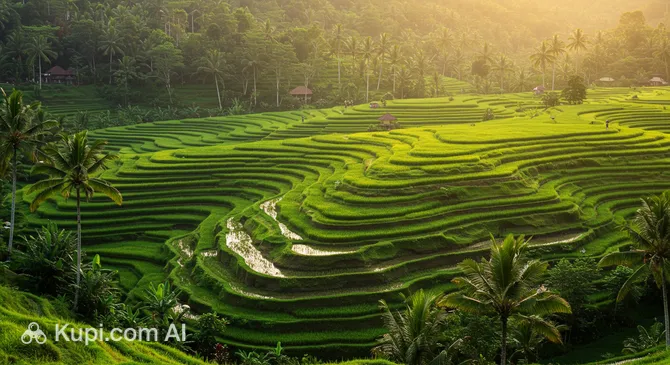
Ubud is not just a city; it is the soul of Bali and the cultural heart of Indonesia. Nestled among the emerald rice fields and hills of central Bali, Ubud attracts travelers with its unique atmosphere of tranquility, creativity, and spirituality.

Ubud. Illustration.
Source: Kupi.com AI

This charming town, with a population of about 10,800 people, is located in a mountainous area, which provides it with a milder and more humid climate compared to the coast. It is warm here all year round, and the lush tropical vegetation creates a feeling of eternal summer. Ubud is famous as a world center for arts and crafts, as well as a popular destination for yoga and meditation.

Among the main attractions not to be missed is the Sacred Monkey Forest Sanctuary, where you can observe the lives of hundreds of long-tailed macaques in their natural habitat among ancient temples. Ubud is also famous for its numerous art galleries, artisan workshops creating amazing wood, stone, and silver pieces, and traditional Balinese dance performances. The city's surroundings are decorated with the famous cascading Tegalalang Rice Terraces, which are one of the region's hallmark sites.

If you are looking for a place to restore your peace of mind, immerse yourself in a unique culture, and enjoy incredible natural beauty, Ubud is exactly what you need. Discover the magic of this amazing corner of Bali!

You can find more interesting facts on the Ubud history page.

Weather Overview

The weather in Ubud is a classic tropical paradise: warmth and high humidity are felt all year round. The temperature regime is very stable: during the day, the air warms up on average to 26-28°C, and at night it rarely falls below 21-23°C. Seasonality is expressed through the amount of precipitation: the wet season lasts roughly from November to March, bringing frequent but often short-lived tropical rains. The most intense precipitation (about 12-13 mm per month) and the highest number of rainy days (28-30) fall in January, February, and March. The dry season, from May to September, is characterized by plenty of sunshine and minimal precipitation—especially in July and August, when only about 2 mm falls, and the number of rainy days decreases to 14-16.

To better prepare for your trip and choose the best time, we recommend studying the detailed information about the Ubud climate.

Average monthly temperature

Average monthly precipitation

Interesting Facts

In addition to its world-famous yoga centers and picturesque rice fields, Ubud holds many fascinating secrets and little-known details. Here are a few interesting facts that will help you understand the soul of this unique Balinese city more deeply:

  • The name "Ubud" itself comes from the Balinese word "ubad", which means "medicine." Historically, this area was known for its healing herbs and plants, and to this day Ubud is considered a center of traditional Balinese medicine.

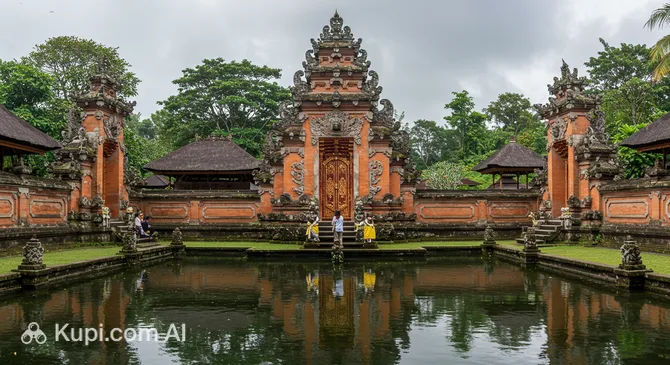
  • The famous Ubud Palace (Puri Saren Agung) is not just a museum or historical monument. It is still the official residence of the Ubud royal family, and some of its members actually reside on the palace grounds.

  • The unique "subak" irrigation system, which has been used for centuries to irrigate rice fields such as the famous Tegalalang Rice Terrace, is recognized as a UNESCO World Heritage site. This system reflects the Balinese philosophy of "Tri Hita Karana"—harmony between people, nature, and the spiritual world.

  • One of the most mesmerizing Balinese dances—Kecak—is often performed in Ubud without musical accompaniment. Instead, the rhythm is created by a chorus of several dozen men making characteristic "chak-chak-chak" sounds, creating a truly mystical atmosphere.

Ubud Palace. Illustration.
Source: Kupi.com AI

Traveler photos:

How to Get There

Ubud is located in the central part of Bali, away from the coast, so it is impossible to get here directly by plane or ship. Travelers must first arrive at one of the region's transport hubs and then continue their journey along scenic roads through jungles and rice fields. You can study all possible routes in detail and choose the best option on the how to get to Ubud page.

The primary way to reach this cultural center is by air. The island's main air gateway is Ngurah Rai International Airport (IATA: DPS). Note that it is not located in Ubud itself, but in the southern part of the island, near the city of Denpasar. The distance to the center of Ubud is approximately 29 km. Due to Balinese traffic and narrow roads, the trip by taxi or transfer usually takes about 1–1.5 hours. It is the largest airport in the region, receiving flights from all over the world.

Alternatively, especially if you are traveling between islands, you could consider Lombok International Airport (IATA: LOP), located in Praya on the neighboring island of Lombok. It is about 115 km from Ubud (as the crow flies), but the logistics are more complex: you will need to cross by ferry or speedboat to Bali, followed by a land transfer. Also, for domestic flights from Java, Banyuwangi Airport (BWX) is sometimes used, located in the city of the same name in eastern Java, just 104 km from Ubud across the strait.

For convenience, here is a summary of the main airports through which you can plan your route:

AirportPassenger trafficDistance
Ngurah Rai International Airport23.9 mln29 km
Banyuwangi150 214104 km
Lombok International Airport2.4 mln115 km
Sultan Muhammad Kaharuddin III Airport61 986237 km
Abdul Rachman Saleh Airport894 000288 km

Regarding rail transport, it is important to remember that there are no railways on the island of Bali itself, including Ubud. The nearest stations are on the neighboring island of Java. Travelers choosing this exotic method usually take a train to the station in Banyuwangi (at the eastern tip of Java), then cross by ferry to the port of Gilimanuk in Bali, and from there travel by bus or taxi to Ubud (the journey from the port takes about 3–4 hours).

Main Attractions

Ubud, the cultural gem of Bali, offers its guests an incredible variety of experiences. From ancient temples and lush jungles to royal palaces and emerald rice fields, everyone will find something here to suit their soul. Here are just a few iconic attractions worth including in your Ubud itinerary:

One of the most famous and visited attractions is the Sangeh Monkey Forest. This is not just a park, but a sacred place with ancient temples shrouded in dense jungle, home to hundreds of long-tailed macaques. Visitors can observe the daily lives of these playful creatures in their natural environment, walk along shaded paths, and feel the mystical atmosphere of this natural corner.

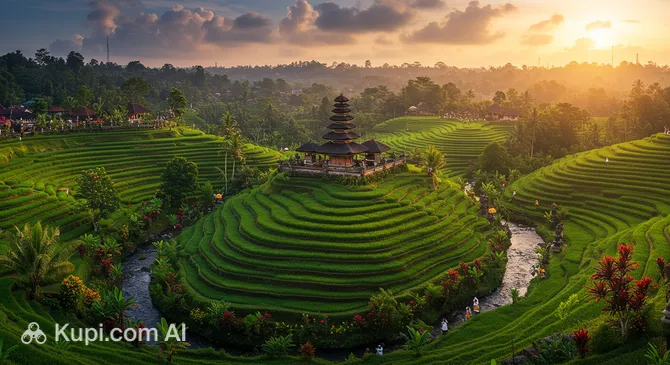
The hallmark of Ubud and all of Bali is undoubtedly the Tegalalang Rice Terrace. These emerald cascades, created using the traditional "subak" irrigation system, are a breathtaking sight and an ideal place for photos. Here you can walk among the fields, learn about the rice-growing process, and enjoy panoramic views from numerous cafes located on the slopes.

Tegallalang Rice Terrace. Illustration.
Source: Kupi.com AI

Traveler photos:

For those interested in Bali's spiritual culture, a visit to Tirta Empul Temple is a must. This ancient Hindu temple is known for its holy springs, whose water is believed to have purifying powers. Pilgrims and tourists come here to perform ritual ablutions in pools of crystal-clear water and touch the island's centuries-old traditions.

Tirta Empul Temple. Illustration.
Source: Kupi.com AI

Traveler photos:

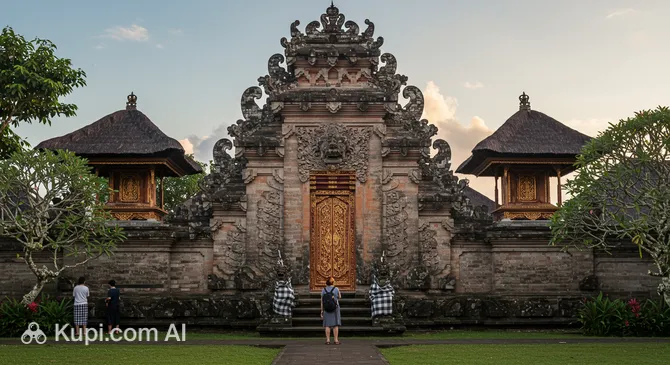
You can immerse yourself in the history and culture of the region by visiting Ubud Palace (Puri Saren Agung). Located in the very heart of the city, it is still the official residence of the Ubud royal family. Part of the palace complex is open to visitors, who can admire the exquisite Balinese architecture, traditional ornaments, and often catch rehearsals or performances of national dances.

Local Cuisine

The gastronomic scene in Ubud is a vivid reflection of its cultural richness and natural abundance. The local cuisine will delight you with fresh ingredients, fragrant spices, and an amazing variety of dishes that combine Balinese traditions with Indonesian culinary heritage. Here, special attention is paid to healthy eating, making Ubud a true Mecca for vegetarians, vegans, and everyone who appreciates natural products.

Be sure to try Nasi Campur—it's a hallmark of Indonesian cuisine: a portion of rice surrounded by small portions of various dishes such as vegetables, chicken, meat, tofu, tempeh, and spicy sambal sauce. Another popular dish is Gado-Gado, a salad of lightly boiled vegetables, tofu, tempeh, and eggs topped with a thick peanut sauce. Don't miss the chance to taste Sate Lilit—traditional Balinese skewers of minced meat or fish with coconut and spices, skewered on lemongrass stalks. Also worth noting is Ayam Betutu—chicken or duck marinated in a rich spice blend and slowly steamed or baked in banana leaves.

Among beverages, Ubud universally offers freshly squeezed juices from exotic fruits like mango, papaya, passion fruit, and dragon fruit. Be sure to try young coconut water—it is excellent for quenching thirst. Traditional herbal drinks known as Jamu, famous for their beneficial properties, are also popular. Coffee lovers will appreciate the local coffee, including the famous (and expensive) Kopi Luwak. Among alcoholic beverages, the most common is the local Bintang beer. You can also find Arak—a palm or rice spirit often used in cocktails, but one should be cautious with it due to varying quality.

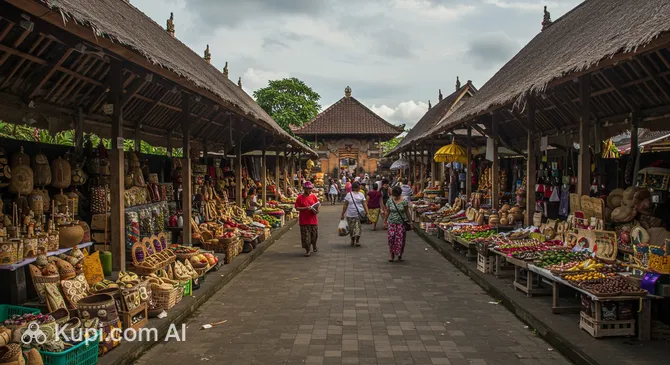
The food culture in Ubud is very diverse. Authentic and inexpensive food can be found in numerous warungs—small family cafes serving delicious home-cooked meals. For more refined dining, there are many restaurants offering both traditional Balinese and international cuisine, often with an emphasis on organic products. Ubud is also famous for its health food cafes serving vegan, raw, and gluten-free dishes. To feel the local flavor and buy fresh fruits, vegetables, and spices, visit the local markets, such as the Payangan Market. Here you can not only shop but also try street food.

Payangan Market. Illustration.
Source: Kupi.com AI

Traveler photos:

The gastronomic features of Ubud that attract tourists are, first and foremost, the incredible freshness of the products, many of which are grown right in the city's surroundings. The vibrant flavors created through the skillful use of local spices such as turmeric, ginger, galangal, and lemongrass make every dish unforgettable. Specialty dishes worth highlighting include the aromatic Nasi Campur, delicate Sate Lilit, and refreshing Gado-Gado. Overall, the Ubud food scene is characterized by a harmonious blend of tradition and modern healthy eating trends, offering a huge selection of dishes for any gourmet, especially those who prefer plant-based food.

Travel Tips

Welcome to Ubud, the cultural heart of Bali! To make your trip to this amazing corner of Indonesia as comfortable and memorable as possible, we have prepared some practical tips. They will help you navigate better and enjoy every moment of your stay.

  1. Clothing and Essentials: Ubud has a warm and humid tropical climate, so choose light, breathable clothing made from natural fabrics (cotton, linen). Don't forget your swimsuit, sunscreen, a hat, and quality sunglasses. For walks and excursions, comfortable shoes like sandals or light sneakers are ideal. During the wet season (roughly November to March), a light raincoat or umbrella will come in handy. When visiting temples and sacred sites, both men and women must cover their shoulders and knees—bring a sarong or a light scarf (pareo) with you, though they can often be rented on-site. Don't forget a universal adapter for electronics, as Type C and F (European) sockets are used in Indonesia.

  2. Transport: Public transport in Ubud is poorly developed. The most popular way to get around is renting a scooter (if you have driving experience and an international license). For more comfortable trips, especially over long distances or with luggage, you can use taxis or order a car through the Gojek or Grab apps—they are very popular and offer both motorcycle taxis (ojek) and cars. Another common option is renting a car with a driver for the whole day for sightseeing in the surrounding area.

  3. Finances: The local currency is the Indonesian rupiah (IDR). You can exchange money at official exchange offices (look for the "PVA Berizin" sign—licensed) or at banks; avoid street money changers with suspiciously high rates. Credit and debit cards (Visa, Mastercard) are accepted in most hotels, large restaurants, and shops, but you will need cash for purchases at markets and small local cafes (warungs). ATMs are quite common, but it is better to use those located at banks. A daily budget can range from $30-50 for a budget traveler to $100-150 and up for a more comfortable stay. Tipping is not mandatory but appreciated (5-10% in restaurants if service is not included, and small amounts for drivers and guides).

  4. Health and Safety: There are pharmacies (apotek) in Ubud, but it is better to bring a basic first-aid kit. If medical assistance is needed, you can contact tourist clinics (e.g., BIMC, Toya Medika). Be sure to get travel insurance before your trip. Ubud is considered quite safe, but basic precautions won't hurt: keep an eye on your belongings, especially in crowded places and when riding a scooter (it's better to keep your bag in the trunk or in front of you). Don't drink tap water and wash fruits thoroughly. Be careful with monkeys in the Monkey Forest—don't tease them or feed them without permission, and hide shiny objects.

  5. Communication: The official language is Indonesian (Bahasa Indonesia), and Balinese is also widely spoken. In the tourist areas of Ubud, many people speak English. Learning a few simple phrases in Indonesian, such as "Terima kasih" (thank you) or "Selamat pagi" (good morning), will be appreciated by the locals. You can buy a local SIM card (e.g., Telkomsel) at the airport or in the city; a passport is required for registration. Wi-Fi is available in most hotels, cafes, and restaurants. Useful apps: Gojek, Grab, Google Maps, WhatsApp.

  6. Local Etiquette: Balinese people are very friendly and hospitable. Greet people with a smile. When passing items or money, use your right hand, as the left is considered unclean. When visiting temples, dress modestly (sarong, covered shoulders and knees) and behave respectfully. Do not point at people or sacred objects with your finger (use your thumb or your whole palm). The head is considered a sacred part of the body, so try not to touch the heads of locals, especially children.

  7. What to Avoid: One of the most important rules is do not step on offerings (canang sari). These are small baskets made of palm leaves with flowers, rice, and incense that Balinese people leave on the ground daily for gods and spirits. Simply walk around them carefully. Also, try not to photograph people, especially during religious ceremonies, without their prior permission. Avoid excessively loud behavior and public displays of strong emotions.

  8. Special Tip for Ubud: This city is a recognized world center for yoga, meditation, and spiritual practices. Even if you've never tried it before, be sure to attend a yoga class or meditation session at one of the numerous studios. It's a wonderful way to immerse yourself deeper in the unique atmosphere of Ubud and find inner harmony. Also, pay attention to the various craft workshops—from batik and wood carving to silver jewelry making.

We hope these tips make your journey to Ubud even more enjoyable and fulfilling. Enjoy every moment in this magical place, discovering its culture, nature, and the hospitality of the locals!

Entertainment & Nightlife

Ubud, known for its tranquility and spiritual atmosphere, transforms as evening falls, offering guests a variety of leisure options. Although the nightlife here is not as vibrant as in the southern resorts of Bali, it has its own unique charm—cozy bars with live music, stylish restaurants that turn into lounge areas, and several intimate clubs.

The main concentration of evening venues is along the main streets, such as Jalan Raya Ubud, Jalan Goutama, as well as on the side streets off Jalan Hanoman and Jalan Monkey Forest. The atmosphere here is predominantly relaxed and friendly. The crowd is mixed—tourists, expats, and locals enjoying the cool of the evening. Most establishments are open until midnight or 1-2 AM, and the dress code is usually casual and laid-back.

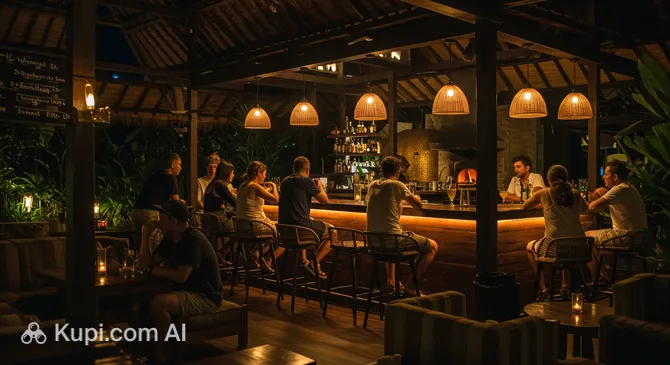
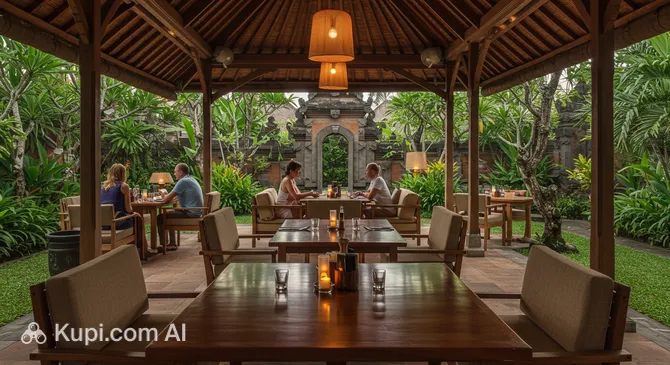
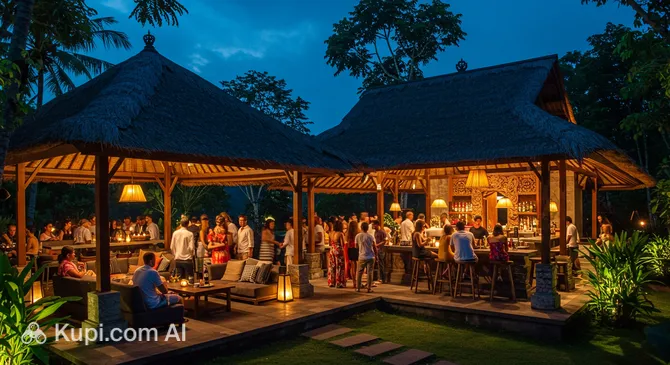
Among the popular spots for evening relaxation, several venues stand out. For example, Batubara Wood Fire is a stylish bar and restaurant known for its meat dishes prepared over an open fire and a pleasant atmosphere for dinner and drinks. Another interesting place is Watercress Ubud, offering delicious food and cocktails in a lively setting. If you're looking for something more club-like, it's worth checking out Arcadia, where you can dance to modern rhythms. Many restaurants, such as Donna, also offer a cozy setting for evening gatherings with friends.

Batubara Wood Fire. Illustration.
Source: Kupi.com AI

Traveler photos:

While there are no large, specially organized night markets in the center of Ubud like in other Asian cities, numerous street food stalls (warungs) come to life after dark, especially on the side streets. Here you can try authentic Balinese dishes at affordable prices. Some sections of the daytime markets also continue to operate in the evening, offering souvenirs and local delicacies.

Watercress Ubud. Illustration.
Source: Kupi.com AI

Traveler photos:

Practical tips for evening in Ubud: the best time to start your evening program is after 7:00 PM - 8:00 PM, when the daytime heat subsides. Prices in bars and restaurants vary but generally remain affordable: a cocktail can cost from 70,000 to 150,000 Indonesian rupiahs. For getting around at night, it is most convenient to use taxi services through the Gojek or Grab apps, or to arrange with a local driver in advance. Make sure the meter is on or agree on the fare beforehand.

Safety: Ubud is considered a fairly safe city. However, after dark, it is recommended to stick to well-lit streets and avoid walking alone in deserted areas. Call taxis from trusted sources (apps, hotel reception) and keep an eye on your belongings, especially in crowded bars.

Arcadia. Illustration.
Source: Kupi.com AI

Traveler photos:

During the day, Ubud also offers plenty of entertainment. In addition to world-famous yoga centers and spas, you can visit numerous art galleries and museums, such as the Neka Art Museum, which houses an impressive collection of Balinese and Indonesian art. For family leisure, places like Bali Safari and Marine Park or amusement parks like Aloha Ubud Swing, offering active recreation and vibrant experiences against a backdrop of picturesque nature, are suitable.

Parks & Museums

Ubud is not only the spiritual center of Bali but also a place where nature and art intertwine harmoniously, offering travelers a rich selection of green areas for peaceful walks and unique museums for immersion in the island's culture.

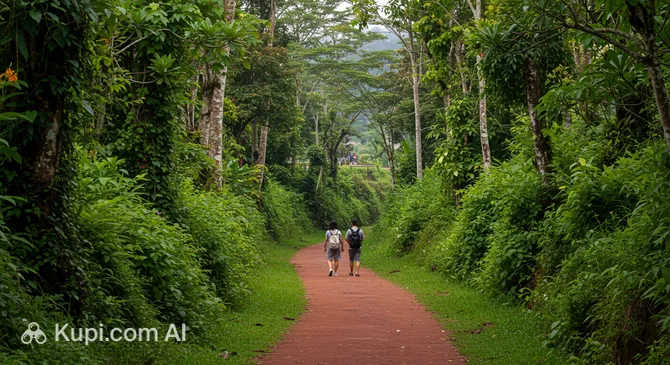
Among the lush greenery of Ubud and its surroundings, several iconic spots for outdoor relaxation stand out. Of course, the world-famous Sangeh Monkey Forest must be mentioned—a sacred place with ancient temples where you can observe macaques in their natural environment. For those seeking more peaceful walks and breathtaking views, the Campuhan Ridge Walk is an ideal choice. This picturesque trail winds along a hill ridge, offering panoramic views of river valleys and rice fields—it's especially beautiful at sunrise or sunset. Another popular spot combining natural beauty with activities is Alas Harum, an agrotourism park where you can not only admire the rice terraces but also taste local coffee, including the famous luwak, and even ride giant swings over the jungle.

Campuhan Ridge Walk. Illustration.
Source: Kupi.com AI

Traveler photos:

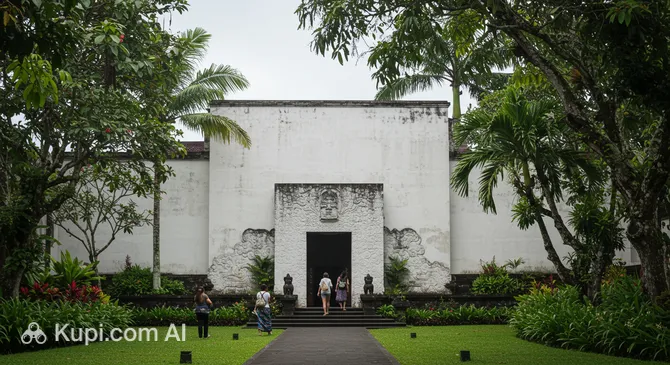
Ubud is rightfully considered the cultural capital of Bali, and its museums vividly confirm this. One of the key venues is the Neka Art Museum, which presents an extensive collection of Balinese and Indonesian art, from traditional works to contemporary pieces. Visiting this museum is a great way to trace the development of the island's artistic traditions and see works by both recognized masters and emerging artists. In addition to major museums, Ubud abounds with small private galleries and artist workshops scattered along its streets, where you can not only see but also purchase unique works of art, often directly from the creators.

Neka Art Museum. Illustration.
Source: Kupi.com AI

Traveler photos:

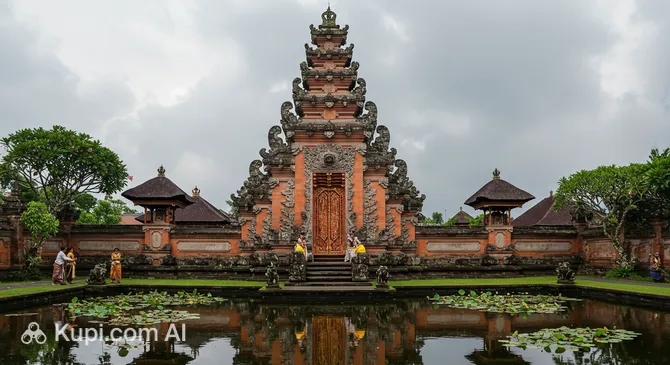
The rich historical heritage of Ubud is reflected in its architectural gems. Centrally located is Ubud Palace (Puri Saren Agung), which is still the residence of the royal family and an important cultural center where traditional dance performances are frequently held. Not far from the palace is another iconic and very photogenic spot—the Saraswati Temple, dedicated to the goddess of wisdom and art. This temple is famous for its picturesque lotus-covered pond, which creates a peaceful and inspiring atmosphere, especially during the flowering season.

Saraswati Temple. Illustration.
Source: Kupi.com AI

Traveler photos:

For a family holiday or simply to get acquainted with the region's fauna, you could consider a trip to Bali Safari and Marine Park, located within reasonable distance of Ubud. It offers the opportunity to see a variety of animals, including rare Indonesian species, in conditions as close as possible to their natural habitat, as well as visit a water park and watch various shows.

To deeper experience the atmosphere of Ubud, we recommend turning off the main tourist streets and exploring the small alleys—there you'll often find hidden cozy cafes with organic food, unique craft shops, and small yoga studios. Also, don't miss the chance to attend one of the many traditional dance performances that regularly take place in different parts of the city, often outdoors or within temple walls, which adds a special flavor and authenticity.

Getting Around

Getting around Ubud and its picturesque surroundings has its own characteristics, differing from the transport systems of major metropolises. Here you won't find subways or trams, but there are several convenient ways to explore this cultural heart of Bali.

Main types of transport:

The most popular means of transport, especially for independent travelers, is renting a scooter (motorbike). This provides maximum freedom to explore both Ubud itself and its surroundings, including rice terraces and remote temples. The cost of rental usually varies from 60,000 to 100,000 Indonesian rupiahs per day. It is important to have an international driving permit and always wear a helmet.

For those who prefer the comfort of a car, taxi services are available. They can be found on the streets or ordered through your hotel. A more modern and often more economical option is using mobile apps to order a taxi, such as Gojek or Grab. These apps offer both motorcycle taxis (ojek) and cars, with the fare known in advance.

Many tourists also use car rental with a driver services for half a day or the whole day. This is an excellent option for sightseeing outside central Ubud, especially if you are traveling in a group or with family. Prices are negotiable but usually amount to about 500,000 - 700,000 rupiahs for 8-10 hours.

As for more traditional public transport, it is poorly developed in Ubud. There are "bemo" minibuses, but their routes and schedules may not always be clear to tourists. Some companies, such as Perama, offer tourist shuttle buses connecting Ubud with other popular Bali resorts. Tickets for these are best purchased in advance at company offices or online.

Payment system and practical tips:

Payment for scooter rentals and private driver services is most often made in cash. In the Gojek and Grab apps, you can link a bank card or also pay cash to the driver. When using a regular taxi, always agree on the price in advance or make sure the driver turns on the meter (if there is one).

The central part of Ubud is quite compact, and many attractions, restaurants, and shops are within walking distance. Walking is a great way to feel the atmosphere of the city. Bicycle rentals are also popular and suitable for leisurely exploration of the immediate surroundings, although the hilly terrain should be taken into account.

Alternatives:

In addition to the mentioned scooters, taxis, and private drivers, it's worth remembering the possibility of walking around the center and using bicycles for short distances. There are no unique historical forms of transport like an old subway or cable cars in Ubud. The main emphasis is on individual transport and ride-hailing services.

When planning your movements around Ubud, choose the method that best suits your travel style and budget. Flexibility and the ability to easily reach the most interesting corners are what make Ubud's transport system convenient for curious tourists.

Accommodation

Ubud offers a wide range of accommodation options to suit any traveler's needs—from budget guesthouses and hostels to mid-range hotels, cozy boutique hotels, luxury villa resorts, and private apartments for rent. Everyone will find accommodation to their taste and budget here, whether it's a simple room with a view of the rice fields or a chic villa with its own pool.

The center of Ubud, especially the areas around Jalan Raya Ubud, Jalan Hanoman, and Jalan Monkey Forest, is very popular with tourists due to its proximity to the main attractions, restaurants, shops, and yoga studios. For those seeking more privacy and quiet, accommodation options in the outskirts of Ubud, among the rice fields or in villages such as Penestanan or Nyuh Kuning, are suitable, offering a more peaceful atmosphere while remaining within easy reach of the center.

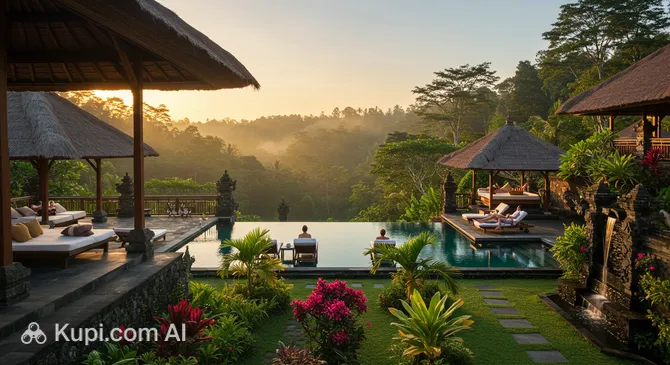
Among the many hotels in Ubud, well-known resorts such as Maya Ubud Resort & Spa, offering a luxury stay among tropical greenery, or Kappa Senses Ubud, known for its stylish design and high level of service, stand out. These hotels are often chosen for romantic getaways or complete relaxation.

Maya Ubud Resort & Spa. Illustration.
Source: Kupi.com AI

Traveler photos:

In Ubud, you can find accommodation for any budget: from budget options (approximately from 15-20 USD per night) to the mid-price segment (50-150 USD) and luxury villas and resorts (from 200 USD and up). It is recommended to book accommodation in advance, especially if your trip falls during the peak tourist season (usually the summer months and New Year holidays). The most common booking methods are popular online platforms (e.g., Booking.com, Agoda, Airbnb), as well as direct booking through official hotel websites.

Nearby Cities

For those who want to explore the surroundings, Ubud serves as an excellent starting point for day trips to several interesting nearby locations:

CityPopulationDistance
Banjarangkan11 85812 km
Kelandis10 35317 km
Denpasar1 779 12219 km
Manggar39 13528 km
Bebandem46 39034 km

These nearby destinations allow you to get a glimpse into the diverse culture and landscapes of the Indonesia region. Each offers its own unique attractions: for example, Denpasar is the bustling capital of Bali with markets and temples; Singaraja is the former colonial capital in the north of the island with preserved architecture; and the island of Lombok attracts visitors with its beaches and Mount Rinjani volcano. Mataram is the main city of Lombok, while Jember, located on the island of Java, is known for its tobacco plantations and annual fashion carnival.

Shopping & Souvenirs

Shopping in Ubud is a true immersion into a world of art, crafts, and unique finds. The city is famous not so much for its large shopping centers as for its numerous boutiques, art galleries, craft workshops, and colorful markets where you can buy authentic Balinese goods. Here you will find everything: from exquisite jewelry and designer clothing to traditional souvenirs, organic cosmetics, and handmade interior items.

The main arteries for shopping in Ubud are Jalan Raya Ubud, Jalan Hanoman, and Jalan Monkey Forest. Along these streets and in the numerous alleys branching off them, a vast number of shops, stalls, and galleries are concentrated. Another popular street with interesting boutiques and cafes is Jalan Goutama, especially known for its health food and organic product shops.

There are no giant modern shopping malls in the conventional sense in Ubud. Instead, small shopping arcades and store complexes offering unique items thrive here. Shopping here is more like an exploration and a hunt for treasures in small, often family-run establishments, rather than a trip to standard malls.

Markets are an integral part of the Ubud shopping scene. The most famous is the Ubud Art Market (Pasar Seni Ubud), located in the heart of the city, opposite the Royal Palace. Here you can find a huge selection of souvenirs, textiles, wood carvings, paintings, and much more. The market opens early in the morning, and the morning hours are the best time for shopping and bargaining. Also worth noting are the local food markets, such as the Payangan Market, where you can buy fresh fruits, vegetables, spices, and get acquainted with the daily life of the Balinese.

From Ubud, it's worth bringing home handmade items: wood and stone figurines, masks, batik and ikat (traditional fabrics), silver jewelry with unique Balinese designs, and paintings by local artists. Natural cosmetics based on coconut oil and essential oils, organic coffee (including the famous Kopi Luwak), spices, incense, and sarongs are also popular. Many shops offer products made from recycled materials, reflecting a commitment to sustainability.

Most shops in Ubud open around 9:00 AM - 10:00 AM and operate until 7:00 PM - 9:00 PM. Markets, especially food markets, start their work very early, around 6:00 AM. In tourist zones, many souvenir stalls may stay open longer. As for payment, credit cards (Visa, Mastercard) are usually accepted in large stores and boutiques, but in markets and small stalls, cash in Indonesian rupiahs (IDR) is preferred. Don't hesitate to bargain at markets—it's part of the local culture, but do it politely and with a smile.

The possibility of tax refunds (Tax Free) for tourists in Indonesia exists, but it applies to purchases in stores participating in the system and usually requires a certain minimum purchase amount. Check this information directly in the stores when making large purchases.
Reached the end of the page?

That means the route is fully explored