Support

Sumenep

About

Sumenep is a true treasure for those dreaming of discovering Indonesia from a new and unexpected perspective. This charming city is nestled on the eastern tip of Madura Island, known for its authentic atmosphere and unhurried pace of life. With a population of about 85,000 people, Sumenep is more than just a small town; it is an important administrative and cultural center of the eastern part of the island.
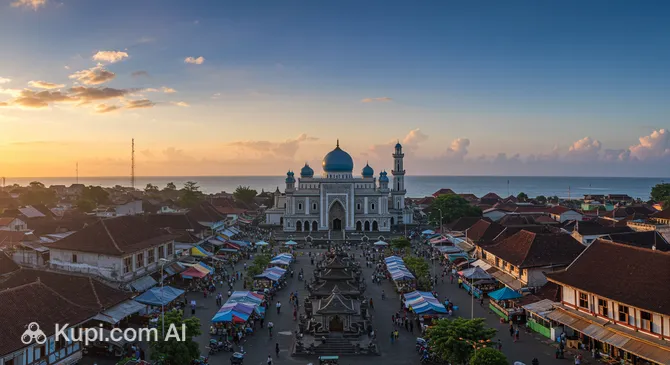
Sumenep. Illustration.
Source: Kupi.com AI

Thanks to its seaside location and mild tropical climate, Sumenep welcomes guests year-round with lush greenery, the scents of fragrant spices, and refreshing ocean breezes. The city is ideal for travelers seeking seclusion and wishing to immerse themselves in authentic Indonesian culture away from noisy tourist routes.

Among the unique features of Sumenep is its distinctive architecture, which harmoniously blends colonial heritage, traditional Javanese motifs, and the bright colors of Muslim temples. Tourists are drawn to the ancient palaces that hold stories of the past, cozy local markets where unique souvenirs and local delicacies can be found, and old mosques reflecting the city's spiritual life. Additionally, the surroundings of Sumenep are famous for secluded white-sand beaches and picturesque landscapes.

If you are looking for a place for leisurely walks, contemplation, and inspiration, Sumenep will be a real discovery for you and will provide unforgettable impressions of authentic Indonesia.

You can find more interesting facts on the Sumenep city history page.

Weather Overview

When planning a trip to Sumenep, be prepared for typical tropical weather. In Sumenep, you can expect consistently hot weather throughout the year, with temperatures usually ranging from 25-31°C. The main climatic variations are related to the amount of rainfall: a distinct wet season with frequent rains lasts roughly from November to April, while from May to October, the weather is drier, with August and September being particularly arid. For a more detailed look at the weather conditions by month, visit the Sumenep climate page.

Average monthly temperature

Average monthly precipitation

Interesting Facts

Beyond its picturesque landscapes and hospitality, Sumenep hides many amazing stories and unique features that make it a truly special place. Here are just a few interesting facts that will help you see this city in a new light:

  • Sumenep is one of the main centers of ancient Madurese culture. It is home to one of the oldest palaces on Madura Island – the Kraton Sumenep. It once served as the residence of local sultans, and to this day, its luxurious interiors and rich history attract the attention of visitors.

  • The city features a fascinating mix of cultures: the traditions of Javanese, Madurese, and Arab traders are closely intertwined here. This cultural diversity is reflected not only in architectural styles but also in local customs and vibrant, original festivals.

  • In the vicinity of Sumenep, unique salt fields are still preserved. Here, you can see firsthand how salt is harvested using ancient technology; it is famous for its quality and is considered some of the best in all of Indonesia.

  • Sumenep is a place shrouded in legends of sea pirates and brave merchants. In times past, they shared the riches of the local straits and, according to legend, hid their treasures on secluded nearby islands. They say some of these caches have never been found to this day!

How to Get There

When planning a trip to the colorful island of Madura, it is important to think through your route in advance. You can find all the details and consider various options on the how to get to Sumenep page, and below we will discuss the main transport hubs used by tourists.

Since Sumenep is located on an island, the most convenient way to get here is to fly to one of the major cities on the neighboring island of Java, followed by a crossing via bridge or ferry. The nearest major hub is Juanda International Airport (IATA: SUB). Note that this airport is not in Sumenep itself, but in the city of Surabaya, which is about 125 km away. This is the main hub for travelers heading to Madura. The travel time from the airport to Sumenep by taxi or bus via the Suramadu Bridge takes about 3.5 hours.

Another popular option, especially for those combining their trip with a vacation in Bali, is Ngurah Rai International Airport (IATA: DPS). It is located in Denpasar, approximately 240 km from Sumenep. This is the region's largest airport with a huge passenger flow. The journey from here requires combined transport (ferry and bus/car), and the trip can take around 6.5 hours or more, depending on the crossing schedules.

You can also consider Abdul Rachman Saleh Airport (IATA: MLG), located in the city of Malang. It is about 162 km from Sumenep. This is a less crowded airport compared to Juanda, but it may be convenient if you plan to visit the mountainous areas of East Java before traveling to Madura. A car journey from here takes approximately 4.5 hours.

For clarity, here is a summary of the main airports through which you can reach the region:

AirportPassenger trafficDistance
Juanda International Airport14.0 mln125 km
Banyuwangi150 214153 km
Abdul Rachman Saleh Airport894 000162 km
Dhoho International Airport1.5 mln226 km
Ngurah Rai International Airport23.9 mln241 km

In addition to air travel, land transport plays an important role. Since there is no railway station in Sumenep itself, most tourists arrive by train in Surabaya (Gubeng or Pasar Turi station) and then transfer to intercity buses. Buses depart from the Purabaya (Bungurasih) terminal in Surabaya and go directly to the Arya Wiraraja terminal in Sumenep via the famous Suramadu Bridge. A bus ride is an economical and scenic way to see the landscapes of Madura Island.

Main Attractions

The city of Sumenep, located on the eastern tip of Madura Island, offers travelers a unique opportunity to immerse themselves in the rich history and culture of this Indonesian region. Here, impressive architectural monuments and picturesque natural spots have been preserved, attracting lovers of authentic experiences.

One of the city's main gems is the Sumenep Palace (Keraton Sumenep). This former palace of the Sumenep sultans is a striking example of Madurese palatial architecture with elements of European, Chinese, and Javanese influence. Visitors can stroll through its grounds, explore the preserved buildings including the main pavilion and the sultan's private chambers, and visit a small museum displaying royal regalia, antique furniture, and other artifacts. The palace is fascinating for its history and the chance to touch the past of the Madurese aristocracy.

Not far from the palace stands the majestic Great Mosque of Sumenep (Masjid Jami Sumenep). Built at the end of the 18th century, this historical mosque impresses with its unique architecture, which also blends various styles. Its monumental gates and multi-tiered roof, resembling a pagoda, are particularly striking. The mosque is not only an important religious center but also a significant architectural monument that draws attention with its beauty and historical value.

For those interested in history and spiritual heritage, a visit to Asta Tinggi Royal Cemetery is a must. Located on a hill, this royal cemetery serves as the final resting place for the rulers of Sumenep and their families. The complex is a quiet and peaceful site with ancient headstones decorated with intricate carvings. A visit to Asta Tinggi allows for a deeper understanding of the region's traditions and history.

If you want to take a break from historical sites and enjoy nature, head to Lombang Beach (Pantai Lombang). This picturesque beach, located about 30 km north of Sumenep, is famous for its soft white sand and unique casuarina trees (cemara udang), which provide pleasant shade. Lombang Beach is an excellent spot for relaxation, picnics, and enjoying seaside landscapes, making it popular among both locals and tourists.

Local Cuisine

A gastronomic journey through Sumenep promises to be a real discovery for foodies. The local cuisine, vibrant and aromatic, has absorbed the best traditions of Madura Island. The calling card and main star is undoubtedly sate madura – mouth-watering chicken or beef skewers. Their secret lies in the thick peanut sauce, generously seasoned with spices, and the fact that they are often cooked right on the streets, filling the air with the tantalizing aroma of freshly grilled meat.

Another dish that is definitely worth trying in Sumenep is kaldu madura. Imagine a rich, hearty broth with tender pieces of beef, potatoes, and a bouquet of aromatic spices – the perfect choice for lunch after a busy day. Due to its proximity to the sea, Sumenep's markets abound with the freshest seafood. Shrimps, squid, various fish, as well as local shellfish and crabs – all these are grilled or stewed with coconut milk and spicy herbs, revealing the true taste of the sea's bounty.

For those with a sweet tooth, Sumenep also has plenty to offer. Look out for traditional Madurese desserts such as laksa madura – an unusual combination of rice noodles, coconut milk, and palm sugar, or klepon – small rice flour balls with a melting dark sugar filling. These treats are a pleasant way to end any meal.

Food culture in Sumenep is largely a culture of street food and bustling markets, where you can not only buy fresh produce but also watch dishes being prepared and, of course, taste them. The city often hosts gastronomic festivals where you can fully appreciate the diversity of local treats and the skill of Madurese chefs. Meals are usually accompanied by refreshing drinks such as freshly squeezed exotic fruit juices, iced tea, or traditional local non-alcoholic beverages. Information about specific local alcoholic drinks is best sought directly in restaurants or from local residents.

Travel Tips

Welcome to Sumenep, a charming city on Madura Island! To make your journey through this unique corner of Indonesia as comfortable and memorable as possible, we have prepared some practical tips.

  1. Clothing and Essentials: Sumenep has a tropical climate, so choose light and breathable clothing made from natural fabrics. Don't forget a hat, sunglasses, and high SPF sunscreen. For visiting mosques and other religious sites, women are recommended to cover their shoulders and knees, and men should wear trousers. Be sure to bring comfortable walking shoes and perhaps a light wrap for evening coolness or rain. A power adapter (usually types C and F) will also be useful.
  2. City Transport: The main modes of transport in Sumenep are becak (cycle rickshaw) and ojek (motorcycle taxi) for short trips. You can also use taxi services; it's better to agree on the price in advance. Car or scooter rental is possible but requires an international driver's license and some experience driving in local traffic conditions. Public transport in the form of buses or minibuses (angkot) connects Sumenep with other parts of the island.
  3. Financial Matters: The local currency is the Indonesian Rupiah (IDR). You can exchange currency at banks or authorized exchange offices; avoid street money changers. Credit cards are accepted in large hotels and some shops, but cash is always preferred, especially in markets and small establishments. ATMs are available, but it's better to withdraw money from ATMs located at banks. Tipping is not mandatory but is always welcome for good service (5-10% of the bill).
  4. Health and Safety: Pharmacies (apotek) are available in the city, but the selection may differ from what you're used to. It's recommended to carry a basic first-aid kit. For serious medical help, it's better to go to large clinics or hospitals. Sumenep is considered a relatively safe city, but standard precautions apply: watch your belongings, especially in crowded places, and do not leave valuables unattended. Drink only bottled water.
  5. Communication: The official language is Indonesian (Bahasa Indonesia), and the Madurese language is also common. English is understood in tourist spots, hotels, and among the youth, but knowing a few phrases in Indonesian (e.g., \"Terima kasih\" – thank you, \"Permisi\" – excuse me) will be very helpful and appreciated by locals. A local SIM card with internet access can be bought at numerous kiosks. Wi-Fi is available in most hotels and some cafes.
  6. Local Etiquette: Indonesians are very polite and hospitable people. Greet people with a smile and a slight nod. When giving or receiving something, use your right hand (the left is considered unclean). Avoid public displays of strong emotions. It is customary to remove your shoes when entering a home or mosque.
  7. What to Avoid: Try not to point at people or objects with your index finger – it's better to use your right thumb or your whole palm. Loud arguments or public criticism are considered bad manners. Also, do not take photos of people without their permission, especially during religious ceremonies.
  8. Additional Tip: Be sure to visit the local markets (pasar) to feel the authentic atmosphere of Sumenep and try fresh fruits. Don't miss the chance to try traditional Madurese cuisine, known for its rich flavors, such as sate Madura or soto Madura.

We hope these tips help you better prepare for your trip and get the most enjoyment out of your stay in Sumenep. We wish you unforgettable experiences!

Entertainment & Nightlife

Evening Sumenep offers its guests a chance to dive into an authentic Indonesian atmosphere, far removed from noisy tourist centers. Nightlife here has its own calmer and more traditional flavor, focused on socializing, delicious food, and local entertainment.

The main hub of evening activity is often the Alun-Alun square and its adjacent streets. Here, as darkness falls, numerous street cafes (warungs) come to life, where you can try local Madurese cuisine. The atmosphere is usually relaxed and family-oriented. Instead of loud nightclubs, you are more likely to find small cafes with live music (often traditional) or simply popular meeting spots for local youth. Night markets (pasar malam), when they take place, also become a point of attraction, offering various goods, street food, and attractions.

Establishments in Sumenep usually stay open until late evening, but not all night like in major metropolises. The dress code is generally casual and modest. The crowd is mostly local, providing a wonderful opportunity to observe the real life of an Indonesian town. While specialized bars with a wide selection of alcohol may be scarce, some restaurants and hotels may offer local drinks. There are few concert venues in the European sense, but cultural events and performances are sometimes held in open areas or community centers.

When planning an evening out, it is best to head to busy areas after 7:00-8:00 PM when the daytime heat subsides. Prices in local establishments are very affordable. For getting around at night, you can use local taxis (if available), motorcycle taxis (ojek), or cycle rickshaws (becak); it's best to agree on the price in advance. Ride-hailing apps are also popular in Indonesia, so it's worth checking their availability in Sumenep.

In terms of safety, the central and busy areas of Sumenep are quite peaceful in the evening. However, as elsewhere, you should follow standard precautions: do not leave valuables unattended and avoid poorly lit, deserted streets. You can ask your hotel or restaurant to call a taxi for you.

During the day, Sumenep also offers interesting leisure options. You can visit historical sites, such as the Sumenep Palace (the Sultan's palace) with its museum, stroll through city parks, or explore local markets that offer fresh produce and handicrafts during the day. There may be other cultural sites in the city, such as traditional houses or mosques of architectural interest.

Parks & Museums

The city of Sumenep, located on Madura Island, offers its visitors not only picturesque natural spots for relaxation but also a rich cultural heritage reflected in its museums and historical monuments. This is a place where you can harmoniously combine a beach holiday with immersion in the unique history of the region.

Among the green zones and natural attractions of Sumenep, Taman Adipura, also known as Alun-Alun Sumenep, stands out. This is the central city square, a popular spot for walks and relaxation for both locals and tourists, where you can feel the rhythm of city life. Although located slightly outside the city limits, magnificent beaches are inextricably linked with Sumenep. Lombang Beach (Pantai Lombang) is famous for its unique "cemara udang" (casuarina) trees, which create a distinctive landscape and pleasant shade for vacationers. Another notable beach is Slopeng (Pantai Slopeng), which attracts visitors with its picturesque sand dunes and calm atmosphere.

The crown jewel of Sumenep's cultural heritage is the Sumenep Palace Museum (Museum Keraton Sumenep). This former palace of the Sumenep sultans now functions as a museum, housing an extensive collection of royal relics: antique furniture, weapons, carriages, clothing, and artworks that tell of the sultanate's glorious past. The architecture of the palace itself is also of great interest, combining various styles. A visit to the museum allows for a deeper understanding of the history and culture of Madura Island.

Near the keraton is another iconic landmark – the Great Mosque of Sumenep (Masjid Agung Sumenep). Built at the end of the 18th century, this mosque is an outstanding example of architecture in which Javanese, Chinese, Arab, and European motifs are harmoniously interwoven. It is not only an active religious building but also an important historical monument, striking in its beauty and majesty. For those interested in the history of the ruling dynasty, it will be interesting to visit the Asta Tinggi Royal Cemetery, located on a hill and serving as the burial site for the sultans of Sumenep and their family members. This place has special spiritual and historical significance for the region.

To get a more authentic experience of Sumenep, visit the local markets where you can find traditional Madurese handicrafts, including the famous batik, and try local cuisine. Also, if the opportunity arises, watch the work of local craftsmen making traditional wooden boats in coastal villages – it's a unique experience that allows you to touch the daily life of the islanders.

Getting Around

Getting around Sumenep can be done in several ways, and public transport here is mainly represented by types traditional to the region. This allows you not only to reach your destination but also to experience the local flavor. The core of the transport system consists of minibuses known as "angkot" or "bemo," which run on specific routes connecting different parts of the city and its surroundings. Motorcycle taxis, or "ojek," are also popular — a fast way to travel short and medium distances, especially convenient in heavy traffic. For leisurely trips over small distances, you can use cycle rickshaws ("becak") or their motorized versions.

The payment system for public transport in Sumenep is quite simple. In angkots, the fare is usually paid in cash directly to the driver upon exiting or boarding; the cost is typically fixed for the route, but it's better to check with the driver or locals. For ojeks and becaks, it is customary to agree on the price of the trip in advance, before the journey starts, and here too, payment is made in cash. There are likely no specialized transit cards or comprehensive transport apps specifically for municipal transport in Sumenep; however, for calling a taxi or motorcycle taxi through online services, payment can be made via a linked card.

Tourists planning to use public transport in Sumenep should keep a few things in mind. To catch an angkot, simply signal with your hand on the street; to get off, inform the driver in advance. Angkot routes are not always obvious, so don't hesitate to ask the driver or other passengers if it is going in your direction. Public transport usually operates most actively during the daytime, from early morning until evening; its availability may be limited during night hours. Always carry small change for fares, as drivers do not always have change for large bills.

As an alternative to public transport, taxi services are widespread in Sumenep, including cars and motorcycle taxis that can be ordered through popular online apps in the region (such as Gojek or Grab). This is a convenient and often more comfortable way to travel, especially if you are traveling with luggage or in a group. The cost of a trip in such services is calculated automatically and displayed in the app. Renting a scooter or a car can also be an option for those who prefer total freedom of movement, though you should consider the local traffic patterns and the requirement for a valid driver's license.

Accommodation

When planning a trip to Sumenep, you will find a variety of accommodation options suitable for different budgets and preferences. The city offers both modest guesthouses and budget hotels as well as more comfortable mid-range options. It is also possible to rent rooms or houses from locals, which allows for a deeper immersion into the city's atmosphere.

When choosing a place to stay, you should look for areas located near major attractions or transport hubs, which will make your movement around the city more convenient. The central part of the city generally offers good access to markets, restaurants, and historical sites.

While specific famous hotels might not be as widely advertised as in major tourist centers, you can find decent accommodation options in Sumenep. It is recommended to check reviews and offers on popular online booking platforms to find a hotel that meets your expectations. For example, you might come across options like local inns offering an authentic experience or small hotels with basic amenities.

Booking Tip: Especially if your trip coincides with the popular tourist season or local holidays, it is recommended to book your accommodation in advance. This not only guarantees availability but often allows you to get better rates.

The price range for accommodation in Sumenep varies from budget to mid-range. Most hotels and guesthouses can be booked through well-known international and local online platforms. Some smaller establishments may also accept bookings by phone or email.

Nearby Cities

For those who want to explore the surroundings, Sumenep serves as an excellent starting point for day trips to several interesting nearby locations:

Located just 125 km away, Surabaya is Indonesia's second-largest city and a bustling metropolis. This major port offers a blend of historical attractions, such as the Arab Quarter and the impressive Suramadu Bridge, with modern shopping malls and a rich culinary scene, making it an attractive destination for an action-packed day trip.

About 130 km from Sumenep lies Jember, a city best known for its annual international Jember Fashion Carnaval, which attracts thousands of spectators with its creativity and scale. Additionally, the region is famous for its extensive tobacco plantations and picturesque natural landscapes, offering unique cultural and agro-tourism experiences.

A bit further, at a distance of about 172 km, lies Malang – a charming city with a cooler climate thanks to its highland location. Malang attracts travelers with its well-preserved colonial architecture, colorful themed villages like Jodipan (Rainbow Village), and serves as a convenient starting point for exploring the majestic Bromo Tengger Semeru volcanic complex.

CityPopulationDistance
Probolinggo223 159111 km
Slateng Dua8 630124 km
Surabaya6 499 000125 km
Gubeng133 846125 km
Pasuruan186 262127 km

These nearby destinations provide insight into the diverse culture and landscapes of the region. Each trip promises new impressions and discoveries, complementing your journey through Indonesia.

Shopping & Souvenirs

Shopping in Sumenep offers tourists the opportunity to dive into local culture and purchase unique items. The city may not be famous for huge shopping malls like metropolises, but here you can find authentic goods and souvenirs reflecting the traditions of Madura Island and Indonesia as a whole. Particular attention should be paid to the products of local craftsmen.

The main trading activity in Sumenep is likely concentrated along the city's main streets and around the central squares. Here you can find small shops, stalls, and kiosks offering a variety of goods – from daily necessities to souvenir products. A walk along such streets will allow you to better feel the city's atmosphere and find interesting things.

Large modern shopping centers in the Western sense may be few or absent in Sumenep. However, there may be local department stores or smaller shopping complexes where a range of clothing, household goods, and electronics is presented. To find a wider selection of branded goods, you might have to head to larger cities in East Java.

Markets play a vital role in the commercial life of Sumenep. Traditional markets (pasars) are the heart of local trade. Here you can find fresh fruits, vegetables, spices, as well as handmade products, textiles, and souvenirs. Visiting such a market is not just shopping but also an opportunity to observe the daily life of citizens and try local delicacies. The city's central market may be the most well-known.

As souvenirs from Sumenep, look out for traditional batik with Madurese patterns, which is distinguished by its brightness and originality. Also popular are wood carvings, woven baskets and mats, as well as local sweets and spices. Don't forget the traditional kris daggers if you're interested in more unique items, but check the export regulations.

Shops in Sumenep usually operate from the morning (around 9:00-10:00 AM) until the evening (6:00-8:00 PM), and some may close for a lunch break. Markets start their work early in the morning. Cash Indonesian Rupiah (IDR) is most commonly accepted for payment. In larger shops or hotels, payment by bank cards may be possible, but in markets and small stalls, it's better to have cash on hand.

The possibility of a tax refund (Tax Free) for tourists in Indonesia exists, but it usually applies to purchases made in large authorized stores in international airports or big cities. In smaller towns like Sumenep, finding stores participating in the Tax Free system can be difficult. It is recommended to clarify this information directly when making large purchases.

Reached the end of the page?

That means the route is fully explored