Support

Blitar

About

Blitar is a charming city, cozily nestled in East Java, Indonesia. It lies at the foot of picturesque mountains, surrounded by emerald rice paddies and fragrant plantations. The city exudes a unique atmosphere of slow-paced Javanese life, where modern trends harmoniously intertwine with centuries-old traditions.
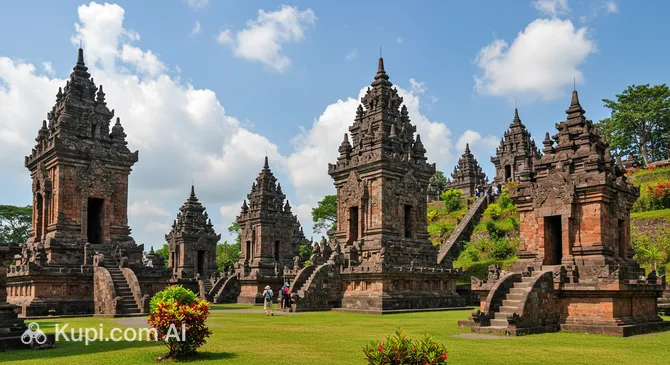
Blitar. Illustration.
Source: Kupi.com AI

With a population of about 132,000, Blitar retains the charm of a provincial town while remaining an important administrative center. The city is famous for its hospitality: smiling locals and colorful markets filled with the aromas of fresh coffee and exotic fruits create a truly warm and welcoming environment.

Blitar attracts travelers not only as a gateway to the natural beauty of East Java but also as a place with a rich historical and cultural heritage. Visitors can explore ancient temples, stroll through old streets, and immerse themselves in the authentic atmosphere of local markets. Additionally, the surroundings of Blitar offer excellent opportunities for eco-tourism, including hiking along scenic trails and experiencing traditional crafts and the region's unique cuisine.

If you dream of discovering the real, non-touristy Indonesia, far from the noise of megacities, Blitar will be a true revelation and provide unforgettable impressions.

You can find more interesting facts on the history of Blitar page.

Weather Overview

In Blitar, you can expect warm weather year-round, with typical daytime maximum temperatures in the 28-30°C range (nighttime minimums 20-23°C), along with a pronounced wet season with heavy rain followed by a drier period. The highest amount of rainfall (up to 12 mm per month and up to 30 rainy days) occurs from November to April, while July and August are the driest months (about 1 mm of rainfall and only 6 rainy days). You can find out more on the Climate in Blitar page.

Average monthly temperature

Average monthly precipitation

Interesting Facts

Beyond its well-known attractions, the city of Blitar hides many surprising stories and features that make it a truly unique place. Here are just a few interesting facts that will help you see it from a different perspective:

  • Blitar is not just a city, but a pilgrimage site for many Indonesians, as it is here that the first president of Indonesia, Sukarno, was born and found his final resting place. His mausoleum and memorial complex are symbols of national pride and attract thousands of visitors every year.

  • In the vicinity of Blitar lie ancient Javanese temples, such as the Temple of Shiva, shrouded in mystical legends. Remarkably, some are still used for traditional rituals, offering a deep look into Java's spiritual heritage.

  • The city is famous for its skilled artisans. Here you can find more than just souvenirs, but true works of art: from exquisite ceramics and carved wooden items to the famous batik – traditional Indonesian fabric with unique hand-crafted patterns.

  • For lovers of nature and active recreation, Blitar and its surroundings offer exciting eco-tours. You can go rafting on mountain rivers, take a stroll through picturesque rice terraces, or visit authentic villages to get acquainted with the daily life of the locals.

How to Get There

When planning a trip to this cozy corner of East Java, it is worth thinking through your route in advance, as the city is located away from the hustle and bustle of the capital. You can learn more about how to get to Blitar by exploring all available options, but tourists most often choose a combination of air travel and ground transfer or a train journey.

Blitar itself does not have an airport, so the region's air gateways are located in neighboring major cities. The most popular and convenient option for international and long-distance domestic flights is Juanda International Airport (IATA: SUB), located in Surabaya. It is approximately 105 km from Blitar. It is a major transport hub receiving many flights. The journey from here by taxi or rented car takes about 3 hours, depending on traffic.

Another convenient option is to fly into Abdul Rachman Saleh Airport (IATA: MLG) in Malang. It is closer, only 64 km from Blitar, but handles fewer flights. A car trip from this airport takes about 2 hours. Also worth noting is the new Dhoho International Airport (IATA: DHX) in Kediri, which is the closest to Blitar — the distance is only 43.5 km, and the travel time by taxi is about 1.5 hours.

For convenience, here is a summary of the main airports through which you can reach the city:

AirportPassenger trafficDistance
Dhoho International Airport1.5 mln44 km
Abdul Rachman Saleh Airport894 00064 km
Juanda International Airport14.0 mln105 km
Adi Sumarmo International Airport1.2 mln168 km
Achmad Yani International Airport2.3 mln233 km

Rail service is another excellent way to get to Blitar, especially if you are already on the island of Java. The city's railway station is located in the very center and receives trains from many major cities, including Jakarta, Bandung, Yogyakarta, Malang, and Surabaya. Traveling by train across Java is not only comfortable but also very scenic, as routes often pass through rice terraces and mountain landscapes.

Main Attractions

Blitar, a city with a rich history, offers tourists several iconic sites worth visiting. One of the main reasons many come here is Makam Bung Karno – a majestic memorial complex dedicated to Indonesia's first president, Sukarno. It is not just a grave, but an entire complex including a mausoleum, museum, and library. Here, you can learn more about the life and work of this outstanding political figure, see personal items and photographs, and soak in the atmosphere of respect for the "Father of the Nation." The complex attracts both Indonesians and international tourists interested in the country's history.

Not far from Blitar is Candi Penataran, the largest and best-preserved Hindu temple complex in East Java. Its construction spanned several centuries, beginning in the 12th century, and it served as an important state temple during the Majapahit Kingdom. Tourists are impressed by its scale, intricately carved bas-reliefs depicting scenes from the Ramayana and Krishnayana, and the sense of antiquity that lingers in the air. This site is a must-visit for lovers of history, archaeology, and ancient architecture.

Another iconic site associated with Sukarno's life is Istana Gebang, the house where the future president spent his childhood. This well-preserved colonial-style house-museum offers a glimpse into the past and the environment in which the young Sukarno grew up. Visitors can see original furniture, photographs, and family belongings. Istana Gebang offers a more personal and intimate look at the history of Indonesia's first president, complementing the experience of visiting his mausoleum.

Local Cuisine

Blitar's gastronomy is a vibrant journey into the world of Javanese cuisine, where fresh ingredients, fragrant spices, and rich flavors are highly valued. Local dishes often combine spicy notes with an abundance of fresh vegetables, offering an authentic culinary experience that will surely be appreciated by tourists wanting to get to know the real Indonesia.

Be sure to try "nasi gudeg" – rice served with young jackfruit stewed in coconut milk with spices. This dish is a true hallmark of the region. Another iconic treat is "soto blitar", a fragrant and hearty meat soup with herbs and spices that will warm you up and provide an unforgettable taste experience. It can be found in almost every family-run cafe in the city, where a cozy atmosphere prevails.

Among the local delicacies, "tempeh" – fermented soybeans – holds a special place. In Blitar, they are often fried until golden and crispy and served with a spicy sauce. Tempeh is an integral part of the local daily diet, and its recipes are carefully passed down through generations, making its taste truly unique.

Food culture in Blitar is unthinkable without the lively street markets. Here you can enjoy the freshest tropical fruits, try sweet "putu" cakes with coconut and palm sugar, and refresh yourself with exotic drinks. Sugarcane juice and traditional "jamu" herbal infusions, known for their healing properties, are particularly popular. Locals and tourists alike enjoy exploring these gastronomic corners where you can eat affordably and deliciously while watching the daily life of the city.

Blitar attracts gourmets not only with its everyday dishes but also with vibrant gastronomic festivals that are periodically held in the city. Such events are a great opportunity to dive deeper into the culinary traditions of East Java, try a variety of local delicacies, and get acquainted with the region's culture. Overall, the gastronomic scene in Blitar offers authentic flavors where traditions meet local hospitality, creating unforgettable memories for every traveler.

Travel Tips

Welcome to Blitar, a charming city in Indonesia known for its rich history and cultural heritage! To make your trip as comfortable and memorable as possible, we have prepared some practical tips to help you better navigate the area.

  1. Clothing and Essentials: Indonesia is a country with a tropical climate, so in Blitar, you can expect warm and humid weather year-round. Bring light, breathable clothing made of natural fabrics (cotton, linen). Don't forget a hat, sunglasses, and sunscreen. For visiting temples and the Sukarno memorial complex, you will need modest clothing that covers shoulders and knees (a sarong or light scarf will come in very handy). Comfortable walking shoes are a must. A universal power adapter may also be useful (types C and F are used in Indonesia). In the rainy season (roughly October to April), bring a light raincoat or umbrella.
  2. City Transport: It is convenient to get around Blitar by "angkot" (local minibuses) or "becak" cycle rickshaws and "ojek" motorcycle taxis for short trips. For more comfort and longer distances, use taxi services or popular Indonesian ride-hailing apps like Gojek or Grab. Car rental is possible, but traffic can be quite chaotic for an unaccustomed driver; renting a car with a driver is often a more convenient option.
  3. Finances: The official currency is the Indonesian Rupiah (IDR). You can exchange currency at banks or authorized exchange offices; avoid exchanging large amounts at the airport due to less favorable rates. Credit cards (Visa, Mastercard) are accepted in major hotels, restaurants, and some shops, but cash remains the primary means of payment, especially in markets and smaller establishments. ATMs are quite common. Tipping is not mandatory but appreciated (5-10% of the bill) for good service; sometimes a service charge is already included in the bill.
  4. Health and Safety: Pharmacies (apotek) are available in the city, but not all are open 24/7. It is recommended to have a basic first-aid kit with you. For medical assistance, go to local hospitals (rumah sakit) or clinics; be sure to get travel insurance before your trip. Blitar is generally considered a safe city. Follow standard precautions: watch your belongings in crowded places, drink bottled water, and be cautious when choosing street food. Protect yourself from mosquitoes to avoid the risk of dengue fever.
  5. Communication: The national language is Indonesian (Bahasa Indonesia), and Javanese is also widely spoken. English is not understood everywhere, mostly in tourist areas and hotels. Learn a few basic phrases in Indonesian: "Selamat pagi/siang/sore/malam" (Good morning/day/afternoon/evening), "Terima kasih" (Thank you), "Berapa harganya?" (How much does it cost?). A local SIM card can be bought at official carrier stores or small shops (passport required). Wi-Fi is available in many hotels and cafes. Useful apps: Gojek, Grab.
  6. Local Etiquette: Indonesians are very polite. A smile and a nod are sufficient for greeting. Use your right hand for passing items, eating, and touching. It is considered impolite to point with your finger (use your thumb instead) or to sit with your feet pointed at someone. It is customary to remove your shoes before entering a house or mosque. Show respect for local traditions and customs.
  7. What to Avoid: Try not to touch the heads of locals, as the head is considered a sacred part of the body. Also, avoid public displays of affection – this is not accepted in local culture. Do not raise your voice or show anger in public, as this is considered extremely impolite.
  8. Special Tip for Blitar: Be sure to visit the Mausoleum of Sukarno, the first president of Indonesia, which is the city's main attraction and an important pilgrimage site. Also, check out the local markets ("pasar") to feel the authentic atmosphere and try local delicacies like nasi pecel (rice with vegetables and peanut sauce), which is popular in East Java.

We hope these tips help you enjoy your trip to Blitar and take home only the warmest memories of this amazing corner of Indonesia!

Entertainment & Nightlife

Evening in Blitar offers travelers a chance to immerse themselves in the authentic atmosphere of an Indonesian city, where entertainment focuses on calm and soulful relaxation rather than loud discos. Instead of the neon signs of major clubs, you will find cozy local establishments perfect for ending a busy day of exploring East Javanese culture.

The center of the city's evening life is often the Alun-Alun square and its surrounding streets. This is where numerous warungs (local cafes) and small restaurants come to life at dusk, offering guests Indonesian cuisine at very affordable prices. Many of them stay open until late evening. The atmosphere in such places is usually very relaxed and welcoming; there is no strict dress code, and the main components of the evening are delicious food, conversation, and perhaps live music performed by local artists. It is a wonderful opportunity to observe the life of the townspeople and feel like a part of it.

If a night market (pasar malam) is operating during your visit to Blitar, be sure to visit it. This is a bright and colorful event where you can not only try a variety of street food and local delicacies but also buy souvenirs. As for European-style bars or large night clubs, the selection in Blitar may be limited, as the city is more oriented toward preserving its traditional way of life and peaceful rest.

For evening walks, choose well-lit central areas. Getting around the city after dark is convenient by motorcycle taxi (ojek) or regular taxi. It is recommended to always agree on the fare in advance or, if possible, use mobile apps to order transport. Blitar is generally considered a safe city, but standard precautions, such as keeping an eye on personal belongings and avoiding poorly lit or deserted areas, are always advisable.

By day, Blitar reveals its historical and cultural treasures. The city is inextricably linked with the name of Indonesia's first president, Sukarno, so significant memorial complexes are located here, including Makam Bung Karno (Sukarno's tomb) and a museum. You can also visit local temples or explore the picturesque surroundings. While you might not find large amusement parks or major theaters in Blitar, its cultural heritage and peaceful atmosphere attract those seeking a deep immersion into Indonesian reality.

Parks & Museums

Blitar, a city with a rich historical heritage in Indonesia, offers its guests not only an immersion into the country's history but also pleasant green corners for relaxation. Here, memorial complexes and city parks are harmoniously combined, creating a special atmosphere for travelers.

Among the green zones in Blitar for relaxation and walking, Alun-Alun Blitar stands out – it is the central city square and the heart of public life. It is a pleasant place to spend time observing the locals, and in the evening, you can often find street food. Another place to enjoy nature is Kebon Rojo Park (Taman Kebon Rojo). This city park is great for families, offering play areas for children and shaded paths for leisurely walks.

The main cultural and historical attraction of Blitar, drawing visitors from all over Indonesia and abroad, is the Makam Bung Karno Complex. This is the final resting place of Indonesia's first president, Sukarno, and it is more than just a mausoleum; it is an extensive memorial complex. It includes a museum dedicated to Sukarno's life and work, a library with his writings, and the majestic mausoleum itself, built in traditional Javanese architectural style. A visit to this complex allows for a deeper understanding of key moments in Indonesian history and the significance of Sukarno for the nation.

Another iconic site closely linked to the first president's name is Gebang Palace (Istana Gebang). This is the house where Sukarno spent his childhood and youth. Today it has been turned into a museum where visitors can see the furnishings of that time, the family's personal belongings, and better imagine daily life in the early 20th century. A tour of Istana Gebang is an opportunity to touch the early years of one of the most influential figures in Indonesian history. The architecture of the building itself, combining colonial and local features, is also noteworthy.

The architectural appearance of Blitar is largely defined by its historical sites. In addition to the mentioned complexes, walking through the city, you may notice other buildings reflecting a mix of colonial heritage and traditional Javanese architectural forms, which gives the city a special charm.

To get a more authentic experience of Blitar, we suggest visiting one of the local markets, such as Pasar Legi. Here you can plunge into the daily life of the townspeople, try fresh tropical fruits, and local culinary delights. Also, if time permits, look for small temples or mosques you might encounter during your walks – they are often quiet and beautiful corners reflecting the spiritual life of the city.

Getting Around

Public transport in Blitar consists of several main types that will help you move around the city and its surroundings. The basis of the transport system is route taxis, known as "angkot," and motorcycle taxis called "ojek."

Angkot are small minibuses that run along specific routes. They do not have a fixed schedule and depart as they fill up. Payment is made in cash directly to the driver upon exit; the fare is usually low and depends on the distance. To stop an angkot, simply raise your hand on the street. This is a popular and affordable way to travel among locals.

Ojek – motorcycle taxis – are a very common and fast way to travel, especially for short distances or in heavy traffic. Ojek drivers can be found at special stands, near markets, or simply on the street. In recent years, online apps for ordering ojeks (and cars) such as Gojek and Grab have become very popular. Through these apps, you can see the cost of the trip in advance and pay by card or cash. This is often a more convenient and transparent option for tourists.

Taxis (cars) are also available in Blitar. They can be ordered by phone, through the mobile apps mentioned above, or found at stands near major hotels and tourist sites. A taxi ride will be more expensive than an angkot or ojek but will provide more comfort, especially if you are traveling with luggage.

Practical tips for tourists:

Always carry small cash for paying fares in angkots and traditional ojeks, as drivers may not always have change for large bills.

When using a traditional ojek (not through an app), it is recommended to agree on the price of the trip before getting on.

Mobile transport apps (Gojek, Grab) significantly simplify travel: you can see the route, the cost, and the driver's details. To use them, you will need a local SIM card or access to Wi-Fi.

Public transport usually runs from early morning until evening. At night, the number of angkots may decrease, making ojeks or taxis the main options.

There are no specific types of transport like subways, trams, or funiculars in Blitar. Bicycle rentals may be available at some hotels or private points, but it is not a centralized system. Walking is also possible in the central part of the city to see closely located attractions.

Accommodation

In Blitar, you will find accommodation options to suit various preferences and budgets. The city offers both inexpensive guesthouses and hostels, which are great for budget travelers, as well as mid-range hotels offering more comfort. You can also consider renting apartments or rooms, which can be convenient for families or those planning a longer stay.

When choosing a place to stay in Blitar, pay attention to its location relative to the city's key attractions and transport hubs. Although Blitar is not a huge metropolis, a convenient location will help you save time on travel and make your discovery of the city more comfortable. Central districts or areas near main tourist sites are usually the most popular.

When planning your trip, especially during peak tourist season, it is recommended to book accommodation well in advance to ensure the best choice and prices. The price range varies from budget options to mid-level offers. To search for and book hotels and apartments in Blitar, it is convenient to use well-known international online platforms; you can also consider direct booking through hotel websites if available. This will allow you to compare conditions and choose the most suitable option for your journey through Indonesia.

Nearby Cities

For those who want to explore the surroundings, Blitar serves as an excellent starting point for day trips to several interesting nearby locations:

For example, Malang, located just 54 km away, attracts visitors with its cool climate, colonial architecture, and vibrant themed villages, such as the colorful Kampung Warna Warni Jodipan. It is also a popular base for excursions to Mount Bromo. A bit further, 113 km away, lies Surabaya, Indonesia's second-largest city. Here you can learn about the country's rich history by visiting the Heroes Monument or House of Sampoerna, as well as enjoy modern city life and shopping.

CityPopulationDistance
Kediri252 00032 km
Batu190 18447 km
Sonosari11 80750 km
Malang2 795 20954 km
Lawang93 56366 km

These nearby destinations provide insight into the diverse culture and landscapes of the region.

Shopping & Souvenirs

Shopping in Blitar offers tourists the opportunity to immerse themselves in local culture and purchase authentic goods. The city is not famous for huge shopping centers like the metropolises of Indonesia, but you can find interesting local products here, especially if you are looking for traditional souvenirs and handicrafts. The main focus should be on local markets and small shops.

Main shopping areas in Blitar are usually concentrated along the city's main streets, such as Jalan Merdeka or Jalan Veteran. Here you will find a variety of shops offering clothing, shoes, electronics, and daily necessities. The atmosphere here is more local than in major tourist centers, allowing you to better feel the city's daily life.

While Blitar may not have large modern shopping malls in the conventional sense, there are small local department stores or shopping complexes catering to the city's residents. They offer a basic range of goods, from clothing to household items. For more extensive shopping at malls, you may need to travel to larger cities in East Java.

Special attention should be paid to Blitar's traditional markets (pasar). For example, Pasar Legi is one of the central markets where you can find fresh fruit, vegetables, spices, local delicacies, as well as inexpensive clothing and household goods. Visiting such a market is a great way to experience local culture and try authentic Indonesian products. You can also find some handmade souvenirs here.

As souvenirs from Blitar, it is worth bringing back batik items – traditional Indonesian fabric with unique patterns. These can be ready-made clothing items (shirts, sarongs, dresses) or simply a piece of fabric. Wooden crafts, local sweets, coffee, and spices are also popular. Look for products made by local artisans to support local production.

Shops in Blitar are usually open from 9:00-10:00 AM to 8:00-9:00 PM, though some small shops may close for a lunch break. Markets start working very early in the morning. The main method of payment, especially in markets and small shops, is cash (Indonesian Rupiah, IDR). Larger stores may accept credit cards, but it is always better to have enough cash on hand.

The possibility of a tax refund (Tax Free) for tourists exists in Indonesia, but it is usually available in large cities and authorized stores for purchases over a certain amount. Finding such stores in Blitar may be difficult. If you plan on major purchases, check the possibility of Tax Free in advance or use this service at shops in larger cities before flying out of the country.

Reached the end of the page?

That means the route is fully explored