Support

Ubud Palace

About

Ubud Palace, officially known as Puri Saren Agung, is one of the most significant and visited landmarks in the heart of Ubud. Located on the island of Bali in Indonesia, this historic complex once served as the official residence of the royal family of Ubud. Today, it remains an important cultural and architectural symbol of the region, attracting travelers from all over the world. Part of the palace still belongs to the descendants of the royal dynasty, which adds a special atmosphere to the place.

The architecture of the palace is a magnificent example of traditional Balinese style. The complex is decorated with intricate stone carvings, gold ornaments, and ancient gates, creating an impressive and authentic look. The palace grounds are nestled in lush, well-kept gardens, while picturesque lotus ponds add charm and tranquility. It is a place where you can take a leisurely stroll, enjoying the beauty and peace despite its location in the busy town center.
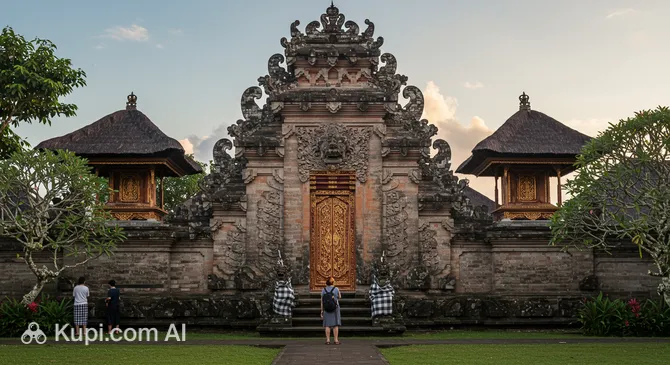
Ubud Palace. Illustration.
Source: Kupi.com AI

Traveler photos:

Ubud Palace is not just a historical monument, but a living cultural center. Every evening, its courtyard transforms into a stage for mesmerizing traditional Balinese dance performances accompanied by a gamelan orchestra. These colorful shows allow guests to immerse themselves in Bali's rich cultural heritage and make a visit to the palace an unforgettable experience. Due to its cultural significance and beauty, the palace is rightfully considered a must-see on any traveler's Ubud itinerary.

Contacts

Ubud Palace is located in the very heart of the city, making it easily accessible for visitors. While there may not be a dedicated contact center for tourists, basic information such as opening hours and performance schedules can be checked on-site or via travel portals. Below are the key details for planning your visit.

How to contactContact
AddressJl. Raya Ubud No.8, Ubud, Kecamatan Ubud, Kabupaten Gianyar, Bali 80571, Indonesia

What to Do

A visit to Ubud Palace offers guests a variety of experiences, combining architecture, culture, and nature. During the day, visitors can freely wander through the parts of the complex open to the public. This is a wonderful opportunity to see examples of traditional Balinese architecture up close, take striking photos against the backdrop of the famous intricately carved stone gates, and enjoy the peaceful atmosphere by the lotus ponds. It is important to remember that part of the palace remains a private residence for the descendants of the royal family, so access there is restricted.

As evening falls, Ubud Palace transforms into one of the city's main cultural venues. The evening performances of traditional Balinese dances, which take place here almost daily accompanied by live gamelan music, are particularly popular with tourists. These colorful and mesmerizing shows are a unique chance to immerse yourself in the rich cultural heritage of Bali. To get good seats, it is recommended to arrive a little early, around 7:00 PM, as performances begin at 7:30 PM.

In addition to the cultural program and walks through the historical grounds, there are small cafes and restaurants located within and near the complex. Here you can relax after sightseeing and try local dishes while continuing to enjoy the views and atmosphere of this iconic location. Entry to the palace grounds during the day is generally free, while separate tickets must be purchased for the evening dance shows.

Getting There

Getting to Ubud Palace is quite easy, as it is located in the heart of Ubud, right across from the famous town market. Thanks to this central location, it serves as a major landmark and is easily accessible from anywhere in the city. For most travelers staying in the center, the palace is within walking distance.

If you are arriving in Indonesia via the main international airport, Ngurah Rai (DPS), located near Denpasar, the trip to Ubud will take approximately 1–1.5 hours. The most convenient way is to take a taxi or book a transfer. Taxi fares from the airport are usually fixed. You can also rent a car or a scooter, which gives you more freedom to move around the island.

Getting around Ubud itself is fairly simple. If you are staying in the central area, a walk to the palace will be a pleasant part of exploring the town. For longer trips or added convenience, you can use local taxis or rent a scooter—a very popular mode of transport in Bali. Additionally, Ubud can be reached by tourist buses like Kura-Kura Bus or Perama from other resort areas like Kuta or Sanur.

Nearest city: Ubud

History & Facts

The history of Ubud Palace is closely intertwined with the history of the city's ruling dynasty. The first mentions of a local rulers' residence on this site date back to the 18th century, but the complex began to take its modern shape in the early 19th century. This happened during the reign of King Ida Tjokorda Putu Kandel, who oversaw construction from approximately 1800 to 1823. It was then that the foundations of the architectural ensemble we admire today were laid.

A significant challenge for the palace was the powerful earthquake of 1917, which destroyed most of the structures. Reconstruction began in the first half of the 20th century and became a matter of honor for the descendants of the royal family—brothers Tjokorda Gede Agung Sukawati and Tjokorda Raka Sukawati. One of the most famous Balinese masters of the time, sculptor and architect I Gusti Nyoman Lempad, was brought in for the design. Thanks to his talent, the palace was not only restored but enriched with new architectural solutions while preserving the traditional Balinese style.

Construction work continued for several decades and was finally completed in the 1950s. An important stage was the creation of the Saraswati Temple on the complex grounds, adorned with picturesque lotus ponds. It was thanks to this elegant addition that the palace received its second, unofficial name—the Ubud Water Palace. In recent years, the complex has been regularly restored with great attention to detail, allowing it to remain one of the best examples of authentic Balinese architecture and an important cultural hub on the island.

Time Needed

For a quick look at the main public areas of Ubud Palace, 30 to 60 minutes is usually enough. During this time, you can leisurely stroll through the courtyard, admire the famous carved gates, take beautiful photos, and feel the atmosphere of this historic site in the heart of Ubud. Since only part of the complex is open to the public, even a short visit will allow you to get a general impression.

However, for a deeper and more complete immersion into the culture of Indonesia, it is worth planning more time. For a full visit to the palace, including a detailed look at the architecture and watching a traditional dance show, it is recommended to set aside at least 2–3 hours. Evening performances usually start at 7:30 PM and last about an hour and a half, offering spectators a mesmerizing sight. Thus, if you want to combine a daytime walk with an evening cultural program, plan to spend a significant part of your evening here.

Working Hours

Ubud Palace is open to visitors year-round, making it accessible to tourists in any season. For daytime walks through the public areas, the palace is open daily, typically from 08:00 AM to 7:00 PM, although some sources indicate closing time as early as 6:00 PM. Entry to the grounds during the day is usually free, and no prior booking is required. However, please note that the schedule may change due to private or religious ceremonies, so it is recommended to check the latest information on-site.

Evening cultural programs are a separate part of a palace visit. Traditional Balinese dance performances usually start at 7:30 PM and last about an hour and a half. Tickets for these shows are purchased separately, usually right on-site before the start. Pre-booking is generally not necessary, but to secure good seats, it is better to arrive around 7:00 PM. The dance schedule may vary, so for the most accurate information, it is best to consult local tourist information centers or check directly at the palace.

7:00 – 17:00

Nearby

Although Ubud Palace is a key attraction in its own right, exploring its surroundings can significantly enrich your trip. The center of Ubud is quite compact, making it easy to explore other cultural sites, natural beauties, and cozy establishments located just a few steps away. A stroll through the neighboring streets will give you the chance to dive deeper into the unique atmosphere of this spiritual and creative heart of Indonesia.

The area around the palace offers plenty of leisure options for every taste: from ancient temples and scenic walking routes to lively restaurants and bars. Whether you are looking to continue your discovery of Balinese culture or simply want to relax and enjoy the local flavor, you will easily find interesting places within walking distance.

NameDistance
Saraswati Temple0.1 km
Donna0.7 km
Watercress Ubud0.7 km
Arcadia0.9 km
Campuhan Ridge Walk0.9 km
Puzzle Bar & Grill1.3 km
Batubara Wood Fire1.8 km

Have you reached the end of the page?

So the route has been studied inside and out