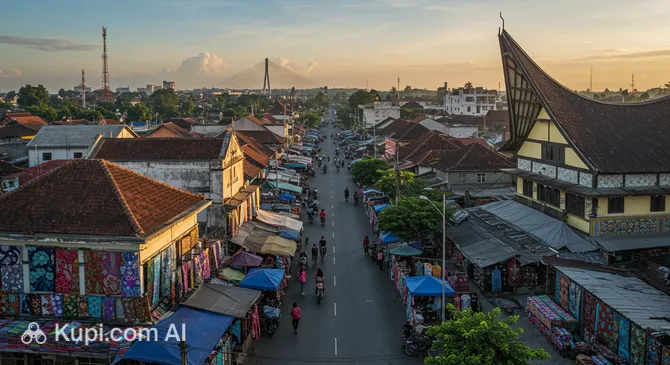
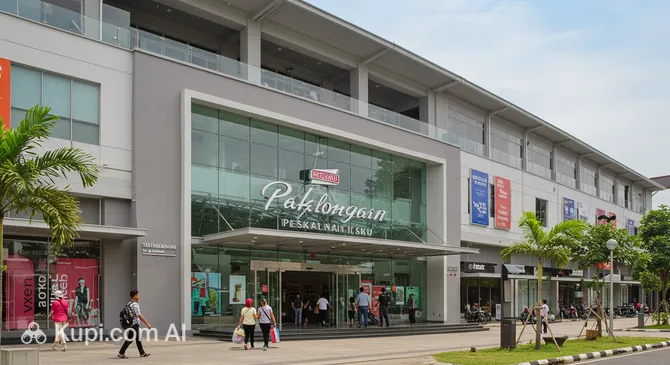
Pekalongan is a charming coastal city located on the northern shore of Java island in Indonesia. Known far beyond the region as the "City of Batik," it is steeped in an atmosphere of traditional craftsmanship and old Javanese charm. Home to approximately 324,000 people, the city is a harmonious blend of various cultures—Javanese, Arabic, Chinese, and Dutch—which is reflected in its architecture and daily life.
Pekalongan. Illustration.
Source: Kupi.com AI
Geographically, the city occupies a flat coastal plain in the Central Java province. For centuries, Pekalongan served as an important trading hub, and today its historical heritage can be felt in every neighborhood. In 2014, UNESCO officially included the city in its Creative Cities Network, recognizing it as the first center of folk art in Southeast Asia where the tradition of batik fabric painting is passed down from generation to generation.
For travelers, the city reveals itself as a place of sincere hospitality and a relaxed pace of life. The main magnets here are specialized batik villages and one of Java's largest fishing ports. Pekalongan invites everyone who wants to touch the authentic culture of Indonesia, see the work of masters with their own eyes, and enjoy the atmosphere of a real seaside city not overwhelmed by mass tourism.
Weather Overview
In Pekalongan, a classic tropical monsoon climate prevails, typical for the northern coast of Java. Warmth reigns here year-round: average temperatures range from 26°C to 32°C. High humidity is a constant companion for travelers in this region; however, sea breezes from the Java Sea often bring much-welcomed freshness to coastal areas.
When planning your trip, it is important to consider the change of seasons. The rainy season usually lasts from November to March, peaking in January and February when heavy tropical downpours can occur daily. The dry season arrives in May and continues through October, which is considered the best time to visit. A more detailed climate of Pekalongan with monthly data will help you choose the ideal dates for your journey.
Despite the predictability of the seasons, the weather can bring surprises in the form of short-lived downpours even during the dry period. Travelers are advised to always carry a light raincoat or an umbrella. Solar activity here is very high, so sunscreen and a hat will be necessary at any time of year, especially during walks around the port or open markets.
Average monthly temperature
Average monthly precipitation
Interesting Facts
Pekalongan is full of fascinating stories and unique features that make it unlike other cities in Java. Here are a few curious facts about this place:
The first mentions of the city appear in Chinese chronicles as far back as the 12th century, indicating ancient trade links with merchants of the Song Dynasty.
The city is officially recognized as the "World Capital of Batik" and became the first in Southeast Asia to join the UNESCO Creative Cities Network in 2014.
It is home to one of the largest fresh fish markets on the entire island of Java, thanks to the active work of the local seaport.
The batik production technique in the city is unique: it combines classical Javanese patterns with influences from European, Chinese, and Arabic motifs that formed over centuries of trade.
In Pekalongan, batik is not just a commodity but part of the educational curriculum: the art of fabric painting is taught in local schools as a mandatory subject.
How to Get There
Pekalongan is conveniently located on the famous Trans-Java coastal highway (Pantura), making it easily accessible by both bus and car. A bus journey from Jakarta takes between 6 to 8 hours, while from nearby Semarang, you can arrive in just 2–3 hours. You can learn more about various ways to get there on specialized travel portals.
Although the city does not have its own airport, the nearest air gateway is in Semarang. Ahmad Yani Airport receives regular flights from many Indonesian cities. From there, you can reach the center of Pekalongan by taxi or shuttle bus in about an hour and a half.
Rail travel is one of the most comfortable ways to move around Java. The city's railway station accepts trains running along the island's northern line. High-speed trains from Semarang bring passengers to the city in about 2 hours, while trips from Jakarta or Surabaya allow you to enjoy scenic views of rice fields and coastal landscapes.
Station
Passenger traffic
Distance
Purwokerto railway station
7
77 km
Semarang Poncol railway station
6
82 km
Karanganyar railway station
6
83 km
Semarang Tawang railway station
7
84 km
Kebumen railway station
7
88 km
Main Attractions
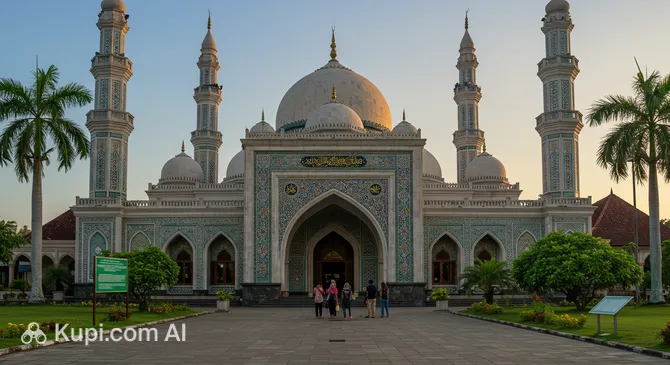
Pekalongan offers travelers a chance to immerse themselves in an atmosphere of spirituality and traditional art. One of the most significant religious landmarks is the Jami As-Syafi’i Pringlangu Mosque. This site attracts both believers and tourists with its calm energy and vital role in the local community's life.
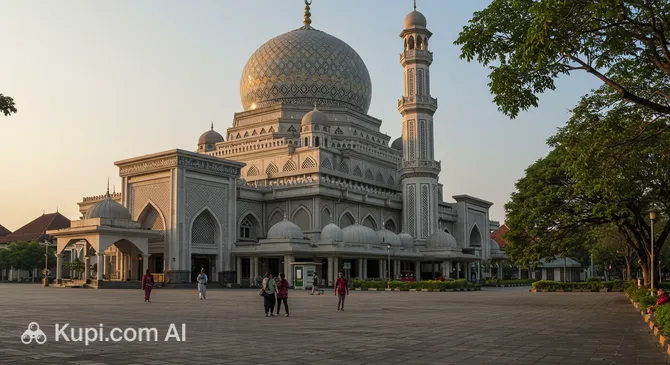
Equally impressive is the Great Al-Jami Mosque of Pekalongan. Located in the heart of the city, it serves as a magnificent example of the region's Islamic architecture. Life often bustles around it, and its monumental appearance is a major landmark for all city visitors.
Al-Jami Grand Mosque Pekalongan. Illustration.
Source: Kupi.com AI
Traveler photos:
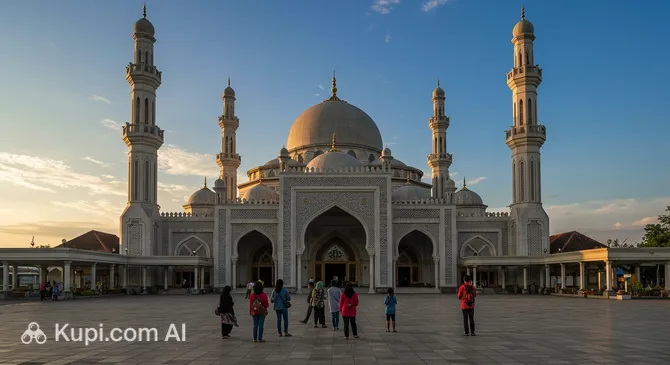
Another modern and elegant site is the Al-Fairuz Mosque in Pekalongan. Its light walls and neat forms make it a popular place to visit at any time of day. Besides the mosques, it is definitely worth stopping by specialized villages like Kauman or Pesindon, where the famous batik is produced, and visiting the Batik Museum to learn the secrets of this ancient art.
Al-Fairuz Mosque Pekalongan. Illustration.
Source: Kupi.com AI
Traveler photos:
Nature lovers and those who enjoy outdoor walks will appreciate the Pekalongan Mangrove Park, located on the coast. It is an excellent spot for ecotourism where you can see the unique flora and fauna of the coastal zone. You can end your day at Pasir Kencana Beach, watching the sun dip below the horizon over the Java Sea.
Local Cuisine
A gastronomic journey through Pekalongan is a feast of flavors for lovers of seafood and spicy Javanese dishes. The city's main specialty is nasi megono (nasi megono)—rice served with finely chopped young jackfruit, shredded coconut, and aromatic spices. This dish is often eaten for breakfast, accompanied by crispy tempeh or fried fish.
Another unique local creation is pindang serani (pindang serani). This is a clear and light fish soup with a subtle sourness that is perfectly refreshing in the tropical heat. The food culture here is closely tied to the sea: in the port warungs (small cafes), you can always find the freshest fish grilled with traditional sambal sauce.
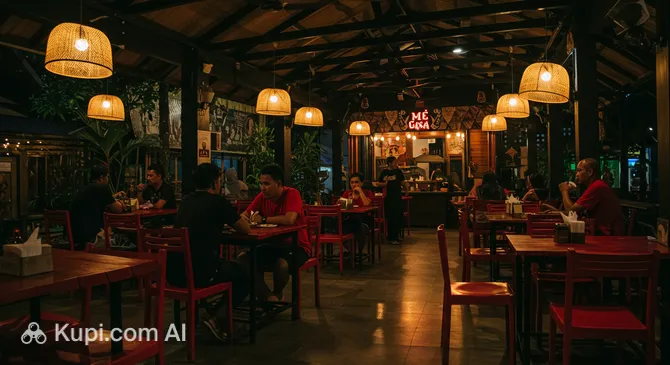
For those who prefer modern spots popular with the youth, it is worth checking out Mie Gacoan Pekalongan or Mie Gacoan Pekalongan. These establishments are famous for their spicy noodle dishes, which have become a real hit in Indonesia. As for a drink, be sure to try the local es cendol—a sweet dessert beverage with coconut milk and green rice flour jelly.
Mie Gacoan Pekalongan. Illustration.
Source: Kupi.com AI
Traveler photos:
Travel Tips
Preparing for a trip to Pekalongan becomes easier with these practical tips that will help you feel confident in the "City of Batik."
Clothing and Dress Code: The city has a hot and humid climate, so choose clothing made of natural fabrics. Given the conservative nature of the region and the abundance of mosques, shoulders and knees should be covered when visiting religious sites.
Transport: To move around the city, it is most convenient to use the Grab or GoJek apps. If you decide to ride a becak, be sure to haggle and fix the price before the trip starts.
Finances: The official currency is the Indonesian Rupiah (IDR). Large shopping centers accept cards, but for batik markets and street food, always have cash on hand. ATMs are available in the center, but not all accept foreign bank cards.
Health: Drink only bottled water and avoid ice in street drinks. During the rainy season, be sure to use mosquito repellent to prevent tropical fevers.
Communication: The main language is Indonesian. English is understood by staff in major hotels, but knowing a few phrases (for example, Terima kasih — thank you) will bring a smile to the locals' faces. Buy a local SIM card (Telkomsel) for navigation access.
Local Etiquette: Greet people with a slight nod or a handshake. Remember that the left hand is considered "unclean," so pass money or food only with your right hand.
What to Avoid: Do not show intense emotions or anger in public—this is considered a sign of losing dignity. Also, avoid walking alone in poorly lit port areas late at night.
Secret Tip: If you want to buy the best batik at the lowest price, check out Pasar Grosir Setono—a huge wholesale textile market at the city's entrance.
Pekalongan is a city that reveals itself gradually. Follow these tips, be open to new things, and your journey through Central Java will be truly unforgettable!
Entertainment & Nightlife
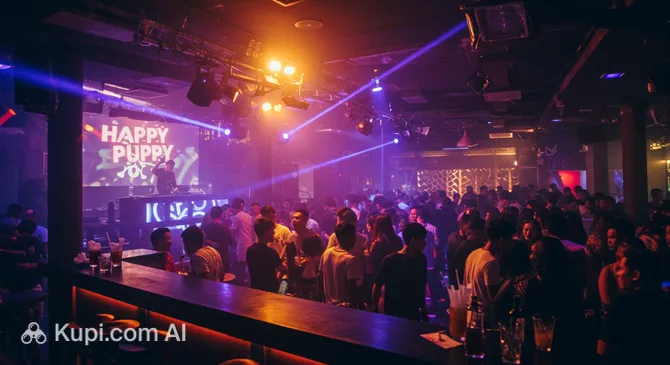
The entertainment scene in Pekalongan is calm and family-oriented, reflecting the city's cultural values. Evening life here is mainly centered around cozy cafes, street food courts, and traditional markets. A special place in local leisure is held by visits to karaoke clubs, such as Happy Puppy, where you can spend time with friends in a relaxed atmosphere.
Happy Puppy. Illustration.
Source: Kupi.com AI
Traveler photos:
For those seeking cultural entertainment, the city regularly hosts batik festivals, parades, and art exhibitions. These are great opportunities to see colorful processions and get acquainted with the region's multi-ethnic heritage. The Jetayu area often becomes the center for such events, where historical buildings provide a beautiful backdrop for mass festivities.
Nightclubs in their classic sense are practically non-existent here, so for loud parties, young people often head to nearby Semarang. Nevertheless, walking by the port under the sea breeze and tasting dishes at the night fresh fish markets create the unique flavor of nighttime Pekalongan. For moving around the city in the evening, it is best to use mobile taxi apps for comfort and safety.
Parks & Museums
The cultural heart of Pekalongan is unthinkable without a visit to the famous Batik Museum. It houses a unique collection of antique and modern fabrics, and visitors can not only see rare exhibits but also participate in a workshop, creating their own pattern using wax and traditional tools.
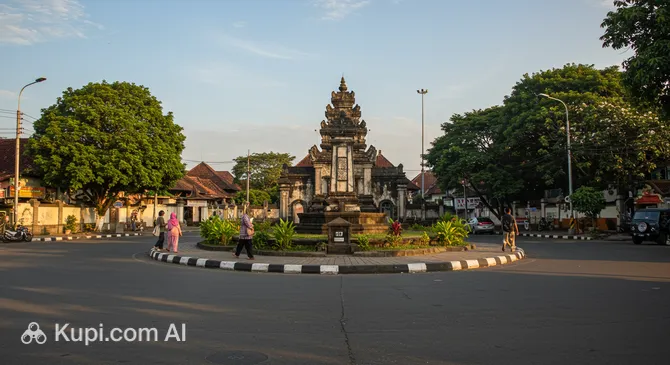
Those who enjoy walks and commemorative sites will be interested in seeing the Poem Monument in Pekalongan. This unusual structure reflects the literary and creative soul of the city. Another important public space is the Simpang Lima Circle in Pekalongan—an iconic square where city events are often held and where you can feel the pulse of the city.
Simpang Lima Roundabout Pekalongan. Illustration.
Source: Kupi.com AI
Traveler photos:
For nature-based relaxation, the Pekalongan Mangrove Park is ideal. It is a green coastal zone where mangrove forests create a unique ecosystem. Walking along the wooden bridges among the trees allows you to escape the city bustle and enjoy the silence and sea air, which is a rarity for densely built Javanese cities.
Getting Around
The transport system in Pekalongan is typical for small Indonesian cities and is quite compact. The main form of public transport here is angkot—minibuses that run on fixed routes. This is the cheapest way to get around, though it requires some adjustment to the local logistics and the absence of fixed schedules.
For more colorful trips around the city center, you can use becaks—three-wheeled cycle rickshaws. They are perfect for leisurely short-distance rides, such as from your hotel to the nearest batik workshop. The price for a becak ride should be agreed upon in advance, as they do not have meters.
The most convenient and popular option for tourists today are online services like Grab or Gojek. You can call both a car or a motorcycle taxi via the app, which guarantees a fixed price and comfort. Bicycles are rare in the city due to heavy traffic on main roads like the Pantura highway, so for independent movement, it is better to choose walking in the historical center or taking a taxi.
Accommodation
Accommodation in Pekalongan is primarily geared toward travelers who value comfort and authenticity. The main concentration of hotels and guesthouses is in the West Pekalongan (Pekalongan Barat) district. This is a strategically convenient location as it provides easy access to the main batik workshops and the railway station.
Visitors to the city can choose between budget options for backpackers and comfortable mid-range hotels. Many of them are decorated in a traditional style, emphasizing the city's status as a craft center. If you plan to visit during major batik festivals, it is recommended to book your accommodation in advance, as demand increases significantly during these periods.
Particularly popular magnets for tourists are the areas near major commercial hubs and historical sites, such as the Simpang Lima Circle in Pekalongan. Staying in this area guarantees proximity to restaurants and evening markets, where you can feel the true rhythm of city life.
Simpang Lima Roundabout Pekalongan. Illustration.
Source: Kupi.com AI
Traveler photos:
Nearby Cities
Pekalongan serves as an excellent starting point for exploring the surroundings of Central Java. Right nearby is the town of Batang, located just a few kilometers away. It attracts tourists with its picturesque beaches and plantations, offering a more tranquil and rural getaway compared to the urban pace.
Heading west, the city of Tegal is worth a visit. It is famous for its colonial architecture and unique poci tea drinking culture. Another interesting place for a short trip is Petarukan, where you can observe the traditional way of life in the Javanese province.
Exploring the nearby regions allows for a deeper understanding of the diversity of Java island. Whether it's a trip to the large metropolis of Semarang for shopping or a stroll through quiet villages, every direction from Pekalongan will provide new experiences and allow you to see Indonesia from different perspectives.
Shopping & Souvenirs
Shopping in Pekalongan is primarily a hunt for the best examples of batik. For authentic handmade fabrics (batik tulis), it is worth heading to specialized villages like Kauman or Pesindon. Here, in small workshops and home-based shops, you can find exclusive items that make wonderful souvenirs. Traditional markets, such as Pasar Banjarsari, offer a huge selection of textiles at affordable prices.
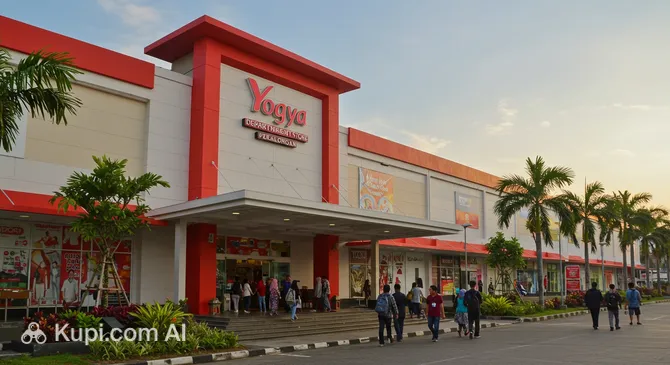
If you prefer a modern shopping format with air conditioning and food courts, there are several large centers in the city. Look out for the Yogya Mall Pekalongan, which offers a wide range of goods from clothing to groceries. It is a popular spot among locals for daily shopping.
Yogya Department Store Mall Pekalongan. Illustration.
Source: Kupi.com AI
Traveler photos:
Another important retail site is Matahari Plaza Pekalongan. Here you can find both international brands and Indonesian-made products. Besides textiles, leather goods and woven souvenirs are worth bringing back from the city. Remember that most small shops and markets only accept cash (Indonesian Rupiah), while large centers stay open until late evening.