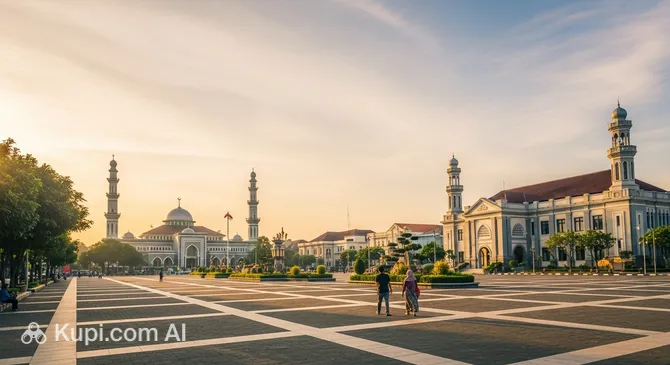
Tegal is a vibrant coastal city located in the northwestern part of the Central Java province in Indonesia. Washed by the waters of the Java Sea, it serves as an important link between Jakarta and Semarang. It is a place with a unique atmosphere, where the industrial rhythm of port life intertwines with the sincere hospitality of locals and rich trading traditions.
The city stretches across a flat plain and has a population of about 275,000 people. Tegal is not your typical postcard tourist resort, and that is its main charm: here, you can see the authentic, unfiltered life of the Javanese coast. Tegal. Illustration.
Source: Kupi.com AI
The city's history, spanning several centuries, is inextricably linked with maritime trade, fishing, and sugar production, all of which have left their mark on its architecture and culture.
For the traveler, Tegal is primarily interesting for its bustling markets, authentic cuisine known throughout the country, and welcoming public spaces. The city is famous for its unique dialect of the Javanese language, which sounds unusual even to residents of neighboring regions. If you are looking for a place to feel the true spirit of Java away from mass tourist routes, Tegal will be a great discovery.
Weather Overview
The climate in Tegal is classified as a tropical savanna type, which means consistently high temperatures and a clear distinction between dry and wet seasons. Year-round, the thermometer fluctuates between 26–32°C. Thanks to its coastal location, sea breezes often blow through the city, slightly softening the daytime heat, although high humidity remains a constant companion for travelers.
The rainy season usually lasts from November to March. During this period, especially in January and February, heavy rainfall occurs, often in the form of short but powerful downpours. The dry season begins in May and lasts until October—this is the most favorable time for a visit, when the sky remains clear and the risk of being caught in the rain is minimal. More detailed information on how the weather in Tegal changes by month should be studied before planning your trip.
For a comfortable stay in the city, it is recommended to always carry sunscreen and wear light clothing made from breathable materials. Even on cloudy days, the tropical sun remains very active. In the evenings, the temperature drops slightly, staying around 24–25°C, which makes night walks through the central squares particularly pleasant and comfortable.
Average monthly temperature
Average monthly precipitation
Interesting Facts
Home of Warteg: Tegal became famous throughout Indonesia thanks to its "Warung Tegal"—budget-friendly eateries that can now be found in every corner of the archipelago.
Tea Capital: The city is the production center for famous Indonesian tea brands like Teh Botol Sosro and Tong Tji; tea culture here is elevated to a cult status.
Unique Dialect: The local "Ngalpak" dialect is so specific that it is often used in Indonesian comedy shows to create a special regional flavor.
Sugar Heritage: In colonial times, the Tegal region was one of the world's largest sugar exporters, a history still reflected by old plantations in the surrounding areas.
Maritime Forge: The city is home to a well-known fishing school that trains personnel for the country's entire maritime industry.
How to Get There
Travel to Tegal is most often done by land, as the city is a major transport hub on the northern coast of Java. How to get to Tegal is a question easily answered thanks to the developed network of railways and highways. The city is conveniently connected to the island's key metropolises, making it accessible to any tourist.
Rail travel is the most comfortable and reliable way to get around. Tegal's main station is located in the very heart of the city, within walking distance of major markets and hotels. Trains from Jakarta (Gambir or Pasar Senen stations) take about 4–6 hours, while the journey from Semarang takes about 2–3 hours. The railway provides scenic views of rice fields and the coastline.
Station
Passenger traffic
Distance
Purwokerto railway station
7
61 km
Cirebon railway station
6
66 km
Kroya railway station
7
84 km
Banjar railway station
6
85 km
Cilacap railway station
6
96 km
For those who prefer air travel, it should be noted that the city does not have its own airport. The nearest large air hubs are located in Semarang (SRG) and Jakarta (CGK). From there, you can reach Tegal by train, regular bus, or by using private shuttle services (travel), which offer door-to-door transfers. Travel time by car from Jakarta can vary significantly depending on traffic on the Trans-Java toll road.
While Tegal is not rich in ancient ruins, its attractions allow for a deep immersion into the everyday culture and history of the region. One of the most popular spots for relaxation is Pantai Alam Indah (PAI) beach. It is a typical northern Javanese beach where you can enjoy the sea breeze and watch the sunset. A special feature of this place is the nearby Maritime Museum, whose open-air exhibition includes old military equipment, highlighting the city's role as an important port.
The heart of city life is considered to be the central square, Alun-alun Tegal. Located directly opposite the Great Mosque, it becomes particularly lively in the evening when locals gather here. It is an ideal place for walking and getting to know the local street food. For those who want to see the real trade bustle, a visit to Pasar Pagi Tegal is a must—the city's largest morning market, where life begins to buzz with the first rays of the sun.
If you have some time, it is worth heading a bit further from the center to Taman Poci park. This cozy square, located near the railway station, is named after the famous local clay teapots. The park is equipped with playgrounds and small kiosks, creating a pleasant atmosphere for a quiet rest after a long journey or a walk through the busy port areas.
Local Cuisine
The gastronomy of Tegal is a true source of pride for the locals. The main culinary symbol of the city is the Warteg (Warung Tegal). These small eateries offer a huge selection of prepared dishes: from various types of curry and stewed vegetables to fried tempeh and fish. The main feature here is the selection system: you simply point to the dishes you like, and they are served on a plate of rice at a very affordable price.
It is definitely worth trying the local seafood, which is delivered straight from the port. Tegal-style fried fish with spicy sambal sauce is a favorite among foodies. The city is also famous for its Sate Tegal—tender young lamb skewers (Sate Kambing), often served on a hot cast-iron skillet. A characteristic feature of the local cuisine is the balanced use of sugar and spices, giving the dishes a mild yet rich flavor.
As for drinks, Tegal is a paradise for tea lovers. The tradition of moci flourishes here—drinking strong sweet jasmine tea brewed in small clay teapots (poci) and served with large sugar crystals. Local tea brands are known throughout the country, and a cup of such fragrant tea paired with traditional fried snacks (gorengan) is the perfect end to any day in this city.
Travel Tips
Tegal is a welcoming city that will give you many impressions if you are ready for its slow provincial rhythm. These practical tips will help make your trip as comfortable and safe as possible.
Clothing and Dress Code: Choose light clothing made from natural fabrics, as it is hot and humid in the city. Remember that Tegal is a Muslim city, so you should cover your shoulders and knees when visiting mosques or administrative buildings. Comfortable shoes are a must for walking through the markets.
Internal Transport: For maximum convenience, install the Grab or Gojek apps. This will save you from having to haggle with drivers and allow you to quickly call a moto-taxi or a car.
Finances: The main currency is the Indonesian rupiah. Large shops and hotels accept cards, but in markets and Wartegs, you will need only cash. There are enough ATMs in the center, but it is better to have a supply of small denomination bills.
Health: Drink only bottled or boiled water. Street food in Tegal is delicious, but if you have a sensitive stomach, choose places with many local customers—the products there are always fresh.
Communication: English is not widely spoken. Knowing basic phrases in Indonesian (Terima kasih — thank you, Berapa? — how much?) will greatly facilitate communication. Locals are very friendly and always ready to help.
Etiquette: Greet people and pass items only with your right hand, as the left is considered unclean. Always remove your shoes when entering a private home or a mosque.
What to Avoid: It is not advisable to walk alone in port areas late at night. Also, avoid discussing political topics and show respect for religious traditions during calls to prayer.
Tea Ceremony: Be sure to try the local moci ritual. Don't rush to stir the sugar—in Tegal, it's customary to enjoy how the tea's taste gradually changes from bitter to sweet.
Observing these simple rules will allow you to fully immerse yourself in the atmosphere of genuine Javanese hospitality and ensure you get only positive emotions from your visit to Tegal.
Entertainment & Nightlife
Nightlife in Tegal differs significantly from the club culture of major metropolises. Here, it is centered around traditional evening gatherings and street food. The main hub of attraction after sunset is Alun-alun Tegal. On the central square and adjacent streets, dozens of snack stalls open, and the air is filled with the aromas of spices and grilled meat. It is the best place to feel the rhythm of the city, with a crowd consisting mainly of young people and families.
For those who prefer evening relaxation by the water, the promenade at Pantai Alam Indah beach is an excellent choice. In the evening, small cafes operate here, offering fresh seafood and drinks, while the view of the nighttime Java Sea sets a peaceful mood. The atmosphere in such establishments is simple and casual, there is no dress code, and the prices are pleasantly affordable.
Daytime entertainment in the city is mainly represented by walks through markets and visits to small shopping centers. The cultural program may include attending local festivals periodically held in the square or the port, featuring traditional music and dance performances. For more active nightlife with clubs and bars, Tegal residents usually head to neighboring large cities such as Cirebon or Semarang.
Parks & Museums
The green zones in Tegal are not large in scale, but they play an important role in the lives of the townspeople. The small Taman Poci park, located right by the station, is a favorite spot for picnics and family outings. Its name is a reminder of the city's main pride—its tea culture. Memorial sculptures in the shape of teapots are installed here, and the shady alleys provide relief from the equatorial heat.
The central square, Alun-alun Tegal, is another open space that functions as the main park. Although there are not many trees here, the flat square is ideal for walking. In the evening, it transforms into a huge recreation area where you can just sit on the grass, watching the city bustle and the lights of the Great Mosque towering over the square.
In terms of cultural institutions, the city offers a visit to the Maritime Museum (Bahari Water Park & Museum), located in the PAI beach area. This is perhaps the only significant museum space in the city, where samples of military equipment, tanks, and planes are exhibited in the open air. The exhibition tells the story of Indonesia's maritime power and the history of the Port of Tegal, which will be particularly interesting for children and military history buffs. For a deeper immersion into natural beauty, many prefer to head out to Guci—a mountain resort with sulfuric waterfalls located on the slopes of a volcano an hour's drive from the city.
Getting Around
The transport system of Tegal is typical for provincial Javanese cities and is characterized by its compactness. The main form of public transport within the city is angkots—brightly colored microbuses that run on fixed routes. There is no card payment here: the fare is paid in cash to the driver upon exiting. This is a cheap, though not the most comfortable, way to get around due to the lack of air conditioning and clear schedules.
For short trips around the city center, becaks (cycle rickshaws) are very popular. This is an eco-friendly and leisurely way to travel that allows you to observe city details. The price should be negotiated with the becak driver in advance. Also, ride-hailing services for motorbikes and cars via the Grab and Gojek mobile apps are widely available in Tegal. This is the most convenient option for tourists: the price is fixed, and the driver will come to any point in the city.
Tegal Railway Station serves as an important hub for travel to neighboring cities. The infrastructure around it is well-developed, and from the station, it is easy to reach any district on foot or by taxi. There is no metro or dedicated bus lanes in the city, so traffic jams are possible during peak hours, especially near the ports and large markets. Nevertheless, Tegal's compact size allows for quick movement between main attractions even during busy times.
Accommodation
The accommodation options in Tegal are mainly geared towards business travelers and transit tourists crossing Java. The highest concentration of places to stay is found in the central part of the city, especially around the railway station and along the main transport arteries. Here, you can find both modern mid-range hotels and very simple budget guesthouses (losmen).
For those looking for comfort at a reasonable price, it is worth looking at Indonesian hotel chains. They offer a standard set of services: air conditioning, hot water, and breakfast. If you are traveling for leisure, it is most convenient to book accommodation near the Alun-alun or the central square—this way you will be in the heart of the action and close to the best places for dinner.
Luxury five-star resorts are virtually non-existent in Tegal; however, the apartment rental sector is gradually developing. Housing prices here are significantly lower than in Jakarta or Bali. During Indonesian holiday periods, such as Lebaran (Eid al-Fitr), it is recommended to book rooms in advance, as the city is an important transit point and vacancies fill up quickly.
Nearby Cities
Tegal occupies a strategic position on the map of Java, making it an excellent starting point for exploring the northern coast and the central part of the island. The region around the city offers travelers a variety of cultural and natural landscapes accessible within a day trip.
Just an hour's drive to the west is the port city of Cirebon, famous for its ancient sultan palaces (kratons) and unique batik style. It is a place with a rich history where Javanese, Chinese, and Arabic traditions have blended. If you head east, you can visit Pekalongan—the official UNESCO "City of Batik," where you can not only buy exquisite fabrics but also see the process of their creation in local workshops.
For those who prefer mountain scenery, a trip to Purwokerto is ideal, from where it is easy to reach thermal springs and waterfalls at the foot of Mount Slamet. Also nearby is the small town of Petarukan and the picturesque Tlagasana, which will introduce you to the traditional rural way of life in Central Java.
Exploring the surroundings of Tegal allows you to see Indonesia from different perspectives: from majestic sultan residences to cozy craft villages. Convenient rail connections and a network of roads make it easy to plan such routes, returning in the evening to the cozy atmosphere of the port city.
Shopping & Souvenirs
Shopping in Tegal is primarily about getting to know the traditional markets and local products. The city's main shopping destination is Pasar Pagi Tegal. This huge market is a real labyrinth where you can find everything from the freshest tropical fruits and fish to textiles and household goods. Prices here are low, and the opportunity to haggle makes the shopping process a real adventure.
If you are looking for unusual items, check out the Bird Market in the Pasar Senggol area. Even if you don't plan on buying a feathered pet, walking among the exotic birds and listening to their polyphonic singing is a unique cultural experience. In the Alun-alun area, there are also many small shops selling souvenirs and basic necessities.
The main souvenir from Tegal is undoubtedly tea. Local shops offer a huge selection of varieties from factories like 2 Tang, Tong Tji, and Sosro. Tea is often sold in gift sets with traditional clay teapots. It is also worth paying attention to the local batik, which differs from the famous Solo or Yogyakarta styles with its brighter colors and maritime motifs. Modern shopping centers are present in the city, but they are small and offer mostly a standard set of mass-market brands, so for authenticity, it is best to head to the markets.